A new direction for India's AI rules
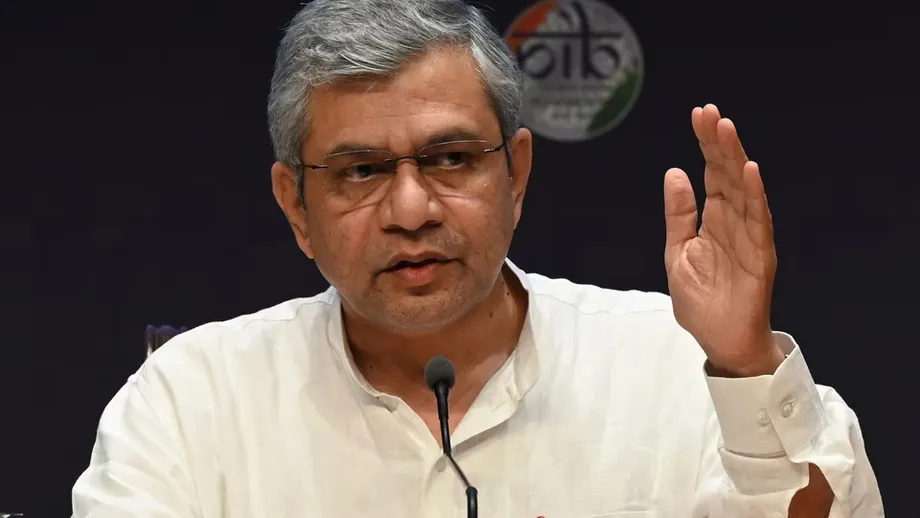
India will release a consultation paper on a new artificial intelligence law in the coming weeks, Union Minister Ashwini Vaishnaw said in New Delhi on October 23, 2026, marking a shift from the government's earlier preference for updating existing laws.
Contents
Speaking at the NDTV World Summit, Vaishnaw said the government was already working on regulation to address harm from AI while protecting innovation. The consultation will invite citizens, civil society, businesses, technology users and subject matter experts to help shape the approach.
Vaishnaw, who holds the electronics and information technology, railways, and information and broadcasting portfolios, said the risks now justified legislation:
Today the time has come when the risks of AI have crossed a threshold when we should come up with a law.
The announcement begins a discussion about how India should govern technology already spreading through banking, manufacturing, services, finance and insurance. For people dealing with these industries, the central issue is practical: who remains responsible when an AI system makes a decision or takes an action that causes harm?
What changed since the 2025 guidelines?
The India AI Governance Guidelines, released by the IT ministry on November 5, 2025, favored focused amendments to existing laws instead of a separate AI statute. That approach would address particular problems through the legal framework already in place.
Ministry secretary S Krishnan said in December 2025 that no dedicated AI law was being planned. A parliamentary reply under Vaishnaw in 2023 had also said the government was not considering legislation to regulate AI's growth.
Vaishnaw's latest remarks move the discussion toward a new law specifically addressing the technology. A consultation paper is an opening document that gathers views before the government settles its proposals. It gives people an opportunity to explain what rules they need and what problems those rules might create.
The change has developed across several public statements:
- 2023: A parliamentary reply said the government was not considering a law to regulate AI's growth.
- November 5, 2025: The India AI Governance Guidelines favored targeted changes to existing laws.
- December 2025: IT ministry secretary S Krishnan said no dedicated AI law was planned.
- October 23, 2026: Vaishnaw said AI risks required legislation and promised a consultation paper in the coming weeks.
The minister gave no publication date beyond that period, no timetable for a bill to reach Parliament, and no details of the proposed law's scope, regulator or penalties. The consultation paper is expected to be the first formal step toward a statute.
Human control is the central principle
Vaishnaw placed human control at the center of his proposed approach. People should retain authority over AI agents, models, outcomes and processes, he said, with safeguards available when systems go out of control.
An AI model is the underlying system trained to recognize patterns and generate responses or predictions. An AI agent uses such capabilities to pursue a task, potentially taking several steps or using software tools. The difference matters because oversight must cover both the system's answers and the actions it can carry out.
Vaishnaw described the control he wanted people to retain:
Control over the agents, the models, the outcomes and the processes has to be in human hands.
He also called for a way to interrupt systems that become unsafe:
Some equivalent of stopping things if they go out of control.
For an organization using AI, that principle means considering more than whether a system usually produces useful results. People must also be able to supervise its operation and intervene. The practical design of that oversight, including responsibility for stopping an unsafe system, will be an important issue for the consultation.
Why the government wants to hear from AI users
Banks, manufacturers, insurers and service companies are adopting AI quickly, Vaishnaw said. Their experience gives them an understanding of both its potential benefits and the harm it can cause.
The minister said discussions now needed to extend beyond the companies building the technology. Explaining that change in focus, he said:
We have discussed a lot with the tech companies. Now we need to discuss with the stakeholders who are users of AI.
A business deploying an AI system faces different questions from a company developing one. The developer may focus on how the model performs, while the user must decide where it belongs in daily operations, which decisions need human review and how to respond when something goes wrong.
Citizens and civil society bring another perspective: how decisions affect the people receiving a service. In banking or insurance, for example, the practical concern is whether a person can understand and challenge an outcome affecting their finances. These are examples of the accountability questions raised by wider AI adoption, rather than measures the minister has already announced.
The consultation's proposed reach therefore matters. It opens the discussion to organizations using AI and to people affected by its use, alongside technology companies and specialists.
Balancing innovation with protection
Vaishnaw described two broad approaches to AI regulation. One allows the technology to develop before introducing rules. The other, which he associated with Europe, intervenes early in ways he argued can restrict innovation.
The minister said India's preference remained with innovation, while the government also had a responsibility to keep citizens safe. His announcement puts both aims into the same policy discussion: allowing useful systems to develop while establishing rules for harmful uses and outcomes.
The difficult work lies in translating those aims into duties that organizations can follow. A rule requiring human control, for example, would need a practical meaning for the people building a model and those using it in a bank, factory or service business.
Vaishnaw's focus was on regulating harm. The consultation will give affected groups a chance to explain where existing protections work, where they see gaps and what new requirements would mean in practice. Those responses can help turn a broad safety principle into a proposal that addresses actual uses of the technology.
Why India wants international agreement
Vaishnaw argued that national action needs international coordination because digital technology operates across borders. A system can be developed in one country and used by businesses and consumers in several others.
The minister explained the problem in direct terms:
In the digital world, the physical boundaries do not exist.
He pointed to cooperation in the nuclear sector as a possible model, saying countries had come together to agree on fundamental principles. For AI, he called for leading technology ecosystems to work toward globally aligned rules while balancing innovation with human safety.
Vaishnaw also said India could be among the world's top three or four AI ecosystems. He presented that position as a reason for India to participate in shaping international principles alongside other major players.
Shared principles would provide a common starting point for countries whose businesses and citizens use the same technology. Human control and the ability to stop unsafe systems were the concrete priorities he identified. His remarks set out an ambition for international cooperation, with India's domestic consultation forming a separate process for deciding national rules.
Phones and chips get a 2028 target
Vaishnaw also set out technology manufacturing ambitions. He said India would have mobile phones designed, manufactured and branded in India by October 23, 2028, exactly two years after his remarks.
The three parts of that target describe different activities. Design determines how a phone is built and functions. Manufacturing turns that design into a physical device. Branding places it on the market under a company's name. His stated goal brings all three under Indian participation.
The minister also outlined a target for the first India-made chip by 2028 and a push to make India a global semiconductor design hub. Semiconductors are the tiny electronic components that process information and control functions in devices such as phones and computers.
Chip design and chip manufacturing require different capabilities. Designers develop a chip's electronic architecture, while factories produce the physical component. The ambitions therefore cover both creating technology and building it.
The manufacturing targets accompany the AI policy announcement as parts of India's wider technology agenda. The nearer milestone is the consultation paper expected in the coming weeks; the phone and chip goals extend to 2028.
Key Points
- Vaishnaw said India will issue a consultation paper on a new AI law in the coming weeks.
- The announcement shifts from the 2025 preference for targeted amendments to existing laws.
- Citizens, civil society, businesses, AI users and experts will be invited to contribute.
- Human control and safeguards to stop unsafe systems are central priorities.
- No timetable for a bill, proposed regulator or penalties was announced.
- Vaishnaw called for internationally aligned AI principles and outlined phone and chip ambitions for 2028.