Eight siblings help bring an answer to a mother aged 95
Eight siblings provided DNA samples to help resolve a question that had troubled the family of Vietnamese soldier Lê Bá Loan for decades: which of two graves bearing his name held his remains? Testing under Vietnam's national 500-day campaign identified the grave in Trà Lĩnh, Cao Bằng province, bringing an answer to his mother, Ngô Thị Mão, now 95.
Contents
- Eight siblings help bring an answer to a mother aged 95
- The schoolboy who volunteered to serve
- Why two matching grave records needed DNA
- Vạn Phú expands the search for other families
- A campaign with a July 2027 deadline
- Recoveries rise, with more searches inside Vietnam
- DNA collection is growing faster than processing
- Some graves cannot yet yield a sample
- Clearing explosives and connecting old records
- Key Points
Loan's family, from Vạn Phú commune in Thái Nguyên province, had found two graves with the same name, hometown and date of birth. One was in the Trà Lĩnh area; the other was at Hòa An cemetery. They asked authorities to verify the identity before bringing him home.
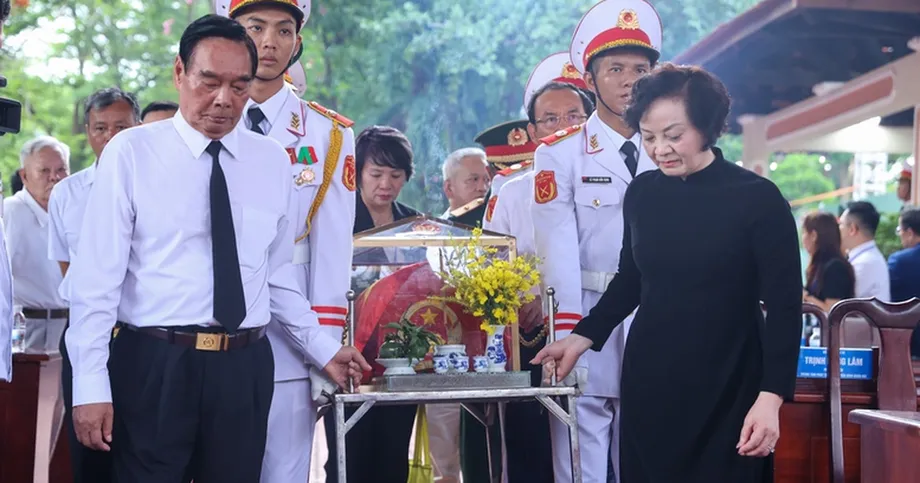
The family now plans to move his remains to their hometown cemetery before the end of the year. No exact date for the transfer has been announced. For his mother, the move would mean having her son nearby after nearly half a century of waiting. For younger relatives, it would make visits and acts of remembrance easier.
His identification comes as Vietnam expands a campaign combining searches for burial sites, DNA testing and a national database of relatives' genetic information. By August 29, 2026, figures from the office of the national steering committee responsible for the work recorded 2,014 recovered sets of remains and 265,761 DNA samples collected from relatives.
The schoolboy who volunteered to serve
Loan enlisted in 1976 while still attending high school in what was then Đại Từ district. His younger brother Lê Bá Xuân remembers a good student whose handwriting was particularly beautiful, and whose teachers regretted seeing him leave his studies for military service.
Xuân, who lives in Văn Yên hamlet in Vạn Phú, recalled that his brother could have continued his education but volunteered to join the military. Notes Loan left behind preserved a small, personal reminder of his school years.
Loan returned home on leave for a few days around 1977. It was the last time his family saw him. They later learned that he had died in the war defending Vietnam's northern border, but they did not know exactly where he had been buried.
His mother, Ngô Thị Mão, described the loss of a son who had still been at school when he volunteered for service:
He was still in high school, with his whole future ahead of him, but volunteered to join the army and, sadly, remained on the battlefield.
Another younger brother, Lê Bá Hồ, recalled how deeply the news affected their parents. Their father would often go to the gate in the afternoon and wait for Loan to return. The search for his grave became a task the family carried through the decades.
Why two matching grave records needed DNA
The graves at Trà Lĩnh and Hòa An presented the family with an unusually difficult problem. Both carried the details they were looking for: Loan's full name, hometown and date of birth. Reading the inscriptions could take the search no further.
Authorities arranged DNA sampling from eight of Loan's siblings through the campaign. The testing confirmed that the remains at Trà Lĩnh belonged to him, giving the family the answer needed to arrange his return.
DNA is the inherited biological information shared within families. Scientists compare genetic features in a sample from human remains with those in samples from relatives to assess a family relationship. In Loan's case, that comparison connected a particular grave with the family searching for him.
The result also shows why identifying a soldier and finding a burial place can involve different kinds of work. Loan's family had already located a grave bearing his name. Their remaining task was to resolve duplicate identifying details through scientific testing.
Vạn Phú expands the search for other families
Vạn Phú commune is also working with the Thái Nguyên Provincial Military Command to identify other soldiers. Local authorities have excavated graves and collected samples relating to 11 soldiers whose identities were unknown at cemeteries in the former Vạn Phú and Vạn Thọ areas.
Đặng Công Bằng, deputy head of the commune's Culture and Society Division, said the locality would continue encouraging relatives of fallen soldiers to provide DNA samples. Officials are coordinating with police to add the information to the national DNA database.
The commune intends to reach families that have not yet submitted samples, particularly relatives living or working away from home and those who still lack information about a missing soldier. Each additional family sample gives laboratories another possible comparison when examining unidentified remains.
For Loan's relatives, the immediate priority is bringing him to the hometown cemetery. A burial closer to home would allow his elderly mother and other family members to visit, burn incense and pay their respects during holidays and Tết, the Vietnamese Lunar New Year.
A campaign with a July 2027 deadline
Vietnam's Government News, in its July 20, 2026 campaign progress update, described the effort as the country's largest comprehensive operation to search for, recover and identify fallen soldiers whose records lack information.
The campaign's implementation period runs from March 15, 2026, to July 27, 2027, although its formal launch took place on April 2. Its closing date coincides with the 80th anniversary of Vietnam's War Invalids and Martyrs Day, first observed in 1947.
The government set targets of recovering about 7,000 sets of remains, completing sampling work at approximately 230,000 graves with incomplete identifying information, and conducting DNA examinations of about 18,000 remains samples. Building a functioning genetic database of relatives and clearing explosives from priority search areas are also part of the plan.
The timetable places the family searches within a defined national programme:
- March 15, 2026: The campaign's implementation period began.
- April 2, 2026: The campaign was formally launched.
- July 20, 2026: The government published figures showing 1,425 recovered sets of remains.
- August 29, 2026: The recorded total reached 2,014.
- November 2026: An interim campaign review is planned.
- Before July 27, 2027: The final campaign review is scheduled.
Recoveries rise, with more searches inside Vietnam
The national steering committee's figures show that recoveries rose from 1,425 in the July update to 2,014 by August 29, an increase of 589, or about 41%. The domestic total rose from 401 to 990 over that period, while the totals for Laos and Cambodia remained at 174 and 850 respectively.
Cambodia therefore accounted for 850 of the 2,014 recoveries recorded by August 29, about 42%. Vietnam accounted for just over 49%, with the remainder recovered in Laos. Search teams work across all three countries to locate Vietnamese soldiers buried away from their hometowns.
At Lê Thị Riêng Park in Ho Chi Minh City, the July government update described a search for a suspected collective burial site and the discovery of 32 objects and two groups of remains. By August 29, the recorded recovery total at the park had reached 521.
In Tuyên Quang, five collective graves containing approximately 23 soldiers' remains were found during five search rounds between January and July 2026. Other recorded discoveries included 13 sets of remains at Câu Nhi in Quảng Trị, 26 in Minh Đức commune in Đồng Nai, 10 in Đắk Pé commune in Đắk Lắk, and four near Trường Chinh Road in Quảng Ngãi.
Thirty-two recovery teams, with 1,559 personnel, were deployed by August 29. Thirteen operated inside Vietnam, eight in Laos and 11 in Cambodia. Authorities had held 17 memorial and burial ceremonies, including the reception of 888 sets of remains.
DNA collection is growing faster than processing
Relatives' participation expanded sharply between the July and August updates. The number of collected biological samples rose from 93,464 to 265,761, almost three times the earlier total. By August 29, 71,102 had been analysed and 66,909 entered into the database.
Those figures describe separate stages of the identification process. Collection brings a sample into the system. Analysis produces genetic information from it. Entry into the database makes that information available for comparison with genetic profiles obtained from remains.
The 66,909 samples entered into the database represented about one quarter of the 265,761 collected. Processing the growing collection is therefore a substantial part of the work still facing the campaign.
Authorities had also received and stored 60,189 samples from soldiers' remains by August 29. The Military Forensic Institute had received 30,474 samples from 17 provinces and cities and examined 195. These institute figures describe its own workload within the wider national effort.
Loan's identification gives a concrete example of what the system is intended to deliver: a comparison between relatives and remains that allows a family to act on a confirmed identity.
Some graves cannot yet yield a sample
Sampling teams had worked at 167,948 graves by August 29. Of those, 116,083 were considered suitable for taking samples, while 51,865 were not. The suitable share was about 69%, close to the proportion recorded in July, when 46,116 of 66,013 graves met the requirements.
The totals distinguish graves where teams have carried out sampling work from graves where a usable sample can actually be taken. That practical constraint matters as Vietnam works towards its much larger national target.
Seventeen of Vietnam's 34 provinces and cities had completed their organised grave sampling work by August 29. They included Cao Bằng, where Loan's grave was identified, along with Lạng Sơn, Điện Biên, Tuyên Quang, Lai Châu, Sơn La, Lào Cai, Hải Phòng, Ninh Bình, Nghệ An, Hà Tĩnh, Huế, Khánh Hòa, Đắk Lắk, Lâm Đồng, Ho Chi Minh City and Tây Ninh.
Across the country, 264 sampling teams involving about 3,500 people were assigned to this task. The scale of that operation sits alongside estimates of approximately 175,000 fallen soldiers whose remains have yet to be recovered and nearly 300,000 whose identities remain unresolved. Recovery and identification are separate needs, requiring searches in the field as well as work in laboratories.
Clearing explosives and connecting old records
Unexploded bombs, mines and other munitions remain a danger in areas where search teams operate. By August 29, clearance units had covered 12,744.2 hectares of a planned 22,725 hectares, reaching 56.08% of the target. The July update had recorded 8,462.16 hectares cleared, or 37.24%.
In the core Vị Xuyên area of Tuyên Quang, clearance had reached 4,162.2 of 4,460 hectares, or 93.32%. Nationally, 360 clearance teams involving 5,183 personnel were using 1,311 detectors and other specialist equipment to make search areas safer.
Records and testimony are another part of the search. At an August 26 Ministry of Defence conference in Ho Chi Minh City, Deputy Defence Minister Senior Lieutenant General Nguyễn Văn Gấu called for stronger collection and verification of information from organisations and individuals in Vietnam and abroad.
Gấu urged agencies to study the use of artificial intelligence to analyse soldiers' records more quickly and accurately. He also called for work with witnesses, Vietnamese veterans and former American service members, alongside exchanges of declassified documents, wartime objects and other records.
Old unit names, burial accounts and maps can help teams narrow a search area; DNA comparisons can help connect recovered remains to a family. Loan's case brought those efforts down to one urgent human purpose: giving a mother who has waited for decades the chance to have her son brought home.
Key Points
- DNA testing using samples from eight siblings identified Lê Bá Loan's grave in Trà Lĩnh, Cao Bằng.
- His family had found two graves bearing the same name, hometown and date of birth.
- His mother, Ngô Thị Mão, is 95. The family plans to bring his remains to their hometown cemetery before the end of the year.
- Vạn Phú authorities have collected identification samples relating to 11 other soldiers whose identities were unknown.
- The national campaign recorded 2,014 recovered sets of remains and 265,761 relatives' DNA samples by August 29, 2026.
- The campaign runs until July 27, 2027, with an interim review planned for November 2026.