Nearly 26,000 diagnoses put early detection in focus
Vietnam records an estimated 25,711 new breast cancer cases and 10,609 deaths from the disease each year, according to figures cited as GLOBOCAN 2024 at recent medical and public health events. Breast cancer accounts for 28.1% of new cancers among women, making access to screening, timely diagnosis and sustained treatment a pressing concern.
Contents
- Nearly 26,000 diagnoses put early detection in focus
- What the national screening targets require
- Why figures on late diagnosis vary
- Screening begins before symptoms appear
- Age and personal risk shape the tests
- New imaging reaches the Mekong Delta
- Treatment continues beyond the operation
- Survival, recurrence and emotional recovery
- Community programmes connect the next steps
- A wider cancer burden adds urgency
- Key Points
At the APPISx conference in Hanoi on October 23, Dr Nguyen Thi Hoa, deputy head of the Breast and Gynecological Medical Oncology Department 2 at K Hospital, warned that delayed care continues to complicate treatment. The Vietnam Women's Union and Novartis Vietnam organised the event and signed a cooperation agreement for 2027 to 2028.
Their community programme comes alongside a Ministry of Health plan to provide regular breast cancer screening for 50% of women aged 40 to 70 by 2030 and 70% by 2035. The plan also sets targets for faster diagnosis and completion of treatment, addressing what happens after a woman first seeks help.
For patients, the practical stakes extend from getting an appointment near home to understanding a biopsy result, managing treatment costs and continuing prescribed medicines for years. Doctors described cases in which fear, misleading advice or financial pressure interrupted that process.
The national burden is substantial. GLOBOCAN 2022 estimates put new breast cancer cases at 24,563, or 28.9% of cancers among women. The newer figure cited at the events is 1,148 cases higher, an increase of about 4.7%. Those estimates describe the scale of demand facing services, from imaging centres to oncology wards.
What the national screening targets require
Deputy Health Minister Do Xuan Tuyen outlined the screening timetable on October 19, 2026, at the Hanoi launch of an awareness campaign organised by the Bright Future Fund for cancer patients and Roche Pharma Vietnam.
The National Action Plan for Breast and Cervical Cancer Prevention and Control for 2026 to 2035 seeks to raise screening coverage among women aged 40 to 70 from its target of 50% in 2030 to 70% in 2035. That is an increase of 20 percentage points, equivalent to reaching seven women in every 10 rather than five.
By 2035, the plan also aims for 60% of breast cancer cases to be detected early, a confirmed diagnosis within 60 days for women with suspicious signs, and completion of treatment by 80% of patients. Screening coverage, speed of diagnosis and treatment completion measure different steps in care: finding a possible problem, identifying it and carrying through the response.
The ministry is bringing screening techniques into health services at commune and ward level. Tuyen also called on employers and organisations to include breast cancer screening for women from age 40 in regular health examinations.
Why figures on late diagnosis vary
Dr Hoa cited research published in Cancer Control indicating that about half of breast cancer patients were diagnosed at stages III or IV. Figures attributed to K Hospital put the proportion arriving at those stages above 60%. Meanwhile, Tuyen said detection at stages 0, I and II had reached about 76%.
The patient groups and measurement periods behind those percentages were not specified in the event accounts. Each figure needs its own population and date to explain how widely early diagnosis has spread.
Another set of figures cited during hospital cooperation activities put early detection at 52.4% in 2008 to 2010 and 76.6% in a later period. Doctors nevertheless continue to encounter advanced disease, including tumours that have spread to lymph nodes or distant organs.
Stage describes how far cancer has developed or spread. Earlier disease can allow a wider choice of treatment, including surgery that preserves more of the breast. Stage IV means the cancer has spread to distant parts of the body and requires a different treatment strategy.
Screening begins before symptoms appear
Dr Pham Thi Cam Phuong, director of the Institute of Nuclear Medicine and Oncology at Bach Mai Hospital, said workplace examinations and free screening programmes were helping doctors find smaller abnormalities. Some are visible on ultrasound or mammography before a woman can feel a lump.
At FV Hospital, Dr Phung Ngoc Thu described a woman over 40 who attended a breast screening event while meeting an old friend. She had no pain and had felt no lump. Imaging identified suspicious areas in both breasts, and biopsies subsequently confirmed cancer on both sides.
Screening looks for signs of disease in people without symptoms. A woman who notices a new change needs a clinical assessment, followed by whichever tests the doctor considers appropriate. A biopsy takes a small tissue sample for examination to determine the nature of an abnormal area.
Dr Le Van Vu, a specialist in oncology and breast reconstruction at K Hospital, advised women to seek assessment for the following changes:
- A new lump or firm area in the breast or armpit.
- Skin that pulls inward, becomes dimpled or develops an orange peel appearance.
- A nipple that turns inward or produces unusual discharge, especially blood.
- An unexplained change in breast size, shape or symmetry.
Thu described another patient who postponed a recommended biopsy. After 18 months, a lesion initially measuring 6 millimetres exceeded 20 millimetres, and cancer had spread to lymph nodes in the armpit. The experience illustrates the practical importance of completing investigations after an abnormal finding.
Age and personal risk shape the tests
Dr Thu recommends assessing breast cancer risk from age 25 and annual screening from age 40 for women at average risk. Dr Vu also advises regular screening from age 40 and earlier specialist planning for women with a higher risk.
Family history, previous chest radiotherapy at a young age, and inherited changes in genes such as BRCA1 or BRCA2 can influence that plan. Genes carry instructions used by cells; some inherited changes increase susceptibility to breast cancer. Higher risk patients may begin screening around ages 25 to 30 and have annual MRI scans alongside other imaging as prescribed.
Mammography uses X-rays to examine breast tissue, including tiny calcium deposits that can require closer assessment. Ultrasound helps doctors examine particular areas and can be useful when breast tissue is dense. MRI produces detailed images and is used when a person's risk or clinical findings warrant it.
Thu, a breast specialist at FV Hospital, explained her approach to choosing tests:
Good medicine is not about doing the most, but about doing what is needed, at the right time, for the right person.
Women can discuss their age, family history, previous results and breast density with a clinician to agree on a screening schedule and understand what follow-up an abnormal result would require.
New imaging reaches the Mekong Delta
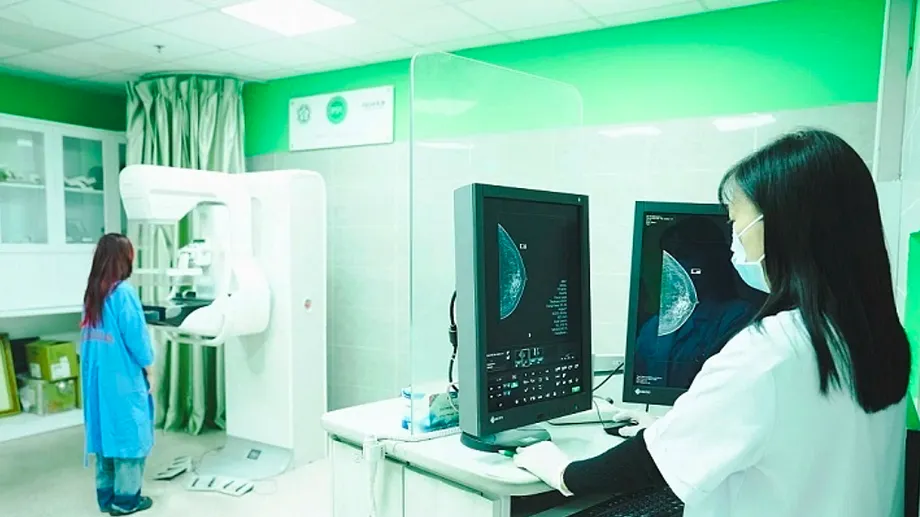
S.I.S Can Tho International General Hospital inaugurated a MAMMOMAT Revelation system with three dimensional mammography and artificial intelligence on October 20, 2026. The hospital described it as the first system of its kind in the Mekong Delta.
The equipment records images across a 50 degree angle and reconstructs slices about 1 millimetre thick. This helps doctors examine tissue with less interference from overlapping structures. Its Transpara software marks suspicious areas and provides scores for doctors to consider alongside the images and clinical findings.
The system also supports mammography with contrast material and biopsies guided by imaging. Its PRIME technology can reduce the X-ray dose by up to 30% under suitable conditions, according to the equipment description; the actual dose depends on the examination and patient.
Can Tho Health Department director Hoang Quoc Cuong said screening remained uneven and urged hospitals to expand community services, strengthen links with local health facilities and consider financial assistance. He stressed that one hospital could not meet the screening needs of the entire region.
Cost remains a concrete part of access. FV Hospital advertised screening packages starting at 2.5 million dong, or 3.2 million dong with ultrasound for dense breast tissue, with an additional rapid MRI priced at 4.5 million dong. Cuong called for free screening programmes and support for women facing financial hardship.
Treatment continues beyond the operation
Dr Hoa warned against delaying hospital treatment to apply leaves, take remedies passed by word of mouth or follow unsupported advice online. Some patients arrive with large tumours that have broken through the skin, causing bleeding and pain.
Breast cancer treatment can combine surgery, chemotherapy, radiotherapy, endocrine therapy, targeted medicines and immunotherapy. Doctors choose the sequence according to the stage, the tumour's biological features, the patient's health, fertility wishes and financial circumstances. Endocrine therapy acts on hormone related signals that help certain cancers grow.
At Hong Ngoc Phuc Truong Minh Hospital, oncology department head Dr Nguyen Thi Minh Phuong said every breast cancer patient is reviewed by a multidisciplinary oncology board. Imaging specialists, pathologists, surgeons and doctors providing cancer medicines or radiotherapy contribute to an individual plan.
A conference there examining developments from GBCC 2026 addressed breast preservation, intervention in armpit lymph nodes, immediate reconstruction, endocrine therapy, immunotherapy and AI in breast MRI. Surgeon Dr Nguyen Dinh Tung can combine cancer surgery and reconstruction in the same operation when appropriate.
After surgery, additional treatment may be needed to destroy remaining cancer cells and reduce recurrence risk. For some patients, endocrine therapy lasts five to 10 years. Hoa urged patients facing side effects, emotional distress or financial difficulty to speak with their care team rather than stop treatment themselves.
Survival, recurrence and emotional recovery
Deputy Minister Tuyen said early detection could bring the chance of cure to as high as 90%. He also cited survival at five years of up to 90% with early diagnosis, while Dr Vu put survival above 90% for early disease. Survival at five years measures how many patients are alive five years after diagnosis; doctors assess a person's prospects using the stage and biological features of their cancer.
Dr Hoa said recurrence risk varies between patients and can continue beyond five years. Follow-up is generally closer during the first five years, with the schedule determined by the disease and treatment. Longer monitoring remains part of care because some breast cancers return later.
Emotional support is another need. Figures cited during hospital cooperation activities suggested that about half of patients experience psychological stress, anxiety or depression, alongside needs for help with information, nutrition and finances.
Ho Chi Minh City Oncology Hospital and AstraZeneca Vietnam launched the Together We Step programme on October 20, 2025, to build connections and provide emotional support. AstraZeneca has also worked with the Bright Future Fund, K Hospital and the Vietnam Cancer Association on treatment support and updates to national diagnostic guidance.
Cao Tuyet, a 42-year-old patient from Gia Lai, described postponing an examination after noticing a firm area in her breast. She said busyness and fear both contributed to the delay. Her experience gives a human explanation for why understandable information and someone to turn to can matter alongside medical equipment.
Community programmes connect the next steps
Vietnam Women's Union vice president Nguyen Thi Thu Hien said local union networks could listen to women's needs, share reliable information and connect them with patient organisations. Novartis Vietnam general director Jondy Syjuco pledged continued support for trustworthy information and earlier detection.
The partnership began in 2024. A national survey attracted more than 24,000 participants, including women with breast cancer and women without the disease. The partners also launched a Facebook channel and community materials covering breast health, treatment, recurrence and healthy living.
The main programme dates and targets are:
- 2024: The Vietnam Women's Union and Novartis began their cooperation programme.
- October 20, 2025: Ho Chi Minh City Oncology Hospital and AstraZeneca launched Together We Step.
- October 19, 2026: The Bright Future Fund and Roche launched their annual awareness campaign in Hanoi.
- October 20, 2026: S.I.S Can Tho inaugurated its new mammography system and held a scientific workshop.
- 2027 to 2028: The next Women's Union and Novartis cooperation phase will focus on awareness, patient education and community support.
- 2030 and 2035: National screening coverage targets reach 50% and 70%, respectively, for women aged 40 to 70.
Dr Pham Thanh Binh, vice president of the Vietnam Medical Association, warned that internet content, social media and AI tools can make reliable health information difficult to identify. She called for communication based on scientific evidence, professional review and language people can understand.
A wider cancer burden adds urgency
Dr Tran Dang Ngoc Linh, head of gynecological radiotherapy at Ho Chi Minh City Oncology Hospital, cited GLOBOCAN 2024 estimates of 91,656 new cancers and 47,848 cancer deaths annually among Vietnamese women. Nearly 240,000 women were living with cancer diagnosed within the preceding five years.
Linh cited a World Health Organization projection that new cancer cases among women could rise by 50% and deaths by 60% by 2050 if current trends continue. Breast and cervical cancers together account for 37% of new cancers and 30% of cancer deaths among women, according to the figures she presented.
Free services are helping address immediate needs. The Bright Future Fund said it had screened more than 80,000 women at high risk over 13 years, including nearly 13,000 during 2020 to 2025. Another initiative, For Vietnamese Women, No More Fear of Cancer, announced 3,000 free examination and screening packages in Ho Chi Minh City, Vinh Long and Lam Dong.
For women who receive an abnormal result, the next steps remain decisive: access to diagnostic testing, a clear explanation of the findings, referral where needed and support to complete treatment. Vietnam's national targets cover that journey as well as the first screening appointment.
Key Points
- Figures cited as GLOBOCAN 2024 put Vietnam's annual breast cancer burden at 25,711 new cases and 10,609 deaths.
- Vietnam aims to screen 50% of women aged 40 to 70 by 2030 and 70% by 2035.
- The national plan targets diagnosis within 60 days for women with suspicious signs and treatment completion for 80% of patients by 2035.
- Doctors recommend screening plans based on age and personal risk, with prompt assessment of new breast changes.
- New imaging equipment, community programmes and free screening initiatives are expanding access.
- Treatment and follow-up can continue for years, with support needed for side effects, costs and emotional recovery.