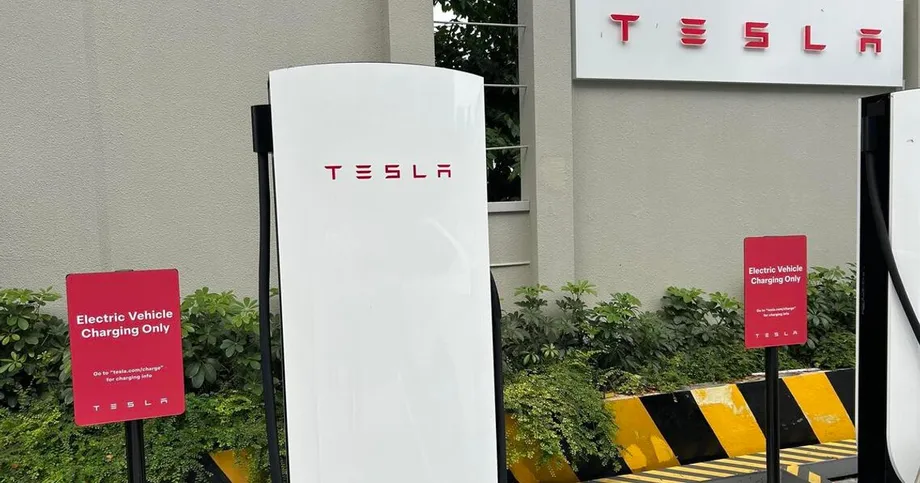
Four charging bays open a wider choice for drivers
Four Tesla charging bays at Dunearn Village in Bukit Timah have opened to drivers of other electric vehicle brands, while SimplyGo has introduced charging payments across six operators. Together, the changes give Singapore motorists more places to charge and fewer separate accounts to manage, although access still depends on the vehicle, location and payment method.
Contents
- Four charging bays open a wider choice for drivers
- What Tesla has opened, and what remains exclusive
- How much does a charging stop cost?
- What SimplyGo brings into one app
- The payment rules behind the convenience
- Why one payment platform remains difficult
- Drivers weigh apps against parking and convenience
- Singapore's expansion goes beyond payment apps
- Safety rules and access at private homes
- Key Points
The Dunearn Village chargers began operating in early October, with SimplyGo introducing its charging feature during the same period. The changes address two different problems: Tesla is widening access to charging equipment, while SimplyGo is bringing several operators into one payment platform.
Drivers of other brands pay between S$0.63 and S$0.91 per kilowatt hour at Dunearn Village, depending on the time of day. Tesla owners pay S$0.47 to S$0.67. The four chargers are rated at 250 kilowatts, compared with the 50 to 120 kilowatts typical of most fast chargers in Singapore's public network.
SimplyGo's rollout brings together more than 1,100 charging points at 332 locations, mostly condominiums and commercial buildings. Its six participating operators are Busways, Busways Public, G. Tech, City Energy Go, MNL Asia and EV Mobility.
Singapore's charging landscape remains divided across many businesses. The Land Transport Authority's MyTransport app lists 28 operators, most with their own smartphone apps and registration requirements. Some require deposits. For a driver looking for a quick battery top up, finding a charger can therefore be only the first step.
What Tesla has opened, and what remains exclusive
Dunearn Village gives drivers of compatible vehicles another place to charge, rather than access to Tesla's entire Singapore network. The other 18 Tesla charging sites remain exclusive to Tesla vehicles. The company did not disclose whether or when those locations would admit other brands.
Tesla's Supercharging access guidance says vehicles from other manufacturers must support CCS2, a connector and communication standard used for fast charging, and meet its communication and safety requirements. Cable reach also matters: drivers must be able to connect without parking across bay markings or obstructing another vehicle.
Tesla's published international guidance lists Australia, Malaysia, Hong Kong, mainland China, New Zealand, South Korea and Taiwan among participating markets, but omits Singapore. It also limits access for drivers of other EV brands to residents of its listed markets. Drivers considering Dunearn Village should check the Tesla app for the site's availability and their account's eligibility.
Tesla says it opens locations selectively, taking account of spare capacity, congestion and customer feedback. Its stated approach makes further access dependent on conditions at individual sites, rather than an automatic change across a country.
How much does a charging stop cost?
Dunearn Village's prices preserve a financial advantage for Tesla owners. For an illustrative purchase of 30 kilowatt hours, the stated rates produce an energy bill of S$18.90 to S$27.30 for another brand, compared with S$14.10 to S$20.10 for a Tesla. Parking and any other applicable charges would come separately.
A kilowatt hour measures energy, the amount added to the battery. A kilowatt measures power, the rate at which energy can be delivered. The difference is similar to the amount of water in a bucket versus how quickly a tap fills it.
The 250 kilowatt chargers are described as capable of adding more than 280 kilometres of driving range in 15 minutes. Actual charging speed and added range depend on the vehicle, battery condition and charge level. A car that accepts less power will charge below the charger's maximum rating.
Walter Theseira, a transport economist at the Singapore University of Social Sciences, said Tesla uses lower prices during quieter periods to spread demand and reduce waiting. He described other operators as generally charging fixed rates, and said Tesla's prices, despite increases, were still generally cheaper than competing services in the same area.
Tesla says its prices for other brands reflect additional support costs and adjustments needed to accommodate different vehicles. Its official guidance says Tesla drivers retain access to its lowest Supercharger pricing.
What SimplyGo brings into one app
SimplyGo users can use their existing accounts to locate participating chargers, start sessions and pay. The SimplyGo charging FAQ says each station listing shows live availability, charging type, connector and price.
The rollout includes chargers ranging from 7 kilowatts using alternating current to 240 kilowatts using direct current. Prices range from S$0.30 to S$0.86 per kilowatt hour, depending on the operator, location and equipment. Alternating current charging usually suits a longer stay, while direct current charging can deliver energy faster when both the car and charger support it.
SimplyGo supports participating chargers with Type 2 or CCS2 connections, including compatible electric cars, plug in hybrids and electric motorcycles. Its FAQ describes access to thousands of stations; the early October rollout figures were more than 1,100 charging points across 332 locations.
Charge+, CDG Energy, Shell Recharge and SP Mobility are absent from the participating group described in the rollout. Those larger operators have chargers in Housing Board carparks, making their absence relevant to drivers who rely on charging near public housing. SimplyGo says it is working to recruit more operators.
A station appearing on the map may still be inside a property with entry restrictions. Drivers must follow each location's access rules, especially at condominiums. Charging bays are available in order of arrival, with no reservation through SimplyGo, so live availability can change before a driver reaches the site.
The payment rules behind the convenience
SimplyGo currently accepts Visa and Mastercard credit and debit cards issued in Singapore. Cards issued overseas are not supported, a practical restriction for visiting drivers. Users can save up to six payment methods.
A minimum fee of S$0.50 applies to each completed charging session. This is a minimum bill rather than an extra S$0.50 added to every session: a charge costing S$0.30 becomes S$0.50, while a session costing S$15.50 remains S$15.50.
A card may also receive a temporary authorisation hold before charging begins. The hold checks that funds are available; the final bill reflects the completed session. SimplyGo says the unused hold is usually released within two to seven working days, depending on the bank.
Drivers should also check for idle or overstay fees. Some stations charge these when a vehicle remains connected after charging finishes, sometimes following a grace period of around 10 to 15 minutes. The operator's applicable fee and grace period appear in the station details.
SimplyGo shows energy received and charging duration during a session, with battery percentage available at direct current stations. Charging stops automatically when the vehicle signals that its battery is full, but drivers still need to return promptly where overstay charges apply.
Why one payment platform remains difficult
Theseira said a single app handling charging and payment across operators is technically possible. The stronger obstacle is commercial: large operators may prefer to retain customer data, sell other services through their platforms and spread costs across a large user base.
Smaller operators can gain visibility by joining a shared platform. Theseira said he was therefore unsurprised that SimplyGo's first participants were smaller businesses that might have less control over their customers.
Tesla's decision reflects a related change in the value of an exclusive network. Theseira said access to Tesla chargers previously helped distinguish its cars from competitors. As Singapore adds more public chargers, that advantage has become less powerful, giving Tesla more reason to welcome other vehicles as its network grows.
The two initiatives leave drivers with different arrangements. SimplyGo combines transactions across participating operators; Tesla provides access through its own app. Drivers of other brands using Tesla must create an account, add a payment method and select the correct charging post. Tesla specifies app version 4.2.3 or later.
Drivers weigh apps against parking and convenience
Samuel Ong, a business consultant who has owned a Tesla since 2021, has downloaded eight charging apps but mainly uses SP Mobility, Great Charge and Tesla. His choice depends on convenience and the total bill, including parking.
Ong finds separate registrations inconvenient and believes government intervention will be needed to achieve unified payments because large operators are unlikely to introduce them voluntarily. He is comfortable with other brands using Tesla chargers because Tesla owners continue to pay lower rates.
Ong also sees Tesla as a source of price competition. Describing its role in Singapore's public charging network, he said it:
"keeps the bigger operators in check".
Ler Hwee Tiong, a director of an automotive aftermarket workshop chain, usually charges at home and keeps several charging apps available for emergencies. Leslie Chang, who drives an Opel Corsa-e with a range below 300 kilometres, sometimes buys only enough energy to reach home or the office, where he usually charges.
Chang would welcome a smoother experience but can tolerate switching apps. Their routines show why a single payment platform matters more to some motorists than others: regular public charging creates repeated transactions, while access to charging at home or work makes public stops less frequent.
Singapore's expansion goes beyond payment apps
The Ministry of Transport's electric vehicle policy page, updated on 25 August 2026, sets a target of 60,000 charging points by 2030. It says every HDB town was ready for EV charging by December 2025, with chargers installed in more than 90% of HDB carparks.
The ministry also plans for every HDB town to have at least one fast charging hub by the end of 2027. These targets concern the availability and location of equipment, while SimplyGo's initiative concerns how drivers find and pay for participating services.
The main dated milestones are:
- July 2021: The EV Common Charger Grant began supporting shared charging installations at condominiums and private apartments.
- December 2023: The Electric Vehicles Charging Act commenced.
- December 2025: All HDB towns were ready for EV charging, according to the ministry.
- 1 April 2026: Singapore Standard 722 replaced Technical Reference 25 as the national EV charging standard.
- 31 December 2026: The common charger grant is scheduled to end, unless 3,500 chargers receive support first.
- End of 2027: Each HDB town is planned to have at least one fast charging hub.
- 2030: Singapore aims to deploy 60,000 charging points.
The early October Tesla and SimplyGo launches were described without a calendar year. The ministry's dated milestones set out the wider infrastructure programme separately.
Safety rules and access at private homes
The Electric Vehicles Charging Act requires charging service operators to hold LTA licences. Their obligations include maintaining service uptime, carrying public liability insurance and sharing data. Chargers supplied must meet LTA safety standards and be certified and registered.
New buildings, and buildings undergoing substantial building and electrical works, must install a minimum number of chargers and provide sufficient electrical capacity. The voting threshold for condominium resolutions to install chargers for residents has also been lowered to 50%.
The common charger grant helps pay installation costs at private residential buildings, where shared infrastructure can be difficult to arrange. For residents, these measures affect whether a charger can be installed close to home. For motorists travelling elsewhere, property access rules still determine whether a listed charger is usable.
Key Points
- Four 250 kilowatt Tesla charging bays at Dunearn Village admit compatible vehicles from other brands; 18 other Tesla sites remain exclusive.
- Drivers of other brands pay S$0.63 to S$0.91 per kilowatt hour at Dunearn Village, above Tesla owners' rates.
- SimplyGo's rollout covers six operators and more than 1,100 charging points at 332 locations, with some properties restricting entry.
- SimplyGo accepts Singapore issued Visa and Mastercard cards and applies a S$0.50 minimum bill per completed session.
- Singapore targets 60,000 charging points by 2030 and at least one fast charging hub in every HDB town by the end of 2027.