Funding Targets Practical Changes on the Factory Floor
Singapore has committed more than S$45 million over the next three years to help small and medium enterprises in advanced manufacturing adopt artificial intelligence, with support for tasks ranging from processing quotation requests to predicting equipment maintenance needs.
Contents
- Funding Targets Practical Changes on the Factory Floor
- What Manufacturers Will Be Able to Use
- How the Programme Will Help Smaller Businesses
- A Research Centre Moves Into Its Next Phase
- AI Adoption Is Growing Across Singapore Businesses
- Micron Provides the First Robotics Challenge
- Business Support Extends Beyond the New Fund
- Manufacturing Jobs Are Part of the Push
- How the Developments Fit Together
- Key Points
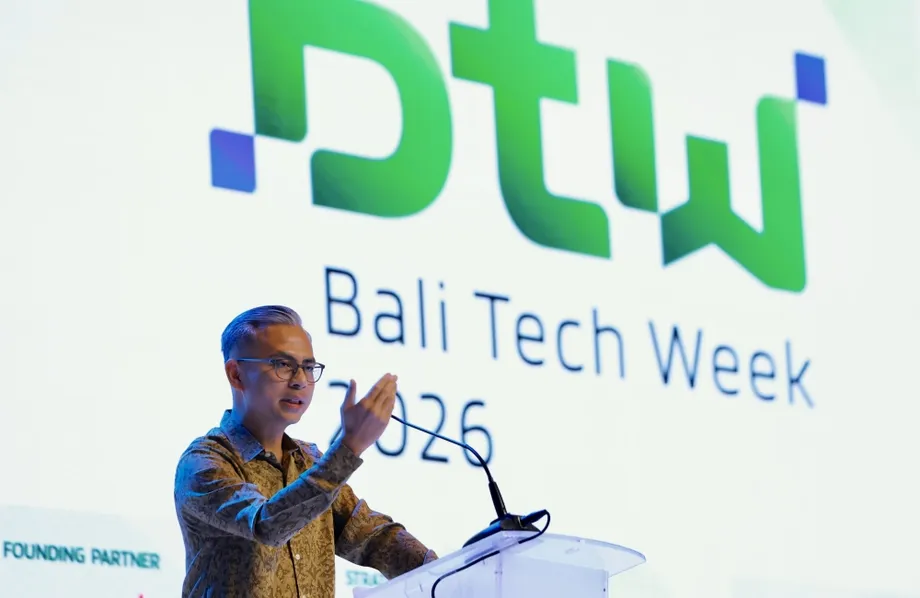
Minister of State for Energy, Trade and Industry Gan Siow Huang announced the funding on October 21 at Industrial Transformation Asia-Pacific 2026. Enterprise Singapore will deliver the support through its Catalytic AI Solutions for Advanced Manufacturing initiative and share adoption costs with eligible companies.
The programme targets three obstacles identified by Enterprise Singapore: the expense of developing AI, difficulty finding solutions suited to particular industries, and uncertainty about whether the investment will deliver useful results. Manufacturers will gain access to solutions they can deploy without developing the technology independently.
The commitment brings together several parts of Singapore's manufacturing strategy: financial support for smaller businesses, research through the AI Centre of Excellence for Manufacturing, and a new competition involving robotics and semiconductor production. Manufacturing accounts for nearly 20 per cent of Singapore's gross domestic product, making productivity in the sector important to the wider economy.
What Manufacturers Will Be Able to Use
Enterprise Singapore's initial suite covers product and component design optimisation, automated processing of request for quotation documents, production scheduling and predictive maintenance. Each addresses a specific stage in the work of a manufacturer, from responding to a potential customer to keeping production equipment running.
A request for quotation, often shortened to RFQ, asks a supplier to price a particular job or product. Automating the processing of these documents can reduce the manual work involved in handling customer requirements and preparing a response.
Production scheduling concerns the order and timing of manufacturing work. Predictive maintenance uses information about equipment to identify when attention may be needed, helping a company plan maintenance before a fault interrupts production. Design optimisation focuses on improving the design of products or their components.
Enterprise Singapore said the solutions could shorten response times, improve equipment reliability and help manufacturers maintain consistent product quality. The agency plans to expand the suite as further industry needs and suitable solutions are identified.
How the Programme Will Help Smaller Businesses
Enterprise Singapore will bring together AI solution providers, system integrators, trade associations and chambers. Solution providers supply the technology, while system integrators help connect it with the equipment, software and working processes a business already uses.
That connection matters because an AI application has to fit into daily operations to be useful. A tool for planning production, for example, needs to work with the information and processes used to organise factory activity. The initiative is intended to reduce the time, cost and complexity of making those connections.
Eligible companies will receive co-funding to adopt solutions in the suite. The announcement did not specify funding percentages, support limits for individual companies, detailed eligibility rules or an application timetable. Gan said some SMEs had already expressed interest.
Enterprise Singapore assistant managing director for manufacturing Wong Zeng Yi said the agency aims to make AI solutions more accessible and help manufacturers embed the technology in their core operations. The practical focus is on changing how work gets done, rather than requiring every smaller manufacturer to build its own AI development capability.
A Research Centre Moves Into Its Next Phase
The AI Centre of Excellence for Manufacturing, known as AIMfg, has worked with 30 manufacturers and completed 23 projects involving deployed AI solutions. Its partners span aerospace, semiconductors, pharmaceuticals and energy, giving the centre experience across several manufacturing industries.
Established in 2024 by the Agency for Science, Technology and Research, or A*STAR, and the Ministry of Energy, Trade and Industry, AIMfg will enter a new phase supported by the Research, Innovation and Enterprise 2030 plan.
Gan said the centre will develop its capabilities to address more complex manufacturing problems, including those involving operations that are essential to production. It will also support AI transformation across connected stages of a business and extend adoption to a broader group of manufacturers.
AIMfg will work more extensively with institutes of higher learning, AI startups and technology providers to develop solutions suitable for industry use. Catalytic AI Solutions will help SMEs access specialised applications, including those developed by the centre. Research and business adoption are therefore connected: the centre develops capabilities, while the Enterprise Singapore initiative helps bring usable solutions into more companies.
AI Adoption Is Growing Across Singapore Businesses
Nearly one in four Singapore businesses adopted AI in 2025, compared with about one in seven in 2024. Expressed as approximate percentages, that is close to 25 per cent versus 14 per cent, an increase of roughly 11 percentage points in a year.
Those figures cover businesses across Singapore. The manufacturing programme directs support towards a particular group within that economy: smaller manufacturers facing the costs and practical demands of introducing AI into production.
Advanced manufacturing is one of four sectors targeted under Singapore's National AI Missions, alongside connectivity, finance and healthcare. Its inclusion reflects the government's intention to apply AI to major areas of economic activity.
Gan, the minister announcing the funding, described the manufacturing objective in terms of output and productivity:
Our aim is to reimagine manufacturing to grow our manufacturing output and productivity,
For a manufacturer, productivity means producing more value from resources such as workers, machines, materials and time. The selected applications address that goal through quicker administrative work, better production planning and more reliable equipment.
Micron Provides the First Robotics Challenge
Singapore also launched the Singapore Embodied AI Challenge for Manufacturing on October 21. Its first edition will begin with a semiconductor manufacturing use case provided by chipmaker Micron.
Embodied AI combines artificial intelligence with robotics and physical systems. Instead of only producing an answer on a screen, such a system uses information about its surroundings to guide actions in the physical world. In manufacturing, this links AI decisions to machinery and production tasks.
The challenge is organised by the National Robotics Programme, A*STAR and PINE Lab@NTU. It will bring together researchers, industry participants, startups and global talent to develop solutions for actual industrial problems, with a route towards commercial deployment.
Micron's involvement gives the inaugural competition a concrete semiconductor application. The challenge adds a development channel alongside the adoption programme: participants will work on an industrial problem, while Catalytic AI Solutions helps manufacturers take up solutions ready for deployment.
Business Support Extends Beyond the New Fund
Budget 2026 introduced other measures intended to help businesses adopt AI. The Enterprise Innovation Scheme was expanded to cover qualifying AI expenditure, while the Productivity Solutions Grant was widened to cover more digital solutions and applications using AI.
The Budget also introduced the Champions of AI programme for companies seeking to use the technology to transform their businesses. Together, these measures address different stages of business investment, from adopting specific tools to making broader changes across an organisation.
Enterprise Singapore is developing Catalytic AI Solutions initiatives for logistics and wholesale trade as well. Further details will be announced later. For now, the manufacturing initiative provides the concrete starting point, with named applications and a funding commitment over three years.
Manufacturing Jobs Are Part of the Push
The Singapore Manufacturing Federation has launched MATCH, the Manufacturing and Talent Connection Hub, with support from government agencies. The jobs portal brings manufacturing employment opportunities together in one place.
Gan discussed the portal in the context of helping workers acquire AI skills and attracting talent into manufacturing. Equipment and software are only part of the adoption process; companies also need people who can introduce the technology and use it in their work.
The announcements put business adoption, research, robotics and recruitment alongside one another. For SMEs, the immediate support concerns access to AI applications and help with adoption costs. For the wider industry, AIMfg, the robotics challenge and the employment portal address the development of solutions and the people needed to put them into operation.
How the Developments Fit Together
Singapore's latest manufacturing measures build on the establishment of AIMfg in 2024 and the rise in business AI adoption recorded in 2025. The key developments span several dates:
- 2024: A*STAR and the Ministry of Energy, Trade and Industry established AIMfg.
- 2025: Nearly one in four Singapore businesses adopted AI, up from about one in seven in 2024.
- Budget 2026: Singapore expanded support for qualifying AI expenditure and digital solutions, and introduced Champions of AI.
- October 20, 2026: Enterprise Singapore formally launched Catalytic AI Solutions for advanced manufacturing.
- October 21, 2026: Gan announced the funding at Industrial Transformation Asia-Pacific 2026 and launched the manufacturing embodied AI challenge.
The S$45 million commitment focuses on getting AI into working businesses. Its practical value for manufacturers will lie in the tasks it helps them improve: responding to customers, designing components, scheduling production and maintaining equipment. The planned expansion of the solution suite gives the programme scope to address further needs as they are identified.
Key Points
- Singapore has committed more than S$45 million over three years to support AI adoption by advanced manufacturing SMEs.
- Enterprise Singapore will co-fund eligible companies adopting solutions from the programme's suite.
- Initial applications cover design, quotation processing, production scheduling and predictive maintenance.
- AIMfg has worked with 30 manufacturers and completed 23 AI deployment projects.
- A new embodied AI challenge begins with a semiconductor use case from Micron.
- Related Catalytic AI Solutions initiatives are being developed for logistics and wholesale trade.