Meals reach fewer poor students despite stronger attendance gains
Indonesia's Free Nutritious Meals programme is reaching more students from wealthier families than from poor households, even as a government study finds that the attendance gap between recipients and other students is particularly large among the poorest families.
Contents
- Meals reach fewer poor students despite stronger attendance gains
- What the national survey examined
- Where DEN wants distribution to change
- The biggest attendance gap was among the poorest
- More frequent receipt was linked to fewer absences
- Why the 95 percent figure depends on meal quality
- Two priorities for the programme
- Key Points
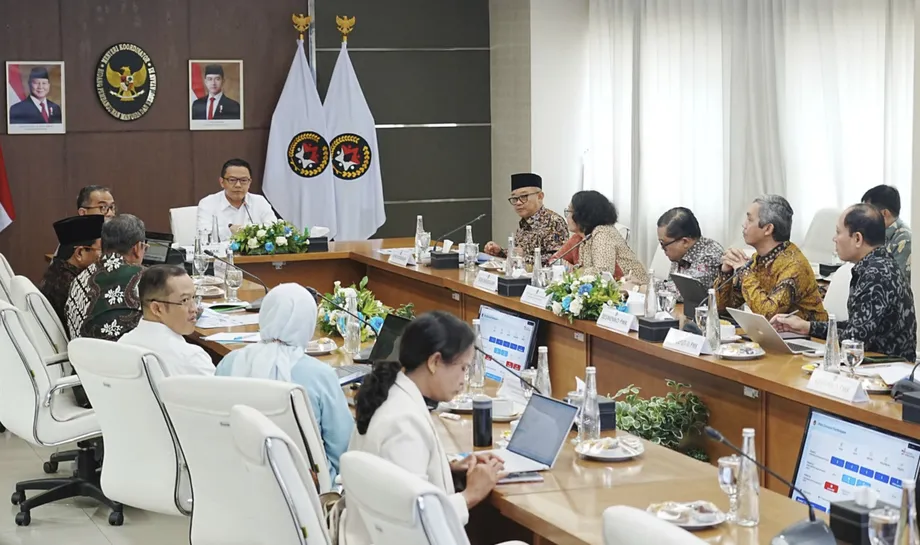
The National Economic Council, known as DEN, presented the findings to President Prabowo Subianto at Merdeka Palace in Jakarta on October 20, 2026. Using distribution data through September 2026, the council also found that recipients remained concentrated in urban areas rather than rural communities.
DEN member Mochamad Firman Hidayat called for greater priority for poor communities, rural schools and Indonesia's underdeveloped, frontier and outermost regions. The council paired that recommendation with another: improve meal quality, which the study linked to students' hunger and motivation to learn.
The findings bring together two concerns for the programme, known in Indonesia as Makan Bergizi Gratis, or MBG. Meals are associated with better attendance and greater enthusiasm for learning, while access remains tilted toward wealthier students and cities. The families showing a particularly large attendance difference are among those DEN wants the government to reach more effectively.
What the national survey examined
DEN developed a special module in the National Socioeconomic Survey, known as Susenas, with Statistics Indonesia, or BPS, and several other institutions. A module is an extra set of questions added to a survey to examine a particular subject. In this case, the questions covered school attendance, motivation to study and hunger during the school day.
The presidential office statement says the module began in September 2025 and covered all of Indonesia. Its national reach allowed DEN to examine differences across places and household welfare groups, alongside differences between students receiving meals and those who had yet to receive them.
The dates describe the introduction of the survey questions, the distribution figures discussed by DEN and the presentation to the president:
- September 2025: The special Susenas module began examining MBG, attendance, study motivation and hunger.
- September 2026: The distribution data cited by Firman showed recipients concentrated in urban areas, with more students from wealthier families receiving meals than students from poor families.
- October 20, 2026: DEN presented its findings to President Prabowo at Merdeka Palace, and Firman explained the results at a press briefing.
The public presentation gave the direction of the main findings, but did not provide recipient totals by income group or location, exact attendance rates, a numerical measure of reduced hunger, or a timetable for implementing the recommendations.
Where DEN wants distribution to change
Firman described an imbalance along two lines: where children live and how well off their families are. Urban students received more meals than rural students, while students from wealthier households received more than those from poor households.
DEN's proposed response is to give greater priority to poorer communities, rural areas and regions described in Indonesia as 3T. The abbreviation refers to underdeveloped, frontier and outermost areas. Those categories identify places the council says need more attention as the programme expands its reach.
Firman, a member of the National Economic Council, set out that recommendation after the findings were presented to the president:
There needs to be better prioritisation, especially for 3T areas, rural areas and poor communities.
The recommendation connects distribution to the study's education findings. DEN wants meals to reach more children in the household group where recipients and nonrecipients showed a particularly large difference in attendance. For families in those communities, the immediate issue is whether their children receive the programme at school.
The biggest attendance gap was among the poorest
Students receiving MBG were absent less often than students who were not receiving it, according to Firman's explanation of the study. The difference was especially pronounced in the poorest household group, described as decile one.
A decile divides a population ranked by a measure, such as household welfare, into ten equal groups. Decile one is the lowest tenth of that ranking. Here, it identifies the poorest group of households examined by the study.
Firman said children in that group who did not receive MBG tended to miss school more frequently, while recipients attended more consistently. That finding gives a concrete reason for DEN's call to put poorer families nearer the front of the distribution effort.
For children, more regular attendance means more days in the classroom and fewer lessons missed. The council's findings therefore connect the meal programme with a basic condition for learning: being at school when teaching takes place.
DEN's recommendation brings that classroom benefit into the discussion about who receives meals. Its concern is both the number of children reached and the extent to which distribution reaches those facing the greatest need.
More frequent receipt was linked to fewer absences
Firman also described a relationship between the intensity of MBG receipt at schools and student attendance. As the intensity of receipt increased, the observed reduction in absences became greater.
That adds a delivery issue to the question of access. The study examined whether children received MBG, while Firman's explanation also drew attention to how much or how often the programme reached their schools.
Firman described the attendance pattern among the poorest students and its relationship with receipt intensity:
When they are not MBG recipients, they are often absent, while MBG recipients are relatively less likely to miss school, and the reduction in absences increases with the intensity of MBG receipt at their school.
The finding gives DEN another reason to focus on the practical delivery of meals. Reaching a school and sustaining provision are both relevant to the attendance pattern the council described.
Why the 95 percent figure depends on meal quality
Meal quality was closely connected to students' motivation to study. Among recipients who rated their meals as very good, 95 percent said their motivation had increased. Put simply, that is 95 out of every 100 students within the group giving meals the highest quality rating.
Students who rated meal quality as poor were much less likely to report greater motivation, according to the council's account. The contrast made menu quality a central part of DEN's recommendations to the president.
Firman explained why the council wanted the government to pay attention to the food served:
One of our recommendations to the president was that attention needs to be paid to the quality of MBG menus because this correlates with children's hunger and motivation to learn at school.
The 95 percent result describes students' reported enthusiasm for studying among those who rated meals very highly. Attendance and hunger were examined separately in the survey, giving DEN several ways to assess children's experience of the programme.
For students, the quality finding concerns the meal they actually receive. DEN's message is that the contents of that meal matter alongside its availability, because a better assessment of the food was associated with a better assessment of motivation.
Two priorities for the programme
DEN's recommendations combine wider access for underserved groups with better food for recipients. The distribution findings point toward poorer households, rural communities and 3T regions. The motivation findings point toward improving menus.
Those priorities address different parts of the same school day. Access determines whether a child receives a meal. Quality shapes the child's experience of that meal and was associated with reported hunger and enthusiasm for learning. Receipt intensity was also linked to the attendance pattern described by Firman.
President Prabowo received findings that identify both benefits and gaps in delivery. DEN's proposed changes focus on bringing those benefits to more children in poorer and less well served communities, while improving the meals already being provided.
Key Points
- DEN found more MBG recipients among wealthier students than poor students, with distribution concentrated in urban areas.
- The study used a nationwide Susenas module introduced in September 2025.
- Recipients missed school less often, with a particularly large difference among the poorest households.
- Greater intensity of meal receipt at schools was associated with a larger reduction in absences.
- Among recipients rating meals very good, 95 percent reported increased motivation to study.
- DEN urged better menus and greater priority for poor families, rural communities and 3T regions.