Review covers classrooms, books and staffing from 2023
Vietnam's Communist Party Secretariat has launched a comprehensive review of school education, covering the period from 2023 to September 30, 2026, with findings scheduled to reach the Secretariat on December 10. The exercise will examine curricula across grades 1 to 12, textbook content and costs, teacher shortages, school facilities and investment in boarding schools in border communes. It must be completed before December 15, 2026.
Contents
- Review covers classrooms, books and staffing from 2023
- How the delegation was established
- Curriculum workload and subject choices face scrutiny
- Textbook content, cost and reuse are separate concerns
- Book shortages bring a sharper accountability message
- Facilities review will measure shortages against enrollment
- Teacher numbers and income will be assessed together
- Regional visits and a December reporting deadline
- Resolution 71 sets targets, not review findings
- Key Points
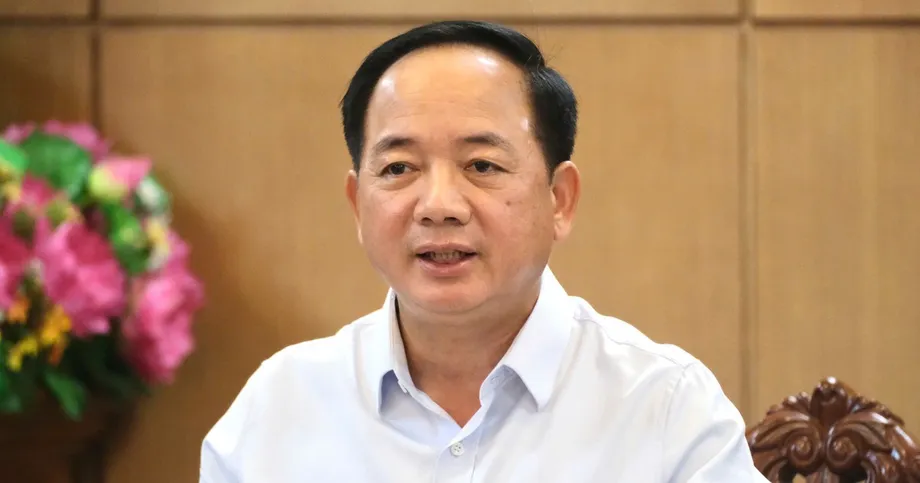
The decision and work plan were announced at the Ministry of Education and Training on October 13, 2026. Trinh Van Quyet, a Politburo member, Party Central Committee secretary and head of the central propaganda commission, leads the delegation. Its formal work is directed at the Standing Committee of the ministry's Party Committee, examining how it has led and organized implementation of Politburo Resolution No. 71-NQ/TW on education and training development.
Education Minister Hoang Minh Son said school education affects more than 20 million students and 1 million teachers. The review brings together concerns that are often considered separately: whether lessons suit children, whether books are affordable and reusable, whether schools have enough rooms and equipment, and whether a qualified teacher is available when a subject is scheduled.
How the delegation was established
The Secretariat considered issues concerning textbooks and school curricula on September 16, 2026. The Party Central Committee Office subsequently communicated its decision through Official Dispatch No. 5099-CV/VPTW, dated September 18. The dispatch assigned Quyet to lead the delegation and instructed the Central Propaganda and Training Commission to coordinate with the Central Inspection Committee and other relevant agencies.
The review period begins in 2023, while Resolution 71 was issued on August 22, 2025. This means the delegation will examine developments preceding the resolution as well as its implementation afterward. Investment, staffing and curriculum decisions made before the resolution can therefore form part of the assessment of current conditions.
Quyet described the exercise as the first Secretariat monitoring delegation of this kind to be headed by a Politburo member who also serves as a Party Central Committee secretary. He distinguished its comprehensive scope from previous inspections of particular cases or narrower education matters. The intended outcome is advice to the Politburo and Secretariat on what should be retained, changed or supported through new policies.
Curriculum workload and subject choices face scrutiny
The curriculum assessment will cover primary, lower secondary and upper secondary education. The delegation will examine the scientific basis of the program, how learning builds on earlier grades, and whether transitions between education levels are coherent. It will also assess whether content suits students' psychological development and the practical conditions of different regions.
Specific concerns include curriculum workload, efforts to reduce excessive demands, integrated teaching and subject choices. Integrated teaching brings related subject content together, requiring schools to organize instruction across those areas. The review will consider whether the way these lessons are arranged fits the wider curriculum and whether schools can deliver them under their actual conditions.
Quyet called for contributions from experts and scientists with experience studying curricula over many years and through different stages of reform. Their assessment is intended to identify which elements remain suitable and which require adjustment. No revised curriculum, list of subjects to remove or new workload limit has been announced as a result of the review.
Textbook content, cost and reuse are separate concerns
The textbook review will examine moral education, history, politics, ideology and ways of living, particularly in literature, history and civic education. The delegation will seek expert advice on passages that should remain, material that could be carried forward from earlier textbooks, and content that should be removed or replaced. Responsibility for compilation and publication will also be examined.
Quyet cited poems that he considered difficult to understand as an example of content requiring closer assessment. The accounts of his remarks do not identify the poems or provide an expert finding about them. His comments set out a subject for review rather than a completed judgment on particular books.
The policy of one curriculum with multiple textbook sets will be assessed for quality, selection and cost. A curriculum defines what pupils should learn, while textbooks present material intended to meet those requirements. The delegation is being asked to establish where problems arise within that arrangement, who bears responsibility and what practical changes should follow.
Books containing exercises that students complete directly on their pages are another focus. Once filled in, they may no longer be suitable for another pupil to use in the same way. Quyet requested consideration of removing or replacing such books where they cause waste for parents. This concern is distinct from the number of textbook sets: a single set can still contain books that cannot readily be reused. No estimate of the resulting household expense or decision to prohibit these books has been announced.
Book shortages bring a sharper accountability message
Textbook availability was also raised at an October 12 meeting with voters in Da Nang. Tran Cam Tu, a Politburo member and permanent member of the Secretariat, met voters from Hai Chau, Hoa Cuong, Thanh Khe, An Hai and Son Tra wards with the city's National Assembly delegation. He said the Politburo had established a comprehensive inspection covering education and training, including curricula, textbooks, teaching, teachers and organizational structures.
Tu questioned why students still faced shortages when Vietnam had publishing and production capacity and multiple publishing establishments. He said the shortages should be examined and investigated to establish their causes, with strict action if wrongdoing was discovered. His remarks addressed access to books, while the October 13 discussion also covered their content, price and design.
The accounts describe the institutional mandate differently. Tu referred to a Politburo inspection, while the announced plan concerns a Secretariat supervision delegation. Quyet said the latter was not an inspection triggered by suspected violations and was not intended to search for individual or organizational faults. However, Nguyen Van Chien, deputy head of the central propaganda commission, described its purpose as including assessment of signs of violations, if any, by Party organizations and members. These statements do not establish that wrongdoing has occurred, and the relationship between the two descriptions has not been clarified.
Facilities review will measure shortages against enrollment
The delegation will assess shortages of schools, classrooms and teaching equipment, together with investment made from 2023 onward. Quyet requested a comparison between student numbers, existing schools and unmet needs at each education level. That approach requires more than listing construction projects: it calls for an assessment of whether provision matches the number of children needing places.
Boarding schools combining primary and lower secondary education in border communes will receive particular attention. The review will examine investment in these schools and their capacity to meet local needs. Their inclusion places facilities, accommodation and access to education within the same assessment of provision in border areas.
No national total for missing classrooms, equipment shortages or unmet demand at border boarding schools has been stated in the review announcement. Those figures are among the evidence the ministry is expected to supply. Until they are established, the delegation cannot give a quantified account of the gap between existing facilities and student needs.
Teacher numbers and income will be assessed together
The staffing review covers education administration, school management and teachers. It will examine local surpluses and shortages, including difficulties in disadvantaged areas and shortages associated with streamlining or reorganizing education establishments. The ministry must explain where staff are missing, why those gaps exist and what action it proposes.
The focus on local imbalances matters because a total headcount does not show whether teachers are available where particular subjects must be taught. Quyet connected staffing to pupils receiving a complete education, warning against situations in which a scheduled subject has no teacher. The review has not yet published figures showing shortages by locality or subject.
Teacher treatment will be assessed using actual monthly income, including salary and allowances, rather than the salary coefficient alone. A salary coefficient is a factor used to calculate a component of pay; it does not by itself represent total earnings. Quyet called for comparisons with the general civil service pay level. No income table or proposed increase was announced, so the review is a request for evidence rather than a decision on future pay.
Regional visits and a December reporting deadline
The delegation plans to seek views from experts, scientists and educators, including people inside and outside the education sector. It will divide into three groups to conduct visits in localities representing northern, central and southern Vietnam, covering major cities, plains, mountainous areas and border regions. The ministry will help select localities, institutions and experts so the assessment includes varied conditions.
Son committed the ministry to a full, truthful report supported by figures, submitted before October 20. The published schedule provides the following sequence:
- September 16, 2026: The Secretariat considers textbook and school curriculum issues.
- September 18: Official Dispatch No. 5099-CV/VPTW communicates the decision to establish the delegation.
- October 13: The decision and supervision plan are announced at the education ministry.
- October 13 to 20: The ministry's Party Committee Standing Committee is scheduled to submit its report and supporting records.
- October 20 to 30: The delegation studies the report and documentation.
- November 1 to 20: The delegation works with relevant organizations and institutions, with specific arrangements to be announced later.
- November 21 to 30: The delegation completes its report.
- December 10: Findings are scheduled to be presented to the Secretariat.
- Before December 15: The supervision exercise must be completed.
Some accounts describe the exercise as lasting until December 15, while the detailed plan requires completion before that date and schedules presentation on December 10. The names of institutions involved in the November meetings and the precise regional visit itinerary have not been announced.
Resolution 71 sets targets, not review findings
Resolution 71 provides the policy framework against which the delegation will assess education provision. Its stated goals for 2030 include at least 80% of secondary schools meeting national standards and at least 85% of people of school age completing upper secondary education or an equivalent qualification. No province or city should fall below 60% on the latter measure.
The difference between the national completion target of 85% and the minimum of 60% for each locality is 25 percentage points. These are targets, not measurements of present performance. No current national completion rate or provincial comparison has been given in the announcement, so the distance from those goals cannot yet be calculated.
The resolution also calls for a curriculum review, a unified national textbook set and efforts to provide free textbooks to all students by 2030. Its wider education goals include universal preschool education for children aged three to five and compulsory education through lower secondary school. The announced supervision exercise, however, concentrates on school education rather than the entire education sector.
The December report is expected to recommend policy choices, not simply record complaints. Decisions on textbook replacement, school investment, staffing or teacher pay have not yet been announced. Quyet said that after the Politburo reaches conclusions, the Government's Party Committee would organize consistent implementation. The immediate test is whether the ministry's report and regional visits establish the scale, causes and responsibility for the problems under examination.
Key Points
- The Secretariat's review covers school education from 2023 to September 30, 2026.
- Trinh Van Quyet leads the delegation, which examines curricula, textbooks, facilities and staffing.
- Textbook quality, costs, shortages and books that cannot readily be reused are separate areas of scrutiny.
- Teacher income will be assessed using salaries and allowances, alongside local staffing imbalances.
- Three regional groups will visit localities across northern, central and southern Vietnam.
- Findings are scheduled for December 10, with completion required before December 15, 2026.
- No final curriculum changes, textbook restrictions, investment allocations or pay decisions have been announced.