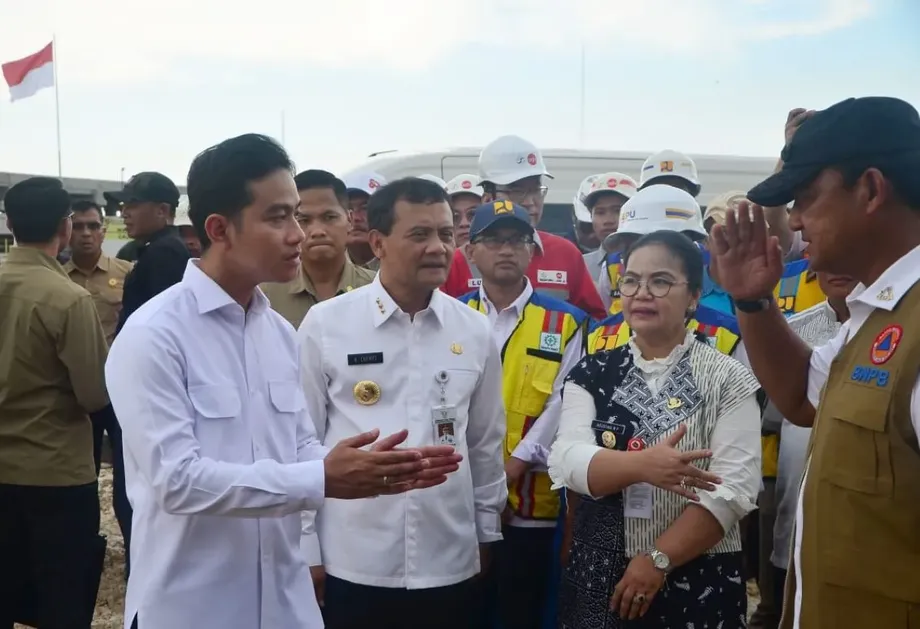
A resignation appeal reaches the president
A group representing 150 Indonesian professors has called on Vice President Gibran Rakabuming Raka to resign voluntarily over questions about the education documents used in his candidacy for the 2024 presidential election. Their open letter, dated October 19, 2026, was addressed to President Prabowo Subianto and former president Joko Widodo, Gibran's father.
Contents
- A resignation appeal reaches the president
- What the professors say the court found
- The education rule at the centre of the case
- What the applicants asked the court to do
- How the dispute developed
- PDIP calls for a political response
- Police question complainants about an equivalency document
- Two competing ideas for future candidate rules
- What the online figures show
- Key Points
The Forum Guru Besar Indonesia, or Indonesian Professors Forum, tied its appeal to Constitutional Court case No. 01/PHPU.PRES-XXIV/2026, whose ruling was read on October 6. The professors argue that questions raised during the case carry ethical consequences even though Gibran was not disqualified.
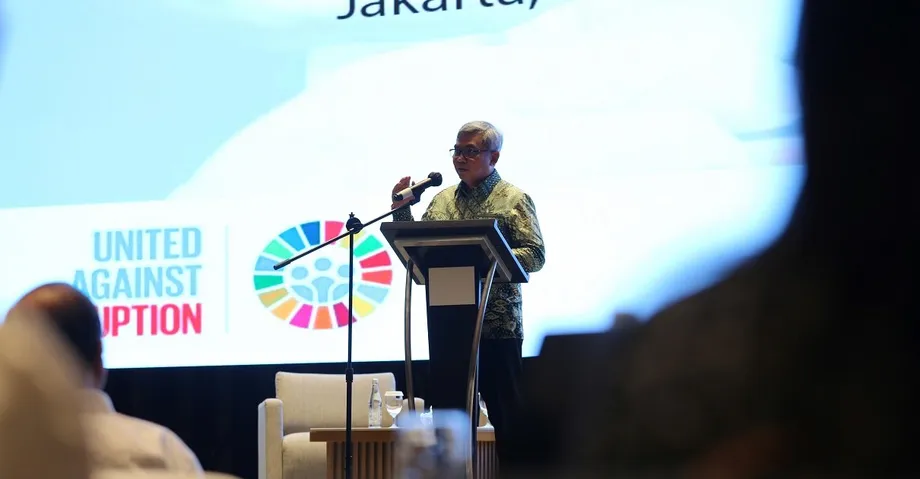
Hasanuddin University professor Idrus Paturusi said 13 academics initiated the letter and that professors signed on behalf of a wider group of 150. Professor Ryaas Rasyid was also identified as an initiator. Both men are from South Sulawesi.
The letter's title translates as Protecting the Dignity of the Constitution, State Ethics and the Legitimacy of National Leadership. Its central request is a voluntary departure from office. Idrus said the organisers did not know whether their appeal would lead to action in the House of Representatives, known as the DPR, where any move toward impeachment would follow a separate constitutional process.
What the professors say the court found
The forum's argument centres on its interpretation of the Constitutional Court's reasoning. According to the letter, the court did not find convincing evidence establishing the validity of foreign education documents equivalent to Indonesian senior secondary school qualifications at the time Gibran registered as a candidate.
The professors also acknowledged that the court did not impose disqualification, which they attributed to questions of legal standing and procedural limits. Legal standing means whether someone has the right to bring a particular case before a court. Procedural limits govern how and when a court may consider a dispute.
The forum argues that an official should answer questions about honesty, public responsibility and eligibility even when a case ends without removal from office. Its appeal therefore asks Gibran to make a personal political decision rather than wait for a compulsory removal process.
Idrus Paturusi, a Hasanuddin University professor and one of the letter's initiators, expressed the request directly:
Kami menghimbau kepada Gibran supaya dengan sukarela mengundurkan diri,
His appeal asks Gibran to resign voluntarily. The professors frame that request as a test of the standards expected at the highest levels of government, particularly when public confidence depends on the accuracy of documents submitted by candidates.
The education rule at the centre of the case
Former deputy law and human rights minister Denny Indrayana and 11 other applicants brought the election dispute. The General Elections Commission, or KPU, was the respondent. The Election Supervisory Agency, known as Bawaslu, and Perkumpulan Militan Gibran 08 Nusantara were related parties.
The applicants relied on Article 169(r) of Law No. 7 of 2017 on General Elections, which sets the minimum education requirement for presidential and vice presidential candidates at senior secondary school level or its equivalent. They argued that candidates must lawfully meet that requirement when registering and when the candidate pairs are approved.
Their challenge also targeted Article 18(3) of KPU Regulation No. 19 of 2023. The disputed provision allows candidates with evidence of completing higher education to proceed without separately submitting proof of graduation from a foreign senior secondary school or its equivalent.
For readers unfamiliar with education equivalency, the issue is how a qualification earned abroad is recognised within Indonesia's school system. A document confirming attendance, a graduation certificate and an official statement recognising an equivalent level of education each answer different administrative questions. The applicants challenged whether the documents accepted during Gibran's registration fulfilled the legal requirement.
The dispute also refers to a 2019 education ministry statement concerning Gibran's studies at UTS Insearch in Australia. That statement described him as having completed grade 12 and possessing knowledge equivalent to an Indonesian vocational secondary school graduate. Critics have questioned the underlying documentation used for that recognition.
What the applicants asked the court to do
Denny and the other applicants sought remedies extending well beyond a declaration about education requirements. They asked the Constitutional Court to disqualify Gibran and invalidate the KPU decisions governing his candidacy and election.
The challenged decisions included KPU Decision No. 1632 of 2023 approving the presidential candidate pairs, No. 1644 of 2023 assigning their ballot numbers, No. 360 of 2024 establishing national election results, and No. 504 of 2024 declaring the elected presidential pair. Their request concerned those decisions insofar as they applied to Gibran.
The applicants also asked for his inauguration as vice president to be cancelled. They requested an order directing the People's Consultative Assembly, known as the MPR, to elect a replacement from two candidates proposed by the president within 60 days of the ruling, referring to Article 8(2) of the constitution.
The 60 days formed part of the remedy the applicants requested. Gibran was not disqualified, so that requested timetable did not become a schedule for choosing a replacement. The professors subsequently chose to press for resignation through their open letter.
How the dispute developed
The court proceedings, online debate and professors' appeal unfolded over several weeks. Their order matters because the social media figures now circulating were collected before the October 19 letter.
- September 21, 2026: The court held the preliminary hearing, where the applicants presented their arguments and requested remedies.
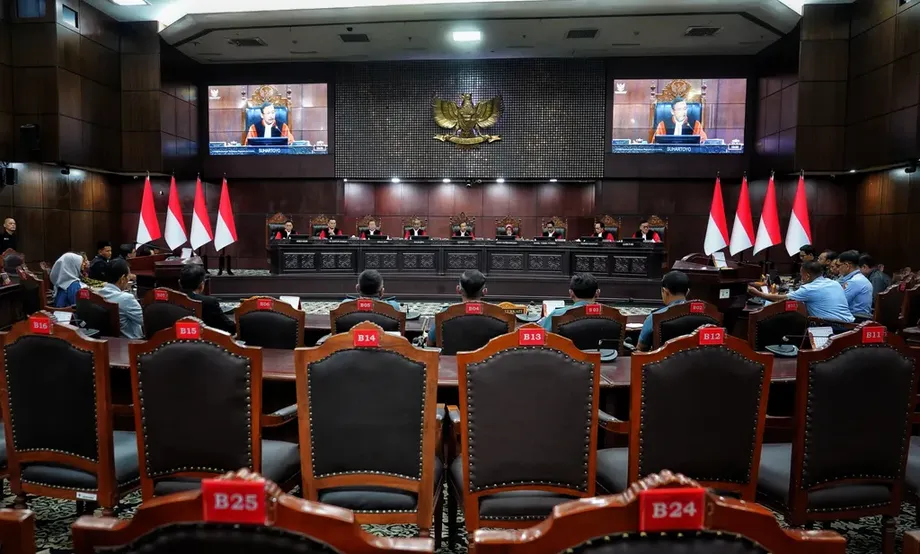
- October 6: The Constitutional Court began reading its ruling in case No. 01/PHPU.PRES-XXIV/2026, with Chief Justice Suhartoyo presiding in Jakarta.
- October 6–13: Drone Emprit analysed online discussion about the education dispute and calls for Gibran's removal.
- October 19: The professors dated their open letter calling for Gibran to resign voluntarily.
- October 21: PDIP secretary general Hasto Kristiyanto urged the president and parliamentary parties to listen to the appeal. Political observer Muhammad Asratillah also assessed its possible effects.
The sequence shows how a court dispute became a wider debate about public office. The professors' letter added an organised academic appeal after the ruling, while party politicians and civil society complainants pursued their own responses.
PDIP calls for a political response
The Indonesian Democratic Party of Struggle, known as PDIP, confirmed that its central leadership had received the professors' letter. Secretary general Hasto Kristiyanto called on Prabowo and political parties represented in the DPR to hear the academics' demands.
Hasto spoke at Sekolah Rakyat PDIP in South Jakarta on October 21. He accused those involved in Gibran's candidacy of abandoning propriety, honesty and example, arguing that minimum requirements had been forced through with intervention from political power.
His comments gave the appeal a party political audience, but he announced no parliamentary timetable in those remarks. Idrus likewise said the academics could not say whether their initiative would move into the DPR.
Political observer Muhammad Asratillah described the letter as an intervention by intellectuals concerned with democratic ethics. He said its influence would depend on the quality of its arguments, the accuracy of its facts and the constitutional basis of any demands.
Asratillah identified three possible developments: a broader public debate, an explanation from the government or vice president, or wider political pressure if other public figures and civil society groups joined. He distinguished pressure on an officeholder from the formal steps needed to end a term in office.
Police question complainants about an equivalency document
Indonesia's national police criminal investigation agency, Bareskrim, has also questioned people who complained about alleged falsification of a statement recognising Gibran's education as equivalent to an Indonesian qualification. The statement is commonly referred to by the Indonesian abbreviation suket, meaning a certificate or official letter.
Investigators questioned complainant Syamsuddin and later Riadi. Riadi said he faced about 15 questions concerning the substance of his complaint, his reasons for filing it and whether other interests were directing the action.
Riadi denied that political interests were behind his complaint. He said he acted out of concern for Indonesia and educational ethics, and called for police to handle the matter professionally.
The police activity described concerns questioning complainants about an allegation. No charging decision or completed police finding on the alleged falsification was announced in those accounts. For the people involved, the next concrete development would be an official decision on how investigators intend to proceed.
Two competing ideas for future candidate rules
Ahmad Doli Kurnia, a Golkar politician serving on the DPR's Commission II, has urged lawmakers and the government to make presidential education requirements stricter and more precise. He wants the Election Law to spell out how qualifications earned in Indonesia and abroad should be checked.
Doli argues that education requirements should remain and could be raised. More detailed legislation, in his view, would give the KPU a firmer basis for writing technical rules and examining candidate documents, reducing disputes over how the requirements apply.
Former Constitutional Court judge Jimly Asshiddiqie has proposed a different approach: remove diploma requirements and provide voters with clear information about each candidate's educational background. Under his proposal, voters would decide whether that background made a candidate suitable for office.
The two proposals would change the KPU's task in different ways. Doli favours a more demanding qualification check before a candidate can run. Jimly favours disclosure so voters can make the judgment at the ballot box. Both address future election rules, while the current controversy concerns documents accepted for the 2024 contest.
The debate has also revisited Constitutional Court Decision No. 90/PUU-XXI/2023 concerning candidate age requirements. That decision opened a route for candidates younger than 40 who had held elected regional office. Gibran was 36 during his candidacy. The education case concerns another part of the eligibility rules.
What the online figures show
Drone Emprit analysed 59,615 mentions across X, Facebook, Instagram, YouTube, TikTok and Threads, alongside 9,771 mentions in online media, between October 6 and 13. Its classification of discussion on X showed more support for challenges to Gibran than opposition.
The X figures comprised 24,351 mentions classified as positive toward the challenges or removal demands, 5,706 negative and 4,400 neutral. The stated shares were 70.7%, 16.6% and 12.8%, respectively. Supportive mentions were about 4.3 times the number of negative mentions, using the counts of 24,351 and 5,706.
The positive category included calls for voluntary resignation, criticism of alleged defects in Gibran's candidacy and demands for parliamentary scrutiny. The negative category included arguments defending the ministry's equivalency document and accusations that the dispute was driven by political hostility.
Those percentages describe classified mentions on X during the collection period, rather than a survey of Indonesian voters. The collection ended six days before the professors dated their letter, placing the figures in the earlier debate over the court case.
Gibran's next political challenge is whether to answer the professors' specific concerns about his registration documents. The immediate developments to watch are a response from his office or the presidency, a defined parliamentary step, or a police announcement. No date for any of those actions has been announced in the accounts of the appeal.
Key Points
- A forum representing 150 professors called for Gibran's voluntary resignation in a letter dated October 19, 2026.
- The appeal was addressed to President Prabowo Subianto and former president Joko Widodo.
- The professors based their ethical argument on their reading of a Constitutional Court case concerning education requirements.
- Gibran was not disqualified, and the applicants' requested replacement timetable did not take effect.
- PDIP urged political leaders to listen, while police questioned complainants about alleged document falsification.
- Lawmakers and a former constitutional judge offered competing proposals for future education requirements.
- Drone Emprit's cited X figures covered October 6–13, before the professors' letter.