A missing bribery offence becomes a membership test
Indonesia is pressing to criminalize the bribery of foreign public officials as it seeks full membership in the Organisation for Economic Cooperation and Development (OECD) by 2028. The proposed change would address a gap identified by the Corruption Eradication Commission (KPK): Indonesia lacks an explicit legal instrument to punish domestic actors who bribe officials of another country.
Contents
- A missing bribery offence becomes a membership test
- What would a foreign bribery law change?
- Four proposed offences, not just one
- Why a treaty commitment needs national legislation
- How much of the OECD process is complete?
- From the roadmap to the current legal push
- Why banks and companies are involved
- Investigations will need cooperation across borders
- Political decisions now shape the timetable
- Key Points
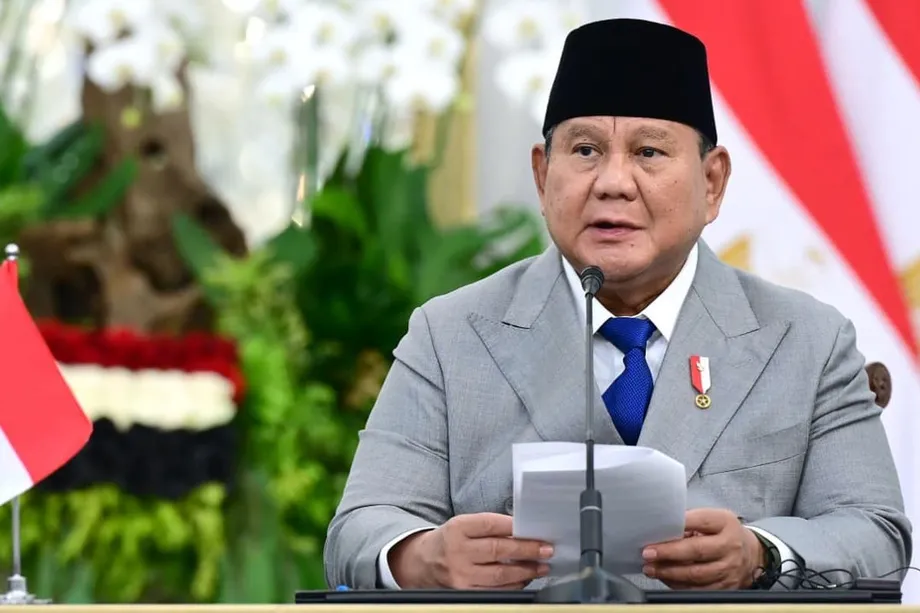
Coordinating Minister for Economic Affairs Airlangga Hartarto renewed the push in Jakarta on October 23, 2026. He said Indonesia had completed technical reviews in 20 of 24 sectors under its accession process, while areas including healthcare still required improvement. Foreign bribery legislation remains part of the legal work needed alongside those sector reviews.
The reform reaches beyond payments made abroad. Recommendations submitted by the KPK to the Ministry of Law on February 4, 2026, cover four areas: foreign bribery, trading in influence, illicit enrichment and bribery in the private sector. Together, they would broaden the conduct explicitly addressed by Indonesia's corruption legislation.
Airlangga, the minister coordinating the economic agenda, described the foreign bribery requirement as an early step in joining the OECD:
We need this ratification as an initial part of the OECD membership process.
Indonesia ratified the United Nations Convention Against Corruption (UNCAC) through Law No. 7 of 2006. Two decades later, the government is considering how to turn more of those international commitments into offences that investigators and courts can apply under national law.
What would a foreign bribery law change?
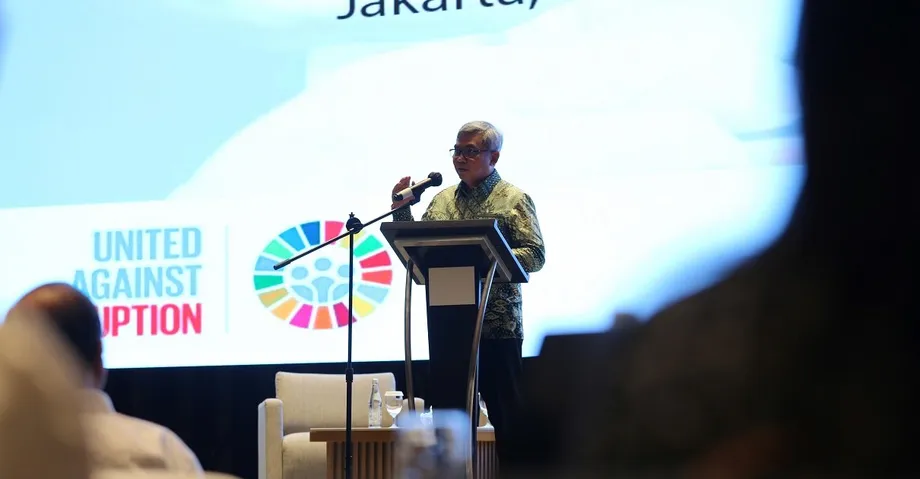
The KPK described the legal gap in its February 2025 statement, published when a technical workshop on the OECD Anti-Bribery Convention opened in Jakarta. The commission said Indonesia did not yet have a legal instrument that could criminalize domestic actors for bribing foreign public officials.
Foreign bribery means offering or providing an improper benefit to an official of another country to gain a business advantage. A hypothetical example would be a company paying an overseas official to secure a contract or obtain favorable treatment when opening a business. The proposed offence would give Indonesian authorities an explicit legal basis to address that conduct.
The OECD Anti-Bribery Convention focuses on bribery of foreign public officials in international business transactions. Its scope includes payments made directly or through an intermediary. That matters because a business can route a payment through another person or company rather than hand money to an official itself.
The KPK says the convention's 17 articles address criminalization, corporate liability, international cooperation and sanctions. Corporate liability means that a company, as well as an individual involved in a payment, can face legal consequences. Indonesia's reform therefore involves decisions about which conduct is punishable and how responsibility should be assigned.
Four proposed offences, not just one
The KPK's February 2026 recommendations were presented at a national workshop in Jakarta, with discussions continuing on February 4 and 5. The commission said the work followed a mandate involving the United Nations Office on Drugs and Crime (UNODC) and Universitas Gadjah Mada's Center for Anti-Corruption Studies (PUKAT UGM).
The four areas address different ways that people may buy advantages or benefit from corruption:
- Foreign bribery concerns improper benefits offered to public officials of another country.
- Trading in influence concerns using real or claimed influence over public decisions in exchange for an improper benefit.
- Illicit enrichment concerns increases in wealth that cannot be reasonably explained by lawful income, with the precise offence depending on the legislation adopted.
- Private sector bribery concerns corrupt payments within business relationships outside public office.
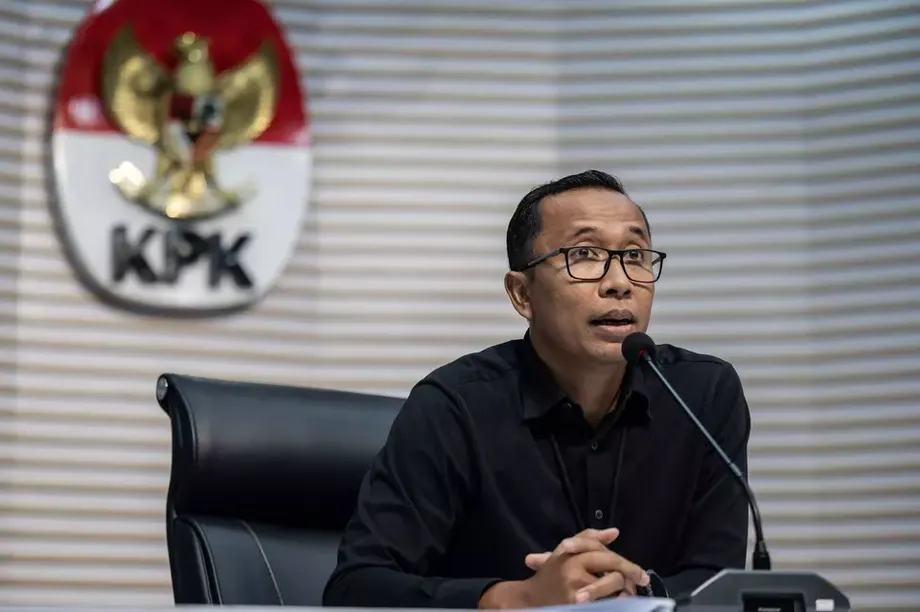
KPK Chairman Setyo Budiyanto said some concepts, including trading in influence, had already been mentioned in Indonesia's legal framework but lacked specific regulation. The commission wants explicit provisions that can guide enforcement.
The recommendations will help inform an academic paper and a draft amendment to the Corruption Eradication Law, commonly called UU Tipikor. That gives the foreign bribery proposal a domestic legislative route alongside Indonesia's international accession work.
Why a treaty commitment needs national legislation
Setyo said Indonesia's Corruption Eradication Law had not undergone significant changes to accommodate UNCAC since ratification in 2006. On February 13, 2026, he pointed specifically to Article 16, which addresses bribery involving foreign public officials, as a reason to update national rules.
Ratifying a treaty means that a country formally accepts international commitments. Creating a criminal offence requires national legislation defining the prohibited conduct and the consequences. Indonesia is pursuing accession to the OECD Anti-Bribery Convention while also considering amendments that would allow its authorities to enforce the relevant rules at home.
Setyo, who leads the KPK, described the accession process as an opportunity to revise domestic law:
Accession to the OECD Anti-Bribery Convention is not just a diplomatic agenda, but an important momentum to update national laws.
A Jambe Law Journal study published on November 24, 2024, reached a similar conclusion. Authors Christopher Michael Cason, of Universitas Islam Indonesia and a visiting lecturer from the University of Washington School of Law, and independent researcher Hanna A. Hefni examined recent OECD members and candidates further along in accession. They found that compliance with the Anti-Bribery Convention requires substantial changes to Indonesia's corruption laws.
How much of the OECD process is complete?
Airlangga's October progress update put completed technical reviews at 20 out of 24 sectors, leaving four. He described progress as about 80 percent. Healthcare was among the areas still requiring improvement, placing the bribery legislation within a wider program of policy and institutional review.
The KPK says Indonesia's accession roadmap contains at least 272 instruments, six of them concerning anticorruption. Those instruments cover a much broader agenda than the proposed foreign bribery offence. The commission has been appointed anticorruption coordinator on the national team preparing and accelerating Indonesia's OECD membership effort.
The KPK dated receipt of the accession roadmap to March 2024; its launch followed in May 2024. At the February 2025 workshop, Nicolas Pinaud, the OECD's deputy director for financial and enterprise affairs, described Indonesia as the first Southeast Asian candidate seeking membership.
The government targets membership in 2028. The UU Tipikor revision remains under government review and is included in the 2025–2029 Medium-Term National Legislation Program, known as Prolegnas. No enactment date or final text has been announced, so the exact penalties, definitions and enforcement arrangements are still to be decided.
From the roadmap to the current legal push
Indonesia's foreign bribery initiative has developed through treaty commitments, technical discussions and formal recommendations. The principal steps show how the membership process has become linked to a broader revision of corruption law:
- 2006: Indonesia ratified UNCAC through Law No. 7 of 2006.
- March and May 2024: Indonesia received its OECD accession roadmap in March, followed by its launch in May.
- November 24, 2024: The Jambe Law Journal study concluded that major legislative changes were needed for compliance with the OECD Anti-Bribery Convention.
- February 10–14, 2025: Jakarta hosted a technical workshop on the convention with support from the Japanese government.
- February 4–5, 2026: The KPK submitted its recommendations to the Ministry of Law and held discussions on updating the legal framework.
- February 13, 2026: Setyo called for a concrete legislative response to UNCAC Article 16.
- October 23, 2026: Airlangga renewed the call for foreign bribery rules while reporting completion of 20 sector reviews.
- 2028: The government's target year for full OECD membership.
The proposed amendment also sits within the 2025–2029 National Medium-Term Development Plan, known as RPJMN. The government has therefore placed the reform within both its legislative program and its national development agenda.
Why banks and companies are involved
Banks can encounter the movement of money connected with bribery, making financial oversight part of the enforcement challenge. Reginaldi and Amanda Savira Monica, analysts in the Legal Department of Indonesia's Financial Services Authority (OJK), have argued for stronger customer checks, monitoring of suspicious transactions and coordination among financial and law enforcement authorities.
Customer due diligence means checking who a customer is and understanding the nature of their business. Enhanced due diligence involves closer examination where risks are higher. For a bank, these checks can help identify transactions that need investigation, including payments routed through intermediaries.
The 1Malaysia Development Berhad scandal provides a regional example of the financial consequences. Goldman Sachs faced more than US$2.9 billion in fines, penalties and criminal sanctions connected with the case. It illustrates why foreign bribery enforcement can reach major financial institutions as well as people making or receiving corrupt payments.
OJK launched Artificial Intelligence Governance for Indonesian Banking on April 29, 2025. The framework provides a basis for responsible use of artificial intelligence while maintaining risk management and prudential principles. Reginaldi and Amanda argue that such technology could also support fraud and bribery detection, although smaller institutions may need training and resources to strengthen their monitoring.
Investigations will need cooperation across borders
Foreign bribery cases can involve a company in one country, an official in another and financial records held elsewhere. Investigators may need assistance from another jurisdiction to obtain evidence and follow transactions.
Article 9 of the OECD Anti-Bribery Convention requires prompt and effective legal assistance for criminal and noncriminal proceedings within its scope. That cooperation is important to the proposed Indonesian offence: authorities need a way to obtain evidence abroad as well as a legal basis to prosecute at home.
The KPK expects Indonesia to undergo evaluation by the OECD Working Group on Bribery before accession to the convention. The preparation agenda includes explicit criminalization of foreign bribery, responsibility for companies, stronger enforcement institutions and protection for people who report wrongdoing.
South Korea offers one legislative comparison. Its 1998 Act on Combating Bribery of Foreign Public Officials provides for imprisonment of up to five years or fines. Indonesia must settle its own provisions through legislation. At the February 2026 workshop, UNODC representative Erik van der Veen offered cooperation while saying the organization supported an approach suited to national needs rather than a single prescribed model.
Political decisions now shape the timetable
The Ministry of Law welcomed the KPK recommendations. Andry Indrady, head of the ministry's Policy Strategy Agency, called for alignment between national law and international standards and for the discussions to lead to practical policy and enforcement measures.
PUKAT UGM researcher Zainal Arifin Mochtar said progress would depend on political will from the government and the House of Representatives, known as the DPR. The academic assessment must now be carried into a draft and then through the legislative process.
Indonesia scored 37 out of 100 in Transparency International's 2024 Corruption Perceptions Index. The index measures perceived public sector corruption, with higher scores indicating cleaner government. The score provides context for the wider reform agenda, while the proposed offences address specific gaps identified by the KPK.
For Indonesian companies operating abroad, the reform would create explicit domestic exposure for bribing foreign officials. For the KPK and other enforcement bodies, it would extend the legal tools available for cases involving international business. The immediate task is to translate the recommendations into legislation while completing the remaining OECD reviews before the government's 2028 target.
Key Points
- Indonesia aims to criminalize foreign bribery as part of its bid for OECD membership by 2028.
- Airlangga Hartarto said technical reviews were complete in 20 of 24 sectors; healthcare still required improvement.
- The KPK submitted recommendations covering foreign bribery, trading in influence, illicit enrichment and private sector bribery on February 4, 2026.
- The Corruption Eradication Law revision is under government review and included in the 2025–2029 legislative program.
- OECD convention preparation includes company accountability, international legal cooperation and evaluation by the Working Group on Bribery.
- The final legislative text, penalties and enactment date have yet to be announced.