Gaming chips move onto AI server boards
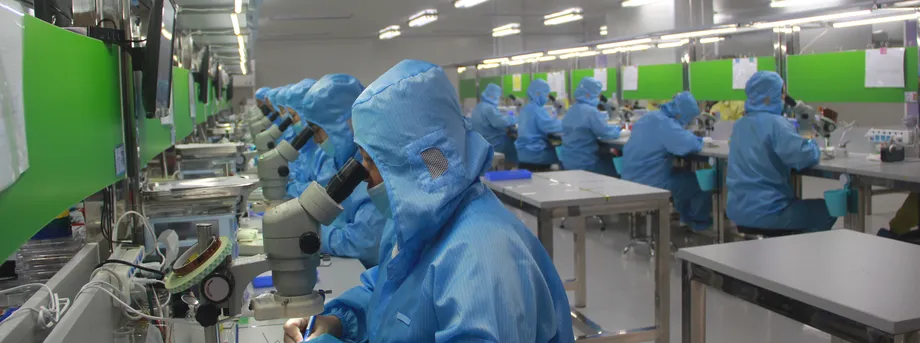
Workers shown in footage circulated on October 23, 2026, are removing Nvidia GB202 graphics processors and 32 GB of GDDR7 memory from GeForce RTX 5090 gaming cards, then fitting those components onto replacement boards intended for AI servers. The operation, described as taking place in China, gives an unusually detailed view of how expensive consumer hardware is being rebuilt for another market.
Contents
- Gaming chips move onto AI server boards
- What workers are changing
- Why a narrower cooler matters
- A Shenzhen operation showed the method in 2025
- Why AI users want a gaming processor
- Export restrictions complicate the supply chain
- Asking prices multiply the cost for gamers
- China's AI market is seeking several routes to computing power
- Key Points
The cards include Nvidia Founders Edition units and models associated with ASUS and Gigabyte. Some appear newly unpacked. Technicians remove the original cooling equipment, extract the processor and memory, and install a narrower cooling system that allows cards to sit closer together inside a server.
The footage arrives amid severe shortages and extraordinary asking prices. Reported Newegg listings put many available RTX 5090 cards above $9,300, with one reaching $10,899, compared with a recommended starting price of $1,999. Separate listings for custom models reportedly begin at $8,500.
Nvidia, however, has disputed claims that it stopped producing the RTX 5090. Jeff Fisher, the company's senior vice president for its personal computing business, said during an October 16 visit to Taiwan that shipments would continue, while acknowledging supply constraints. His account conflicts with claims that production had ended and valuable silicon was being redirected toward professional products such as the RTX Pro 6000 Blackwell.
The central development is a conversion business built around the same processor serving two audiences: gamers seeking a flagship graphics card and AI users seeking computing capacity. The engineering work changes how that processor can be installed and cooled, while the retail market places an exceptionally high price on access to it.
What workers are changing
The conversion goes much further than replacing a fan. A graphics card consists of a processor, memory chips, a printed circuit board and supporting components that deliver electricity and connect the hardware to a computer. Its cooler carries away the heat generated during use.
Workers first detach the original fans and metal heatsink. Specialized heating equipment then loosens the solder connecting the GB202 processor and GDDR7 memory chips to the board. Those parts are transferred to another printed circuit board, or PCB, designed around a more compact server configuration.
The footage shows retail packaging, exposed boards and cards at several stages of disassembly. Premium ASUS ROG Astral models and Nvidia Founders Edition cards are among the products identified in descriptions of the scenes.
After rebuilding, workers place multiple cards on open testing platforms. Dozens are described as running graphics workloads and stability checks at the same time. Cards that pass are arranged in layers and packaged for delivery, with data centers and AI laboratories described as likely customers.
Why a narrower cooler matters
Many large RTX 5090 models use three fans and occupy the space of three or four expansion slots inside a desktop computer. Their cooling systems release heated air into the surrounding case. That arrangement can work in a gaming PC with room around a single card, but it creates difficulties when several cards must sit alongside one another.
The converted designs occupy two slots and use a blower, a fan arrangement that pushes heated air toward an exhaust at the rear. This gives a server builder more room to place cards next to each other and a more directed route for removing heat.
Reducing a cooler from four slots to two halves the space it occupies across the expansion slots. A change from three slots to two reduces that space by one third. Actual capacity still depends on the server's board layout, electrical connections, power supply and ventilation.
The designs are intended for dense configurations, including servers described as 4U. The term refers to the height of the enclosure in a standard equipment rack. In such systems, fitting the hardware and carrying heat out of the case are practical requirements for keeping several processors working together.
A Shenzhen operation showed the method in 2025
A similar conversion process was described in July 2025 at a Shenzhen business identified by the code name CT. That operation reportedly bought consumer RTX 5090 cards, tested them and transferred their processors and memory onto replacement boards.
The equipment described included BGA rework stations and nitrogen reflow ovens. BGA refers to the small solder connections beneath a chip package; rework equipment allows technicians to remove and reconnect those packages. A reflow oven heats solder so components can be attached to a board.
The resulting cards were called RTX 5090 Turbo. Each reportedly underwent a burn in test lasting 24 hours, meaning it was kept operating under load to check for early faults. The configuration was said to accommodate as many as eight cards in one server.
The sequence places the latest footage within a practice already described more than a year earlier:
- July 2025: A Shenzhen operation is described transferring RTX 5090 processors and memory onto compact boards, with tests lasting 24 hours.
- October 16, 2026: Nvidia's Jeff Fisher denies that the RTX 5090 has been discontinued and says shipments will continue.
- October 23, 2026: New conversion footage circulates, showing disassembly, replacement boards, testing and packaging.
- October 24, 2026: Further accounts describe the footage alongside shortages and high retail asking prices.
Why AI users want a gaming processor
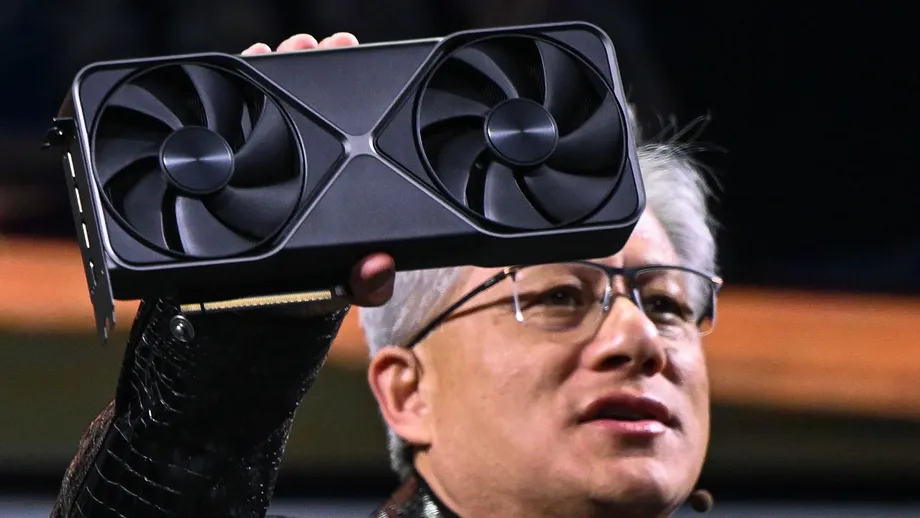
The RTX 5090 combines a powerful GB202 processor with 32 GB of GDDR7 memory. Graphics processors perform many calculations at once, a capability useful for drawing complex game scenes and for the mathematical work behind AI.
Memory holds information the processor needs while it works. For AI, that can include model parameters, the numerical values learned during training, and temporary data used to produce an answer. Capacity therefore helps determine which workloads a card can handle and how those workloads must be divided.
The converted cards are described as intended for large language model training and other AI tasks. Training adjusts a model using examples; inference runs the trained model to generate an answer. The specific model, memory requirements and software determine how useful a particular card will be.
The replacement board and cooler address installation and airflow. The underlying processor remains consumer hardware, with reliability and performance depending on the complete rebuilt system, including power delivery, firmware and software support.
Export restrictions complicate the supply chain
The full RTX 5090 is subject to United States export restrictions affecting shipments to China. Nvidia has offered a version with reduced capabilities, the RTX 5090D, for that market. Demand for the international model has nevertheless supported trade through unofficial channels.
The exact location and operators of the newly filmed workshop, the cards' purchase and shipping routes, their ultimate buyers and measured AI performance remain unconfirmed. Accounts describe hundreds of cards in the scenes, while estimates of thousands of conversions per day refer to a wider network of factories and remain unverified. Nvidia has given no date for an easing of supply constraints.
Earlier disputes show the practical consequences of unofficial distribution. In October 2025, MSI issued a denial of China sales after a photograph showed pallets of its RTX 5090 cards on a Chinese street. The company said serial numbers led to third party sources outside its authorized channels.
MSI described those cards as parallel imports, genuine products brought into a market without the manufacturer's authorization. It also said unauthorized units in China were ineligible for its warranty, repairs and technical support. For buyers, the route by which a card arrives can therefore affect the cost of a later failure.
Asking prices multiply the cost for gamers
The reported US prices show how far some sellers have moved above the RTX 5090's $1,999 recommended starting price. At $9,300, a card costs about 4.65 times that benchmark. The $10,899 listing is approximately 5.45 times the benchmark, or $8,900 more.
Custom models have different specifications and original retail prices, so the comparison uses the starting price as a common reference. The figures are asking prices from listings, rather than a measure of what every buyer paid.
Scarcity has also been described in Germany, although comparable figures were not given. The pressure reaches consumers deciding whether to buy a card, postpone a computer upgrade or seek a complete system instead.
Some computers already assembled with an RTX 5090 reportedly cost less than a standalone card. Such systems can also include a manufacturer's warranty. The unusual comparison makes the total system price and support terms relevant alongside the price of the graphics card itself.
AI conversion creates another commercial use for retail GPUs during a shortage. The share of current prices attributable to these operations has not been measured; supply constraints and demand across several markets also shape availability.
China's AI market is seeking several routes to computing power
Chinese demand for Nvidia hardware continues alongside growth by domestic chip suppliers. Figures described in China's AI chip shift put Nvidia's shipments of AI accelerators at 678,000 in the first half of 2026, compared with Huawei's 572,000.
The corresponding market shares were 34% and 28%, leaving a gap of six percentage points. Nvidia's shipment volume was down 44% from a year earlier, while nine of the 11 Chinese chipmakers tracked increased shipments.
Chinese companies also reportedly bought more than one million Nvidia gaming and workstation chips during 2026. Those purchases show demand extending beyond products sold specifically as data center accelerators.
The conversion workshops fit into that broader search for usable computing capacity. Domestic accelerators, specialized Nvidia products and repurposed consumer cards offer different combinations of availability, software compatibility, cost and operating requirements.
For server buyers, the immediate attraction of rebuilding an RTX 5090 is physical: a valuable processor and its memory can be fitted into a denser arrangement. For gamers, the same hardware remains scarce and expensive. Nvidia's promise of continuing shipments leaves supply, rather than an announced production halt, at the center of the purchasing problem.
Key Points
- Footage circulated on October 23, 2026, shows RTX 5090 processors and memory being transferred onto replacement boards for AI server use.
- The converted cards use cooling systems occupying two slots, allowing closer placement than many large gaming designs.
- A Shenzhen conversion operation described in July 2025 reportedly tested cards for 24 hours and fitted up to eight into a server.
- Nvidia's Jeff Fisher denied discontinuation on October 16 and said shipments would continue despite supply constraints.
- Reported Newegg asking prices ranged above $9,300 and reached $10,899, against a recommended starting price of $1,999.
- The latest workshop's identity, supply routes, production volume and customer destinations remain unconfirmed.