AI agents move into Linux distribution engineering
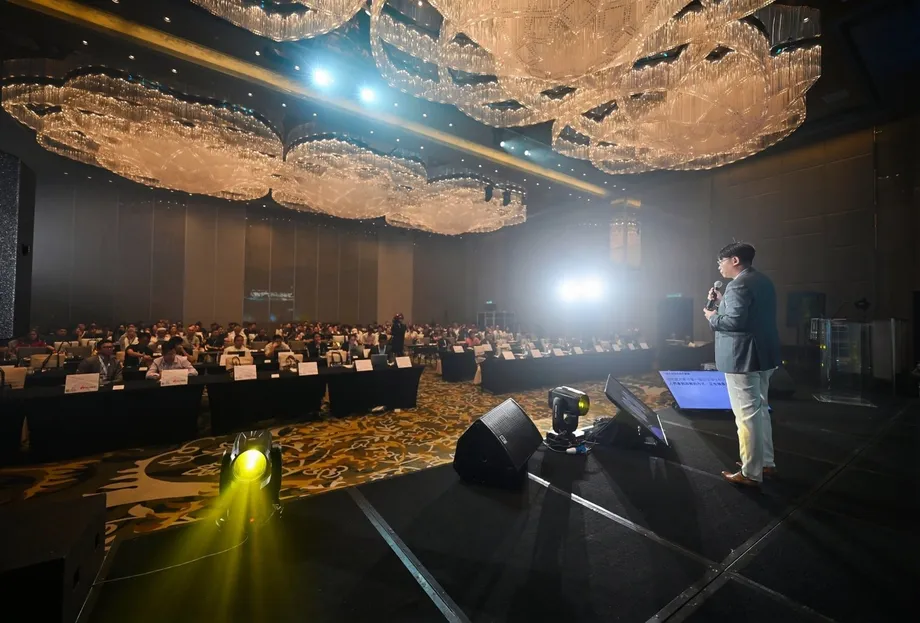
OpenAnolis is developing Anolis OS 27 with AI agents selecting software packages and patches, reviewing code and moving fixes between software versions. Ma Tao, the community's chair and head of basic software at Alibaba Cloud, outlined the approach at the GOSIM AI Vision Forum in Zhuhai, where he said agents now generate 95% of new code in Alibaba Cloud's basic software team.
Contents
- AI agents move into Linux distribution engineering
- What agents will do in Anolis OS 27
- What the 95% figure measures
- Two connected tracks, with different jobs
- Why tokens and sandboxes matter
- How the September announcements fit together
- SysAgent takes automation beyond development
- Control and recovery across devices and cloud
- Open source governance becomes part of the engineering
- Key Points
The community's ambition reaches beyond writing code. OpenAnolis wants engineering across an operating system's life cycle, from development and maintenance to operation and governance, to become an order of magnitude faster, meaning roughly ten times as fast. That is a target presented by Alibaba Cloud's leadership, while the 95% figure describes new code generated within Ma's team.
Anolis OS 27 puts that ambition into a concrete development project. OpenAnolis has opened a monorepo, a single Git repository containing many software packages, intended to let human maintainers and AI agents work together on a Linux distribution. Other teams can study and reuse the approach.
The effort also connects to Alibaba Cloud's push to build operating systems specifically for agents. At the 2026 Apsara Conference, the company said its Agentic OS reduces token consumption by more than 30% and triples sandbox deployment density. Taken together, the announcements describe two linked changes: agents helping build operating systems, and operating systems being redesigned to run agents.
What agents will do in Anolis OS 27
A Linux distribution combines the Linux kernel, which manages hardware and core system resources, with many other software packages. Maintaining it means choosing versions, applying security fixes, checking compatibility and keeping the collection working as a whole.
OpenAnolis describes Anolis OS 27 as agent native because agents are being built into that engineering process. Different agents handle package and patch selection, code review and patch backporting. Backporting means adapting a fix from a newer software version so that it can work in an older version still used by customers.
The monorepo gives that work a shared home. Putting many packages in one repository can help people and agents examine changes across the distribution together, rather than treating every package as an isolated project. OpenAnolis presents this as a method for collaboration between maintainers and agents, with the engineering approach itself available for others to examine.
Ma said agents may eventually build a complete operating system independently and that the industry needs to face that trend. The immediate project, however, is a distribution engineering process involving both people and software agents. No release date for Anolis OS 27 was given.
What the 95% figure measures
Ma's 95% figure applies to new code in Alibaba Cloud's basic software team. Its scope matters because maintaining an operating system also involves testing, investigating failures, deciding which changes to accept and supporting software over time.
Code generation is one part of that work. An agent can produce a proposed change, while review and integration determine whether it becomes part of the maintained system. OpenAnolis is extending agent participation into those surrounding tasks, including review and patch selection.
The tenfold speed ambition covers a wider process than code writing. Reaching it would mean shortening the time needed to move through development, maintenance, operation and governance. The practical benefit for users would be faster delivery of working updates and fixes, alongside the continuing need for dependable releases.
Ma's presentation places code accountability at the centre of this shift. Once agents both submit changes and help review them, communities need clear responsibility for the software they distribute. That issue was among the subjects discussed at the GOSIM opening roundtable.
Two connected tracks, with different jobs
OpenAnolis describes its strategy through two directions: System for AI and AI for System. The first concerns the operating system that agents run on. The second concerns agents doing the work of building and managing the operating system.
For the first direction, Ma described an operating system that connects computing resources, models, tools and applications. OpenAnolis positions its ANOLISA project as a runtime base for agents. A runtime is the environment that supplies the resources and services a program needs while it is running.
Anolis OS 27 belongs to the second direction. Its development process uses agents to carry out engineering work. Alibaba Cloud's SysAgent extends the same idea into operating system delivery and management, while Agentic OS focuses on the environment in which agents execute their tasks.
The distinction helps explain the breadth of the programme. A company might use agents to maintain a distribution, run those agents in isolated environments, and use another agent to investigate problems after deployment. Each activity has a different job, even when they share underlying technology.
Why tokens and sandboxes matter
Alibaba Cloud says Agentic OS cuts token consumption by more than 30% and raises sandbox deployment density to three times the previous level. Tokens are the pieces of text or other information processed by an AI model. Reducing their use can reduce the amount of model processing required for a task.
A sandbox is an isolated environment where an agent can run code or use tools with limits on its access to the surrounding system. Agents may need many such environments, sometimes for only a short period. Creating and closing them frequently puts different demands on an operating system from running a small number of applications continuously.
Alibaba Cloud describes system tuning for these brief sandbox sessions and frequent process creation. Higher deployment density means fitting more sandboxes into a given infrastructure footprint. Using the company's stated comparison, capacity for 100 sandboxes would become capacity for 300 under the conditions behind its claim.
Alibaba Cloud has not detailed the benchmark workloads, baseline configurations or measurement method behind the figures discussed here. Those details matter to customers estimating savings for their own tasks, since an agent's model, tools and workload all affect resource consumption.
How the September announcements fit together
Alibaba Cloud's wider strategy emerged across two events at the 2026 Apsara Conference in Hangzhou. On September 22, chief technology officer Li Feifei presented its Agentic Cloud strategy. On September 23, an operating system forum brought together OpenAnolis and companies including AMD, Arm, Intel, Lenovo and ZTE.
OpenAnolis's September forum recap describes the operating system programme, including Agentic OS, SysAgent and Loongkit. It also records Ma's statement that the community completed its donation to the OpenAtom Foundation in June 2026.
- June 2026: OpenAnolis completed its donation to the OpenAtom Foundation, according to Ma's remarks recorded by the community.
- September 22, 2026: Li presented Alibaba Cloud's Agentic Cloud strategy and products including AgentCore, Agent Sandbox and a new generation of CPFS storage.
- September 23, 2026: The operating system forum covered agent runtime infrastructure, automated system management and a SkillHub recommendation system.
- At the GOSIM forum in Zhuhai: Ma outlined the agent native Anolis OS 27 approach and gave the 95% figure for his team.
The September forum also included Wang Jiangbo, a member of the OpenAnolis technical committee and leader of its distribution working group. He discussed agents participating in distribution construction and maintenance, alongside work involving the RISC-V processor architecture.
SysAgent takes automation beyond development
Feng Fuqiu, Alibaba Cloud's head of system services and a senior technical expert, described SysAgent as covering distribution, operations and security. The product was open for invited public testing at the September forum.
SysAgent developed from OS Copilot, which helped users investigate problems. Alibaba Cloud now presents it as a more autonomous tool spanning the operating system life cycle. Feng used training and inference on GPU clusters as an example of performance analysis conducted through a natural language conversation. Training builds or adjusts a model, while inference is the process of using it to produce an answer.
Zhang Pengcheng, Alibaba Cloud's basic software product lead, presented SysAgent alongside Agentic OS and Loongkit. Loongkit targets model training performance, giving the programme a separate component focused on making the underlying computing work more efficiently.
Alibaba Cloud's AgentCore platform handles another layer: building and governing enterprise agents. Its functions include long tasks, retries after failure, resuming interrupted work, identity permissions and activity auditing. Agent Sandbox supplies execution environments, while the new CPFS storage system supports demanding data workloads. These products place the operating system changes within a broader cloud infrastructure programme.
Control and recovery across devices and cloud
Dingdao Zhilian general manager Li Jinyuan described a DingOS integration with Alibaba Cloud Agentic OS aimed at devices, nearby computing infrastructure and cloud services. The design brings together local computing and model scheduling with controls for agent execution.
The functions he described include tracking task progress, token consumption and hardware resources; auditing and intervening in execution; and restoring workspaces so interrupted tasks can continue. For an organisation running agents, these are practical operating requirements: knowing what a task used, controlling what it can do and recovering its work after a disruption.
DingOS contributes capabilities close to the device, while Alibaba Cloud Agentic OS provides runtime management functions such as token governance, security, observability and workspace recovery. Observability means collecting enough information about a running system to understand its behaviour and investigate problems.
Alibaba Cloud's broader strategy also includes a Context Engine intended to organise business information for agents. Context is the information an agent needs for its current task, including relevant records, prior interactions and execution feedback. Bringing that information together serves a different purpose from generating code, but both depend on controlled access to tools and data.
Open source governance becomes part of the engineering
Ma presented the Anolis OS 27 plan at the GOSIM opening roundtable, Roots: Open Source Holding Ground in the Agentic Era. Participants included leaders from the Rust Foundation, OpenUK, OpenCV and the Beijing Academy of Artificial Intelligence. A co-chair of the LF AI and Data Generative AI Commons moderated the discussion.
The panel addressed governance, code accountability and international collaboration as AI changes who submits and reviews open source contributions. For OpenAnolis, those subjects sit alongside a community structure involving companies, universities and research institutes. Anolis OS also serves as the upstream community for Alibaba Cloud Linux, meaning its development feeds into that cloud distribution.
OpenAnolis is building a second shared resource through SkillHub, a platform for reusable system capabilities. Its September recap says hundreds of skills had joined within two months, spanning security, operations, AI inference, databases and computing across different hardware types.
The SkillHub recommendation system evaluates capabilities through four areas: functional trustworthiness, runtime gains, static quality and security effectiveness during execution. Static quality concerns checks made without running the software. The system produces both general and category rankings to help users choose capabilities from the growing collection.
Anolis OS 27 and SkillHub bring the same operational issue into focus: reusable automation needs a way to be inspected, selected and maintained. OpenAnolis is pursuing that through a public development repository, community governance and evaluation of shared skills. The next concrete steps are continued distribution development and feedback from SysAgent testing.
Key Points
- OpenAnolis is developing Anolis OS 27 with agents handling package selection, patches, code review and backporting.
- Ma Tao says agents generate 95% of new code in Alibaba Cloud's basic software team.
- The community aims to make engineering across the operating system life cycle roughly ten times faster.
- Alibaba Cloud says Agentic OS reduces token use by more than 30% and triples sandbox deployment density.
- Anolis OS 27 has a public monorepo intended for collaboration between human maintainers and agents.
- SysAgent was open for invited public testing at the September 2026 forum; no Anolis OS 27 release date was given.