A new account with precise times and a different sequence
Bangladesh's 2027 Class 7 textbook will describe Major Ziaur Rahman declaring independence to Bengali soldiers at 2:15 a.m. on March 26, 1971, followed by a radio declaration at 6:30 p.m. on March 27. The revised passage marks another change in how schoolchildren are taught the country's founding, following different accounts under the Awami League government and the interim administration that succeeded it.
Contents
- A new account with precise times and a different sequence
- What the 2027 independence passage says
- How the three textbook versions compare
- A longer cycle of changes after elections and upheaval
- More detail on the Liberation War and its organisation
- Political history from 1975 to the July uprising
- Four new books before a possible curriculum overhaul
- Delivery figures show a gap between school levels
- Calls for evidence and rules that outlast governments
- Key Points
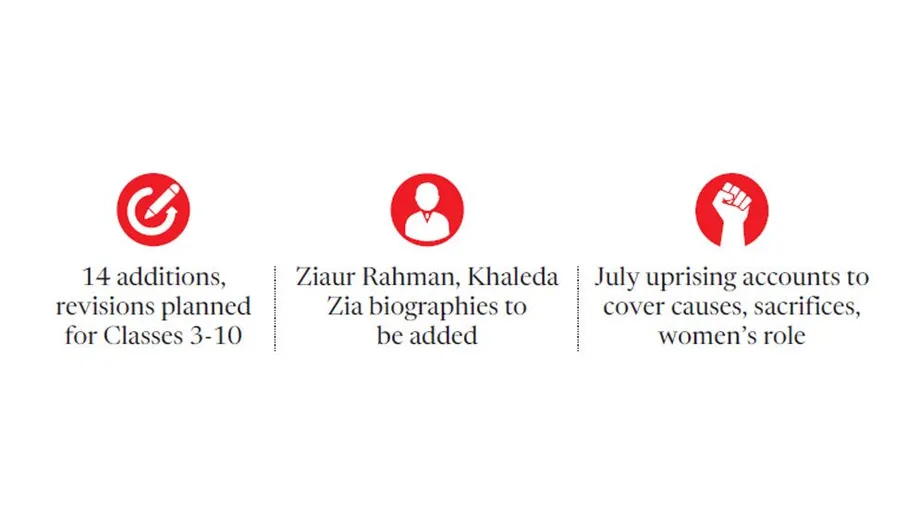
The National Curriculum and Textbook Board (NCTB) is preparing approximately 310 million books for about 40 million students for the next academic year. A board document lists 14 additions or revisions across Bangla Literature, Bangladesh and Global Studies, and History of Bangladesh and World Civilisation for Classes 3 to 10.
The changes extend beyond the independence declaration. Students will encounter more material on the organisation of the Liberation War, former president Ziaur Rahman, former prime minister Khaleda Zia, the events of November 7, 1975, the 1990 mass uprising and the July 2024 uprising that led to the Awami League government's fall.
Under the Bangladesh Nationalist Party (BNP) government, the initiative follows an electoral pledge to present what the government describes as accurate Liberation War history. Historians and education specialists have called for accounts grounded in documentary evidence and rules that remain stable when governments change.
Printing is already underway, creating a practical deadline alongside the debate over historical content. Delivery figures reported on October 8, 2026, showed that approximately 13 percent of secondary books had reached their destinations, while no books for Classes 9 and 10 had yet been delivered.
What the 2027 independence passage says
The first chapter of the 2027 Class 7 Bangladesh and Global Studies book, titled Bangladesh's Struggle for Freedom and Mass Movement, describes the Pakistani army attacking unarmed Bengalis during the night of March 25, 1971. It says news of the attack on Dhaka's Rajarbagh Police Lines spread through wireless messages and that Sheikh Mujibur Rahman was arrested that night.
The revised narrative then describes a population left without leadership. It identifies Zia as the second in command of the 8th East Bengal Regiment and says he rebelled in Chattogram after learning of the killings. According to the passage, he assembled the battalion's Bengali officers and soldiers at 2:15 a.m. on March 26 and declared independence and the start of war.
The book places the next declaration at the Swadhin Bangla Betar Kendra, the independence radio station established at Kalurghat in Chattogram. It says Zia declared independence at 6:30 p.m. on March 27 as provisional president and commander in chief of the Liberation Army.
The passage describes a subsequent radio announcement on Sheikh Mujib's behalf, with Zia speaking as provisional commander in chief of the Bangladesh Liberation Army. It gives no date or time for that subsequent announcement. The revised sequence therefore separates an initial declaration to soldiers from later radio broadcasts, placing greater weight on Zia's military and broadcasting roles.
How the three textbook versions compare
The 2022 Class 7 textbook, published under the Awami League government, credited Sheikh Mujib with declaring independence before his arrest, in the first hours of March 26. The passage moved directly from that declaration to the beginning of the Liberation War, without mentioning Zia in that part of the narrative.
The interim government's version instead stated that Zia declared independence from Kalurghat radio station on March 26 and made another declaration on Sheikh Mujib's behalf on March 27. This wording appeared in the 2025 books and is also described in the Class 7 book being taught in 2026.
Professor A.K.M. Reazul Hassan, NCTB chairman when the 2025 changes were announced, described the new wording at the time:
on March 26, 1971, Ziaur Rahman declared the independence of Bangladesh, and on March 27, he made another declaration of independence on behalf of Bangabandhu
The 2027 version adds precise times, an initial declaration within Zia's battalion and a March 27 broadcast in which he is described as claiming provisional leadership. Unlike the interim version, it locates the March 26 declaration among soldiers rather than at Kalurghat radio station. All three passages retain December 16, 1971, as the date of victory and the textbook figure of three million people killed.
The comparison uses the 2022 book for the Awami League period because the 2023 and 2024 Class 7 Bangladesh and Global Studies books were unavailable on the NCTB website. The 2025 changes also removed the title Father of the Nation for Sheikh Mujib, extending the revision beyond the declaration passage to how he was identified.
A longer cycle of changes after elections and upheaval
Bangladesh's textbook revisions have followed political changes for decades. The latest rewrite continues a pattern in which governments alter the space given to national leaders and the way their contributions are described.
- 1996: After the Awami League took office, textbooks added Liberation War material about Sheikh Mujib and the four national leaders.
- 2001: The BNP administration removed or reduced references to Sheikh Mujib and his March 7 speech, while giving Zia greater prominence in the independence account.
- 2009: After the Awami League returned, an expert review restored Sheikh Mujib's biography and his role in the declaration, while removing Zia's name from that account.
- August 2024 onward: The interim government discontinued the 2022 national curriculum and returned secondary education to the 2012 framework.
- 2025: Revised textbooks credited Zia with a March 26 declaration and a March 27 declaration on Sheikh Mujib's behalf.
- 2027: The planned books add a more detailed sequence of Zia's declarations and expand coverage of later political events.
Students moving through school during these changes can encounter different explanations of the same event. The disagreement concerns who is credited with declaring independence, where the declaration occurred and how the start of armed resistance is narrated.
More detail on the Liberation War and its organisation
The NCTB plan introduces Zia's rebellion and declaration briefly in Classes 3 to 7, with fuller treatment in Classes 8 to 10. Class 5 Bangladesh and Global Studies will add biographies of Zia and Khaleda Zia under Our Memorable Leaders.
Students in Classes 9 and 10 will also read Zia's essay Memories of the War of Independence in Bangla. Including an account written by a participant gives students a different type of text alongside a textbook summary: a personal recollection of wartime events.
Class 6 will receive a brief text about the seven Bir Sreshthos, recipients of Bangladesh's highest military gallantry award. Class 8 will cover the Liberation War Brigade Forces. The broader revisions also include the war's sectors, helping explain how fighting was organised geographically and through military formations.
The history book for Classes 9 and 10 will cover the organisational phase of the war, including the Teliapara Meeting of April 4, 1971. Together, these additions broaden the curriculum from leaders and declarations to the people, meetings and structures involved in conducting the war.
Political history from 1975 to the July uprising
Books from Class 6 upward will include increasingly detailed accounts of the events of November 7, 1975. The NCTB document labels this material the Sipahi-Janata Revolution. Khaleda Zia's contribution to the 1990 mass uprising will appear in Class 8 and in the books for Classes 9 and 10.
The July 2024 uprising will feature through texts including The Story of Martyr Anas and the July Mass Uprising Memorial Museum, planned for Class 4 and Classes 9 and 10. Material about the uprising had already entered textbooks during the interim government's tenure.
Education Minister ANM Ehsanul Hoque Milon told parliament on September 8, 2026, that students would receive accounts suited to their age covering the uprising's causes and course, killings during the movement, the sacrifices of those killed, women's role and its historical significance.
Milon also said the history textbook for Classes 9 and 10 would address disappearances, killings, money laundering, the electoral system, the Pilkhana tragedy, killings of journalists and interference with the media during the previous Awami League government. His statement sets out the intended subjects; the chapter wording will determine how these events are explained to students.
Four new books before a possible curriculum overhaul
Class 4 students will receive two additional books, Culture of Bangladesh and Sports. Class 6 will receive a book on technical or vocational education and another on joyful learning, described in English as Learning with Happiness.
NCTB Chairman Professor Mohammad Fakhrul Mawla said these subjects were designed to avoid increasing students' academic burden and would not be assessed through conventional grading. Class 6 Bangla will also gain a text titled Third Language, while information and communication technology books will add artificial intelligence and emerging technologies.
Artificial intelligence refers to computer systems that can perform tasks such as recognising patterns, generating text or making predictions. Its inclusion brings a rapidly developing area of technology into the school curriculum alongside the history revisions.
Mawla described the 2027 work primarily as additions and revisions to existing books, with any major restructuring reserved for the 2028 curriculum:
There has not been much change. The major change, if there is to be one, will come with the 2028 curriculum.
The NCTB's Curriculum Development and Revision Core Committee was due to begin work in October 2026. A curriculum sets the wider plan for what students learn and how learning is organised; revising a textbook changes the material within that plan. The board is proceeding with the books for 2027 while preparing the broader review for 2028.
Delivery figures show a gap between school levels
NCTB Member for Textbooks Professor Mohammad Abu Naser reported that 84 percent of books for education before Class 1 had been printed and delivered. Delivery stood at 64 percent for Class 1, 63 percent for Class 2, 51 percent for Class 3, 26 percent for Class 4 and 21 percent for Class 5.
Secondary delivery was much further behind at approximately 13 percent. The figures were 18 percent for Class 6, 17 percent for Class 7 and 2 percent for Class 8, with none delivered for Classes 9 and 10. At the ibtedayi level, the primary stage of madrasa education, delivery stood at 41 percent.
The gap between delivery for education before Class 1 and secondary education was 71 percentage points, using the board's figures of 84 percent and 13 percent. The percentages describe progress within each category, while the total printing programme covers approximately 310 million books, including provision for students from ethnic minority communities and students with visual impairments.
Naser said the four additional books for Classes 4 and 6 had not entered printing because regular work orders had not been issued. Primary books were expected to reach the field between October 15 and 20. The board's deadline for delivering secondary books to every upazila, or subdistrict, was November 30.
Calls for evidence and rules that outlast governments
Professor Siddiqur Rahman, a curriculum specialist and former director and professor at Dhaka University's Institute of Education and Research, called for documented evidence to guide accounts of the Liberation War and later political events. He said individual contributions should be presented without exaggerating or diminishing anyone's role.
Rahman argued that the people who will study these books should take priority over the political interests of the administration preparing them:
The present generation does not belong to any one political party. They are citizens of Bangladesh who will take part in building the country in the future.
He called for neutral, qualified writers to use documents and, where relevant, testimony from people who witnessed events. He also urged permanent NCTB rules so textbook and curriculum preparation would follow the same principles regardless of the governing party, rather than being determined by an electoral pledge.
Liberation War historian Afsan Chowdhury identified political self interest as the reason successive governments keep changing state history. He also called for greater attention to social and informal history, bringing the experiences of people outside formal state narratives into the study of the war.
The two arguments address different parts of the same problem. Rahman's proposal concerns the evidence and rules used to prepare textbooks. Chowdhury's concerns whose experiences receive space in them. Both offer concrete alternatives to repeatedly reorganising history around the leaders favoured by the government of the day.
Key Points
- The 2027 Class 7 book gives Zia's March 26 declaration a time of 2:15 a.m. and a March 27 radio broadcast a time of 6:30 p.m.
- The revised sequence differs from both the 2022 Awami League account and the interim government's textbook wording.
- NCTB lists 14 additions or revisions across three subjects for Classes 3 to 10, alongside changes to other books.
- New material covers wartime organisation, Zia and Khaleda Zia, the events of 1975, the 1990 uprising and the July 2024 uprising.
- Four additional books are planned for Classes 4 and 6; any major curriculum change is expected through the 2028 review.
- About 13 percent of secondary books had been delivered by the October 8 reporting date. The delivery deadline is November 30.
- Education specialists and historians have called for documented evidence, stable preparation rules and greater attention to social history.