Open Bank gains permission as Tansar awaits authorisation
Uzbekistan has issued its first special licence for Islamic banking to Open Bank, while Kazakhstan has registered Tansar Islamic Bank Ltd as a company seeking to enter the sector. The October 2026 developments put two prospective providers at different stages: Open Bank has regulatory permission for Islamic banking operations, while Tansar still needs authorisation to conduct regulated financial business.
Contents
- Open Bank gains permission as Tansar awaits authorisation
- What Open Bank's licence allows
- How Uzbekistan built the legal framework
- Six ways to structure financing
- What customers will pay attention to
- Conversion rules extend beyond commercial banks
- What Tansar has registered in Kazakhstan
- More banks are preparing, but scale will depend on use
- Key Points
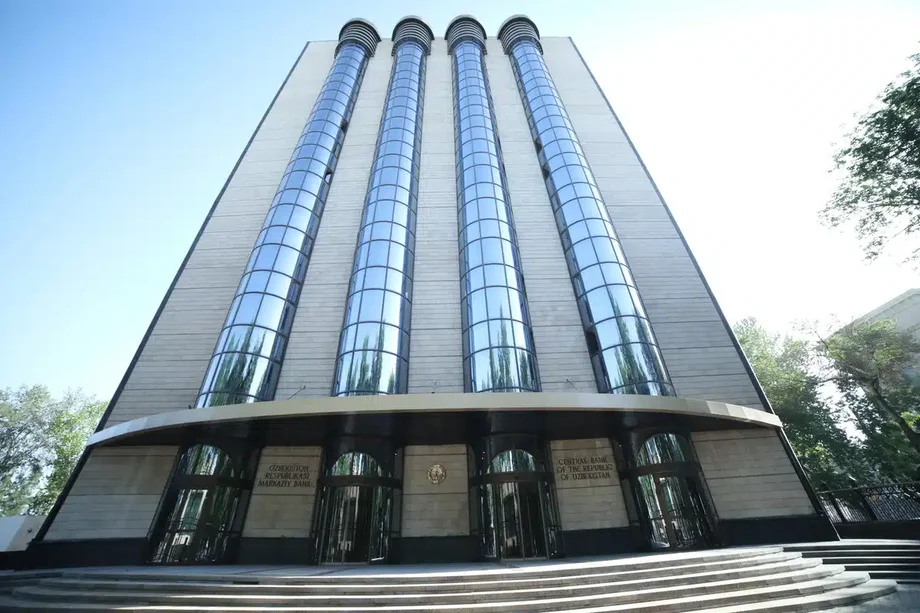
The Central Bank of Uzbekistan approved licence No. 1-I through Board Resolution No. 28/1 on October 23 and announced the decision on October 26. It covers operations listed in Article 5¹ of the Law on Banks and Banking Activities, following legislation that took effect on June 29.
In Kazakhstan, Tansar Islamic Bank Ltd was registered at the Astana International Financial Centre on October 16. The official register of the Astana Financial Services Authority, known as AFSA, lists declared share capital of $12 million, Tansar Group JSC as its sole shareholder and Rustem Baimakhanov as chief executive.
For businesses and households, the practical issue is when these developments will translate into services they can use. Islamic banking earns income through arrangements such as sales, leases and shared investments instead of conventional interest charges. Customers still face financing costs and contractual obligations.
Open Bank's product prices and launch dates had not been specified in the Central Bank announcement. As of October 26, there was also no confirmed AFSA authorisation for Tansar in the information available. The immediate change is therefore a new banking permission in Uzbekistan and a new corporate registration in Kazakhstan.
What Open Bank's licence allows
Open Bank already operates as a commercial bank. Formerly called Smart Bank, it changed its name in September 2025. The Central Bank register separately lists its main banking licence as No. 89, dated September 15, 2025.
The additional Islamic banking permission gives that existing institution a route to develop services under the new framework. Uzbekistan allows both specialised Islamic banks and conventional banks with the necessary permission to carry out Islamic banking activities.
Asia Daily covered the first licence decision on October 26, including the six principal financing structures permitted by the legislation. The next step for customers is the publication and launch of specific products with clear terms.
Open Bank has established a Council for Islamic Finance and will maintain separate accounting for its Islamic operations. Those arrangements support the requirements that apply when conventional and Islamic banking take place within the same institution.
Separate accounting means keeping distinct records for the Islamic side of the business. It allows those transactions and their income to be identified and checked against the rules governing them. The bank's council provides an institutional mechanism for reviewing compliance with Islamic finance standards.
How Uzbekistan built the legal framework
Law No. ZRU-1126, dated March 27, 2026, created the legislative foundation for Islamic banking in Uzbekistan. Its entry into force on June 29 was followed by changes to licensing and institutional conversion rules.
The reforms cover more than the issue of a single licence. They provide routes for existing banks and microfinance institutions to change their legal status, alongside the option for conventional banks to offer Islamic services through dedicated operations commonly called Islamic windows.
- March 27, 2026: Uzbekistan adopted Law No. ZRU-1126 establishing the new legislative framework.
- June 29: The law entered into force.
- July 20: Amendments to Central Bank licensing rules took effect.
- August 1: The Ministry of Justice registered amendments governing institutional conversions.
- October 16: Tansar Islamic Bank Ltd was registered in Kazakhstan's Astana International Financial Centre.
- October 23: Uzbekistan's Central Bank approved Open Bank's Islamic banking licence.
- October 26: The Central Bank announced the licence.
Six ways to structure financing
Uzbekistan's framework identifies six principal Islamic financial operations. Each uses a different contractual relationship, giving banks several ways to finance goods, equipment, production or investment.
- Mudaraba: One party supplies capital and another manages it, with the resulting profit divided according to an agreement. This structure can support financing and investment deposits.
- Wakala: A party acts as an agent for another under an agency agreement. Banks can use it to provide services or manage funds.
- Murabaha: A bank purchases goods and sells them to a customer at an agreed price that includes a markup, with payment potentially made in instalments.
- Salam: A buyer pays for goods in advance, with delivery due at an agreed later date.
- Musharaka: Partners contribute financing to a project or take part in a company's capital.
- Ijara: A customer uses an asset under a lease, which may include an option to purchase it later.
A business buying machinery illustrates the difference between two of these structures. Under murabaha, the bank buys the machine and resells it at an agreed price. Under ijara, the business pays to use the machine through a lease.
Salam addresses a different need by providing payment before goods are delivered. Musharaka brings partners into a financing arrangement, while mudaraba separates the provision of capital from its management. The agreement determines how the participants share the resulting profit.
What customers will pay attention to
Islamic finance changes the structure of a transaction and the way a bank earns money. A trade markup, rental payments or a share of investment profit can provide the bank's return. Financing therefore has a cost even when the contract uses no conventional interest charge.
A customer comparing a murabaha purchase with other ways to buy equipment needs the full sale price, payment schedule and contractual obligations. A business considering ijara needs to understand the rent, length of the lease and any conditions governing a later purchase.
Investment customers need equally clear information about how profits are calculated and distributed, who manages the funds and what risks their particular agreement assigns to them. Product names alone give only a starting point for understanding those arrangements.
The Central Bank advised customers to verify the appropriate licence on its official website before using banking services. For Open Bank, that check involves recognising both its existing commercial banking status and the additional permission covering Islamic activities.
Entrepreneurs seeking finance for goods, transport or equipment may gain another choice once products become available. The usefulness of that choice will depend on the actual price, payment terms and suitability of the contract for the asset or business being financed.
Conversion rules extend beyond commercial banks
Uzbekistan's August amendments set out several routes for institutions to change their status. The Ministry of Justice registered the amendments to the regulation on changing the activities of microfinance institutions and banks on August 1, 2026, under No. 3656-1, in accordance with Law No. ZRU-1126. A microfinance institution can convert into an Islamic microfinance bank, and an Islamic microfinance bank can apply to become an Islamic bank.
The rules also provide for an Islamic bank to become an Islamic microfinance bank, an Islamic microfinance bank to return to conventional microfinance status, and a conventional bank to convert into an Islamic bank. Within the microfinance route to full Islamic bank status, the applicant must first be an Islamic microfinance bank.
Accessibility is part of the licensing process. Before registration and licensing, an Islamic microfinance bank must obtain a conclusion from the Inspectorate for Control in Construction and Housing and Communal Services confirming that its premises provide accessible conditions for persons with disabilities in accordance with urban planning standards and rules.
Uzbekistan has also established an Islamic Finance Council under the Central Bank to develop standards and oversee expansion of Islamic financial services. This body operates at the regulatory level, while Open Bank's own council serves the institution.
Public universities are introducing Islamic finance as a bachelor's degree programme from the 2026/27 academic year. The education initiative accompanies the legal reforms as institutions prepare to offer and supervise products built around different contractual structures.
What Tansar has registered in Kazakhstan
Tansar Islamic Bank Ltd's registration documents describe a planned business covering Islamic banking finance, payment services, money transfers, currency exchange and management of investment accounts with profit sharing.
The AFSA register identifies the company's ownership, management and declared share capital. Those details establish who stands behind the registered entity and the activities it intends to pursue. Regulated financial operations require a further permission from AFSA.
Tansar's next regulatory step is therefore authorisation for the relevant services. Its declared capital of $12 million is a corporate registration figure; customers looking for an operating provider will also need information about its regulatory permissions and service availability.
Kazakhstan has national legislation governing Islamic finance, while the Astana International Financial Centre has a separate framework for regulation and authorisation. Tansar's incorporation places its proposed business within that financial centre's process.
Uzbekistan's October decision concerns a special licence issued to an existing bank under national banking law. Kazakhstan's October registration concerns a company pursuing entry through the financial centre. In both cases, the permission needed for banking operations is central to what the institution can offer customers.
More banks are preparing, but scale will depend on use
More than ten commercial banks in Uzbekistan have begun preparing infrastructure for Islamic windows, according to information attributed to the regulator. Named institutions include Agrobank, Asakabank, Ipak Yuli Bank and Orient Finans Bank.
An Islamic window allows a conventional bank to offer Islamic financial products alongside its other business, subject to the applicable separation and control requirements. This gives existing institutions a way to enter the market without converting the entire bank.
Before the special law, similar services were available only through certain microfinance organisations. The new framework gives banks a wider institutional route into the sector and creates the possibility of more providers competing for customers.
An estimate accompanying the reforms puts potential additional investment and deposits at approximately $1 billion over five years. That is a projection of possible inflows. The amount ultimately attracted will depend on customer demand, product terms and the ability of institutions to meet regulatory requirements.
Deposits and investment funds would show whether customers are placing money with providers. Financing volumes would show how much is reaching businesses and households. Customer numbers would help explain how widely the services are being used. Together, those measures will give a fuller picture of the market than the number of registrations or licences alone.
Open Bank's first products and Tansar's authorisation process are the immediate developments to watch. Uzbekistan has reached the stage of granting banking permission under its new law; the proposed Kazakh entrant still has a regulatory step to complete before providing its planned regulated services.
Key Points
- Uzbekistan approved Open Bank's Islamic banking licence No. 1-I on October 23, 2026, and announced it on October 26.
- The licence follows legislation effective from June 29 and covers operations under Article 5¹ of the banking law.
- Open Bank has established an Islamic Finance Council and will keep separate accounting for Islamic operations.
- Tansar Islamic Bank Ltd registered in the Astana International Financial Centre on October 16 with declared share capital of $12 million.
- Tansar needs AFSA authorisation for regulated financial activities; confirmation was unavailable as of October 26.
- Customer access will depend on product launches, while market growth will be measured through funds attracted, financing provided and customers served.