Billions spent while promised results fell short
Kazakhstan spent about 4.5 trillion tenge supporting businesses between 2019 and 2024, yet auditors found unused infrastructure, export programmes serving companies that were not exporting, and government records that could not agree on how much assistance had been delivered.
Contents
- Billions spent while promised results fell short
- How much support did the state provide?
- A register arrived with gaps still in place
- Infrastructure without a factory
- Full spending did not deliver all the jobs
- Export assistance missed its central goal
- Business growth remained concentrated in smaller firms
- Many entrepreneurs did not know help existed
- Repayments, referrals and changes ordered
- Key Points
In findings covering 824 billion tenge of spending, the Supreme Audit Chamber identified 6.2 billion tenge in financial violations and more than 60.8 billion tenge in inefficient planning and use of funds. Together, those categories amounted to about 67 billion tenge, roughly 8.1% of the spending examined.
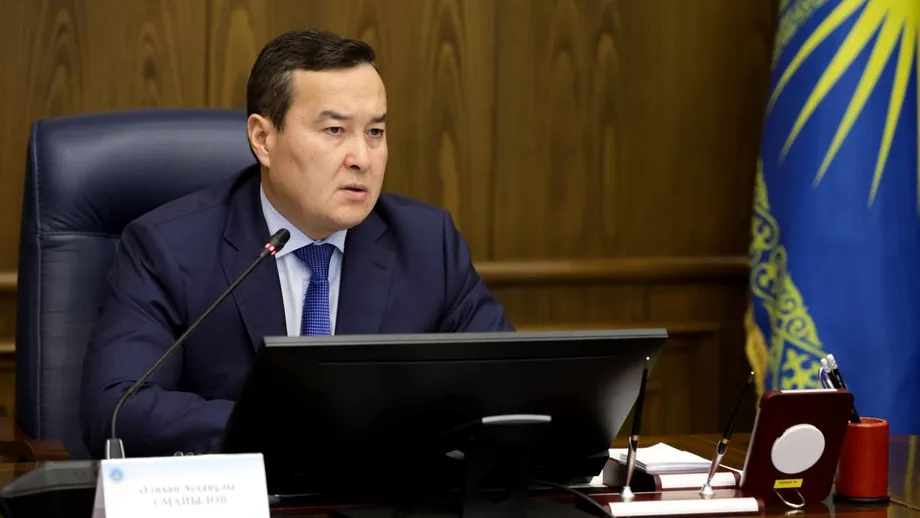
A wider set of figures presented by chamber chairman Alikhan Smailov to the Mazhilis, the lower house of parliament, on December 24, 2025, put inefficient planning and spending at 133 billion tenge, distorted financial reporting at 132 billion tenge, and direct financial violations at 13 billion tenge. The relationship between these parliamentary totals and the figures attached to the 824 billion tenge examination was not specified.
The consequences were concrete. In Pavlodar Region, around 2.5 billion tenge went into infrastructure for a soda ash factory that was never built. Businesses receiving subsidised loans sometimes faced little obligation to expand employment. Meanwhile, the tax receipts recorded for each tenge of subsidies fell from 5.2 tenge in 2020 to three tenge in 2024.
How much support did the state provide?
The Supreme Audit Chamber found that Kazakhstan lacked reliable consolidated information on business assistance. Its audit conclusion covered January 1, 2022, through June 30, 2025, with some questions examined over earlier years, including the spending total for 2019 to 2024.
For 2022, the Economic Research Institute estimated support at 734.4 billion tenge, the BAKYLAUDA information system recorded 1.5 trillion tenge, and auditors calculated 1.32 trillion tenge. For 2023, the corresponding figures were 720.8 billion, 1.55 trillion and 1.83 trillion tenge.
The 2023 gap between the institute's estimate and the audit calculation exceeded 1.1 trillion tenge. Smailov told parliament that Ministry of National Economy estimates had understated assistance by at least half. For 2024, the chamber calculated support at 1.35 trillion tenge, without comparable final figures from the other two systems in the audit conclusion.
About 90% of the estimated 4.5 trillion tenge went through five instruments: reimbursement of business expenses, loan interest subsidies, guaranteed purchases of goods and services, lending, and leasing. An interest subsidy pays part of a borrower's financing cost; a loan guarantee promises to cover an agreed share of a lender's losses if the borrower cannot repay.
The Ministry of National Economy and the Bureau of National Statistics also used different criteria to classify businesses. Without matching definitions and spending records, officials had difficulty measuring how many enterprises received help and what changed afterward.
A register arrived with gaps still in place
Kazakhstan approved a unified register of support measures on June 20, 2025, more than two years after responsibility for shaping the policy was assigned to the Ministry of National Economy. It listed 117 measures: 76 financial, 38 nonfinancial and three involving property.
Some tax benefits and arrangements for renting state property at reduced rates were missing. Other instruments remained listed after being removed from legislation or losing their relevance. A register with those gaps leaves administrators without a complete map of the assistance businesses can receive.
BAKYLAUDA entered full operation in March 2025, but auditors found unverified historical information in the system. At the time of the audit, rules requiring institutions to enter information and take responsibility for its accuracy had not been established.
The main dates show how spending, record keeping and scrutiny developed:
- 2019 to 2024: Business assistance totalled approximately 4.5 trillion tenge, according to the chamber's estimate.
- January 1, 2022, to June 30, 2025: The audit conclusion's main examination period.
- March 2025: BAKYLAUDA entered full operation.
- June 20, 2025: The unified register of support measures was approved.
- December 24, 2025: Smailov presented audit findings to the Mazhilis.
Infrastructure without a factory
In Pavlodar Region, public money financed utility connections for a proposed soda ash plant belonging to Pavlodar-Soda LLP. Around 2.5 billion tenge was spent, but the plant was not built and the infrastructure remained unused.
The finding exposes a practical weakness in project planning: public infrastructure was completed without the industrial facility needed to use it. The intended benefit depended on both parts being delivered, rather than on completion of the government funded works alone.
Auditors also found instances in which project costs were adjusted to match a previously approved preferential loan. In one project, 20 billion tenge, equal to 16% of the loan, went unused and was subsequently cancelled.
Large shopping and entertainment complexes, including Aport Mall, also received subsidised support. The complexes examined had tax burdens ranging from 0.8% to 4.6%, while performance requirements were largely limited to creating a small number of jobs. In another example presented to parliament, a project valued at 37 billion tenge required an increase in staffing of just one employee.
Full spending did not deliver all the jobs
The Damu fund received 686.2 billion tenge from the national budget for interest subsidies and loan guarantees between 2022 and the first half of 2025. Allocations were 170.5 billion tenge in 2022, 234.2 billion in 2023, 247 billion in 2024 and 34.5 billion in the first half of 2025.
A further 2.1 billion tenge was provided for operator services over that period. The funding was fully spent, but the employment target for 2023 was missed: supported businesses created 9,466 jobs against a target of 11,843. The shortfall was 2,377 jobs, or about 20%.
Auditors found that programmes were commonly judged by money spent, loans issued, businesses supported or people trained. Measures such as output per worker, the value businesses added through production, and export growth were often outside the assessment. They also identified no mechanism for revising assistance according to its actual economic results.
The tax receipts associated with subsidies weakened as well. The ratio fell from 5.2 tenge in taxes for every tenge of subsidy in 2020 to three tenge in 2024, a decline of about 42%. This measure compares tax payments with subsidy spending, while programme assessments also need to track employment and production.
QazIndustry presented another mismatch between spending and delivery. In 2024, the number of enterprises supported under its productivity programme fell from 64 to 42, while operator funding of 72.9 million tenge was not reduced. A contract amendment lowered the planned service volume to 50 recipients, still above the 42 actually supported.
Export assistance missed its central goal
More than half the businesses participating in export acceleration programmes during 2023 and 2024 were not actually exporting, auditors found. Such programmes are intended to help companies prepare for and enter foreign markets, making subsequent sales abroad a central result to track.
Dozens of companies granted Gold Supplier status on Alibaba had no export declarations. An export declaration is a customs record documenting goods sent abroad. Auditors therefore had a direct way to compare participation in the programme with recorded shipments.
Nearly 1.9 billion tenge also remained in an operator's accounts, with only 3% used over two and a half years. The findings describing export assistance identified it as money held by the export promotion operator; the detailed audit account described 1.9 billion tenge allocated to promoting domestically processed goods and services within Kazakhstan.
Contract amendments allowed the spending period to continue until obligations were fulfilled. Auditors considered that arrangement capable of allowing indefinite extensions. They also identified overlapping tasks among the Export Credit Agency of Kazakhstan, QazTrade and Damu, adding another coordination problem to a system already struggling to track money and results.
Business growth remained concentrated in smaller firms
Kazakhstan's number of active small and medium enterprises rose from 1.24 million in 2015 to 2.07 million in 2024, an increase of about 1.7 times. Their combined contribution to gross domestic product rose from 24.9% to 38.9% over the same period. GDP measures the value of goods and services produced in an economy.
Medium businesses accounted for just 6.7% of GDP in 2024, compared with 32.2% for small businesses. Their share had changed little over the previous five years. Medium enterprises represented only 0.2% of active small and medium business entities, and about 0.85% of active legal entities.
Government targets were much higher. In 2023, medium businesses contributed 6.9% of GDP against a target of 12.5%. A goal of reaching 15% by 2025 was also missed, and the same percentage is now included in the National Development Plan through 2029.
These figures show why counting registered businesses gives only part of the picture. The sector grew, but relatively few enterprises occupied the medium business category. Auditors concluded that assistance was still failing to produce enough stable, well paid jobs, particularly for improving living standards in the regions.
Many entrepreneurs did not know help existed
An entrepreneur survey conducted through eGov Mobile found that 66.5% of respondents had never heard of nonfinancial support programmes. These are forms of help other than funding, such as advice or training.
More than half said the state assistance they received had made no difference to their business. Respondents identified bureaucracy and a lack of information about available support among their main difficulties.
The findings point to two different service problems. Entrepreneurs need a clear route to discover and apply for assistance, while administrators need to assess whether recipients gain useful results. Paying for a programme and recording participants leaves both questions unanswered unless businesses can access the service and demonstrate a measurable benefit.
Repayments, referrals and changes ordered
The chamber identified 126 procedural violations and 72 weaknesses across the support system. Damu was instructed to take steps to recover 1.73 billion tenge in subsidies paid to SERPIN-2030 LLP.
Ten administrative cases were initiated over questionable issuance of certificates of origin, documents identifying where goods were produced. At the December parliamentary presentation, Smailov said 14 sets of materials would be referred to law enforcement and another 105 sent for administrative action.
The government and the ministries responsible for the economy, industry and construction, and trade were instructed to revise recipient registers, introduce meaningful obligations for businesses receiving assistance, and establish a unified digital platform for recording support.
The proposed platform would cover the process from application through to assessment of results. Smailov said monitoring of business obligations was often still performed manually, leaving opportunities for manipulation. A complete record would allow officials to connect each allocation with its recipient, promised outcome and subsequent performance.
The chamber placed implementation of its recommendations and instructions under special monitoring. The immediate tasks are concrete: pursue the ordered recovery, act on referred cases, correct incomplete records and replace minimal commitments with measurable requirements for supported businesses.
Key Points
- Kazakhstan provided about 4.5 trillion tenge in business assistance between 2019 and 2024, according to the Supreme Audit Chamber.
- An examination of 824 billion tenge identified roughly 67 billion tenge in financial violations and inefficient planning or spending.
- Smailov presented larger totals to parliament in December 2025, including 133 billion tenge in inefficient planning and spending.
- Unused infrastructure, missed employment targets and export programmes serving businesses without exports were among the findings.
- Government spending records diverged sharply, and the unified register omitted some assistance measures.
- Authorities were instructed to improve recipient records, set measurable business obligations, recover specified subsidies and introduce unified digital tracking.