Rail incidents expose gaps in Taiwan's transport safety records
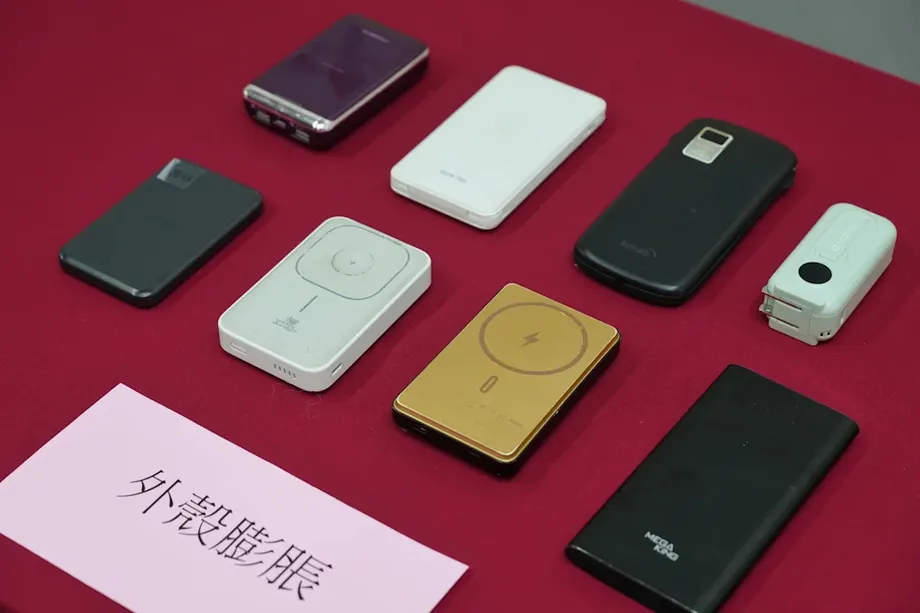
Taiwan's Transportation Safety Board is urging authorities to require reports whenever a power bank smokes or catches fire on public transport, after gathering records of 17 incidents between January 2024 and June 2026. Twelve occurred on railway systems, three in aviation, and one each on water and road transport.
Contents
- Rail incidents expose gaps in Taiwan's transport safety records
- What the 17 recorded incidents show
- Why the board says the count is incomplete
- More than half had an unknown usage status
- Later train emergencies add urgency
- How crews responded to smoke and fire
- Airlines already have a reporting obligation
- What the ministry will consider
- Key Points
The board says the records are incomplete because mandatory reporting requirements for these incidents apply to Taiwanese airlines, while other transport modes lack equivalent rules. Its chairman, Lin Shinn-der, said investigators collected the figures by asking authorities what reports they had received, leaving open the possibility of incidents that never reached them.
The Ministry of Transportation and Communications has agreed to examine the proposal with transport operators and the board. No implementation date or detailed reporting procedure has been announced.
The proposal would change how transport authorities learn about battery emergencies. Instead of relying on records gathered after the fact, they would receive reports through a required process, helping them identify recurring circumstances and decide where safety measures need attention.
What the 17 recorded incidents show
Railways accounted for 12 of the 17 incidents, or about 71 percent. Aviation accounted for three, while water and road transport recorded one each. The railway category covers conventional railways, high speed trains and metro systems.
Nine incidents occurred in 2025, compared with three during the first six months of 2026. The remaining five occurred in 2024, calculated by subtracting those figures from the total of 17.
The comparison covers two complete calendar years and only half of 2026. With reporting requirements also varying between transport modes, the board wants a more complete record before assessing patterns across the network.
Seven incidents damaged equipment, mainly seats and floors; the other 10 had no recorded equipment damage. That means roughly two in every five recorded incidents left physical damage, even though most fires were quickly extinguished without spreading.
The injury figures contain a discrepancy. The board's summary puts the number injured at four, while a detailed breakdown attributed to its analysis lists one incident with three people injured and three incidents with one person injured each, which totals six. Both descriptions place the injuries within a group of incidents that caused no major casualties.
Why the board says the count is incomplete
Lin said the 17 cases were too few to support the safety analysis the board wants to conduct. His concern is that authorities may hold only a portion of the events that actually happened.
On May 26, 2026, the board requested incident information from agencies under the transport ministry and the transport authorities in Taipei, New Taipei, Taoyuan, Taichung and Kaohsiung. The collection covered incidents from 2024 through June 2026.
The national agencies approached included the Civil Aviation Administration, Maritime and Port Bureau, Railway Bureau, Highway Bureau and Freeway Bureau. The request covered Taiwanese civil aircraft, civilian vessels, railway and metro trains, and commercial road transport.
This method depended on whether those bodies had already received a report. A smoking battery dealt with promptly by transport staff could be missing from the collection if the event never reached the relevant authority.
Mandatory reporting would give operators a defined obligation to pass information onward. A database maintained over time could then help investigators compare events rather than repeatedly asking different authorities to reconstruct their records.
More than half had an unknown usage status
Nine of the 17 records did not establish what the power bank was doing when it began smoking or burning. That is about 53 percent of the total, leaving a substantial gap in understanding the circumstances of the emergencies.
Four incidents involved power banks connected to mobile phones. In two others, the power bank itself was being charged. Another two happened while the device was not in use.
The difference matters because a power bank can supply electricity to a phone, receive electricity to recharge its own battery, or remain disconnected in a passenger's belongings. Recording that state gives investigators a basic starting point for examining what happened.
Among the eight cases with a known usage status, four involved a connection to a phone. The two incidents involving unused devices also make storage conditions relevant to the investigation, alongside what happens during charging.
A more complete reporting process could help the board gather these details consistently. The existing collection shows how often even this basic information was missing when authorities assembled the records.
Later train emergencies add urgency
Several incidents after the June 2026 statistical cutoff brought the issue back into public view. They fall outside the period covered by the 17 recorded cases.
An incident on a high speed train on August 10 was followed by another on Taipei's metro the next day. A further metro fire on October 29 involved a power bank inside a passenger's backpack.
- May 26, 2026: The safety board requested incident records from national transport agencies and five city governments.
- June 2026: The collection period for the 17 recorded incidents ended.
- August 10, 2026: A passenger's power bank emitted white smoke and a sharp smell on a high speed train.
- August 11, 2026: A smoking power bank on Taipei's metro prompted the use of a fire extinguisher and the evacuation of about 1,000 passengers.
- October 29, 2026: A power bank caught fire on a Taipei metro train travelling from Daan to Xinyi Anhe, filling the carriage with smoke and producing reported explosion sounds.
The October 29 incident occurred at about 10:40 a.m. on the Tamsui line. The power bank was in a man's backpack, illustrating how a device carried among ordinary passenger belongings can become an emergency inside a carriage.
How crews responded to smoke and fire
Aircraft cabin crews in the board's collection used water or other liquids to cool affected power banks before isolating them. On ships, trains and road transport, crew members, train managers or drivers used fire extinguishers and evacuated passengers.
Most incidents were brought under control quickly, with no major casualties or spread of fire. The damage to seats and floors in seven cases nevertheless shows that some emergencies affected the surrounding vehicle interior before they ended.
Power banks store electricity in rechargeable batteries. When a battery overheats severely, it can release heat and smoke and may catch fire. Cooling a battery addresses its temperature, while extinguishing flames addresses the visible fire.
The responses described by the board also show why a useful incident record needs more than the date and location. What staff encountered, how they acted, whether passengers moved away and what damage followed all help explain the event.
Airlines already have a reporting obligation
Taiwanese airlines follow mandatory reporting requirements under international aviation rules, according to Lin. Other transport modes do not have the same specific obligation for power bank smoke or fire incidents.
Railways therefore account for most of the recorded cases while operating without an equivalent mandatory reporting requirement for this category. The board's proposal would extend routine collection beyond the part of the transport system where reporting is already required.
The ministry says transport bodies currently report major occurrences covered by the board's rules. Examples include coach fires and traffic crashes suspected of involving driver assistance systems.
Adding power bank incidents would bring a more specific category into that reporting framework. The proposed scope includes smoke as well as fire, allowing authorities to collect information about events that staff contain before they become larger emergencies.
What the ministry will consider
The transport ministry plans to discuss feasibility and the reporting mechanism with operators and the safety board. Its response commits to examining the proposal, while the form of any new requirement remains undecided.
The board wants the resulting information to support analysis of trends and recurring incident patterns. In simple terms, it wants enough consistent records to spot repeated problems and act before another event causes greater harm.
For passengers, the immediate issue is smoke or fire in a shared vehicle. For operators, the proposal would add a formal responsibility after the emergency response: ensuring that the event reaches the authorities responsible for transport safety.
The 17 cases already collected offer a starting point, including where incidents happened, how devices were being used and what crews did. The next policy decision is whether reporting such events should become a routine duty across Taiwan's public transport system.
Key Points
- Taiwan's safety board collected records of 17 power bank smoke or fire incidents from January 2024 through June 2026.
- Twelve incidents involved railways, three aviation, and one each water and road transport.
- Seven incidents damaged equipment, mainly seats and floors.
- The summary gives four people injured; a detailed incident breakdown totals six.
- Nine records lacked information about whether the power bank was in use.
- Taiwanese airlines already face mandatory reporting requirements, while other transport modes lack equivalent rules for these events.
- The transport ministry will examine mandatory reporting with operators and the safety board; no start date has been announced.