Import limits arrive as sugar purchases rise
Uzbekistan plans to introduce an annual quota of 300,000 tonnes for white sugar imports by food industry businesses from January 1, 2027, while giving domestic sugar factories debt relief, interest subsidies and priority in government purchases. The package would reshape access to a key ingredient for beverage makers, confectionery businesses and other food producers.
Contents
- Import limits arrive as sugar purchases rise
- How the three import quotas will work
- Businesses will bid for import access
- Why the supply figures matter
- Factories gain buyers and easier loan terms
- Interest subsidies and proposed tax relief
- Banks receive a larger role inside factories
- Economists warn of costs for buyers and the budget
- Investment plans and the implementation calendar
- Key Points
The measures are set out in Cabinet of Ministers Resolution No. 417, dated July 30, 2026, on developing domestic sugar production, ensuring food security and stabilising the sugar market. The resolution carries a restricted official use classification and has not been published in the national legislation database, Lex.uz. A June decision date has also been reported, while the resolution itself is identified as dated July 30.
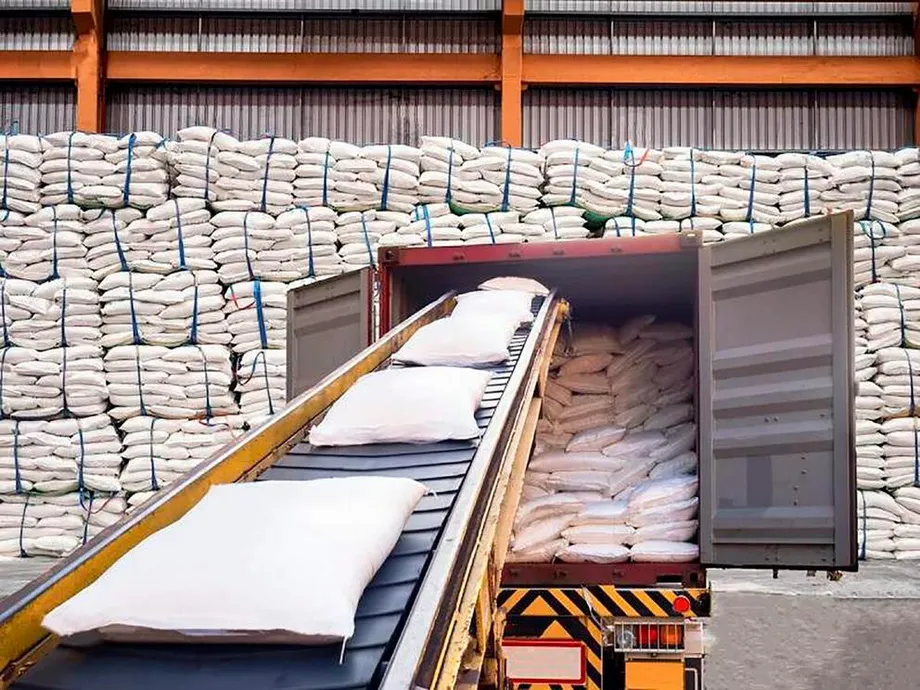
The import ceiling comes as overseas purchases increase. Customs Committee figures put imports of sugar and raw sugar at 652,800 tonnes worth $440.1 million in January through September 2026, compared with 480,100 tonnes worth $321.3 million during the same period of 2025. Import volume rose by about 36%.
Domestic production has moved in the opposite direction. According to the National Statistics Committee, Uzbekistan produced 165,500 tonnes of sugar in the first six months of 2025, down from 332,600 tonnes in the same period of 2023. That is a decline of approximately 50% in two years.
The government's approach combines protection from imported white sugar with financial support for local factories. Food manufacturers would face a more controlled supply system, while domestic sugar producers would receive help to repay debts and restore their finances.
How the three import quotas will work
The 300,000 tonnes will be divided equally among three groups of food manufacturers. Each will receive a separate allocation:
- Beverage manufacturers: 100,000 tonnes annually.
- Confectionery producers: 100,000 tonnes annually.
- Manufacturers of other food products: 100,000 tonnes annually.
The Cabinet of Ministers is to approve the following year's quota each November. Proposals will come from the Ministry of Economy and Finance, the Competition Promotion and Consumer Protection Committee, and the National Statistics Committee.
Officials may review the quotas every six months, taking account of domestic consumption, how much factory capacity is being used, import prices and prices inside Uzbekistan. This gives the government a mechanism to adjust permitted volumes as supply and demand change.
The arrangements for shipments above the quota, imports by businesses outside the specified groups and any special tariff treatment have not been explained. Those details will determine how broadly the restriction affects the market.
Businesses will bid for import access
Import allocations are to be distributed through online auctions, with results published openly. The Ministry of Investments, Industry and Trade, working with the Ministry of Digital Technologies, the Customs Committee and the competition authority, must launch the platform by December 1, 2026.
The platform will connect to the Customs Committee's Single Window system, which brings customs procedures together electronically. For businesses, the auction would become an additional step in securing imported white sugar.
Business lawyer Bektosh Hatamov has warned that the cost of winning an allocation could be passed on to buyers. A manufacturer paying for import access would have that expense alongside the sugar's purchase price, transport costs and applicable customs charges.
Hatamov also cited World Trade Organization rules against quantitative import restrictions. His warning adds a trade policy concern to the immediate commercial issue: how manufacturers will obtain enough sugar at a price that lets them compete.
Why the supply figures matter
Uzbekistan's annual sugar needs are estimated at 650,000 to 700,000 tonnes. The proposed 300,000 tonnes equals roughly 43% to 46% of that amount. Domestic production and any imports permitted through other channels would therefore play a substantial role in meeting demand.
Economist Otabek Bakirov estimates that sugar imports could reach 750,000 to 800,000 tonnes in 2026. Compared with that forecast, a quota of 300,000 tonnes would be 60% to 62.5% lower. Bakirov describes the measure as a sharp administrative reduction in access to imports.
The customs figures cover sugar and raw sugar together, whereas the quota concerns white sugar imported by specified food businesses. Raw sugar is an input that factories can process into refined sugar. The two categories need to be kept separate when assessing how much finished sugar will reach manufacturers and households.
Russia supplied 417,000 tonnes of sugar to Uzbekistan in 2025, the highest volume in five years. Total imports of sugar and raw sugar that year reached 732,300 tonnes, valued at $481.9 million, according to the customs figures.
Uzbekistan abolished its 20% excise tax on imported white sugar on October 1, 2025, while retaining a 20% customs duty. Excise and customs duty are different charges: removing the first reduced one part of the import tax burden, but the border duty continued to apply.
Factories gain buyers and easier loan terms
State organisations and enterprises must give priority to domestically produced white sugar in public procurement from January 1, 2027. Government sugar reserves are also to be built using supplies from local factories, providing producers with another source of demand.
Domestic factories must sell their output through the commodity exchange, an organised marketplace where products are traded. Finished sugar may be exported without additional special restrictions. Producers will also be eligible for free certification of locally manufactured goods and entry in the Register of Local Products and Manufacturers.
Existing loans owed to Uzpromstroybank may be rescheduled for up to five years, including a grace period of up to two years. Repayment schedules and interest rates are to be reviewed using the bank's applicable lending rates. The relief would give factories more time to meet their obligations.
By the end of 2026, producers are expected to collect outstanding accounts receivable, meaning money customers or other parties owe them. The package also calls for attracting $50 million in investment to support operations. That target is described as foreign direct investment in several accounts and more broadly as private investment in another.
Interest subsidies and proposed tax relief
The Entrepreneurship Development Company is to compensate 50% of interest expenses on loans in foreign currency used to import raw materials, subject to a ceiling of five percentage points. The support period runs from August 1, 2026, to August 1, 2031.
Percentage points measure the difference between interest rates. On a qualifying loan carrying 8% annual interest, covering half the interest would amount to four percentage points. At 12% interest, the five percentage point ceiling would limit the support below half of the interest bill.
The Ministry of Economy and Finance has also been instructed to prepare proposed Tax Code amendments within one month. The detailed terms describe an exemption from corporate income tax and a reduction of property tax to half the applicable rate until January 1, 2031. Other descriptions refer to a full property tax exemption, leaving that element of the proposed legislation unclear.
Factories would have to use all money saved through the tax benefits to repay loans. The relief is therefore tied to reducing debt rather than giving owners unrestricted funds. The tax measures still require the legislative changes described in the resolution.
The interest subsidy has a later end date than the proposed tax relief: August 1, 2031, rather than January 1, 2031. Both would support factories for several years after the import quota begins.
Banks receive a larger role inside factories
Domestic producers are advised to appoint representatives of creditor banks as financial directors. These representatives could participate in company general meetings and block decisions that would weaken a borrower's financial position.
Surplus liquid funds, meaning cash or assets readily available for payment, are to be directed towards early repayment of bank debt. The package also provides for withholding dividends until loans have been repaid, keeping profits inside the debt repayment process rather than distributing them to owners.
Pledged assets may be inventoried and transferred to the bank's balance sheet under specified conditions. These include launching projects outside the business plan, increasing debt, missing loan payments or failing to channel sales proceeds through the designated Uzpromstroybank account for repayment.
Foreign consultants are to help assess factory finances and prepare recovery plans. The package also calls for digital production management, better product and warehouse accounting, reduced production losses and continuous video monitoring. Deputy Prime Minister Jamshid Khodjaev is responsible for overseeing implementation.
Economists warn of costs for buyers and the budget
Bakirov warns that restricting imports could raise sugar prices, increase expenses for beverage and confectionery manufacturers, and reduce production or export opportunities. Poorer households would be particularly exposed to higher food costs, he argues.
His budget calculation assumes imports fall by 500,000 tonnes annually and sugar costs $650 per tonne. Those purchases would be worth $325 million. Applying the retained 20% customs duty produces his estimate of $65 million in lost annual duty revenue, or about 770 billion soum.
The figure is Bakirov's estimate based on those assumptions. He also argues that interest compensation, tax concessions and changes to factory loans would add costs for the budget and public financial institutions.
Economist Yuliy Yusupov has challenged both the restricted publication of the resolution and the policy of replacing imports through protection and subsidies. In a comment translated from Uzbek, he asked:
Why a closed document?
Yusupov argues that factories can become dependent on repeated state support: import barriers and financial concessions help them operate, then the benefits are extended when they struggle to compete without them. He calls instead for stronger competition and protection of consumers' interests.
The package's stated objectives are domestic production, food security and market stability. Its practical test will be whether factories increase reliable supply at prices that food manufacturers and households can afford, while reducing their debts.
Investment plans and the implementation calendar
Egypt's Nile Sugar was reported in February to be planning a $450 million investment in sugar beet cultivation and a processing plant in Jizzakh Region. The proposed plant could produce up to 200,000 tonnes annually once operational.
That planned capacity equals roughly 29% to 31% of Uzbekistan's estimated annual sugar needs of 650,000 to 700,000 tonnes. No opening date was given for the Nile Sugar plant. In January, Khodjaev said two major projects could increase domestic production within two to three years.
The resolution sets several nearer deadlines for businesses and officials:
- July 30, 2026: the date assigned to Cabinet of Ministers Resolution No. 417.
- August 1, 2026: the start of the interest compensation period.
- November each year: Cabinet approval of the following year's import quota.
- December 1, 2026: deadline for launching the electronic auction platform.
- End of 2026: deadline for collecting outstanding receivables and attracting the planned $50 million investment.
- January 1, 2027: start of the import quota and procurement priority for domestic sugar.
- January 1, 2031: proposed end date for the tax concessions.
- August 1, 2031: end of the interest compensation period.
The Customs Committee must publish quarterly data on imports of socially important foods by the 10th day of the following month. Required information includes volume, value and average customs value per tonne, broken down by supplier country and importer. Alongside published auction results, those figures would give businesses and consumers a way to track changes in import access and costs.
Key Points
- Uzbekistan plans a quota of 300,000 tonnes for white sugar imports by food industry businesses from January 1, 2027.
- Beverage, confectionery and other food manufacturers will each receive an allocation of 100,000 tonnes, distributed through online auctions.
- The government may review quotas every six months and will approve the following year's volume each November.
- Domestic factories will receive procurement priority, longer loan repayment periods and interest support, with tax concessions proposed.
- Economists warn of higher consumer prices, greater manufacturing costs and reduced customs revenue.
- The treatment of imports above the quota and businesses outside the specified groups has not been explained.