Six agreements anchor a wider electricity overhaul
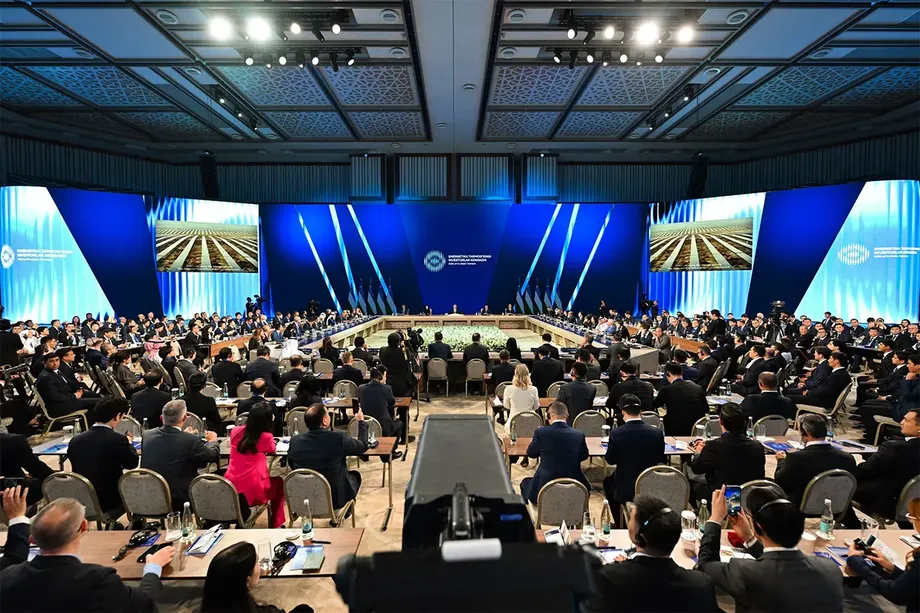
Uzbekistan has signed six energy project agreements worth $4.7 billion to add 3,000 megawatts of electricity generation and 400 megawatts of energy storage capacity, President Shavkat Mirziyoyev announced at an October 16 meeting with investors in Tashkent. The agreements accompany a broader change in policy: new power plants will be planned around regional electricity needs, with greater attention to the networks and storage systems needed to deliver reliable supplies.
Contents
- Six agreements anchor a wider electricity overhaul
- What has changed since 2016?
- New tenders will start with regional demand
- A public plan will guide development through 2050
- Power lines and storage move up the investment agenda
- Data centres add new demands on electricity and water
- Saving electricity becomes an investment opportunity
- Export ambitions meet a push for local manufacturing
- Oil and gas investment remains part of the programme
- A new council will address investor delays
- Key Points
By 2030, the government aims to develop 22,000 megawatts of new generating capacity, increase annual electricity production to more than 129 billion kilowatt hours and raise the renewable share of generation to 54%. It also plans 5,000 kilometres of power lines, 16 major substations and storage capacity of 4.5 gigawatts.
Mirziyoyev identified improving electricity supply and reducing grid losses as priorities alongside building new plants. For households and businesses, the practical objective is to get more of the electricity produced to the places that need it, with fewer interruptions and less energy lost along the way.
What has changed since 2016?
Uzbekistan has attracted $35 billion in energy investment since 2016, according to the president. The sector has opened to private investors and introduced public-private partnerships, arrangements under which government bodies and companies share responsibilities for developing infrastructure or providing services.
The number of partner countries has grown from two or three to more than 10. Solar, wind and hydropower facilities now have a combined installed capacity of 11.1 gigawatts, while renewable sources account for 31% of electricity generation. Electricity production per person has increased by 28% to 2,300 kilowatt hours.
The planned rise in the renewable share from 31% to 54% amounts to 23 percentage points. Capacity and production measure different things: capacity describes how much power equipment can deliver at a given moment, while production measures electricity generated over time. Solar and wind output also changes with the weather, making networks and storage central to the expansion.
New tenders will start with regional demand
Six solar and wind projects with a combined capacity of 2,200 megawatts are due to be offered through open tenders. These are a separate announcement from the six signed agreements worth $4.7 billion. The government intends to identify where additional power is needed before inviting investors to compete for prepared projects.
Earlier renewable projects were often located in areas proposed by investors. Mirziyoyev said this helped attract investment quickly, but concentrated generating capacity in some places and increased the cost of transmitting electricity to others.
President Mirziyoyev described the reasoning behind the change:
We do not need separate power plants, but an interconnected energy system.
Each tender will disclose the land plot, the grid connection point and schedule, and the terms for purchasing electricity and making payments. Investors are to face equal requirements, supported by stronger payment discipline and measures to reduce risks.
A recently signed decree divides responsibilities between the state and businesses in the fuel and energy sector, the president said. He pledged open competition, transparent rules and compliance with agreed terms. Publishing connection and payment information before bidding would give companies a clearer basis for estimating costs and preparing their proposals.
A public plan will guide development through 2050
Uzbekistan will prepare its first National Energy Development Master Plan covering the period through 2050 and make it public. The document is intended to connect forecasts of regional demand with decisions about power plants, transmission networks and storage.
Fergana, Andijan and Namangan already meet part of their electricity demand with supplies generated in other regions. New industrial areas and large enterprises will place further demands on the networks carrying that electricity. A map of grid connection opportunities is intended to help investors see where new facilities can connect.
The announced sequence sets out several milestones:
- September 22: officials discussed preparing projects around the needs of the electricity system before selecting investors competitively.
- October 16: Mirziyoyev announced the agreements and wider investment measures at the Tashkent dialogue.
- March 1, 2027: the map of grid connection opportunities is due.
- July 1, 2027: the full master plan is due.
- 2030: the government targets expanded generation, networks and storage, with renewables providing 54% of electricity.
Power lines and storage move up the investment agenda
More than $2 billion has been directed to modernising Uzbekistan's electricity grids over the past five years, Mirziyoyev said. The next phase will give priority to projects that combine generation, storage and network infrastructure rather than developing each component separately.
Much of the planned network work will be in Karakalpakstan and the Bukhara, Jizzakh, Samarkand, Namangan, Kashkadarya and Tashkent regions. Substations, which change voltage and help direct electricity through the network, will be part of the planned expansion alongside the 5,000 kilometres of power lines.
The storage target of 4.5 gigawatts is equivalent to 4,500 megawatts. Storage holds energy for later use, helping electricity generated at one time meet demand at another. Its power rating describes how quickly it can supply electricity; how long it can keep supplying that power depends on the amount of energy stored. Storage duration for the newly signed projects was not specified.
Uzbekistan also plans to work with investors on pumped storage hydropower for longer periods of storage. Such facilities use electricity to pump water to a higher reservoir, then release it through turbines when power is needed.
The government intends to clarify existing land and property tax exemptions lasting 10 years for storage projects. The exemptions are to explicitly include supporting infrastructure such as substations, control buildings and associated facilities, bringing those parts of a project within the stated tax treatment.
Data centres add new demands on electricity and water
Artificial intelligence, data centres and new industrial facilities were identified as growing sources of electricity demand. Uzbekistan plans to select sites for large data centres with access to electricity networks and renewable energy sources before development proceeds.
Large facilities will need primary and backup electricity supplies, storage and cooling systems planned together. Data centres house computing equipment that consumes electricity and produces heat, so cooling is part of their energy needs. Investors will be expected to use technologies that reduce both electricity and water consumption.
Planning these requirements alongside generation and network connections would bring a major new category of electricity consumer into the national investment programme. Site selection will need to account for the power available locally as well as the infrastructure required to keep facilities operating.
Saving electricity becomes an investment opportunity
Private companies are to take a greater role in electricity distribution, the part of the system that delivers power to customers. A model introduced in Samarkand will be extended to Jizzakh and Tashkent regions, with the stated aims of reducing electricity losses and improving service.
The government also wants private investment to modernise public facilities and water pumping stations using equipment that consumes less energy. Investors could receive revenue linked to the electricity saved and carbon credits generated by these projects.
President Mirziyoyev summed up the case for cutting waste:
The cheapest energy is the energy we save.
Renewable electricity producers are also expected to gain opportunities to earn revenue from green certificates and carbon credits. Green certificates track the renewable origin of electricity, while carbon credits represent measured reductions or removals of greenhouse gas emissions under the rules of a particular programme.
The government plans mechanisms for sharing these benefits between the state and investors, taking account of international environmental commitments and existing contracts. These measures would add potential income alongside electricity sales or payments for energy savings.
Export ambitions meet a push for local manufacturing
Uzbekistan's project with Azerbaijan and Kazakhstan to supply green electricity to Europe through the Caspian Sea is moving into practical implementation, Mirziyoyev said. Afghanistan and South Asian markets were also identified as potential destinations for energy exports.
The export plans place international connections alongside the expansion of domestic supply. Electricity produced in Uzbekistan would need a connected route through partner countries to reach European customers, making cooperation on infrastructure part of the project.
At home, the construction programme is expected to create demand for copper products, cables, transformers, metal structures and building materials. Mirziyoyev said domestic manufacturers should compete on quality, price and compliance with international standards.
The president described the economic idea of "O'z" as developing Uzbekistan's own capabilities while cooperating with international partners on equal terms. In practical terms, the energy programme brings together foreign investment and technology with local resources, industrial companies, engineers and workers.
Oil and gas investment remains part of the programme
Uzbekistan is also preparing to offer 128 oil and gas blocks to foreign partners. Preliminary resource estimates total 5.8 trillion cubic metres of gas and 560 million tonnes of liquid hydrocarbons.
Those figures describe estimated resources in the areas under consideration. Recoverable reserves are the quantities that geological work and economic assessment indicate can be extracted. The recoverable volumes, timing and terms for offering the blocks have yet to be specified.
The proposed blocks show that the investment agenda extends beyond renewable electricity. Alongside the 54% renewable generation target for 2030, the government is seeking partners across the wider fuel and energy sector.
A new council will address investor delays
Saida Mirziyoyeva, head of the Presidential Administration, will chair a new Investors' Council for the fuel and energy sector. Mirziyoyev announced the body after ACWA, Vision Invest, DataVolt, Voltalia and EDF proposed continuing dialogue with government agencies to resolve project problems.
The council is intended to address difficulties from land allocation through to the commissioning of facilities. The president said a single delay involving land, a grid connection or technical specifications could affect an entire project because energy developments require substantial investment and complex infrastructure.
Mirziyoyev acknowledged bureaucracy and corruption among the problems the council is intended to help prevent. He said presidential oversight would continue. The council's specific powers, membership and operating procedures have not yet been announced.
The new body adds an administrative measure to the construction targets. For investors, timely access to land and connections will be part of turning signed agreements into operating facilities. For electricity users, the intended result is a system in which new plants, storage and networks are ready to work together.
President Mirziyoyev described the relationship he wanted with investors:
We view energy as more than just another economic sector. It is a solid foundation for our future and prosperity. We need not just investments, but mutual trust and a genuine partnership. This is the core purpose of our dialogue today.
Key Points
- Six agreements worth $4.7 billion cover 3,000 megawatts of generation and 400 megawatts of storage capacity.
- Six additional solar and wind projects totalling 2,200 megawatts are planned for open tenders.
- Uzbekistan targets more than 129 billion kilowatt hours of annual electricity production and a 54% renewable share by 2030.
- The 2030 infrastructure programme includes 5,000 kilometres of power lines, 16 major substations and 4.5 gigawatts of storage.
- A grid connection map is due on March 1, 2027, followed by the national energy master plan on July 1, 2027.
- Saida Mirziyoyeva will lead a new council intended to resolve energy investors' project problems.