A summer surge brings influenza precautions forward
Japan crossed its national influenza epidemic threshold during August 17–23, 2026, the second earliest start since the country's infectious diseases law took effect in 1999. A changing A(H1N1)pdm09 virus has driven the summer wave, while Okinawa's continuing outbreak has put pressure on some emergency hospitals.
Contents
- A summer surge brings influenza precautions forward
- How early did the epidemic begin?
- H1N1 has replaced the previous mix of viruses
- What does the G155E change do?
- Why several conditions may have favored spread
- Okinawa's decline still leaves hospitals under pressure
- Hospital data show the burden on children and older adults
- Similar H1N1 signals have appeared abroad
- Vaccination and surveillance become immediate priorities
- Key Points
The Japan Institute for Health Security (JIHS) recorded 1.11 patients per designated reporting clinic in that August week. The rate rose to 1.76 during August 24–30, when clinics reported 6,543 patients. By October 5–11, Okinawa alone was recording 31.34 patients per reporting clinic, with nearly half its reported patients younger than 20.
Laboratory findings help explain why H1N1 is attracting attention. Between epidemiological weeks 27 and 37, it accounted for 188 of 199 reported influenza virus detections, or 94.5%. Researchers also found that a growing share of analyzed H1N1 viruses carried a change called G155E, which affects a part of the virus recognized by antibodies.
The outbreak arrived before vaccination for the 2026/27 season. Japan expects about 51.9 million vaccine doses for that season, making the timing of protection a practical concern for families, older people and medical facilities already dealing with infections.
Several developments appear to have converged: limited recent exposure to H1N1, changes in the virus, heavy summer travel and renewed contact when schools reopened. Scientists are tracking those factors alongside hospital admissions and laboratory tests as Japan approaches the months when influenza usually reaches its winter peak.
How early did the epidemic begin?
Japan defines an influenza season as week 36 through week 35 of the following year. The August threshold crossing therefore occurred near the end of the 2025/26 surveillance season, even though it marked the beginning of another wave of illness.
JIHS's week 35 influenza report, based on information available on September 2, places the timing behind only the 2009 pandemic in records dating to 1999. Before COVID-19, influenza generally entered its epidemic phase around week 45, apart from that pandemic year. In 2025, the threshold was crossed in week 39.
The national benchmark is an average of more than one patient per reporting medical institution in a week. These institutions, called sentinel clinics, provide a regular sample of influenza activity rather than a count of every infection in Japan.
- April 2026 onward: Almost all analyzed H1N1 viruses belonged to the genetic subgroup D.3.1.1.
- May: Viruses carrying the G155E change began appearing in the analysis.
- August 17–23: Japan crossed the national epidemic threshold at 1.11 patients per sentinel clinic.
- August 24–30: The national rate rose to 1.76, and reporting hospitals recorded 213 admissions.
- September 11: Okinawa issued an influenza advisory after reaching 10.34 patients per clinic in week 36.
- October 2: Okinawa issued a warning, its first in one year and seven months.
- October 9: Okinawa Prefecture and its medical association urged residents to use emergency care appropriately as some hospitals faced pressure.
H1N1 has replaced the previous mix of viruses
A(H1N1)pdm09 accounted for just 2.3% of reported virus detections, or 223 samples, from week 36 of 2025 through week 26 of 2026. During weeks 27–37, its share rose to 94.5%, with A(H3N2) accounting for the remaining 11 detections and no B/Victoria viruses reported.
JIHS's shorter snapshot for weeks 31–35 showed the same pattern: 36 of 37 detections were H1N1. Across the entire 2025/26 season, however, the institute's September 2 tally contained 9,862 detections: 272 H1N1, 5,635 H3 and 3,955 influenza B. The summer increase came after a season dominated by other viruses.
Public health laboratories, health centers and quarantine stations register these findings in Japan's National Epidemiological Surveillance of Infectious Diseases system, known as NESID. JIHS's virus detection tables include samples from sentinel clinics and other medical facilities. Their automatically generated figures reflect registrations through two days before preparation, excluding weekends and holidays; older records can also be added, revised or deleted.
What does the G155E change do?
Researchers at JIHS's National Institute of Infectious Diseases study viruses supplied by public health laboratories and institutions abroad, viruses isolated from clinical samples, and samples collected through genomic surveillance at entry points. They examine the genes for hemagglutinin and neuraminidase, two proteins on the virus's surface.
Hemagglutinin, often shortened to HA, helps influenza attach to cells. Antibodies can recognize parts of this protein and help block infection. G155E describes a change in one of HA's building blocks at position 155, in a region that antibodies recognize.
About 90% of the viruses analyzed in August carried G155E. All the September samples analyzed by October 1 carried it too, although the September sample count was small. Researchers also detected other combinations of changes.
In hemagglutination inhibition tests, which assess how well antibodies interfere with a virus's activity, G155E viruses reacted less strongly with antibodies from ferrets exposed to reference viruses. Reactivity against antibodies to A/Victoria/4897/2022, the strain recommended for vaccines grown in eggs for 2025/26, fell by a factor of eight to sixteen.
Human antibody research points in a similar direction. Jesse Bloom, a virologist at the Fred Hutchinson Cancer Center in Seattle, led a study testing blood samples from 260 people in Australia and the United States against 148 influenza A viruses circulating by mid-2026. He described the findings this way:
We saw that a number of strains which have the G155E mutation are, in some cases, less well recognized by pre-existing human antibodies,
The study, posted before peer review, found weaker recognition especially among antibodies from teenagers and young adults. The researchers suggested that many people in those age groups had limited previous exposure to H1N1 viruses with similar features.
Why several conditions may have favored spread
H1N1 last caused a large Japanese wave two seasons earlier and was rarely detected through much of 2025/26. Some people may consequently have had less recent immune protection against this subtype when it returned. Changes in the virus could have made recognition by existing antibodies more difficult.
Niigata University's September influenza analysis also identifies summer travel, weather and school reopening as possible contributors. Japan received 3,442,100 overseas visitors in July, including 763,800 from Taiwan and 272,500 from Hong Kong, where H1N1 activity was increasing.
Okinawa received 963,900 visitors that month, including 270,100 from abroad, an increase of 11.0% in foreign visitors from a year earlier. Heavy travel creates more opportunities for respiratory viruses to move between communities, while school reopening brings children back into prolonged contact. Outbreaks in August and early September forced some Japanese schools to close.
Extreme heat may also have encouraged people to spend more time in enclosed rooms with air conditioning. When ventilation is inadequate, shared indoor air provides opportunities for respiratory infections to spread. Researchers are considering these conditions together with changing immunity and viral genetics; the relative contribution of each remains uncertain.
Okinawa's decline still leaves hospitals under pressure
Okinawa reported 1,379 patients across 44 sentinel medical institutions during October 5–11. Its rate of 31.34 per clinic was down from 37.07 the previous week, but remained above the threshold of 10 used to end its warning.
Yaeyama recorded the highest regional rate, at 45.33 per clinic. Rates elsewhere were 35.00 in central Okinawa, 33.58 in the south, 27.40 in the north, 23.56 in Naha and 18.00 in Miyako. The warning remained in effect despite the weekly decline.
Children and young people made up a large part of the reported burden: 684 patients were under 20, including 248 aged one to four and 190 aged five to nine. Influenza A accounted for 90.0% of cases, influenza B for 0.3%, and the type was unknown for 9.7%. Niigata University researchers had confirmed A(H1N1)pdm09 in locally collected August samples.
Admissions at Okinawa's seven major sentinel hospitals fell from 90 to 57. Some emergency hospitals nevertheless faced pressure during the outbreak, prompting the prefecture and prefectural medical association's October 9 appeal for appropriate use of emergency services. By October 15, influenza patient numbers were also rising rapidly in Hokkaido, showing that concern extended from Japan's southwest to its north.
Hospital data show the burden on children and older adults
Japan's national hospital surveillance recorded an increase from 57 influenza admissions in week 31 to 213 in week 35. Roughly 500 designated hospitals report to this system, which tracks admissions separately from outpatient clinic visits.
Across the 2025/26 season, 24,929 admissions had been reported by September 2. Children under 10 accounted for 9,175, while people aged 70 and older accounted for 9,388. Together, those two age groups represented about three quarters of recorded admissions.
Children under 10 made up 36.8% of admissions, compared with 20.2% at the same point in the previous season. The share among people aged 70 and older fell from 55.7% to 37.7%, although they remained a large part of the hospital burden.
JIHS also recorded 176 cases of influenza associated encephalopathy during 2025/26, including 14 deaths. Encephalopathy is a serious condition affecting brain function. These figures cover the full surveillance season through the reporting date, including the earlier waves.
Another measure supported the summer increase. Across 140 National Hospital Organization hospitals, influenza test positivity rose from 0.5% during August 1–15 a year earlier to 2.1% in the same period of 2026. Positive results increased from 31 to 94, even as the number of tests fell from 6,377 to 4,367.
Similar H1N1 signals have appeared abroad
Hong Kong's summer surveillance showed a rapid shift toward H1N1. According to Niigata University's analysis, H1 accounted for 576 of 965 subtyped influenza A samples in week 32, 760 of 935 in week 35, and 942 of 1,106 in week 36. Its share rose from about 60% to 85% over that period.
Taiwan reported H1N1 in 79.4% of its circulating influenza A viruses. Of 105 newly reported severe influenza cases during September 1–7, 97 were H1N1. Those figures put the same subtype at the center of outbreaks in several places connected to Japan by frequent travel.
In the United States, H1N1 accounted for 96% of positive samples for which subtyping was performed during the week ending September 26. H3N2 accounted for almost 4%, and no influenza B was detected. Alex Greninger, a University of Washington virologist, said his Seattle laboratory found G155E in 13 of 17 H1N1 samples with enough genetic sequence information to identify the change.
The early American findings came from relatively few positive tests compared with the numbers available during a winter peak. Scientists are watching whether the rise continues and how hospital admissions develop alongside infections.
Vaccination and surveillance become immediate priorities
Japan's 2026/27 influenza vaccine is designed to cover two influenza A subtypes and the B/Victoria lineage. Niigata University's analysis notes that the World Health Organization changed its H1N1 vaccine recommendation to an A/Missouri/11/2025-like virus as circulating viruses evolved.
The laboratory comparison with A/Victoria/4897/2022 concerned the previous season's vaccine strain. Protection during 2026/27 will depend on the match with circulating viruses, people's immune responses and the outcomes measured in clinical studies. Evidence on those outcomes will develop as vaccination and infections occur.
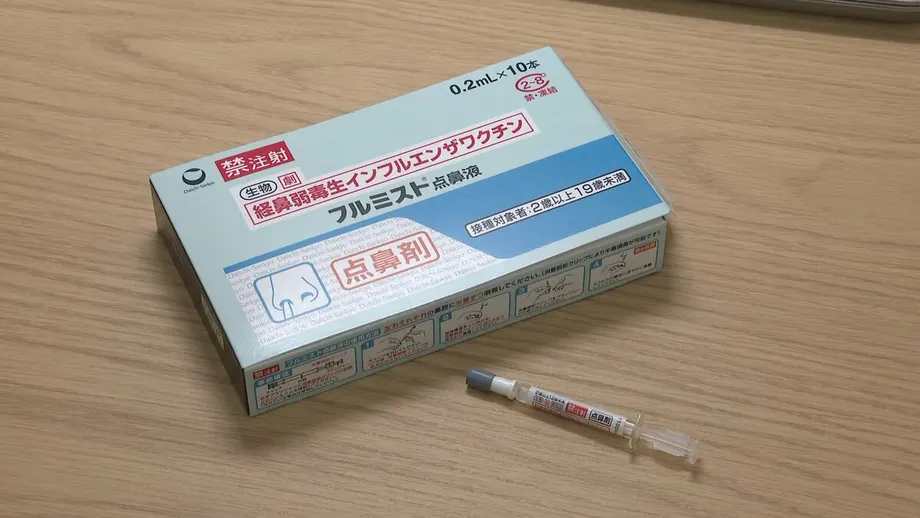
Japan expects about 51.9 million doses through the season. Routine vaccination eligibility includes people aged 65 and older, and certain people aged 60–64 with specified serious heart, kidney, respiratory or immune conditions. A vaccine sprayed into the nose, FluMist, has also attracted attention among families concerned about injection pain.
JIHS recommends cough etiquette, including appropriate mask use, hand hygiene and ventilation, along with efforts to keep respiratory viruses out of medical and welfare facilities. Influenza can cause fever, headache, muscle pain and marked fatigue, and symptoms alone can be difficult to distinguish from COVID-19.
Japan's 2025/26 season had two peaks, at 51.12 patients per sentinel clinic in week 47 and 43.34 in week six. Another winter rise is possible after the summer wave, including a later increase in H3N2 or B/Victoria.
Surveillance methods have also changed. Since week 15 of 2025, influenza reporting has operated through the acute respiratory infection network, described by JIHS as approximately 3,000 sites, replacing the former network of approximately 5,000 influenza and COVID-19 sites. Comparisons across that change require attention to which clinics and patient groups are represented.
Public health teams will therefore follow several measures together: patients per clinic, test positivity, admissions, severe illness and the genetic and antibody response characteristics of detected viruses. For families and care facilities, the immediate change is straightforward: influenza precautions and vaccination decisions have arrived well before the usual winter timetable.
Key Points
- Japan crossed its influenza epidemic threshold during August 17–23, its second earliest start in records dating to 1999.
- A(H1N1)pdm09 accounted for 94.5% of reported virus detections during weeks 27–37.
- The G155E change became common among analyzed H1N1 viruses and showed reduced recognition in antibody tests.
- Okinawa's rate fell to 31.34 patients per sentinel clinic during October 5–11, but its warning continued.
- Children under 10 and adults aged 70 and older accounted for about three quarters of reported admissions across 2025/26.
- Japan expects about 51.9 million influenza vaccine doses for 2026/27, while monitoring for further winter waves.