Licence No. 1-I opens a new route for banking
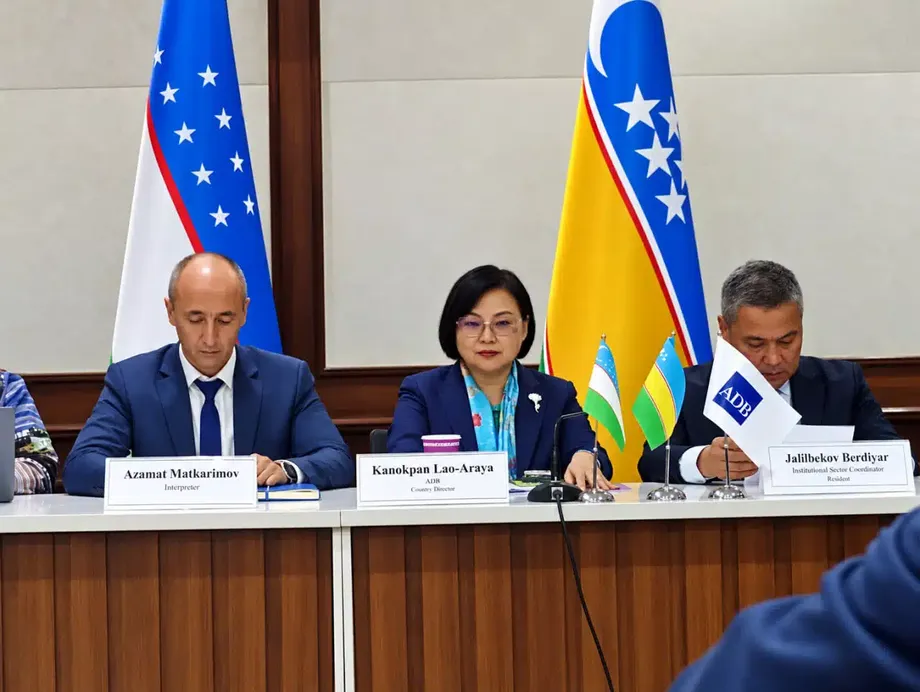
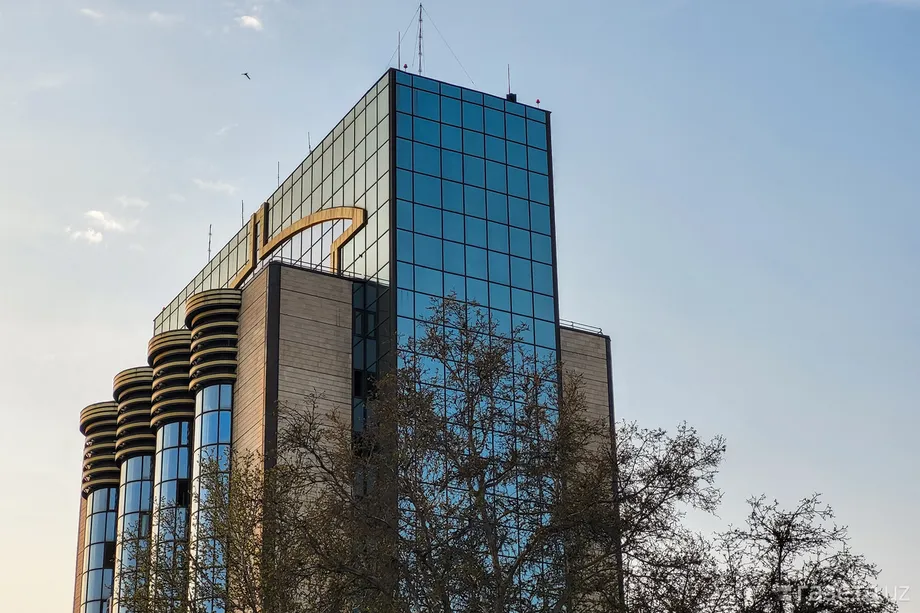
Uzbekistan's Central Bank has issued the country's first licence for Islamic banking to Open Bank, giving an existing commercial lender permission to offer financing based on trade, leasing, agency agreements and shared profits. The regulator's board approved licence No. 1-I through Decision No. 28/1 on October 23, 2026, and announced the decision on October 26.
Contents
- Licence No. 1-I opens a new route for banking
- How the six permitted operations work
- What changes for borrowers and savers?
- Why an Islamic window needs a separate licence
- From legislation to Open Bank's approval
- The institution behind the first licence
- Who will check the Islamic standards?
- How banking expands an existing market
- Two banks planned, with more institutions preparing
- Key Points
The authorisation covers Islamic financial operations under Article 5-1 of the Law on Banks and Banking Activities. It follows legislation signed on March 27, 2026, which took effect on June 29, and licensing regulations that entered into force on July 20.
For customers, the change creates a banking option that replaces interest on loans with other ways of paying for finance. A bank might buy goods and resell them at an agreed markup, lease equipment to a business, or invest money under an agreement to share profits. Customers still pay for financing, but the contract and the way the bank earns its return are different.
Open Bank already holds a conventional banking licence. Its additional authorisation allows it to develop Islamic services alongside its existing business, subject to rules requiring separate accounting and supervision of Islamic operations. The bank had not announced when customers would be able to use its Islamic products as of October 26.
How the six permitted operations work
Uzbekistan's banking legislation identifies six main Islamic financial operations. Together, they cover several everyday needs, from buying equipment to financing production and placing money in an investment account.
- Mudaraba: one party supplies capital and another manages it, with profits divided under an agreed arrangement. Banks can use this structure to finance customers or accept investment deposits.
- Wakala: money is provided or accepted under an agency agreement, in which one party acts on behalf of another.
- Murabaha: the bank buys goods and sells them to the customer in instalments at a price that includes an agreed markup.
- Salam: payment is made for goods before they are delivered, giving the seller money ahead of supply.
- Musharaka: partners jointly finance a project or participate in a company's capital.
- Ijara: the bank provides an asset through an Islamic lease, which may include an option for the customer to buy it later.
The law also allows other Islamic financial operations when they follow international banking practice and comply with Uzbek legislation. That gives banks room to develop products beyond the six named categories while remaining within the country's legal framework.
What changes for borrowers and savers?
A customer buying machinery through murabaha would pay a sale price that includes the bank's markup rather than repay an interest bearing loan. Under ijara, the customer would pay to use the machinery through a lease. A business seeking a partner could instead use musharaka to bring capital into a project.
These arrangements connect the bank's earnings to a sale, the use of an asset, an agency service or an investment. Islamic finance follows Sharia principles, which prohibit charging interest on a loan and exclude activities such as gambling and alcohol production.
For savers, the legislation creates a route to investment deposits structured around Islamic financial principles. Under mudaraba, for example, the agreement sets out how investment profits are shared between the provider of the money and the party managing it. The contract determines the arrangement for returns and risk, making its terms central to the customer's decision.
Uzbekistan's Central Bank has advised people to check that a financial institution holds the required authorisation before using its services. The regulator says banking licence information can be checked on its official website. Customers considering Islamic products will also need the bank's published terms, including the agreed price, fees, profit arrangements and payment obligations.
Why an Islamic window needs a separate licence
Uzbekistan permits two routes into Islamic banking: a bank devoted to Islamic operations, or an Islamic division within a conventional commercial bank. The second arrangement is commonly called an Islamic window. Both require a separate Central Bank licence.
A conventional bank operating an Islamic window can continue its traditional business, but must keep separate accounts for the two types of operations. It must also establish a specialist Islamic finance division and a council responsible for checking compliance with Islamic financial standards.
The licence is valid indefinitely and cannot be transferred to another institution. Banks must establish management, internal control and audit arrangements for their Islamic operations. Open Bank's existing conventional business therefore remains relevant: the new licence adds a regulated line of activity to an institution already operating in the market.
From legislation to Open Bank's approval
Open Bank's shareholders began the formal preparations on June 29, the same day the new banking law took effect. At their annual general meeting, they unanimously approved the introduction of Islamic banking and instructed management to take the steps needed to obtain a licence.
The shareholders also approved an Islamic finance council whose members would serve for three years. Their candidates were to be submitted to the Central Bank for approval, while the council's operating rules were to take effect after the licence was issued.
The main steps leading to the first authorisation were:
- April 2022: President Shavkat Mirziyoyev signed legislation allowing microfinance organisations to provide Islamic financing.
- July 2024: the Central Bank approved rules governing Islamic financial services offered by microfinance organisations.
- March 27, 2026: the president signed the law introducing Islamic banking.
- June 29, 2026: the law took effect, and Open Bank's shareholders approved preparations for Islamic operations.
- July 20, 2026: regulations governing the establishment and licensing of Islamic banks and Islamic windows took effect.
- October 23, 2026: the Central Bank approved Open Bank's Islamic banking licence.
- October 26, 2026: the regulator announced the decision.
Central Bank deputy chairman Sanjar Nosirov said in August that the licensing process had begun. He expected conventional banks to open Islamic windows before fully Islamic banks entered operation. Open Bank's approval follows that sequence.
The institution behind the first licence
Open Bank was registered by the Central Bank in late 2022 and previously operated as Smart Bank. It adopted its current name in September 2025 and reissued its conventional banking licence, No. 89.
As of October 26, 2026, its authorised capital was 500 billion soums. Future Open Technology Group was its sole shareholder, holding all 500 million shares. Authorised capital is the amount recorded as the shareholders' contribution to the bank, separate from money placed by customers.
Ownership information updated in September 2026 listed Sherzod Tashpulov, chairman of Open Bank's supervisory board, as holding 95.16% of Future Open Technology Group. Infovest Capital — FZCO held the remaining 4.84%. Earlier information from 2025 identified Investment Development-Textile, a company linked to Tashpulov, as the parent company's principal owner.
The ownership record places the first Islamic banking licence within an established commercial banking group. Open Bank can build the new business through its existing institution rather than establish a separate bank from the beginning.
Who will check the Islamic standards?
July's licensing rules require an Islamic finance council of at least three members at an institution conducting Islamic banking. Banks must also appoint a responsible executive who meets qualification requirements and adopt a policy for compliance with Islamic financial standards.
Applicants need a business plan covering three years, arrangements for managing risk and controls to check that products meet the required standards. The Ministry of Justice registered the changes to banking licensing procedures in July, putting these requirements into the approval process.
A separate Islamic finance council at the Central Bank coordinates the development of common standards for banks, microfinance organisations and other participating institutions. Its five members were approved in July. Saidjamol Masayitov, a chief specialist at the Fatwa Centre of the Muslim Board of Uzbekistan, became chairman, with fellow chief specialist Muhammadayubkhon Khomidov as deputy chairman.
The other members are Fatwa Centre specialists Hikmatilla Toshtemirov and Abdulatif Tursunov, and Orient Audit Group managing partner Ahrorjon Sadullayev. The council brings together religious and financial expertise for the regulator's work on product standards.
By early August, the Central Bank had amended 15 regulatory documents covering licensing, risk management and other operating requirements. Nosirov said at the fifth Tashkent International Investment Forum in June that the regulator planned to adopt up to seven Islamic financial service standards by the end of 2026. Murabaha and mudaraba were among the areas being developed.
How banking expands an existing market
Microfinance organisations were offering Islamic financial services before Open Bank received its licence. The April 2022 legislation opened that route, and the Central Bank's July 2024 regulation set rules for mudaraba, murabaha, musharaka, ijara and salam.
Some banks also worked through agreements with international Islamic financial institutions. The new banking framework lets licensed banks offer a broader range of Islamic products themselves, including investment deposits. The March 2026 law also established legal rules for those deposits and their taxation.
The shift is therefore from a market served mainly through microfinance and specific international arrangements to one in which commercial banks can develop their own Islamic services. The banking law names six main operations, compared with the five covered by the earlier microfinance framework, with wakala included in the banking list.
Central Bank officials have described Islamic finance as a way to attract money from people who avoid conventional banking for religious reasons, as well as investment from countries with established Islamic financial markets. Islamic banks already operate in Kazakhstan, Kyrgyzstan and Tajikistan, giving Uzbekistan regional neighbours with experience in this form of banking.
Two banks planned, with more institutions preparing
Uzbekistan's plans presented in March 2026 called for at least one Islamic window in a commercial bank before the end of the year and two fully Islamic banks during 2026 to 2030. Authorities estimated that the expansion could bring about $1 billion in additional investments and deposits over five years.
An earlier forecast was larger: in October 2025, Central Bank deputy chairman Abrorkhoja Turdaliev said ten Islamic banks were expected by 2030, alongside Islamic windows at three state banks. The March 2026 programme set out the later target of two fully Islamic banks for 2026 to 2030.
Central Bank chairman Timur Ishmetov has said more than ten commercial banks began preparing to introduce Islamic financial instruments. In June 2026, shareholders at Agrobank, Asakabank, Ipak Yuli Bank and Orient Finans Bank also approved plans to develop Islamic financing.
Nosirov said in April that representatives of four or five foreign banks had expressed readiness to enter Uzbekistan's market if the necessary legal framework was established. The government's investment ambition also sits within a global Islamic finance market estimated at $6 trillion, although that figure describes the worldwide industry rather than funds committed to Uzbekistan.
Open Bank's licence gives the reform its first authorised banking participant. The next practical developments are the introduction of customer products, further licensing decisions and completion of the standards scheduled for the end of 2026. For households and businesses, the immediate change is a new legal route to finance, with access depending on the services individual banks put into operation.
Key Points
- Open Bank received Uzbekistan's first Islamic banking licence under a Central Bank decision dated October 23, 2026.
- Licence No. 1-I covers six main forms of Islamic finance, including instalment sales, leasing, agency agreements and shared investment.
- The bank can develop Islamic services alongside conventional banking, with separate accounting, controls and specialist supervision.
- Open Bank had not announced a customer product launch date as of October 26.
- Microfinance organisations already provided Islamic financing; the new framework extends the market into licensed commercial banking and investment deposits.
- Authorities plan two fully Islamic banks during 2026 to 2030 and expect about $1 billion in additional investment and deposits over five years.
- The Central Bank planned up to seven Islamic financial service standards by the end of 2026.