A new well with potential to supply 20 million cubic feet a day
Bangladesh's state exploration company has begun testing Bhola North-3, the first well in a Tk 907 crore drilling project, after finding gas at a site drilled to a measured depth of 3,526 metres. Preliminary observations put its potential daily production at 20 million to 22 million cubic feet, according to project director Engineer Mohammad Ahsanul Amin.
Contents
- A new well with potential to supply 20 million cubic feet a day
- What engineers are testing beneath Jangalia
- From drilling to the next five wells
- How much gas does Bhola hold?
- Why existing capacity is going unused
- A 201 kilometre pipeline proposal
- Why trucks have struggled to fill the gap
- How the investment compares with imported LNG
- Residents want local benefits alongside national supply
- Key Points
The discovery in Jangalia village, Paschim Ilisha Union, Bhola Sadar, could expand the island district's gas supply. Yet Bhola already has substantial production capacity sitting unused because local demand is limited and transport to consumers elsewhere remains inadequate. The practical challenge is to connect gas underground with factories, power plants and households that need it.
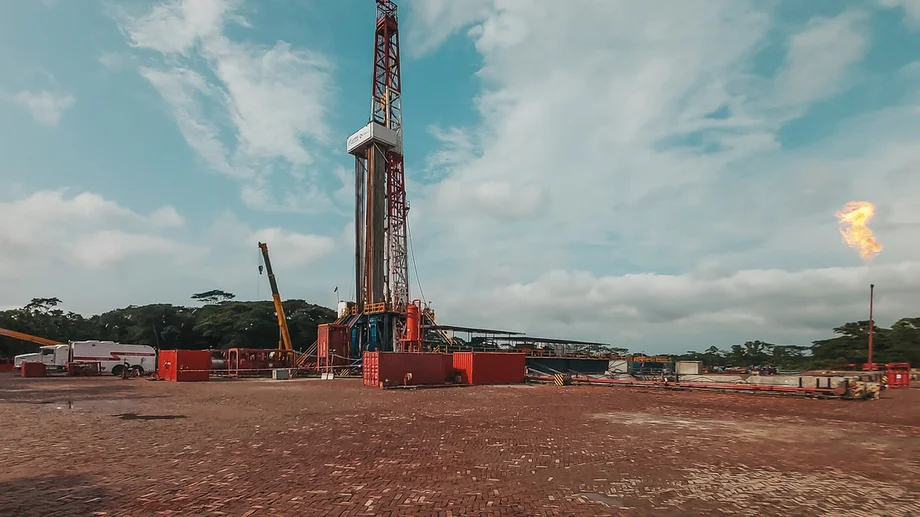
Bangladesh Petroleum Exploration and Production Company Limited, known as BAPEX, confirmed the presence of gas after igniting it during a drill stem test on November 15. Amin put the start at 8:20am; another published account placed the ignition at about 9:45am.
Preliminary production estimates also vary. Alongside Amin's estimate of 20 million to 22 million cubic feet a day, BAPEX officials have been cited giving a range of 22 million to 25 million. Engineers will examine gas flow and pressure readings before settling the well's production assessment and reserve estimate. No completion date for that assessment was announced.
Bhola North-3 brings the district's well count to 10 across three gas fields. Chinese contractor Sinopec drilled the well under BAPEX supervision. The next planned well in the project is Shahbazpur North East-1.
What engineers are testing beneath Jangalia
Amin, a BAPEX general manager and the drilling project director, said gas was detected in three geological layers during drilling. Project officials also said gas had previously been found in two other wells in the Bhola North field.
A drill stem test allows engineers to let gas flow under controlled conditions and measure how the underground reservoir responds. The flow rate shows how quickly gas reaches the well, while pressure readings help engineers assess the reservoir's ability to sustain production.
BAPEX completed perforation over a 12 metre interval between depths of 3,283.50 metres and 3,295.50 metres. Perforation creates openings through the well lining so gas from the surrounding rock can enter. The well's measured depth of 3,526 metres is the distance along its drilled path.
Pressure checks on the testing string and surface flowlines were satisfactory before the test began. These are the pipes and equipment that carry gas during testing. Engineers will use the subsequent flow and pressure data to judge how the well could operate in regular service.
From drilling to the next five wells
Bhola North-3 is the first development well in the Tk 907 crore programme, equivalent to Tk 9.07 billion. The drilling and testing sequence has stretched across more than two months:
- September 9: Drilling began at Jangalia village.
- October 22: Drilling was completed.
- November 14: Perforation was completed across the selected 12 metre interval.
- November 15: BAPEX began the first drill stem test.
BAPEX expects the five wells being implemented through Sinopec to add about 100 million cubic feet a day of production capacity if they deliver the anticipated results. That would raise Bhola's stated capacity from 182 million to about 282 million cubic feet a day, an increase of roughly 55%.
The government has also initiated plans for five additional wells during 2025 to 2030. Petrobangla planning accounts describe five wells under implementation and another five undergoing tender procedures. Those expansion plans make the question of where the gas will go increasingly urgent.
How much gas does Bhola hold?
BAPEX estimates that the Shahbazpur, Bhola North and Ilisha fields together contain about 2.05 trillion cubic feet of gas underground, of which approximately 1.43 trillion cubic feet is recoverable. Other published estimates put Bhola's reserves at about 1.75 trillion cubic feet.
Gas underground and recoverable gas are different measurements. Recoverable gas is the portion engineers expect to extract using the technology and operating conditions assumed in their assessment. BAPEX's figures put that recoverable share at about 70% of the estimated underground total.
Petrobangla has also been cited estimating 1,432 billion cubic feet across the three fields, numerically close to BAPEX's recoverable figure, with less than 200 billion cubic feet produced so far. One trillion cubic feet equals 1,000 billion cubic feet, making consistent units essential when comparing these estimates.
Bhola's exploration history began with the Shahbazpur discovery in Borhanuddin in 1995. Production there started in 2009. BAPEX discovered Bhola North in 2018 and Ilisha in 2023; regular production from those latter two fields had yet to begin in the operating accounts describing the district's unused capacity.
Why existing capacity is going unused
Bhola's nine existing wells have a combined stated production capacity of 182 million cubic feet a day. Actual extraction at Shahbazpur has been around 70 million to 75 million cubic feet daily, reflecting the limited amount that consumers can take.
Shahbazpur itself has processing capacity of about 150 million cubic feet a day, assembled through units rated at 70 million, 20 million and 60 million cubic feet. Its maximum reported utilisation of 75.5 million cubic feet is only about half that processing capacity.
BAPEX produces and processes the gas, while Sundarban Gas Distribution Company supplies consumers. Existing customers include three power plants, two industrial units generating their own electricity, factories and about 2,500 households. Limited growth in the customer base has held back demand.
On one Wednesday described in an operating account, four wells produced 71 million cubic feet, which the distributor could not fully take. More wells would expand potential supply, but customers and transport connections are needed to turn that capacity into useful daily deliveries.
A 201 kilometre pipeline proposal
The government has agreed in principle to move Bhola gas through pipelines to Barishal and then Khulna. Gas Transmission Company Limited, known as GTCL, and Petrobangla favour that option after comparing it with carrying compressed or liquefied gas by road.
The proposed Bhola to Barishal section would run for 96 kilometres, including crossings beneath two rivers. A second section from Barishal to Khulna would extend 105 kilometres. Together, the 201 kilometres have an initial estimated cost of Tk 4,131 crore, or Tk 41.31 billion.
The estimate comprises Tk 1,931 crore for the first section and Tk 2,200 crore for the second. GTCL expects the figures to change after the Khulna feasibility study and the addition of land acquisition costs. The Bhola to Barishal study used a pipe diameter of 24 inches; the proposed Barishal to Khulna pipe would be 30 inches.
GTCL's planning timetable calls for completing the Khulna feasibility study within two months and preparing a development project proposal within three months. The proposal would pass through GTCL and Petrobangla before going to the Energy Division. Final government approval would be followed by separate tenders for the two sections.
Officials envisage construction within three years, although river crossings and other work could extend that schedule. Earlier planning had examined a direct Barishal to Dhaka route, with a feasibility report expected in December. The subsequent decision favours Khulna, where gas could serve existing power plants and connect with the wider network.
Why trucks have struggled to fill the gap
Bhola gas has already been transported outside the district in cylinders containing compressed natural gas, or CNG. Compression squeezes gas into a smaller space so specially designed containers can carry it by road.
Intraco began filling cylinders in December 2023 under an initial plan to deliver 5 million cubic feet a day. Actual deliveries have been about 800,000 to 900,000 cubic feet daily, equal to roughly 16% to 18% of that target.
The government's transport comparison estimated that moving 100 million cubic feet daily would require 1,600 special trucks using CNG, or 700 specialised tankers carrying liquefied natural gas. LNG is gas cooled until it becomes liquid, reducing its volume for transport. Both options require equipment to prepare the gas and handle it at its destination.
Petrobangla had considered cylinder deliveries to Meghnaghat and an LNG export option under chairman Md. Rezanur Rahman. The pipeline proposal seeks a larger, continuous outlet for Bhola's production, while avoiding the road traffic and delivery uncertainty identified in the transport review.
How the investment compares with imported LNG
The Energy and Mineral Resources Division estimates that supplying 100 million cubic feet a day through imports would require about 12 LNG cargoes a year. Using an average cost of Tk 970 crore per cargo recorded for October, its calculation puts that annual import bill at Tk 11,640 crore.
Five cargoes at that price would cost Tk 4,850 crore, more than the initial Tk 4,131 crore pipeline estimate. Dividing the pipeline estimate by the stated annual import bill gives about 4.3 months of equivalent spending on imported LNG.
The project's commercial return will depend on construction and financing costs, operating expenses, domestic gas production costs, and how much supply actually replaces imports. Petrobangla's ambition to move 300 million cubic feet daily would also require more production capacity and sufficient recoverable reserves.
Petrobangla projections put Bhola's potential capacity at about 280 million cubic feet daily in 2029 and 380 million in 2032. A pipeline with a diameter of 24 inches could transport about 300 million cubic feet a day, according to the planning assessment. Land would be reserved for a possible parallel line.
Petrobangla chairman Md. Abdul Mannan said, in remarks translated from Bengali:
Domestic gas means savings in foreign currency.
Mannan said connecting Bhola to the national pipeline could supply power plants in Khulna and increase deliveries to fertiliser factories, alongside meeting demand from investments within Bhola. The pipeline review identified three underused Khulna power plants with combined capacity of 1,244 megawatts.
Residents want local benefits alongside national supply
Bhola residents have welcomed the discovery while pressing for household gas connections, industries, employment and better public infrastructure. Bhola Sadar administrative chief Sajal Kumar Das urged prompt action to connect the district's gas to the national grid, citing benefits for industry and economic activity.
District council administrator and district BNP convener Golam Nabi Alamgir called for a Bhola to Barishal bridge and a medical college before gas is sent to the national network. Residents Hossain Al Faruk, Tuhin and Miraj also pressed for the bridge while supporting the use of Bhola gas for national development.
A signature campaign supporting six local demands, including household connections and industrial development using gas, began on November 15 in Char Kukri Mukri Union of Char Fasson. Organisers aim to send applications from several hundred thousand people to the prime minister.
Geologist Badrul Imam has argued that more investment within Bhola could increase local gas demand, while a pipeline could help relieve shortages elsewhere. The two approaches address different needs: factories in Bhola would bring local employment, while transmission infrastructure would reach consumers beyond the island.
For Bangladesh, the new well's immediate contribution would be modest beside a national shortfall. Figures cited from energy sector officials put daily demand at 3,800 million to 4,000 million cubic feet and supply near 2,100 million. Bhola North-3's preliminary 20 million to 22 million estimate amounts to roughly 1% of that supply. The wider drilling programme and a workable transport connection would give Bhola a larger role.
Key Points
- BAPEX began testing Bhola North-3 on November 15 after drilling to a measured depth of 3,526 metres.
- Preliminary production estimates range from 20 million to 25 million cubic feet daily; flow and pressure tests will guide the final assessment.
- The well is the first in a Tk 907 crore project that could add about 100 million cubic feet of daily capacity.
- Bhola already has unused capacity because local demand and transport connections are limited.
- A proposed 201 kilometre pipeline through Barishal to Khulna has an initial estimated cost of Tk 4,131 crore.
- Residents are seeking household connections, jobs, a bridge and a medical college alongside national use of the gas.