A season of smoke carries a heavy human cost
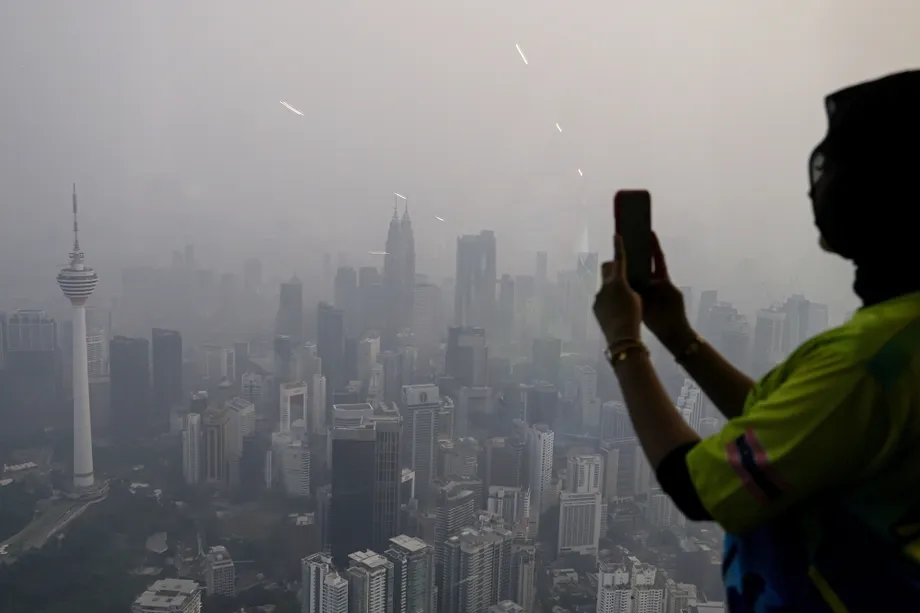
Malaysia's haze between July 1 and October 22, 2026, may have contributed to about 1,700 premature deaths and caused an estimated RM8 billion in welfare losses, according to research commissioned by the Federation of Malaysian Manufacturers (FMM). About 1,600 of those estimated deaths were attributed to smoke from fires outside Malaysia.
Contents
- A season of smoke carries a heavy human cost
- What does the RM8 billion figure measure?
- How researchers estimated the deaths
- Pollution lasted longer than a bad day
- Factories faced absence, lower output and shutdowns
- School closures became a workplace problem
- Fire tracing puts regional businesses under scrutiny
- What employers were asked to do
- Regional promises face demands for measurable action
- Key Points
The study, undertaken by Dr Piyu Ke, chief scientist of Carbon Spur Sdn Bhd, connects pollution exposure with consequences that extend from hospitals and schools to factory floors. Malaysia recorded 422 city-days with an Air Pollutant Index (API) above 100 across 13 cities during the study period, compared with 207 during the same dates in 2019.
Manufacturers also faced immediate bills. Forty-five sites that estimated their additional spending reported a combined minimum of RM280,000 in haze expenses, mainly for masks and medical care. Among 59 sites reporting operational impacts, 81 per cent experienced more sick leave or absences related to health, while 63 per cent said school closures affected staff availability.
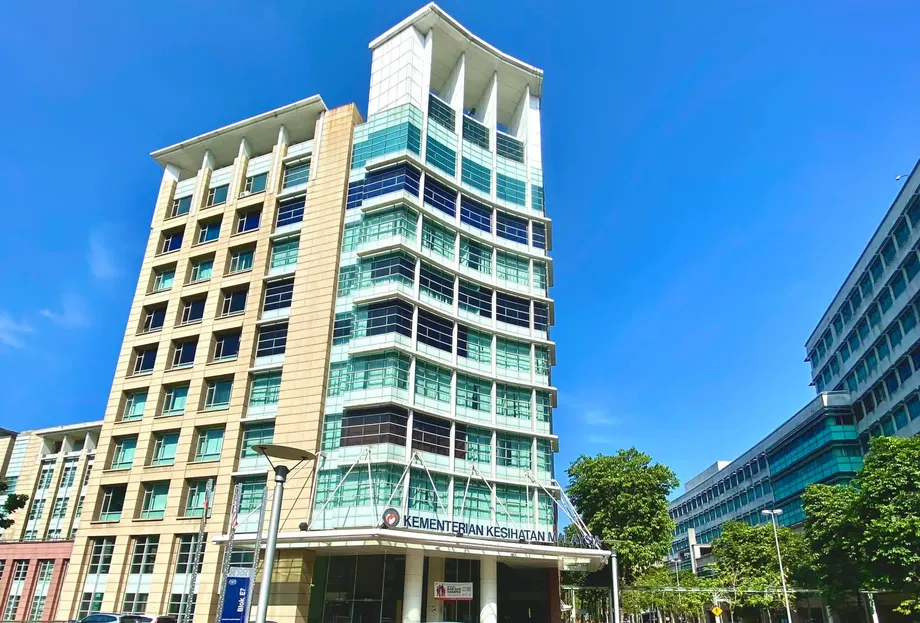
FMM president Jacob Lee Chor Kok said the research paper, titled The 2026 Fire Season and Transboundary Haze in Malaysia, had been submitted to the Natural Resources and Environmental Sustainability Ministry. Its findings were provisional because the fire season was still continuing when data collection ended on October 22.
Lee's message was that haze prevention belongs on the economic agenda as well as the environmental agenda. Factories depend on healthy employees, reliable deliveries and functioning schools. Smoke crossing a border can disrupt all three, even when the fires are far from the businesses bearing the costs.
What does the RM8 billion figure measure?
The RM8 billion estimate places a monetary value on the health burden associated with premature deaths. The report gives a range of RM3 billion to RM15 billion, using standard benefit-transfer methods.
Benefit transfer means taking findings from existing economic studies and applying them to another population or situation. Here, the calculation estimates how much people would be willing to pay to reduce the risk of dying prematurely. It puts a value on safer, healthier lives rather than calculating missing factory production.
Malaysia's welfare estimate and the manufacturers' additional expenses therefore describe different kinds of harm. The report says the welfare valuation should be kept separate from other economic losses rather than added to them. Presenting RM8 billion as money lost from national output would give readers the wrong understanding of the calculation.
The RM280,000 in business expenses has a narrower basis: estimates supplied by 45 responding sites. Spending across the wider economy, including household purchases of protective equipment, was not valued because public data for the season were unavailable. The study also left the educational cost of poorer teaching or lost classroom time without a monetary valuation.
How researchers estimated the deaths
Dr Ke combined satellite observations, air quality monitoring, atmospheric modelling and the FMM survey. The research examined accumulated pollution exposure over time, rather than concentrating only on the highest daily readings. Repeated exposure matters because people can breathe polluted air for many days even without a single extreme peak.
The central mortality estimate was about 1,700 deaths brought forward across the population, with a 95 per cent uncertainty interval of approximately 1,300 to 2,300. Researchers calculated this population burden using pollution exposure and health risk relationships; the figure represents a statistical estimate rather than a register of named patients.
The calculation changes substantially under a different assumption about smoke toxicity. If particles from fires are assumed to be no more toxic than other fine particles, the estimated toll falls to about 600. Fine particles are tiny airborne pollutants that can travel deep into the lungs.
The main estimate also draws on a health risk study that did not include Malaysian cities and dealt mostly with forest fires rather than peat fires. Peat is soil rich in partly decomposed plant material, and its burning can produce prolonged smoke. The choice of health risk assumptions is therefore a major reason for the wide uncertainty around the estimated toll.
Pollution lasted longer than a bad day
Malaysia's 422 city-days above API 100 were just over twice the 207 recorded during the corresponding period in 2019, an increase of about 104 per cent. A city-day counts one city experiencing that condition for one day. If three cities exceed the threshold on the same date, they contribute three city-days.
West Sarawak experienced 63 days of haze episodes during the study period. The report identified Sarawak as the worst affected state, although the manufacturers' survey had very little representation there.
Department of Environment figures on October 9 showed unhealthy API readings at 38 of Malaysia's 68 monitoring stations, or about 56 per cent. Seremban recorded a reading of 186 that morning. The API translates air pollution measurements into an index used to communicate health conditions and guide responses.
The season developed across several stages:
- July 1: The FMM study's assessment period began.
- October 5: The period covered by the manufacturers' survey began, and Greenpeace published findings on Indonesian fire sources.
- October 6: The Department of Occupational Safety and Health issued a workplace haze advisory.
- October 9: Unhealthy air was recorded at 38 national monitoring stations.
- October 12 to 21: FMM collected responses from member sites.
- October 22: The scientific study reached its data cutoff.
- October 28: FMM announced its call for regional action and said the study had been submitted to the ministry.
Factories faced absence, lower output and shutdowns
FMM received responses from 86 member sites, including 81 manufacturers. Fifty-nine sites, about 69 per cent of respondents, reported some operational impact. Across all respondents, 26 per cent described the disruption as moderate or significant.
Among the 59 affected sites, 14 per cent said staff shortages disrupted shifts, production or deliveries. Thirty-seven per cent reported lower output, and 27 per cent temporarily suspended at least one operation. A temporary suspension could affect part of a site's activity rather than the entire factory.
Additional spending was widespread within that affected group: 92 per cent reported higher costs, with masks cited by 76 per cent and medical expenses by 58 per cent. These percentages describe the responding sites with operational impacts, rather than all Malaysian manufacturers.
Most survey responses came from Selangor and Penang, and only two came from Sarawak. FMM cautioned that the survey was not representative of the manufacturing sector. Its findings offer a detailed picture of participating workplaces, while its geographical coverage limits any national estimate of factory disruption.
Lee, FMM's president, described how the effects spread through manufacturing operations:
For manufacturers, prolonged haze can result in employee illness, absenteeism, disruptions to production and deliveries, and additional expenditure on protective measures and healthcare. These costs ultimately affect business competitiveness and economic resilience,
School closures became a workplace problem
School closures during the haze amounted to an estimated 8.4 million to 13.4 million student-days. One student missing five school days contributes five student-days, so the figure combines the number of pupils affected with the duration of their interrupted attendance.
Parents and guardians also had to manage those interruptions. The survey finding that school closures affected staff availability at 63 per cent of impacted sites shows how a measure intended to protect children can create staffing pressures elsewhere.
FMM urged employers to offer scheduling flexibility to employees affected by school closures. For manufacturers managing shifts, that places family care alongside illness as a practical issue in maintaining operations.
The study did not attach a price to any deterioration in teaching quality. Its education figures measure the scale of disrupted attendance, while the financial consequences for learning and families remain outside the valuation presented.
Fire tracing puts regional businesses under scrutiny
The FMM study attributed most haze affecting Peninsular Malaysia to fires in Sumatra and Kalimantan, with fires inside Malaysia contributing a small proportion. Its estimate of about 1,600 deaths associated with foreign fire smoke, out of roughly 1,700 in total, makes prevention outside Malaysia central to reducing the country's health burden.
Greenpeace Indonesia and Malaysia, together with peatland monitoring group Pantau Gambut, presented a more detailed account of fire locations in their October 5 joint fire analysis. The organisations identified 5,540 smoke-source points between August 8 and September 20, 2026.
They recorded 859 points within 115 forestry concessions and 774 within 210 oil palm concessions. They also identified 2,951 points in peat hydrological areas and 2,211 in places that had burned previously between 2015 and 2023. These geographical categories can overlap, so their counts should be considered separately.
The organisations named Kuala Lumpur Kepong Group and its linked Indonesian entity PT Menteng Jaya Sawit Perdana among the top 20 entities associated with their 2026 fire findings. They also named concessions connected to Singaporean business interests: PT Damai Agro Sejahtera, PT Kayung Agro Lestari, PT Mitra and PT Arjuna Utama Sawit. The findings concern detected fire sources and corporate connections; responsibility for particular fires requires investigation by the relevant authorities.
South Papua accounted for 1,069 smoke-source points, about 19 per cent of the national total identified through September 20. Greenpeace also reported points inside two conservation areas in Merauke. Pantau Gambut's analysis claimed that 97 to 99 per cent of previously burned areas had never been restored, pointing to land management as a continuing concern alongside emergency firefighting.
What employers were asked to do
The Department of Occupational Safety and Health advisory issued on October 6 recommended curtailing strenuous outdoor work when API readings exceed 100 and stopping such work when readings exceed 200. FMM urged manufacturers to put that guidance into practice.
The advisory also addressed fine particulate matter, including PM2.5, entering buildings through ventilation and air conditioning systems. Moving indoors therefore needs to be accompanied by attention to workplace air conditions.
FMM called for certified respiratory protection where risks could not otherwise be controlled, flexible scheduling for staff affected by school closures, and activation of business continuity plans. Those plans set out how essential operations can continue when normal staffing, transport or production arrangements are interrupted.
The federation also sought Budget 2027 tax allowances and matching grants for industrial green technology, pollution control and workplace air monitoring, including support for small and medium enterprises. These were requests for government action, rather than announced budget measures.
Regional promises face demands for measurable action
FMM called for faster implementation of the Second Roadmap for ASEAN Cooperation on Transboundary Haze Pollution Control, covering 2023 to 2030 and supporting the goal of a region free of haze by 2030. It urged ASEAN and Asia-Pacific Economic Cooperation leaders to address haze through environmental, economic and ministerial cooperation.
The federation's priorities combined better monitoring and early warnings, enforcement against illegal burning, peatland rehabilitation, responsible supply chains, financing and worker protection. It also sought affordable alternatives to burning for smallholders and rural farming communities.
Companies were urged to trace their supplies, check environmental practices and help smaller vendors meet requirements. For governments, FMM proposed regular public progress scorecards, timely sharing of hotspot and air quality data, and coordinated warnings and rapid responses.
The ASEAN Investment Framework for Haze-Free Sustainable Land Management aims to raise US$1.5 billion by 2030. FMM called for faster mobilisation of that funding, alongside scientific cooperation and exploration of satellite monitoring and artificial intelligence. The 2030 targets provide a deadline against which financing, enforcement and prevention can be assessed.
Lee, speaking as FMM president, argued that countries must share the work of prevention:
Transboundary haze does not recognise national boundaries. Its consequences are shared by neighbouring countries, their populations and their economies. Therefore, its prevention cannot be the responsibility of any single country alone.
Malaysia's study brings several consequences into the same picture: estimated deaths, prolonged unhealthy air, interrupted schooling and factories paying more while producing less. FMM said it was prepared to discuss the findings and practical policy recommendations with the ministry, the Environment Department and other agencies.
Key Points
- The FMM study estimated RM8 billion in welfare losses and about 1,700 premature deaths associated with haze from July 1 to October 22, 2026.
- The mortality estimate ranges from about 1,300 to 2,300 under the main approach and falls to about 600 under a different smoke toxicity assumption.
- Malaysia recorded 422 city-days above API 100 across 13 cities, compared with 207 during the same period in 2019.
- Forty-five surveyed sites estimated at least RM280,000 in additional haze expenses. The survey was not representative of all manufacturers.
- School closures affected an estimated 8.4 million to 13.4 million student-days and disrupted employee availability.
- FMM urged stronger regional enforcement, workplace protection, transparent progress reporting and faster action toward ASEAN's 2030 haze goal.