A cheaper route to medical cover, with costs patients must still carry
Malaysia plans to launch MediAsas nationwide in January 2027 after about 340,000 medical insurance policies were surrendered between January 2024 and June 2025 as households struggled with rising premiums. The scheme will offer basic private medical insurance and takaful protection up to age 85, alongside measures to make hospital charges more predictable.
Contents
- A cheaper route to medical cover, with costs patients must still carry
- What happens before the nationwide launch?
- How Teras and Fleksi compare
- How much will premiums cost?
- Can people with existing illnesses join?
- What changes after seven years?
- Paying from EPF brings a retirement tradeoff
- What support will workers receive?
- How hospital billing is meant to change
- Public assistance and the test of success
- Key Points
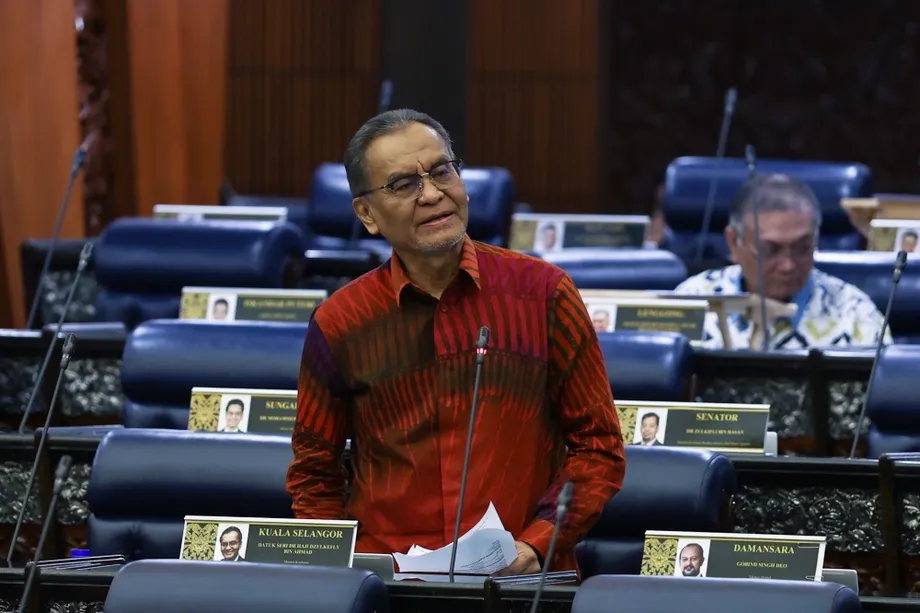
Health Minister Datuk Seri Dr Dzulkefly Ahmad said on October 18, 2026, that the initiative would provide a financial safety net for the M40, Malaysia's middle 40 per cent of households by income. He said people unable to maintain private insurance were increasingly turning to government healthcare facilities.
The 340,000 surrendered policies represented about 5 per cent of policies whose premiums had been revised, according to Bank Negara Malaysia figures cited by economist Dr Shalini Nagaratnam. The total accounts for policies subsequently reinstated.
Dzulkefly described the purpose of the scheme in his October 18 statement:
No citizen should fall into poverty just because he or she wants medical treatment; therefore, this Madani health financial protection comes forward by offering an affordable basic protection scheme.
MediAsas combines lower basic coverage costs with annual benefit limits and payments that patients must make themselves. Some applicants with existing illnesses could obtain insurance for unrelated conditions. Eligible Employees Provident Fund (EPF) members could use savings to pay premiums, while a subsidy would help some workers during their first year.
For households, affordability will depend on three things together: the premium, the amount payable when treatment is needed, and the illnesses covered. The larger annual limit offered by one option also comes with a much larger deductible, the amount a patient pays before insurance begins paying eligible costs.
What happens before the nationwide launch?
A pilot has been running in the Klang Valley since late July 2026. Prime Minister and Finance Minister Datuk Seri Anwar Ibrahim confirmed the nationwide January 2027 launch when presenting Budget 2027 on October 9.
The main milestones show how the insurance product fits into a wider effort to control healthcare costs:
- January 2024 to June 2025: About 340,000 repriced medical policies were surrendered, accounting for reinstatements.
- Late July 2026: The MediAsas pilot began in the Klang Valley.
- September 27, 2026: Bank Negara Malaysia outlined standard benefits, annual limits and shared treatment costs.
- October 9, 2026: Budget 2027 confirmed the national launch and support for eligible workers.
- October 18, 2026: Dzulkefly set out the scheme's role in protecting middle income households.
- January 2027: MediAsas is scheduled to launch nationwide, with uniform private hospital charge categories planned from 2027.
Private insurers and takaful operators will offer the voluntary scheme. Takaful is an insurance arrangement consistent with Islamic principles in which participants contribute to a shared protection fund. MediAsas will be available as standalone medical protection, rather than requiring purchase as part of a broader insurance package.
How Teras and Fleksi compare
MediAsas has two options: Teras, the standard plan, and Fleksi, the plan with a higher annual coverage limit. Both provide protection up to age 85 and have no lifetime benefit limit.
Teras provides an annual limit of RM100,000 for people below 60 and RM150,000 for those aged 60 and above. Patients below 60 pay a RM500 deductible for each treatment episode; the deductible rises to RM1,000 from age 60.
Fleksi provides an annual limit of RM300,000. Its annual deductible is RM10,000 at hospitals classified as tier one and RM15,000 at hospitals classified as tier two. The hospital classification therefore affects how much a policyholder must pay.
Fleksi's annual limit is three times Teras's RM100,000 limit for younger policyholders, and twice its RM150,000 limit for older policyholders. Its larger deductible means buyers also need sufficient cash or other medical benefits to meet the initial expense.
An annual limit caps eligible payments within a policy year. Having no lifetime limit means there is no single cumulative ceiling across all years of coverage. Bank Negara Malaysia said 99 per cent of domestic medical claims were below RM60,000, while most claims involving cancer, heart attacks and strokes also fell within RM100,000.
How much will premiums cost?
Premium estimates announced ahead of the launch vary. Dzulkefly's indicative figure was RM65 a month, or RM780 a year; Bank Negara Malaysia's indicative standard plan figures cited by Dr Shalini were RM80 to RM120 monthly for ages 31 to 35 and RM280 to RM350 for ages 61 to 65. Galen Centre for Health and Social Policy chief executive Azrul Mohd Khalib discussed estimated annual premiums of RM500 to RM600.
The estimates give households several possible price points rather than one settled bill for every buyer. A final premium schedule, complete policy wording, participating hospital list and exact January launch date have not been specified in the announcements described here.
The age specific estimates illustrate the pressure older buyers may face. RM80 to RM120 monthly equals RM960 to RM1,440 a year, while RM280 to RM350 monthly equals RM3,360 to RM4,200 annually. These are illustrative prices for different age groups, with future medical costs adding further uncertainty.
Bank Negara Malaysia said some applicants with higher expected claims risks could also face additional premiums. A household comparing plans therefore needs to consider its own quoted price alongside deductibles and exclusions.
Can people with existing illnesses join?
Some people currently unable to obtain medical insurance could qualify for MediAsas. Bank Negara Malaysia identified possible applicants including people with early stage cancer in remission, disease affecting a single heart vessel, certain stable and well managed mental health or developmental conditions, and mild or moderate autism.
Treatment linked to an existing condition may remain excluded. For example, a cancer survivor could obtain protection for unrelated illnesses or injuries while future treatment connected to the earlier cancer stays outside the policy.
Bank Negara Malaysia said fully covering known existing conditions could require premiums to rise five to 10 times because those policyholders would be more likely to claim. The design aims to accept more applicants while keeping basic premiums affordable.
Dr M. Murallitharan, medical director of the National Cancer Society of Malaysia, argued that exclusions leave the plan of limited use to many people living with noncommunicable diseases, such as cancer, diabetes and heart disease. He also questioned whether enough people would join to sustain the shared fund used to pay claims.
Dr Shalini warned that people whose current policies already cover chronic illnesses could lose valuable protection by switching. Acceptance into a new plan and the treatment it pays for are separate parts of the decision.
What changes after seven years?
MediAsas will introduce a provision limiting investigations into suspected failure to disclose medical information after seven years. Bank Negara Malaysia said insurers and takaful operators would generally be barred from reopening claims on that basis once the period had passed.
Exceptions apply to five categories of serious medical conditions and cases where evidence of fraud emerges independently. The measure is intended to give policyholders greater certainty about claims after maintaining coverage for years.
Existing treatment exclusions can continue under the policy. The seven year provision concerns investigations into disclosure, while the coverage terms determine which illnesses and treatments qualify for payment. Both matter to someone deciding whether to replace an existing policy.
Paying from EPF brings a retirement tradeoff
EPF members below age 55 will be allowed to pay MediAsas premiums using Akaun Sejahtera, formerly Account 2. The account received 15 per cent of monthly EPF contributions as of June 2026, giving eligible members another way to maintain medical protection when household cash is tight.
Dr Shalini Nagaratnam, an econometrics and business statistics lecturer and director of undergraduate studies at Monash University Malaysia, warned that repeated withdrawals would reduce savings and the dividends those funds could earn. She identified a particular risk when access to this payment route ends:
"There is also a cliff edge: The EPF option ends at 55, just as premiums climb most steeply, so members who relied on it may struggle to keep their cover in later life," she warned.
Retirement savings are already limited for many contributors. As of May 31, 2026, 38.3 per cent of active Malaysian EPF members in the formal sector aged 18 to 60 had reached their basic savings target for their age, according to figures given to Parliament.
Money withdrawn also loses future growth. At the EPF's cited average dividend rate of 5.88 per cent over five years, RM5,000 left invested for 20 years would grow to about RM15,700 if that rate continued. Future dividends will vary.
Dr Shalini also recognised the protection insurance can provide against a large hospital bill. She proposed minimum account balances, annual withdrawal caps, projections showing the effect on future savings, matching contributions for people on lower incomes, and early warnings when balances become insufficient to pay premiums.
What support will workers receive?
Eligible small and medium enterprises with fewer than 75 employees will receive a RM200 subsidy towards each participating worker's first year premium, limited to 50 workers per company. Up to 200,000 workers are expected to benefit.
A company receiving the maximum support would obtain RM10,000 in premium subsidies. At the indicative RM780 annual premium cited by the health minister, RM200 would cover about 26 per cent of the first year cost, leaving RM580 before any other support.
Life Insurance Association of Malaysia chief executive Mark O'Dell said MediAsas could help workers facing financial constraints obtain basic medical protection. He said the industry supported the scheme as an option for uninsured people and those struggling with rising premiums.
Dr Shalini said continued affordability would depend on workers being able to maintain coverage after the first year. She also suggested that future support could reach gig workers and people working outside formal employment.
How hospital billing is meant to change
Bank Negara Malaysia places MediAsas within RESET, a national strategy led jointly by the Health Ministry, Finance Ministry and central bank to address medical inflation. The insurance design standardises benefits and key processes, including pricing methods, eligibility assessments and claims.
Private hospital bills are intended to use uniform, transparent charge categories from 2027. A phased move towards Diagnosis Related Groups (DRG) would link payments to categories of diagnosis and treatment, making the expected charge for comparable care easier to understand and manage.
Mark O'Dell welcomed this part of the scheme, saying:
"It also introduces important features, which we hope will eventually be adopted in the wider marketplace, especially diagnosis-related group pricing. We think that will help level the playing field and align interests between the payers and the providers," he said.
A World Bank study published in April found that treatment volume accounted for two thirds of the increase in spending on claims paid by insurers between 2022 and 2024. More treatment, alongside its price, is therefore central to the spending problem.
Dr Shalini recommended reliable clinical data, consistent medical coding and health records that different systems can share to support the billing changes. She also called for a broad hospital network covering Sabah and Sarawak, plus regular reporting on enrolment, claims and premiums.
Public assistance and the test of success
Malaysia is also increasing the Medical Assistance Fund, or Tabung Bantuan Perubatan, from RM40 million to RM60 million. The RM20 million increase is 50 per cent and will help vulnerable patients pay for costly medical devices, including bone implants and heart stents.
Another RM80 million has been allocated to PeKa B40, the healthcare programme for households in the bottom 40 per cent by income. These measures address needs alongside MediAsas's focus on middle income households and access to private medical protection.
Azrul Mohd Khalib argued that MediAsas should be judged by successful reimbursement, claims processing and protection against financial catastrophe rather than subscriber totals. He also questioned the concentration on hospital care and called for greater attention to treatment at general practitioner clinics.
The practical test begins after enrolment: whether households can keep paying premiums, meet deductibles and receive payment for the treatment their policies cover. Those outcomes will determine how much relief MediAsas brings to families considering abandoning private medical insurance.
Key Points
- MediAsas is scheduled to launch nationwide in January 2027 after about 340,000 medical policies were surrendered between January 2024 and June 2025.
- Teras has annual limits of RM100,000 below age 60 and RM150,000 from age 60. Fleksi has a RM300,000 limit and larger deductibles.
- Both options provide protection up to age 85 with no lifetime benefit limit.
- Some applicants with existing illnesses may qualify, while treatment for those illnesses may remain excluded.
- EPF members below 55 may use Akaun Sejahtera for premiums, creating a tradeoff between current protection and future savings.
- Eligible SME workers can receive a RM200 subsidy for their first year, with support expected to reach up to 200,000 workers.
- The Medical Assistance Fund rises to RM60 million, while PeKa B40 receives RM80 million.