Private discussion, little public detail
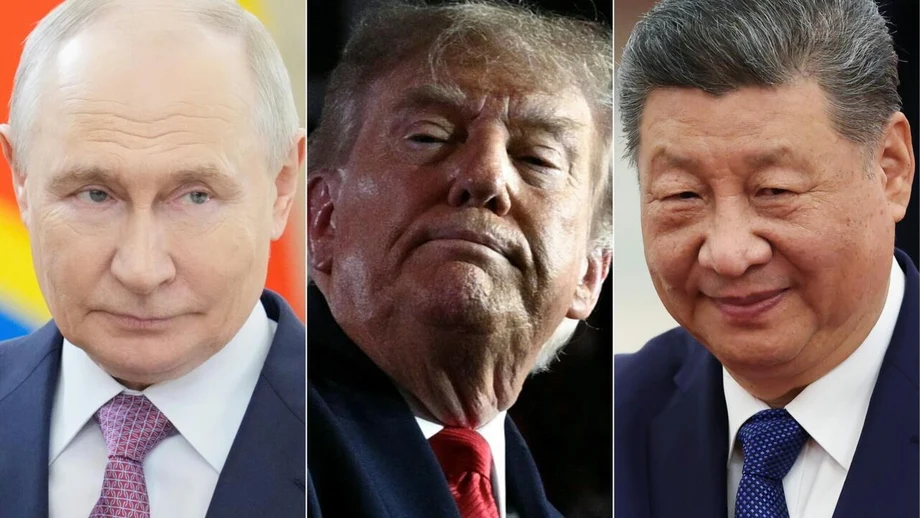
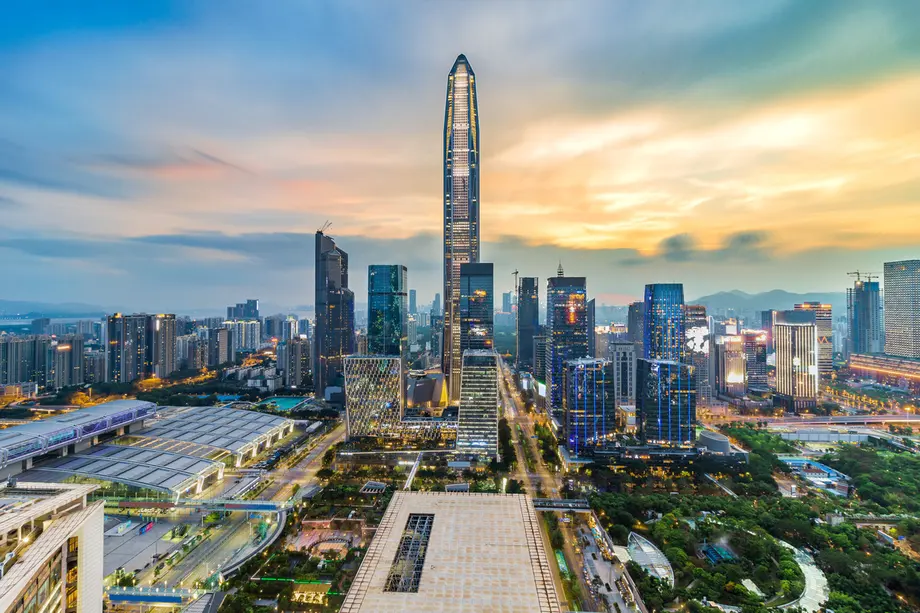
On Nov. 19 in Shenzhen, U.S. President Donald Trump, Chinese President Xi Jinping and Russian President Vladimir Putin held a meeting described as the first summit among the three leaders. Chinese officials and Putin said they exchanged views on the Korean Peninsula, alongside the wars in Ukraine and the Middle East. The public declaration, however, did not mention the peninsula or set out any agreement on North Korea's nuclear weapons.
Contents
The declaration's nuclear commitments focused on talking about reducing nuclear risks and preventing nuclear weapons from spreading. It did not name North Korea, call for its denuclearization or set a timetable for dismantling or freezing its weapons program. Trump spoke about cooperation to stop nuclear proliferation, and mentioned Iran, but did not publicly name North Korea.
The difference matters: the leaders may have raised Korea in private, but the public record gives little indication of what they said or whether they agreed on a shared policy. The three governments also hold sharply different positions on North Korea's nuclear program, making it difficult to know whether future talks on nuclear risks will address the North directly.
What does the nuclear language mean?
Reducing nuclear risks and preventing proliferation are related goals, but neither automatically means eliminating a country's existing nuclear weapons. Risk reduction can include steps to prevent an accident or miscalculation, or to make military communications more reliable. Nonproliferation generally means stopping nuclear weapons or related technology from spreading to other countries. A demand to dismantle North Korea's arsenal is a separate, more direct goal.
Sydney Seiler, a former U.S. National Intelligence Council official responsible for North Korea, explained that distinction in comments carried by Radio Free Asia. In that account, risk reduction was described as different from reducing nuclear weapons, while nonproliferation was described as focusing on preventing North Korean weapons from being transferred to other countries.
Washington continues to state that it seeks North Korea's complete denuclearization. The U.S. State Department reaffirmed that position on Nov. 18, along with its support for implementing United Nations Security Council resolutions concerning North Korea. The European Union has also said North Korea cannot receive the status of a nuclear weapon state under the Nuclear Non-Proliferation Treaty, the international agreement intended to limit the spread of nuclear weapons.
Russia's position has moved in the opposite direction. Foreign Minister Sergei Lavrov described North Korean denuclearization as a closed issue in 2024 and said in July that Russia would no longer join calls for it. China has also avoided naming denuclearization as a shared goal in recent statements and has opposed sanctions and military pressure on North Korea. The three leaders therefore arrived at the summit without a common public position on what should happen to the North's arsenal.
North Korea's nuclear facilities remain a concern
Developments reported at Yongbyon, North Korea's main nuclear complex, added urgency to the debate. International Atomic Energy Agency Director General Rafael Grossi said on Nov. 18 that exterior construction work to expand an existing uranium enrichment facility appeared to have been completed in late October. The work reportedly began in mid September.
Grossi also described signs that the Yongbyon five megawatt reactor may have entered its seventh nuclear fuel irradiation cycle, which would indicate continued activity. The reactor can produce spent fuel that may be reprocessed to obtain material for nuclear weapons. The IAEA has had no direct access to North Korean nuclear facilities since 2009, however, so it cannot verify the new building's internal equipment or confirm whether the reactor is operating.
The European Union has separately criticized expanded activity at uranium enrichment sites in Yongbyon and Kangson, the operation of a radiochemical laboratory, and three North Korean ballistic missile launches in October. Those details point to the practical challenge facing diplomats: discussion of general nuclear risk can happen even while North Korea's weapons and facilities continue to develop.
Robert Abrams, a former commander of U.S. Forces Korea, said the three countries have not previously recognized North Korea as a nuclear weapon state as a matter of policy, and he judged that formal recognition at the summit was unlikely. Formal recognition and arms control are different questions. Governments could, in principle, discuss ways to limit danger or prevent weapons transfers without accepting North Korea's claim to nuclear status or agreeing that its arsenal should remain in place.
Why did the leaders say so little in public?
There are two accounts of what happened at the summit that can fit together. Chinese officials and Putin said the leaders discussed the Korean Peninsula. At the same time, the joint declaration and their public opening remarks did not refer to it. That leaves open whether the issue received only a brief mention, whether the leaders avoided discussing details publicly, or whether their accounts referred to a general exchange rather than a negotiated plan.
Ko Yu-hwan, professor emeritus of North Korean studies at Dongguk University, said Korea may have been pushed down the agenda because the wars involving Ukraine and Iran were more urgent for the leaders. The public remarks highlighted those conflicts, while the declaration contained no regional agenda for the Korean Peninsula.
Bang Gil-joo, head of the Center for International Security Studies at the Korea National Diplomatic Academy, said the three countries shared an interest in preventing war on the peninsula, even as they disagreed over North Korea's nuclear weapons. He cautioned that a meeting that only exposed disagreements could weaken the significance attached to the historic three leader gathering.
The three countries do agree that there should not be a war on the Korean Peninsula. Their positions on North Korea's nuclear weapons are different.
For South Korea, the absence of any public message that could be read as accepting or overlooking North Korea's nuclear status was viewed as a positive point. Yet the three powers also signaled that they would continue nuclear risk and nonproliferation discussions. Seoul will be watching whether those talks eventually include specific demands on North Korea's production, testing or transfer of weapons.
Why did Trump and Kim not meet?
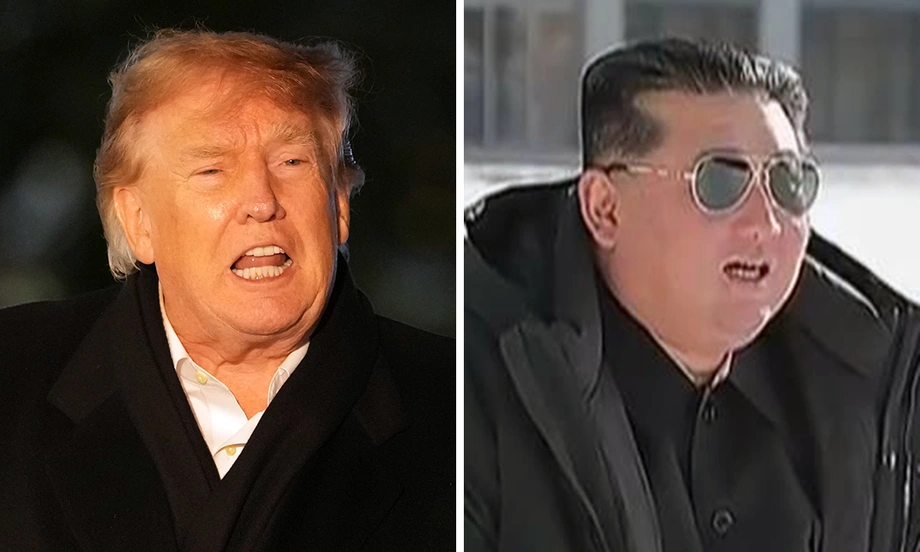
Trump repeatedly raised the possibility of meeting North Korean leader Kim Jong Un during his Asia trip, but no meeting took place. Trump left for the United States on Nov. 19 after meeting Xi and Putin. On his flight home, he told NBC News there had been 'too many meetings' for a sit down with Kim, adding that they would meet 'at some point.' North Korea did not publicly respond to his invitations.
The two leaders met three times during Trump's first term: in Singapore on June 12, 2018; in Hanoi on Feb. 27, 2019; and at the Demilitarized Zone on June 30, 2019. Their Hanoi summit ended without a nuclear agreement. The original account of the current missed meeting points to a central obstacle: Pyongyang has sought recognition as a nuclear weapons state and an end to what it calls U.S. hostile policy, while Washington continues to call for complete denuclearization.
Park Byung-kwang, a senior research fellow at South Korea's Institute for National Security Strategy, said what Kim might gain from Trump would have been central to the North Korean leader's decision. He suggested that the conditions for a productive meeting had not been prepared.
What Kim Jong Un could receive as a gift from Trump was the most important thing, but in the end, that part may not have been properly prepared.
Other factors may have reduced the incentive for Kim to meet. During Trump's trip, North Korean state media showed Kim visiting Samjiyon, sites in Riwon and Rakwon counties, and a naval university in Hamhung. The visits included tourism, farming and construction projects. North Korea also has closer economic and military ties with Russia, which may make U.S. engagement less attractive to Pyongyang.
Lim Eul-chul, a professor at Kyungnam University's Institute for Far Eastern Studies, said the failed Hanoi talks may have left Kim distrustful of Washington. Koh Yu-hwan said a serious summit would require envoys and negotiations among officials beforehand, rather than a meeting arranged mainly for a photograph. Trump and Kim's earlier meetings show that a leader level encounter alone does not guarantee a nuclear agreement.
What could come next?
Trump's statement that a meeting could happen later keeps open the possibility of renewed contact before his term ends. No date, preparatory talks or North Korean response has been announced. The immediate gap is between Washington's continued denuclearization demand and Pyongyang's demand for recognition and a change in U.S. policy.
South Korea's government has proposed four party talks involving North Korea, South Korea, the United States and China. The plan would begin with renewed U.S.-North Korea dialogue and could address ending the Korean War and establishing a lasting peace arrangement. The lack of public attention to Korea at the three power summit makes that route harder to advance, though the summit did not rule out later talks.
Yoo Ji-hoon, a research fellow at the Korea Institute for Defense Analyses, has identified a further concern: nuclear arms control discussions among major powers could treat North Korea as a separate subject or connect it to other strategic disputes. Choi Yong-hwan, vice president of the Institute for National Security Strategy, has called for South Korea to pursue active diplomacy with China and Russia as well as the United States.
The next test is whether the three powers' broad promise to discuss nuclear risks becomes a process that addresses North Korea's weapons program, or stays focused on general safeguards. For now, the public outcome is limited: leaders reportedly exchanged views on Korea, issued no joint plan on North Korean denuclearization, and left Trump and Kim without a meeting.
Key Points
China and Russia said the U.S., Chinese and Russian leaders exchanged views on the Korean Peninsula on Nov. 19.
The public declaration did not mention North Korea or commit the three countries to its denuclearization.
The IAEA reported signs of construction at Yongbyon and possible continued activity at its five megawatt reactor, but has no direct access to verify operations.
Trump and Kim did not meet. Trump said they would meet 'at some point,' while North Korea did not respond publicly.
Washington continues to support complete denuclearization; Russia has rejected joining that demand, and China has avoided stating it as a shared goal.