A financing plan meets an orbital ambition
SpaceX lenders have sought to stop artificial intelligence chips bought with borrowed money from being launched into orbit, where they would be difficult to recover and sell if the company failed to repay its debts. The concern puts a practical limit on Elon Musk's plan to build data centers in space, at least for the Nvidia processors tied to the current financing.
Contents
- A financing plan meets an orbital ambition
- Why does the location of the chips matter?
- How is the $40 billion financing arranged?
- What does the borrowing cost tell investors?
- Why is SpaceX building data centers on Earth first?
- What would an orbital data center need?
- Chip supply is another constraint
- What happens next?
- Key Points
The financing package has been described as worth between $40 billion and $43 billion. A $32 billion bond sale is one part of it, alongside bank loans. The money is intended to fund access to about $47.3 billion in graphics processing units, or GPUs, the powerful chips used to train and run AI systems. SpaceX says the chips connected to the financing are for data centers on Earth.
The proposed lender restriction reflects a basic rule of secured borrowing: a lender is more willing to provide money when it can claim and sell valuable property if the borrower defaults. Chips installed in a data center can, at least in principle, be removed and resold. Chips circling Earth aboard satellites would be much harder to seize or bring back.
The final loan and lease documents have not been provided, so the exact wording and status of any restriction on launching the financed chips are not available. The immediate arrangement is for equipment on the ground, while the question of how SpaceX could finance chips for future orbital facilities remains open.
Why does the location of the chips matter?
The chips serve as collateral, meaning they are assets lenders can claim if a borrower stops paying. That security helps lower the risk of lending. It can also make financing available on better terms than a loan with no specific assets behind it.
Space makes that security harder to enforce. A satellite in orbit cannot be collected like a server from a warehouse. The equipment could be moving at about 17,500 miles per hour, hundreds of miles above Earth, and would need to be retrieved, transported and sold. Lenders would have to consider whether that could be done at all, and what the chips would be worth by then.
Technology also loses value as newer models arrive. Some Nvidia H100 chips have recently sold for about half their 2023 cost, while some H200 configurations have sold for around their 2024 introductory price. Those examples show why lenders care both about access to the hardware and its resale value: a chip that is hard to reach may be worth less as protection for a loan.
The concern is especially relevant because the chips are being leased through a financing structure rather than simply bought with cash by SpaceX. If a company promises to make payments over several years, lenders need confidence that the equipment supporting those payments remains accessible and useful.
How is the $40 billion financing arranged?
The arrangement uses Saturn Funding Trust, a special purpose vehicle that buys the chips and leases them to SpaceX for about five years. A special purpose vehicle is a separate legal entity set up to hold particular assets or carry out a particular deal. The structure is intended to keep the borrowing off SpaceX's balance sheet, while lease payments from SpaceX support repayments to investors.
SpaceX remains responsible for lease payments even if the equipment breaks or an extraordinary event, such as a natural disaster, disrupts its use. That promise matters to lenders because it gives them a source of repayment beyond the chips themselves. The arrangement may also help SpaceX preserve its investment grade credit ratings, which can make it easier to borrow money in the future.
Apollo Global Management is involved in arranging the financing, with Goldman Sachs also managing the bond sale. Apollo was expected to provide a large share of the funding upfront and then distribute or sell parts of the debt to other investors. The bonds were sold in three portions, with the largest, about $25.2 billion in Class A3 notes, priced at an 8.259% yield.
The structure resembles financing used elsewhere in the technology industry, where a separate entity holds equipment and leases it to a company. The key distinction for this dispute is the asset's location. A financing vehicle can hold a legal claim to a chip, but that claim is less useful if the chip is beyond practical reach.
What does the borrowing cost tell investors?
The 8.259% yield on the largest bond portion was well above the 5.95% average yield for US investment grade corporate bonds that day, a gap of about 2.3 percentage points. A yield is the return investors receive for lending money through a bond. Higher yields usually mean the borrower must pay more to attract buyers, often because investors see added risk or want extra compensation for a complex deal.
Other reported parts of the financing carried rates around 7.75% to 8.3%, while smaller, riskier portions could cost more than 9%. The terms matter because SpaceX is borrowing at a time when technology companies are spending heavily to build AI infrastructure and investors are weighing whether future revenue will justify the cost.
Davis Hebert, head of technology, media and telecommunications at CreditSights, said clients had doubts about the deal after investors lost money on an earlier SpaceX bond sale. Hebert said the new bonds were priced generously to draw in more traditional investors.
I do think that's why the pricing on this is really wide to try and attract participation for more traditional investors.
Scott Goodwin, co-founder of Diameter Capital Partners, described chip financing as a new kind of investment category as companies seek money for AI hardware.
It's a new asset class.
Investor demand for the bonds does not remove the cost of the financing. SpaceX will need its AI operations to generate enough cash to meet lease payments and other expenses over the life of the deal.
Why is SpaceX building data centers on Earth first?
SpaceX's near term AI buildout is on the ground. Its compute equipment at terrestrial ground stations has been described as a profitable part of the business, and Musk has directed engineers from the rocket team to help speed up construction. The work includes tackling supply challenges such as casting turbine blades for generators.
Earth based data centers still face practical limits. Projects can be delayed by a lack of suitable land or power, and some have encountered local opposition. A data center needs large amounts of electricity and cooling, while its owners need to connect it to the communications and power networks that keep computers running.
SpaceX's AI business has also grown quickly alongside heavy spending. Its AI revenue rose from $2.6 billion in the second quarter to $7.6 billion in the third quarter. Capital spending by the AI unit was $16.4 billion in the third quarter, while company wide capital spending reached $19.6 billion.
SpaceX chief financial officer Bret Johnsen said in October that the company was seeing payback periods of less than one year on infrastructure investments. A payback period is the time a project takes to earn back the money spent on it. The rapid spending and revenue growth show why the company is seeking large pools of financing, while leaving investors to judge whether that pace can continue.
What would an orbital data center need?
Musk has described space as the cheapest place to operate data centers within two to three years. The idea is to use solar power and avoid some of the land and electricity constraints faced by facilities on Earth. SpaceX would need to launch satellites carrying large numbers of advanced chips to make that plan work.
Cooling is more complicated than simply placing computers in a vacuum. On Earth, air or liquid can carry heat away from equipment. In space, there is no surrounding air to do that, so a data center would have to send heat out as radiation. The systems would also need to withstand radiation and extreme temperatures, and a failed component would be difficult to repair.
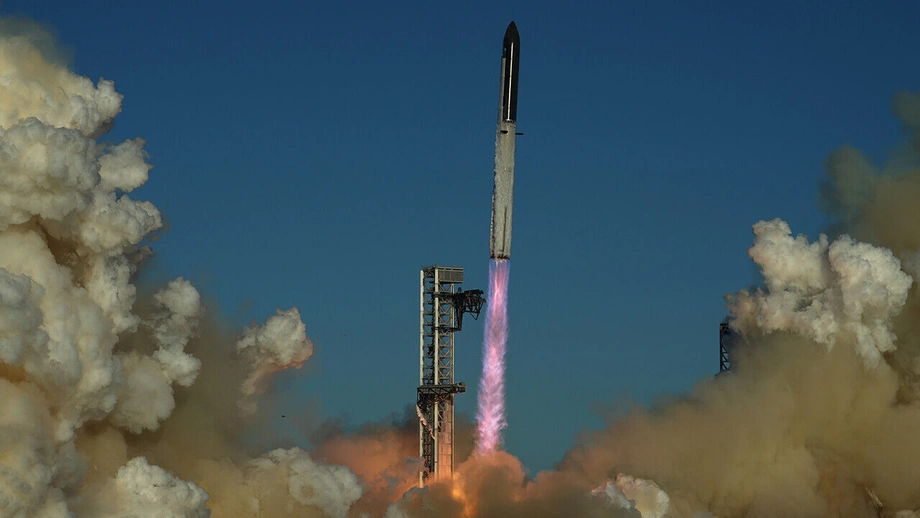
Launch costs are another major factor. SpaceX's Starship is expected to help carry large amounts of equipment if it can fly often and reuse its parts. In its latest test described in the accounts, the booster was not recovered, while the upper stage returned and landed at the company's Texas launch facility. The date of the next flight and the cost of preparing the upper stage for another trip were not known.
Until rockets can carry heavy loads repeatedly at lower cost, launching chips and supporting equipment could make orbital computing more expensive than running computers on Earth. The financing issue adds another layer: lenders may want different protections for hardware that cannot be readily repossessed.
Chip supply is another constraint
SpaceX is not the only company pursuing data centers in orbit. StarCloud, Cowboy Space Corporation, Sophia Space and Orbital are also working on space computing projects. Google is pursuing space deployed Tensor Processing Units, or TPUs, through Project Suncatcher. TPUs are chips designed by Google for machine learning tasks.
SpaceX and Tesla are also working on a US chip factory called Terafab, but construction has not begun. A new semiconductor factory can take years and billions of dollars to build before it can produce chips at scale. For now, SpaceX's plans depend on buying processors from suppliers such as Nvidia.
The current equipment package is expected to include Nvidia's Rubin chips, with deliveries expected to begin in January, according to the financing details. An October equipment commitment described deliveries as due in the first half of 2027. The two schedules have not been reconciled; the dates may be compatible, but the exact delivery schedule may depend on the deal's conditions.
For lenders, the arrival of newer chips could affect the value of the existing hardware over time. For SpaceX, access to enough processors is essential whether the computers stay on Earth or eventually travel into orbit.
What happens next?
The financing and the space data center plan now run on different tracks. SpaceX has raised billions of dollars for chips intended for ground based computing, while the proposed limits on launching those specific chips remain unconfirmed. Any future plan to send financed equipment into orbit would need to address how lenders could protect their money if the borrower stopped paying.
The financing timeline also shows how quickly the plans are moving:
In October, SpaceX announced an equipment financing commitment of about $40 billion with an Apollo managed entity.
On November 19, SpaceX sold about $32 billion in bonds as part of a wider financing package worth more than $40 billion.
Chip deliveries were reported to begin in January, while a separate schedule described them as due in the first half of 2027; the dates may be compatible, but the schedules have not been reconciled.
The final loan and lease documents have not been provided, so the exact wording and status of any restriction on sending the financed chips into orbit are unavailable.
The immediate test is whether SpaceX can turn the new chips and its expanding data center capacity into enough revenue to support the lease payments. The longer term test is whether launch costs, repair limits and lender protections can be made compatible with computing in orbit.
Key Points
SpaceX's wider chip financing has been described as worth $40 billion to $43 billion, including a $32 billion bond sale and bank loans.
Lenders want the chips kept on Earth because they would be hard to recover and resell in orbit after a default.
The largest bond portion, about $25.2 billion, carried an 8.259% yield, compared with a 5.95% average for US investment grade bonds that day.
SpaceX says the chips tied to the financing are intended for terrestrial data centers.
The final loan and lease documents have not been provided, so the exact wording and status of any restriction on launching the financed chips are unavailable.
Deliveries were reported to begin in January, while a separate schedule said the first half of 2027; the dates may be compatible, but the schedules have not been reconciled.