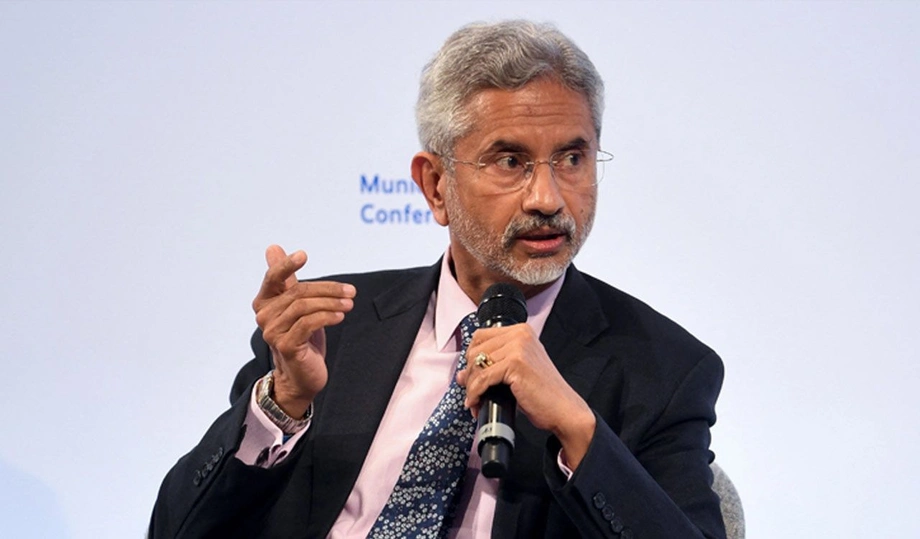
A larger military commitment alongside efforts to repair ties
India needs a larger, sustained troop presence along its border with China, External Affairs Minister S Jaishankar said in New Delhi on Saturday, November 14, 2026, arguing that roads, tunnels, bridges and airfields are central to keeping those forces in position.
Contents
- A larger military commitment alongside efforts to repair ties
- Why roads and airfields matter to soldiers staying put
- Jaishankar places the infrastructure shift in the past decade
- How the confrontation and diplomatic recovery unfolded
- China's reinforcement capacity broadens the challenge
- Arunachal Pradesh and Tibet's airfields add another dimension
- Jaishankar links the economic gap to earlier industrial choices
- Building selected strengths rather than matching every move
- Key Points
Speaking at the 24th Hindustan Times Leadership Summit, Jaishankar said India's ability to deploy and maintain troops along the Line of Actual Control (LAC) had improved markedly since the deadly clashes in eastern Ladakh's Galwan Valley in 2020. The LAC is the line separating areas controlled by the two countries along their disputed frontier.
Jaishankar, India's external affairs minister, described a border demanding a continuing military commitment:
What has happened today is the border with China has become more alive in a way. It has required a much greater commitment of troops on a sustained basis.
His remarks came as New Delhi and Beijing continued efforts to repair relations after a military confrontation in eastern Ladakh strained ties for more than four years. India's approach combines diplomatic engagement with investment in the capacity to keep soldiers deployed.
The wider military picture helps explain that approach. The Defence Ministry's annual report for 2025-2026, released on September 13, 2026, says China continued to maintain 10 combined arms brigade-sized formations along the LAC and in traditional training areas during 2025. The reported figure covers both locations, rather than 10 formations in each. China's ability to move reinforcements through Tibet gives India a reason to focus on transport and supplies as well as the troops already near the border.
Why roads and airfields matter to soldiers staying put
Jaishankar linked India's infrastructure programme directly to its ability to sustain its military presence. Moving troops into position is one task; keeping them supplied and ready over an extended period requires a continuing transport network.
Roads connect positions to supply centres. Bridges allow vehicles and equipment to cross difficult ground, while tunnels provide routes through mountain barriers. Airfields offer another way to move personnel and supplies. Together, these facilities determine how much support can reach troops and how quickly reinforcements can arrive.
The minister said completed work had made larger deployments possible, while continuing construction would help maintain them:
The fact is that the work we had already done allowed that kind of numbers to be deployed out there, and the work we continue to do will maintain those numbers.
Jaishankar pointed to the growing frequency of announcements about new tunnels, bridges and commissioned airfields. His argument concerned the combined value of those projects: each connection can help turn a deployment into a presence that can be maintained.
For soldiers in remote mountain positions, that means the capacity to receive supplies, rotate personnel and move equipment when conditions or security needs change. For military planners, it means having more options when deciding where forces are needed.
Jaishankar places the infrastructure shift in the past decade
Jaishankar argued that India's border infrastructure had been neglected until about a decade ago. He credited the subsequent period with greater government attention, resources and policy support, and said annual road construction, tunnelling and the location of facilities offered ways to assess progress.
The external affairs minister described the change in government priorities:
It's really been in the last decade that that kind of attention, resources, policy push has been given.
His assessment puts construction and military readiness within the same policy. The practical question is how the transport network supports forces in the places where they must operate, rather than simply how many projects have been announced.
Jaishankar did not give a troop total, construction budget, project completion schedule or date for reducing deployments. The picture he presented was of a continuing commitment, with further infrastructure work intended to support the forces India maintains along the frontier.
How the confrontation and diplomatic recovery unfolded
Eastern Ladakh remains central to the political context. The Galwan Valley clashes in 2020 were followed by years of strained relations, while the military confrontation made border security a major issue between the two governments.
Prime Minister Narendra Modi and Chinese President Xi Jinping met in Kazan, Russia, in October 2024, following the end of that confrontation. The meeting marked a step towards repairing relations. Discussions also covered the trade deficit, terrorism and fair trade in multilateral forums, where several countries negotiate shared rules.
The main developments span several years:
- 2020: Deadly clashes in Galwan Valley deepened the crisis in eastern Ladakh and severely strained relations.
- October 2024: Modi and Xi met in Kazan as the two countries began repairing ties after the prolonged confrontation.
- 2025: The Defence Ministry's annual report recorded 10 Chinese combined arms brigade-sized formations along the LAC and in traditional training areas.
- June 25, 2026: Commercial satellite imagery showed four covered Chinese J-20 stealth fighters at Damxung in Tibet, according to findings reported in July.
- September 2026: Senior military commanders held Wacha-Damai flag meetings amid reported tensions around Taksing in Arunachal Pradesh.
- November 14, 2026: Jaishankar described the need for a larger, sustained Indian troop presence and continued infrastructure development.
The diplomatic recovery and the military investment are proceeding together. Talks offer a way to manage disagreements, while infrastructure gives India the means to sustain its chosen deployment during that process.
China's reinforcement capacity broadens the challenge
The Defence Ministry's annual report for 2025-2026 describes a significant reduction in Chinese deployments along India's northern borders during 2025, while recording 10 combined arms brigade-sized formations along the LAC and in traditional training areas. It also describes the Indian Army's deployments across all LAC sectors as robust, well poised and prepared to deal with any emerging contingency.
A Combined Arms Brigade brings several military functions into one formation, including infantry, artillery, armoured vehicles, air defence, reconnaissance, engineers and logistics. Estimates place a typical brigade at around 4,500 to 5,000 personnel, although its organisation depends on its assigned role and terrain.
China's posture includes border defence units near the frontier, formations farther back under the Tibet Military District and potential reinforcements from the Western Theatre Command. Roads, railways and airfields connect these layers and support the movement of personnel, equipment and supplies.
The 52nd, 53rd and 54th Combined Arms Brigades have been associated with the Yadong-Shigatse, Nyingchi-Bayi and Lhasa areas respectively. Elements associated with the 77th Group Army have also been identified as possible reinforcement options. These are reported associations rather than a current unit deployment list.
The military importance lies in the network connecting forces to the frontier. Troops farther from the LAC can still influence a crisis if transport and supply systems allow them to move forward and remain there. Terrain, weather, starting location and operational conditions determine how quickly that can happen.
Jaishankar's focus on sustained deployment addresses the Indian side of the same challenge. India needs both forces in position and the transport capacity to support or reinforce them when necessary.
Arunachal Pradesh and Tibet's airfields add another dimension
Arunachal Pradesh presents its own operational difficulties, including rugged mountains, dispersed settlements and demanding supply routes. The September 2026 Wacha-Damai meetings between senior military commanders took place amid reported tensions around Taksing, showing the continuing role of direct military communication in the eastern sector.
Such meetings give commanders a channel to discuss local incidents and reduce the risk of escalation. The underlying boundary dispute remains unresolved, so communication and military readiness continue to serve different, connected purposes.
China's air infrastructure in Tibet adds to its capacity to support operations. Damxung, roughly 300 kilometres from the Arunachal-Tibet frontier, has a runway approximately 5.2 kilometres long at an altitude of around 4,000 to 4,300 metres.
Lhasa Gonggar Airport, by comparison, is around 3,500 metres above sea level and has a runway approximately four kilometres long. Damxung's runway is therefore about 1.2 kilometres longer, or roughly 30 percent longer, using those approximate measurements.
High altitude helps explain the need for runway length. Thinner air reduces the lift generated by aircraft wings and affects engine performance, so aircraft may need a longer takeoff run or carry a lighter load.
Commercial satellite imagery dated June 25, 2026, reported in July, showed four J-20 stealth fighters under protective covers at Damxung, about 350 kilometres from Tawang in Arunachal Pradesh. The images were attributed to OSINTDesk. The imagery does not establish how long the aircraft were there, whether they were operationally ready or whether they were permanently based at Damxung. The airfield's connections to highways and railway routes around Lhasa also give it value as part of a wider transport network supporting personnel, equipment and supplies.
Jaishankar links the economic gap to earlier industrial choices
Jaishankar also addressed the difference in economic strength between India and China. He traced that gap to their different experiences of modernisation, industrial development and reform, arguing that India now needs to build strengths in selected areas.
The minister said the economies were about the same size around the time former prime minister Rajiv Gandhi visited China in 1988. He then contrasted China's industrial push during that decade with India's record.
Jaishankar described what he regarded as a missed opportunity:
But the fact was that China, in the 1980s particularly, made a huge push towards modernisation and industrialisation. I'm sorry to say India in the 1980s simply missed the bus. Now in the 1990s, we did some corrections, reforms, but we did not carry through the reforms sector by sector and keep building and raising it.
He said his assessment was not intended as a political point and referred to the Modi government's efforts in manufacturing and industrialisation. His central argument was that closing the gap requires choosing areas where India can make substantial gains.
Economic asymmetry means a difference in economic size and resources. In practical terms, Jaishankar was arguing that India must decide where to direct investment and effort rather than try to match China in every area.
Building selected strengths rather than matching every move
Jaishankar called for India to advance more quickly by building on its particular strengths. He used the idea of leapfrogging, meaning moving to more advanced methods or capabilities instead of repeating every stage another country has already passed through.
The external affairs minister explained his approach to competing with a larger economy:
In asymmetry, you don't go toe-to-toe on every issue. You pick the issues where you feel you have the ability to make a big change. That's really what we think we're doing right now.
His economic and border arguments share a focus on where investment produces useful capability. Along the frontier, he identified roads, tunnels, bridges and airfields as the means to sustain troops. In the economy, he argued for manufacturing, industrial development and selected strengths to address the gap with China.
India's immediate security task remains concrete: maintain forces across difficult terrain, keep them supplied and retain the ability to respond to changing conditions. Diplomatic engagement continues alongside that commitment, while military communication offers a way to manage local tensions.
Key Points
- Jaishankar said the China border requires a larger, sustained Indian troop presence.
- He linked improved deployment capacity to roads, tunnels, bridges and airfields built over the past decade.
- India and China have been repairing relations since the October 2024 Modi-Xi meeting in Kazan.
- The Defence Ministry's 2025-26 annual report recorded 10 Chinese combined arms brigade-sized formations along the LAC and in traditional training areas during 2025.
- China's transport network across Tibet supports its ability to reinforce forces near the frontier.
- Jaishankar said India should address its economic gap with China by building selected strengths rather than competing in every area.