A bag of chips becomes a retail sensation
A honey and banana snack named after advanced computer memory became an unexpected winner from Nvidia chief executive Jensen Huang's food outings in Seoul. According to figures attributed to 7-Eleven, sales of its Honey Banana Mat HBM Chips rose 704% on June 6 and 7 compared with the same weekdays a week earlier, while searches in its mobile app increased 160 times.
Contents
- A bag of chips becomes a retail sensation
- How the food outings unfolded
- Why HBM chips attracted so much interest
- Chicken restaurants gain customers and photo seekers
- What Kkanbu's annual figures show
- The spending spread beyond Huang's menu
- A baseball outing extends the exposure
- Food and drink companies look overseas
- Turning attention into lasting business
- Key Points
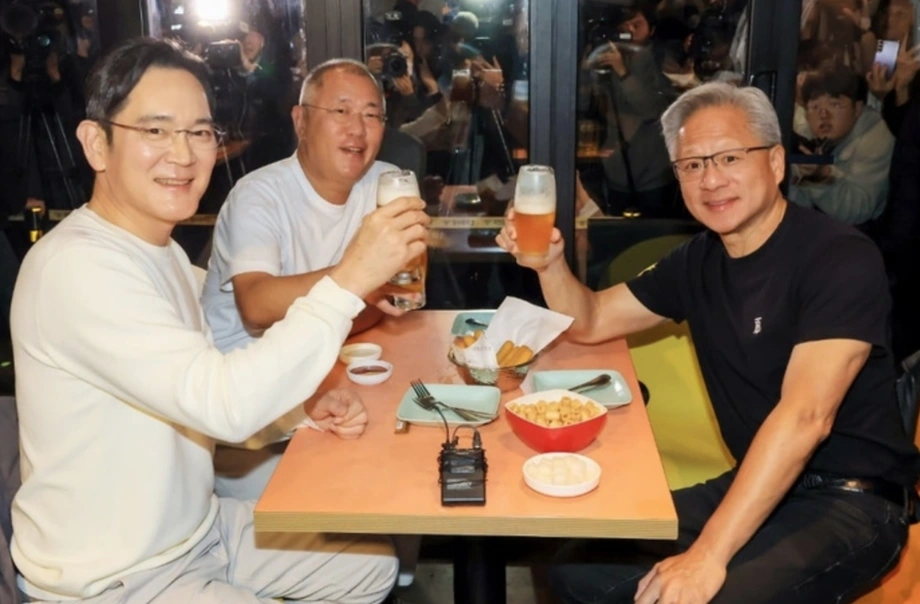
The surge followed a June 5 dinner near Hongik University Station, where Huang met SK Group Chairman Chey Tae-won, LG Group Chairman Koo Kwang-mo and Naver board chair Lee Hae-jin. Afterward, Huang handed the snack to people outside and opened a packet himself.
The figures illustrate how quickly attention around a global business leader can reach ordinary shops. A 704% increase means sales reached 8.04 times their previous level. Fried chicken restaurants, convenience stores and a small pastry shop also attracted customers following Huang's appearances.
For Korean food companies, the opportunity stretched beyond a busy weekend. Some considered more production, new marketing and export campaigns. Their challenge was to turn curiosity about Huang's choices into repeat purchases, while keeping their products' appeal broader than their connection to one person.
How the food outings unfolded
Huang's restaurant visits brought together some of South Korea's most prominent business figures in places selling familiar meals and inexpensive snacks. The sequence began with a fried chicken gathering in October 2025 and continued during the reported June 2026 visit.
- October 30, 2025: Huang met Samsung Electronics Chairman Lee Jae-yong and Hyundai Motor Group Chairman Chung Eui-sun at Kkanbu Chicken in Seoul's Samseong-dong neighbourhood.
- October 31, 2025: Some Seoul Kkanbu franchise operators reported customer numbers at least 30% higher, or sales increases exceeding 20%, compared with the previous day.
- June 5, 2026: Huang met Chey, Koo and Lee near Hongik University Station, distributed snacks and visited a nearby BBQ chicken restaurant.
- June 6 and 7: 7-Eleven recorded the sharp increase in HBM chip sales and app searches.
- June 7: Huang appeared at Jamsil Baseball Stadium, where Nvidia ordered chicken for a group including employees and their families.
The October meeting made one restaurant table an attraction. The June outings spread attention across a wider commercial district, reaching shops that sold drinks, prepared meals and pastries as well as the products Huang personally distributed.
Why HBM chips attracted so much interest
7-Eleven developed the snack with SK hynix, the Korean memory manufacturer. Its name combines Honey, Banana and Mat, the Korean word for taste, while also referring to high-bandwidth memory, or HBM. This memory technology moves large amounts of data quickly and is used alongside powerful processors in artificial intelligence systems.
The joke linked an affordable convenience store snack to the expensive technology connecting Nvidia and SK hynix. SK Group reportedly prepared the packets for the gathering at Hyeongnim Jeoyo, a pork barbecue restaurant near Hongik University Station.
The snack already had a customer base before Huang distributed it. Figures attributed to 7-Eleven put cumulative sales between its November launch and May at 450,000 packets, including 200,000 sold during its first three weeks. Those early purchases account for about 44% of the cumulative total, showing that the launch itself had generated substantial interest.
7-Eleven was considering additional production and whether to make the snack a permanent product. Its private label products, sold under the retailer's own brand, are not all manufactured continuously. Stock levels and subsequent sales would guide production decisions. No final decision or production timetable was given.
Chicken restaurants gain customers and photo seekers
Kkanbu's Samseong-dong restaurant became a destination after the October dinner. Visitors sought photographs at the table used by Huang, Lee Jae-yong and Chung Eui-sun, and the restaurant limited use of that table to one hour. Kkanbu later introduced an AI Kkanbu set containing dishes the three executives had eaten.
The immediate response reached other franchise locations. Some Seoul operators reported at least 30% more customers the next day, while others recorded sales growth exceeding 20%. Kkanbu also topped real time searches on the Baedal Minjok delivery app, and some outlets ran short of ingredients.
BBQ experienced a similar response during the June visit. The company said Huang's stop at its Hongdae restaurant was spontaneous. His group ordered Golden Olive Chicken, and customers subsequently came to see his signature and photograph the place where he sat.
BBQ put the Hongdae entrance branch's sales increase at more than 20% for June 5 through 7 compared with the same days a week earlier. The branch was already a busy restaurant in a major shopping and nightlife area. According to the company, staffing operations and available food during the busiest weekend hours were close to maximum capacity.
What Kkanbu's annual figures show
Kkanbu's operating company recorded annual revenue of 33.2986 billion won, up from 29.21191 billion won, an increase of 14%. Operating profit rose 9.1%, from 4.91673 billion won to 5.36312 billion won, while net profit increased 3.5%, from 2.95291 billion won to 3.0575 billion won.
Operating profit is the money left after the costs of running the business, before items such as tax and financing expenses. Net profit is what remains after those other items are included.
The company added about 4.09 billion won in annual revenue. Its operating profit margin, calculated by dividing operating profit by revenue, moved from approximately 16.8% to 16.1%. In simple terms, sales and operating profit both grew, but operating profit grew more slowly.
The October gathering came late in the year. The immediate customer increases describe the response around the visit; the annual accounts describe the company's performance across the full year. The business value of the attention would depend on how many new customers returned and what it cost restaurants to serve them.
The spending spread beyond Huang's menu
Five GS25 convenience stores near Hongdae recorded combined daily sales growth of 62% on June 5 compared with a week earlier, according to figures attributed to the chain. Functional drinks rose 77%, rice balls 43% and gimbap 51%. Gimbap is a meal of rice and fillings rolled in seaweed.
Those purchases show that the spending reached beyond snacks associated with Huang. People gathering in the neighbourhood also bought drinks and ready meals. Meanwhile, nationwide sales of banana flavoured milk at GS25 rose 12% compared with the same period a year earlier.
Stores near Hongdae received more than three times their usual supply of banana milk as demand increased. That figure describes deliveries to stores, while the 12% figure measures nationwide sales against the previous year.
A nearby bungeoppang shop also received large group orders after Huang's party reportedly selected pastries filled with Nutella and cream cheese, alongside misutgaru, a drink made from mixed grain powder. Bungeoppang are pastries shaped like fish, commonly sold with sweet fillings. Social videos about the shop drew a reported 2.5 million views in one day.
A baseball outing extends the exposure
Huang's food appearances continued at Jamsil Baseball Stadium on June 7. He threw a ceremonial first pitch before a game between the Doosan Bears and Kiwoom Heroes, with Doosan Group Chairman Park Jeong-won taking part.
Nvidia ordered 113 boxes of BBQ Boneless Chicken Crackers from four outlets inside the stadium. The food was intended for a group including Huang, Park, Nvidia employees and their families.
Huang, Nvidia's chief executive, spoke from the mound about the food he had come to enjoy:
I came here to enjoy KFC (Korean fried chicken). There is nothing better than chimaek. Go Korea!
Chimaek combines chicken with maekju, the Korean word for beer. For BBQ, the stadium appearance extended the exposure beyond one restaurant. The company said it operated 800 stores in 57 countries, giving it an international network through which interest in Korean chicken could reach customers.
Food and drink companies look overseas
HiteJinro saw an opportunity in the drinks served during the business dinners. Tables featured its Terra beer, Chamisul soju and Ilpoom Jinro soju, alongside Oriental Brewery's Cass beer. Soju is a Korean alcoholic drink commonly served with meals.
HiteJinro said it planned to introduce overseas consumers to a mix of Terra and Chamisul known as Tesla, a name formed from the two brands. The drink belongs to the broader category of somaek, which combines soju and beer.
Binggrae similarly said it would use banana milk's international recognition to support export growth. Other products receiving attention included Orion Choco Pies, Paldo's Birak Sikhye, a sweet rice drink, and Buchang Bakery walnut cakes.
Companies also worked to meet demand locally. Liquor businesses sent sales and marketing employees into Hongdae to inspect displays and stocks. Naver gained visibility when Lee Hae-jin paid the barbecue bill using Naver Pay on his smartphone. The gathering gave several businesses publicity through ordinary actions, from sharing snacks to settling a restaurant bill.
Turning attention into lasting business
Younger consumers gave Huang the nickname meokjalal, Korean slang for someone who knows food well. His choices circulated through social media, encouraging people to visit the same restaurants, order the same dishes and photograph the same seats.
The commercial response was concrete: Kkanbu packaged the executives' meal into a set, 7-Eleven reviewed production, restaurants managed crowds, and convenience stores increased supplies. Each action offered a way to convert a burst of attention into purchases.
Longer term results require different measures, including repeat sales after the crowds thin out, sustained demand for the snack and actual export orders. The figures disclosed so far centre on immediate sales, searches, deliveries and earlier annual accounts.
Claims about a subsequent Nvidia leadership change and personal controversy could not be independently verified. For the food businesses, the documented sales response provides the firmer basis for assessing the opportunity. Their lasting connection with customers will rest on the meals, products and service people encounter after following the publicity.
Key Points
- 7-Eleven's HBM chip sales rose 704% on June 6 and 7 compared with the same weekdays a week earlier, while app searches increased 160 times.
- The snack had sold 450,000 packets between its November launch and May, before the June sales surge.
- BBQ reported sales growth exceeding 20% at its Hongdae entrance branch after Huang's visit.
- Five nearby GS25 stores recorded daily sales growth of 62% on June 5 compared with a week earlier.
- Kkanbu's annual revenue increased 14% to 33.2986 billion won, while operating profit rose 9.1%.
- 7-Eleven considered further production, while Binggrae and HiteJinro identified opportunities to promote products overseas.