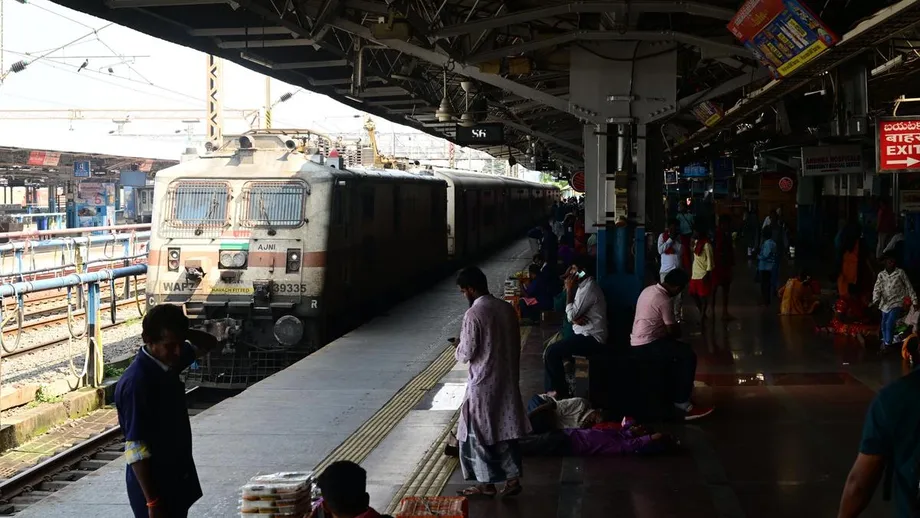
A 604 km connection between two sacred cities
Indian Railways has approved a weekly passenger train between Janakpur Dham in Nepal and Ayodhya Cantt. in Uttar Pradesh, setting out a route of approximately 604 kilometres with 10 intermediate stops. The Ministry of Railways says trains will leave Janakpur Dham on Saturdays and Ayodhya Cantt. on Mondays, connecting religious destinations with communities across Bihar and Uttar Pradesh.
Contents
- A 604 km connection between two sacred cities
- Where the train will stop
- How often it will run and who will operate it
- From bilateral talks to a planned inauguration
- What officials checked at the border
- A regular service for pilgrims and other travellers
- Where local businesses could benefit
- Ayodhya prepares passenger facilities
- A transport link built around shared traditions
- Key Points
A joint virtual inauguration by Indian Prime Minister Narendra Modi and Nepalese Prime Minister Balendra Shah is planned for November 23, 2026, during Shah's visit to India. Launch preparations also describe an inaugural departure from Ayodhya on November 23 and a return on November 24, alongside the announced weekly departure pattern.
Janakpur Dham is revered in the Ramayana tradition as the birthplace of Mata Sita, while Ayodhya is revered as the birthplace of Lord Ram. The ministry presents the service as a way to make pilgrimage easier while supporting journeys for education, business and family visits.
The operating arrangement gives the project another practical dimension: Indian Railways is to run the train initially and determine its fares and passenger facilities. Nepal Railways Managing Director Paribesh Parajuli says Nepal intends to take over when it has the resources to operate the service.
Where the train will stop
The ministry's announced route connects Janakpur Dham and Ayodhya Cantt. through Jaynagar, Madhubani, Shisho, Sitamarhi, Raxaul, Narkatiaganj, Gorakhpur, Basti, Mankapur and Ayodhya Dham. These are commercial stops, meaning passengers can board or leave the train there.
Ayodhya Dham is therefore an intermediate stop in the ministry's plan, while Ayodhya Cantt. is the terminal where the service ends or begins. For passengers arranging tickets or onward travel, the distinction between the two stations matters.
The ministry gives the journey length as approximately 604 kilometres; descriptions of the proposed service and inauguration also give 464 kilometres and sometimes identify Ayodhya Dham as the endpoint. An earlier proposed stopping pattern included Darbhanga rather than the announced Shisho and Madhubani stops. The ministry's approval sets out the 604 km route and the 10 intermediate stops listed above.
Bihar's stations give the service a role beyond travel between its endpoints. Passengers boarding at places such as Sitamarhi, Raxaul and Narkatiaganj would gain access to destinations on the same route, while Jaynagar provides the connection into Nepal.
How often it will run and who will operate it
Parajuli describes the initial plan as one round trip each week. That means one journey in each direction, with any increase in frequency tied to the number of passengers using the service.
Parajuli, the managing director of Nepal Railways in Janakpur, explained how responsibility for running the train and setting its passenger arrangements would work:
For now, the Indian Railways will operate the train. All the availing facilities and the ticket fare will also be decided by them; later, when we have the resources to operate it on our own, then we will decide about the facilities to be given and the required changes,
He also described the basis for potentially adding more journeys:
For now we are planning for one round trip in a week. It would be further expanded depending on the flow of passengers, which might increase the frequency as well,
Launch preparations identify the Indian Railway Catering and Tourism Corporation, known as IRCTC, as the booking channel for travel in both directions. Earlier planning considered air conditioned and sleeper coaches. Final fares, departure and arrival times, journey duration, the confirmed coach mix and a date for Nepal to take over operations have not been announced in the details released so far.
From bilateral talks to a planned inauguration
India and Nepal discussed railway connections, including passenger services on the Janakpur–Ayodhya section, in June. Operational talks later moved to Jaynagar, where officials worked through the arrangements needed to carry passengers across the border.
The sequence of discussions, inspections and launch preparations is:
- June: India and Nepal discussed railway links, including passenger services between Janakpur and Ayodhya.
- Autumn: Railway, customs, immigration and security officials met at the Jaynagar railway station rest house to discuss operations and border procedures.
- Earlier in November: A train with 17 coaches, identified in trial details as WDP-4D 40370, ran from Jaynagar to Kurtha.
- November 14, 2026: The Ministry of Railways announced approval of the weekly service and its route.
- November 23, 2026: Modi and Shah are scheduled to inaugurate the connection virtually, with an inaugural departure from Ayodhya planned that day.
- November 24: Launch arrangements describe a return journey following the inaugural departure.
Earlier planning had sought approval before Vivah Panchami, the religious observance associated with the marriage of Ram and Sita. The November launch arrangements give the project a specific planned opening after months of discussions about its operation.
What officials checked at the border
Indian and Nepalese officials jointly inspected the Jaynagar–Janakpurdham–Kurtha section after their meeting. Their checks covered tracks, signalling, level crossings, stations and security arrangements. The inspection report was to go to the relevant ministries for consideration.
Signalling controls train movements so that trains can use the railway safely. Level crossings are places where roads cross railway tracks. Inspecting both is part of preparing the physical route, while customs and immigration discussions deal with the movement of passengers and their belongings between countries.
Officials reached an agreement in principle that Nepalese agencies would be responsible for passenger and train security inside Nepal, with Indian agencies responsible on the Indian side. Launch preparations also call for customs inspections at Jaynagar for trains travelling in both directions.
The Jaynagar–Kurtha trial covered the section connecting India with the Janakpur area. Alongside that railway work, officials discussed passenger facilities and how the two countries would coordinate checks, bringing transport operations and border responsibilities into the same planning process.
A regular service for pilgrims and other travellers
The train is planned as a regular passenger service, with religious tourism forming a major part of its purpose. It would connect places associated with Ram and Sita through a scheduled railway journey that passengers could book in either direction.
The Ministry of Railways says the service will support tourism circuits associated with the Ramayana. A tourism circuit connects several related destinations in one itinerary. Here, the connection between Janakpur Dham and Ayodhya gives travellers a way to include both cities in a religious visit.
Students, traders and people visiting relatives are also among the intended users. Stops across Bihar and Uttar Pradesh make the service relevant to journeys along the route, as well as to passengers travelling its full length.
A weekly departure gives those travellers a specific day around which to arrange a visit. Parajuli's proposal to review frequency according to passenger numbers makes actual use of the train central to any later expansion.
Where local businesses could benefit
The ministry expects improved railway access to create opportunities for tour operators, hospitality businesses, local traders and traditional artisans. Those benefits would depend on passengers spending money in the places they visit, whether on accommodation, meals, transport, guided visits or locally made goods.
Janakpur Dham and Ayodhya are the main religious destinations, but intermediate stations place other communities within reach of the service. For businesses in Bihar's border districts, passengers joining or leaving the train could create opportunities beyond the two terminal cities.
Tour operators would have a recurring schedule around which to organise visits. Hotels and other accommodation providers could plan for arrivals linked to the weekly train, while traders and artisans could gain customers among visiting pilgrims and tourists.
The government describes these as expected economic benefits. Its announcement gives no estimate for passenger numbers, additional visitor spending or jobs. The clearest immediate change for border communities is the planned addition of another passenger transport option.
Ayodhya prepares passenger facilities
Preparations in Ayodhya include a passenger facilitation centre at Ayodhya Dham station, where Railway Minister Ashwini Vaishnaw is expected to attend the inauguration. The centre is described as covering about 10,000 square feet and costing approximately Rs 5 crore, or Rs 50 million.
The planned air conditioned building includes waiting areas, toilets, drinking water, a water ATM, Wi-Fi and an enquiry centre, with direct access to the platforms. Large screens are intended to display train arrival and departure information.
Its ticketing facilities are to include 12 general ticket counters, five reserved ticket counters and five automatic ticket vending machines. That gives the centre 17 staffed counters, with provision for additional counters during fairs and other periods of heavy passenger traffic.
Online booking, payments using QR codes and other digital services are also part of the arrangements. Suresh Kumar Verma, divisional railway manager of Northern Railway's Lucknow Division, inspected the railway stations in Ayodhya and Katra to review preparations.
A transport link built around shared traditions
The railway plan follows an earlier attempt to connect Ayodhya and Janakpur by bus, launched by Uttar Pradesh Chief Minister Yogi Adityanath. That service did not succeed, and preparations subsequently continued for a railway connection.
The ministry places the new train within India's cooperation with Nepal, pointing to shared religious traditions and relationships between communities across the border. The operational work gives that stated aim a concrete form: a recurring passenger service, agreed security responsibilities and railway inspections conducted jointly.
For travellers, the next milestones are the planned November 23 inauguration and the inaugural return journey described for November 24. Once regular operation begins, passenger demand will guide whether the initial weekly connection grows into a more frequent service.
Key Points
- Indian Railways has approved a weekly Janakpur Dham–Ayodhya Cantt. passenger service covering approximately 604 kilometres.
- The announced departure days are Saturday from Janakpur Dham and Monday from Ayodhya Cantt., with 10 intermediate stops.
- A joint virtual inauguration by Narendra Modi and Balendra Shah is planned for November 23, 2026.
- Indian Railways will initially operate the train and set fares and facilities, according to Nepal Railways Managing Director Paribesh Parajuli.
- Officials have inspected the border railway section and agreed in principle on security responsibilities within each country.
- The service is intended for pilgrims, tourists, students, traders and people travelling for business or family visits.
- Any increase beyond one round trip each week will depend on passenger demand.