A First Legal Win for a North Korean Defector
Seoul Central District Court in South Korea ordered North Korean leader Kim Jong-un to pay defector Choi Min-kyung 50 million won, about 37,210 United States dollars, plus annual interest of 12 percent and litigation costs. The judgment was delivered in August 2025 after Choi sued over human rights abuses she said she suffered in North Korea. It was the first legal victory by a North Korean defector against North Korea in a damages case.
Contents
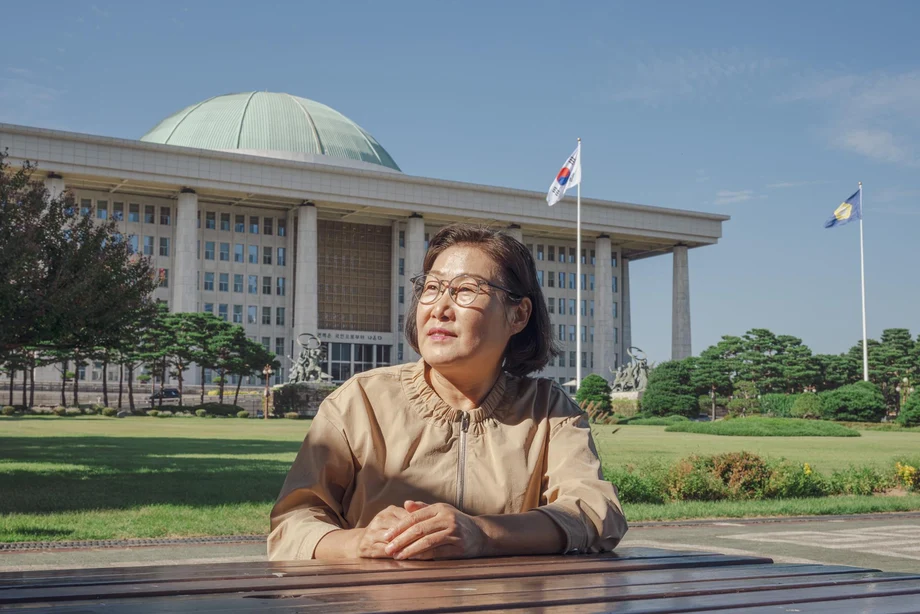
Choi Min-kyung, then 54, head of the North Korean Detainee Families Association, said she trusted South Korean law and considered her body vivid evidence of the violence she endured. She filed the suit in July 2025. The complaint could not be served directly to North Korea and was processed through a public notification service.
I trusted South Korean law and considered my body vivid evidence of the violence I endured.
Choi had considered suing other officials but could not identify their addresses, so she focused on Kim Jong-un. She described the 50 million won claim as symbolic and said collecting the money would not be simple.
A possible route would involve funds held by a cooperation foundation that collected copyright fees for North Korean outlets and deposited about 2.8 billion won with South Korean courts after remittances stopped in 2008. Former prisoners of war who won similar judgments were unsuccessful in collecting from the foundation, and Choi was watching a Supreme Court case on the issue.
The Court and the Damages Claim
The court ordered Kim to pay 50 million won and interest. The court did not separately state its reasons. North Korea did not respond during the trial. Public notification meant the court treated documents as delivered when posted in official gazettes.
Choi filed a criminal complaint under South Korea's International Criminal Act. The case was transferred between authorities and is currently suspended because investigators cannot investigate Kim Jong-un. Choi said the lawsuits lay groundwork for bringing him before the International Criminal Court and pursuing war crimes charges, particularly after North Korea acknowledged deploying troops to Ukraine. Her broader aim, she said, is to constrain Kim Jong-un's financial resources.
A Life of Escape and Imprisonment
Choi was born in North Hamgyong Province in a family loyal to the ruling Kim dynasty. Her father was a party secretary, and she worked as a clerk at the security office of the ruling party and as a mobile propaganda lecturer. During the famine, her father died of paratyphoid, and Choi and her mother crossed the Tumen River to China in search of food.
Choi settled in China, married an ethnic Korean man, and had a daughter. Chinese authorities arrested her after a border crackdown, and she was forcibly repatriated to North Korea. She escaped detention with help from relatives and returned to China, but was arrested and repatriated again. During her third repatriation, punishments intensified. She spent six months in Chongjin Detention Center, where she witnessed beatings, deaths, and suicide. Her mother died in prison.
Choi defected again, but was arrested in 2008 and sent to Jeonggari Reeducation Camp in Hoeryong, where she was sentenced to three years. Prisoners were forced to build the camp and their own graves, perform hard labor, and survive on rotten food. Choi said around 1,500 people were held there, bodies were taken out daily, and she was once placed in a morgue while barely alive with a fever. She was released in 2010 after an amnesty following Kim Jong-un's designation as successor. Of 34 people repatriated with her from China, she said only six survived.
After recovering for more than a year, Choi crossed the border again in 2012 despite tightened security and threats of execution for people fleeing during the mourning period after Kim Jong-il's death. She reunited with her daughter in China, traveled through the country and Laos, and reached South Korea in October 2012.
The Lawsuit and Its Aims
Choi originally planned to sue China and North Korea together, but ultimately did not name China because the case would have been too big and costly. She also planned to sue five North Korean officials from agencies such as the Ministry of State Security along with Kim, but could not include them because South Korean law requires defendants to be identified by name. Backed by legal funding from a Dutch nongovernmental organization, Choi filed the lawsuit against Kim in July 2025.
Choi said she could not get her eldest daughter out, so she risked her life filing this lawsuit. She said the ruling established a legal basis to arrest Kim if he enters South Korea. Collecting the 50 million won awarded by the court from Kim is virtually impossible, but Choi is seeking to seize it from a cooperation fund for projects with the North. The effort awaits a Supreme Court ruling.
The case continued a legal fight that Choi described as laying groundwork for bringing Kim before the International Criminal Court and pursuing war crimes charges.
Human Rights Work and Advocacy
Choi was recently selected for the Dutch Embassy in South Korea's 2026 Human Rights Tulip Award for founding the North Korean Detainee Families Association and raising awareness of North Korean abuses internationally. The association was founded in 2023 after China secretly repatriated about 600 defectors following the Hangzhou Asian Games. The group has about 160 members and regularly protests outside the Chinese Embassy in South Korea against forced repatriations.
Choi criticized what she viewed as weakening support for human rights advocacy in South Korea, including changes in official terminology for defectors and the replacement of a planned National North Korean Human Rights Center with a peace coexistence center. She argued that changing words does not bring peace and that people need to understand North Korea's human rights situation.
What the Ruling Means
The complaint listed North Korea's United Nations mission in New York as the service address, since direct service to Pyongyang institutions is impossible. Enforcement remains impossible as there is no mechanism to compel North Korea to pay damages even when plaintiffs win, making such victories largely symbolic.
Joanna Hosaniak of the Citizens Alliance for North Korean Human Rights cautioned that crimes against humanity cases typically required multiple victims and extensive evidence of organized patterns. She said these were hugely complex legal proceedings that usually take years to build properly.
Choi remains undeterred. She said her association of survivors from North Korea will keep speaking out and documenting abuses and testimony, and will not stop until those responsible are held accountable.
Key Points
- South Korea court ordered Kim Jong-un to pay Choi Min-kyung 50 million won.
- The ruling was the first North Korean defector damages win in a South Korean court.
- Choi said she suffered torture and sexual violence in North Korea.
- The court did not decide how Choi might collect the money.