The final fifth holds up a decadeslong negotiation
China and Southeast Asian countries have provisionally agreed on about 80% of the paragraphs in a proposed South China Sea Code of Conduct, but negotiations will continue into 2027 because the remaining disputes concern the agreement's most basic rules, three senior regional diplomats said on November 11.
Contents
- The final fifth holds up a decadeslong negotiation
- What remains unresolved?
- A deadline that moved from July to December
- What the 2002 declaration already promises
- Practical cooperation is already on the table
- Why the Philippines pushed for faster talks
- Rules would operate amid a growing military presence
- Diplomacy continues despite public disputes
- What Manila can deliver, and what Singapore inherits
- Key Points
The diplomats said the final negotiating round of 2026 ended in October without agreement on which waters the code would cover, the meaning of sensitive terms or whether its obligations would be legally binding. They spoke anonymously because they were not authorised to discuss the negotiations publicly.
The delay would carry the talks beyond a completion target set in 2023 and transfer responsibility for guiding them from the Philippines to Singapore, which takes over ASEAN's chairmanship in 2027. China and Malaysia, the country coordinating ASEAN's broader relations with Beijing, jointly led at least 10 major negotiating rounds this year.
The announcement comes before regional leaders gather in Manila, where maritime confrontations and the unfinished code are expected to feature prominently. For coast guard crews, naval personnel and fishing communities, the practical issue is whether negotiations can produce rules that make dangerous encounters less likely to become armed conflict.
What remains unresolved?
The three outstanding issues identified by the diplomats determine where the agreement would operate, what its instructions would mean and what legal obligations governments would accept. Earlier discussions also identified a fourth issue: the code's relationship with the existing 2002 Declaration on the Conduct of Parties in the South China Sea.
Geographic scope means the waters and maritime features covered by the rules. Definitions matter because governments need a shared understanding of the activities they are agreeing to permit, restrict or avoid. Binding status would turn agreed commitments into legal obligations, while procedures for handling violations would determine how complaints are addressed.
Philippine President Ferdinand Marcos Jr. acknowledged the difficulty during an October discussion in Singapore. Describing negotiations over the code, he said:
The discussions have been going on for a while, and sometimes it's a bit frustrating that just the definitions of ordinary words are becoming bones of contention.
The 80% figure measures paragraphs provisionally accepted. The remaining subjects carry much of the agreement's practical weight because they govern its reach and operation. No completed text or agreed enforcement arrangements have been announced.
A deadline that moved from July to December
ASEAN and China adopted guidelines in July 2023 to accelerate negotiations, setting a target of completion within three years, or by July 2026. By July this year, Philippine Foreign Secretary Ma. Theresa Lazaro was describing the goal as the end of 2026, with negotiators meeting monthly since January.
Marcos hoped to secure an agreement during the Philippines' chairmanship, preferably around the Manila summit. Palace Press Officer Claire Castro reiterated that ambition before the meetings, while Philippine diplomatic officials said completion was not expected by the summit. The diplomats' November assessment extends the expected delay beyond the end of the year.
The negotiating process has passed through several stages:
- November 4, 2002: ASEAN and China signed a declaration in Phnom Penh committing them to work toward a code.
- 2005: Negotiations on the proposed code began, according to the regional diplomats' account.
- 2017: ASEAN and China adopted a framework to guide substantive negotiations.
- 2018 and 2019: They agreed on a Single Draft Negotiating Text and completed its first reading.
- 2023: The second reading concluded, and guidelines established the three year completion target.
- 2025: Negotiations entered a third reading, including discussions of the code's relationship with the 2002 declaration.
- October and November 2026: The final round of the year left central issues unresolved, with diplomats saying negotiations would continue in 2027.
Marcos had already expressed doubts about November completion in October. The latest assessment makes the expected timetable more definite: Singapore will inherit unfinished negotiations despite the Philippines' more intensive meeting schedule.
What the 2002 declaration already promises
ASEAN's 2002 conduct declaration, signed by Southeast Asian governments and China, already contains commitments to restraint, peaceful dispute settlement and freedom of navigation and overflight. It refers expressly to the 1982 United Nations Convention on the Law of the Sea, commonly called UNCLOS.
The declaration says territorial and jurisdictional disputes should be resolved peacefully, without threats or force, through consultations and negotiations among the sovereign states directly concerned. It also calls for restraint in activities that would complicate disputes, including refraining from inhabiting previously uninhabited islands, reefs, shoals and other features.
The document is not legally binding. Its final provision says the parties will work by consensus toward the eventual adoption of a code of conduct. Consensus requires agreement among the participants, making unresolved objections central to the pace of negotiations.
The proposed code is therefore intended to give more detailed shape to commitments made more than two decades ago. The difficult task is translating promises of restraint into instructions that governments and personnel at sea can apply during a confrontation.
Practical cooperation is already on the table
The 2002 declaration contains a detailed list of activities that governments can pursue while their territorial and maritime disputes continue. These include marine environmental protection, scientific research, navigation and communication safety, search and rescue, and action against piracy, armed robbery at sea and other transnational crime.
Its confidence building measures include dialogue between defence officials, humane treatment of people in danger or distress, voluntary notification of impending joint military exercises and voluntary exchanges of relevant information. The declaration says the scope, locations and arrangements for cooperative activities should be agreed before implementation.
Those provisions show how an agreement can address daily risks without waiting for governments to settle every competing claim. Rescue coordination, for example, concerns how authorities respond when someone is in danger. Navigation procedures concern how vessels move and communicate when operating near one another.
A more operational code would need clear channels for reporting incidents, consulting after a confrontation, resolving disagreements and reviewing compliance. These are proposals for making the agreement workable; negotiators have not announced that such procedures have been settled. The central choice is how much detail governments will accept when the rules could constrain their own actions.
Why the Philippines pushed for faster talks
The Philippines hosted negotiations in Cebu scheduled for January 30 to February 2, following an ASEAN foreign ministers' meeting on January 29. Technical working groups and senior officials were expected to take part. Lazaro said she would discuss a new negotiating strategy privately with her ASEAN counterparts.
Timor-Leste, admitted as ASEAN's 11th member in October 2025, was not taking part in those Cebu code negotiations, according to regional diplomats. The negotiating effort continued throughout the Philippine chairmanship, with meetings held at least monthly.
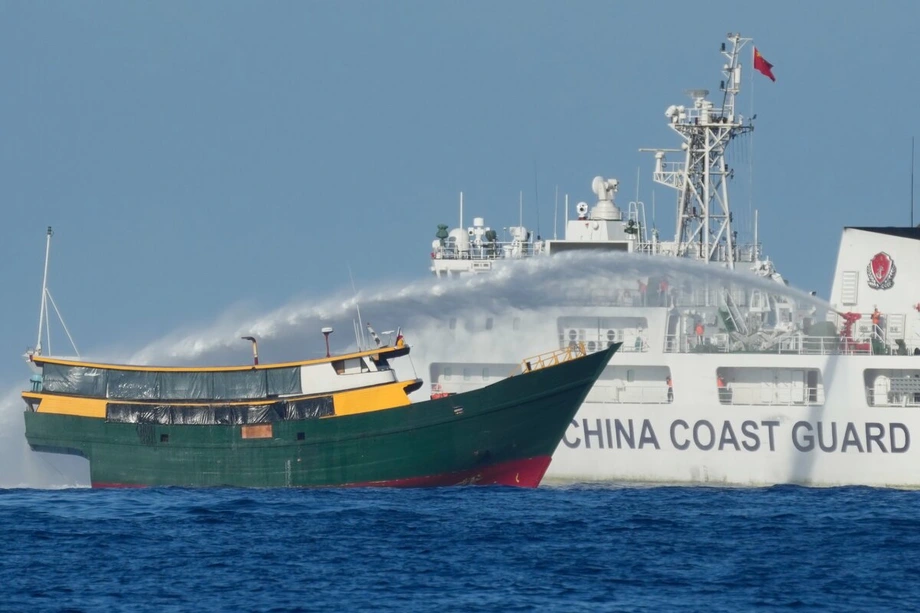
Manila has a direct security interest in the outcome. Encounters between Chinese and Philippine coast guard and naval forces have intensified around disputed shoals. China, Brunei, Malaysia, the Philippines and Vietnam have overlapping claims in the South China Sea; Taiwan also maintains claims.
The waterway carries international trade and is believed to contain undersea oil and gas deposits. Philippine efforts to secure maritime rights have proceeded on several tracks, including its July seabed submission to a United Nations commission. That process concerns seabed and subsoil rights, while the code negotiations address how states behave at sea.
Rules would operate amid a growing military presence
China has built military facilities in the Spratly and Paracel Islands, including facilities capable of hosting bombers. Vietnam has also carried out reclamation and infrastructure work on features it occupies, with activity reported in 2025 supporting a larger military presence.
The history of confrontation gives the negotiations a concrete purpose. Fighting between Chinese and Vietnamese forces at Johnson South Reef in 1988 killed more than 60 Vietnamese sailors. China's occupation of Mischief Reef in 1995 helped drive the regional push for an agreement on conduct.
Today's negotiating environment includes both maritime deployments and expanding defence partnerships. The Philippines has strengthened cooperation with Australia and Japan while maintaining its alliance with the United States. Manila sees such relationships as additional ways to respond to pressure at sea.
Broad restrictions on military exercises or cooperation with countries outside Southeast Asia could affect those partnerships. The 2002 declaration provides for voluntary notification of impending joint exercises. Any new obligations would depend on the wording governments eventually accept, including how they balance incident prevention with their freedom to choose defence partners.
Diplomacy continues despite public disputes
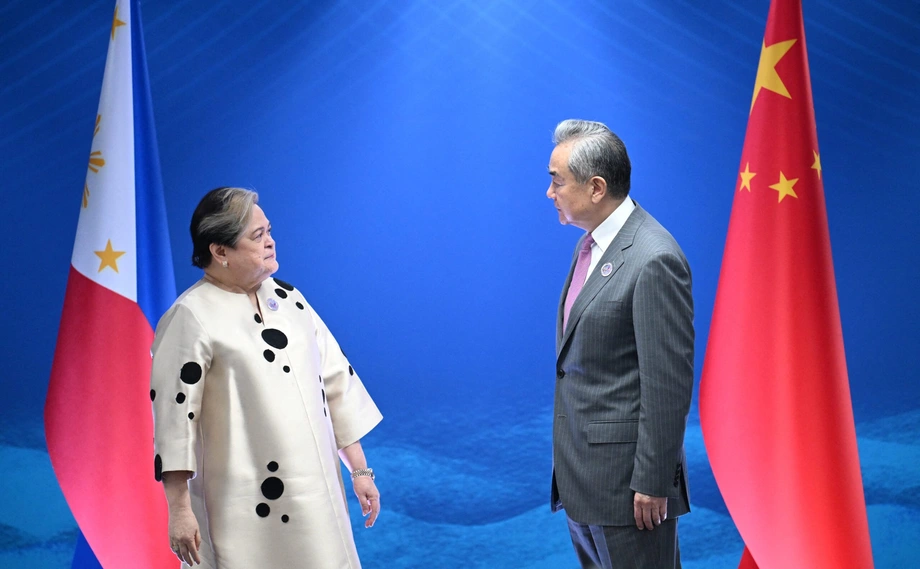
Lazaro and Chinese Foreign Minister Wang Yi discussed bilateral relations in a telephone conversation announced by the Philippine Department of Foreign Affairs on November 4. Manila said the ministers agreed on maintaining dialogue, avoiding actions and rhetoric that needlessly heighten tensions, and resolving disputes peacefully.
The effort to calm relations followed sharp exchanges between Philippine officials and the Chinese embassy. Those arguments included remarks by Chinese Ambassador Jing Quan about China's use of force, which Marcos described as a threat, and disagreements over China's participation in regional defence meetings.
The ministers' conversation gave both sides a channel to discuss maritime issues before the Manila summit. Their stated commitment to dialogue sits alongside continuing confrontations, making the handling of individual incidents a test of whether diplomatic assurances affect daily conduct.
Washington has repeatedly said its defence treaty commitments apply if Philippine armed forces come under armed attack, including in the South China Sea. Beijing has urged the United States to stay out of what it describes as an Asian dispute. A serious encounter could therefore draw in governments beyond those negotiating the code.
What Manila can deliver, and what Singapore inherits
Manila's summit meetings are scheduled for November 15 to 17, although a November 16 to 18 timetable has also been cited for the gathering. Regional leaders are expected to discuss the South China Sea before meeting partners including China and the United States. The Philippine foreign ministry confirmed a United States special summit for November 17.
China is expected to be represented by Premier Li Qiang. President Xi Jinping was not expected to attend. Marcos had hoped a completed code might provide an occasion for Xi to visit Manila, but the negotiations are now set to outlast the Philippine chairmanship.
Singapore will take responsibility for guiding the talks in 2027. It has no territorial claim in the disputed waters, but its economy depends heavily on the movement of trade and its government has advocated freedom of navigation and overflight.
Julio Amador III, a geopolitical analyst based in Manila, said a code could help discourage aggression when combined with diplomacy and stronger military capability. Referring to China, he described the scale of the task:
Restraining great powers takes a lot of effort.
For Singapore, the immediate task will be to preserve the provisional agreements while working through the provisions that determine the code's legal force, geographic reach and practical meaning. For people operating in the disputed waters, the desired result is more concrete: fewer dangerous encounters and a dependable way to manage them when they occur.
Key Points
- Three regional diplomats say about 80% of the code's paragraphs have provisional agreement, but talks will continue into 2027.
- The principal remaining disputes concern geographic scope, definitions and whether the code will be legally binding.
- The Philippines increased meetings to at least once a month; China and Malaysia jointly led at least 10 major rounds in 2026.
- The existing 2002 declaration calls for restraint, peaceful settlement and freedom of navigation, but is not legally binding.
- Singapore will inherit negotiations as ASEAN chair in 2027 while confrontations in the South China Sea continue.