Tokyo agreements connect cleaner growth with farm trade
Vietnam and Japan have agreed to expand cooperation on carbon credits, ocean management and agricultural technology, while targeting the 2027 harvest season for Vietnamese pomelos and Japanese grapes to enter each other's markets. The initiatives connect major environmental tasks, including handling Vietnam's 61 million tonnes of rice straw each year, with practical opportunities for farmers, technology companies and exporters.
Contents
- Tokyo agreements connect cleaner growth with farm trade
- Eight environmental priorities, from emissions to electronic waste
- How the carbon credit partnership will operate
- Rice straw becomes a concrete test for cleaner technology
- Ocean cooperation brings mapping, conservation and wind power together
- Pomelos and grapes lead the next trade opening
- Yamanashi links growers with technology and buyers
- Japan's share shows the commercial stakes
- The timetable from agreements to implementation
- Key Points
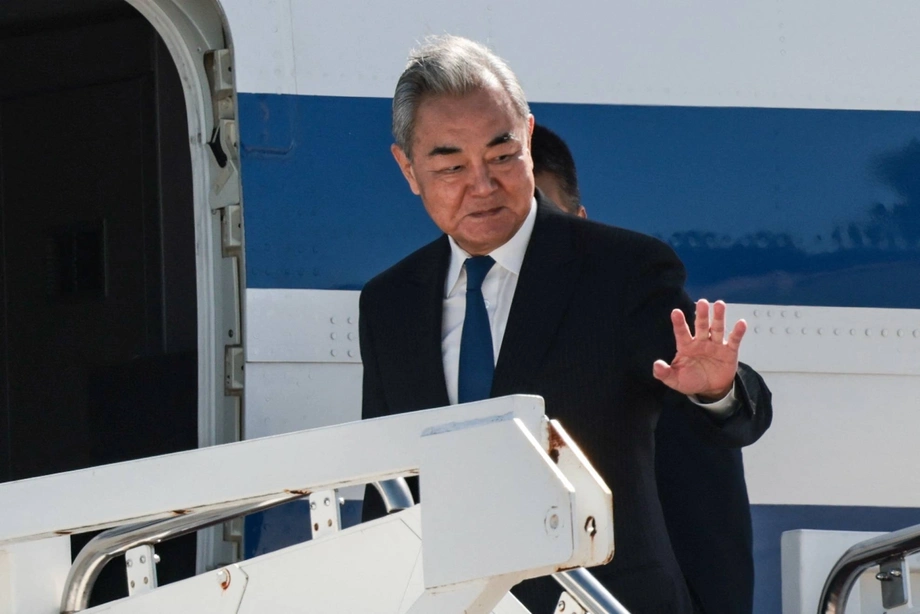
Environmental and marine policy memoranda formed part of the agreements exchanged in Tokyo on November 9, 2026, during Vietnamese Communist Party General Secretary and President To Lam's official visit to Japan from November 8 to 11. Lam and Japanese Prime Minister Takaichi Sanae witnessed the exchange.
The Vietnamese Government's list of agreements describes 11 agreements exchanged; the ceremony was also reported as presenting nine documents out of 11 signed. The package includes separate memoranda between Vietnam's Ministry of Agriculture and Environment and Japan's Ministry of the Environment, and between the Vietnamese ministry and Japan's Cabinet Office on marine and ocean policy.
The wider package covers artificial intelligence research, nuclear power, intellectual property, development assistance and university cooperation. It accompanies the university and power financing commitments exceeding 43.1 billion yen announced for Vietnam Japan University and the O Mon III thermal power plant.
For the environmental and agricultural initiatives, the immediate work involves developing project rules, exchanging technology and completing import procedures. The 2027 fruit target gives businesses a planning horizon, while the marine proposals identify a cooperation period running from 2026 to 2030.
Eight environmental priorities, from emissions to electronic waste
Vietnamese Agriculture and Environment Minister Trinh Viet Hung and Japanese Environment Minister Sasagawa Hiroyoshi took part in the exchange of the environmental memorandum. Its eight priority areas span emissions reductions, adaptation to climate change, cleaner technology, carbon markets, waste management and pollution control.
The agreement also covers recycling and the circular economy, monitoring and early warning, environmental planning, sustainable cities, biodiversity conservation and natural resource management. A circular economy keeps materials in use through repair, reuse and recycling, reducing the amount that becomes waste.
Hung held talks with Sasagawa and co chaired the Vietnam Japan Environmental Policy Dialogue with Japanese State Minister of the Environment Shogo Azemoto. The discussions reviewed cooperation on greenhouse gas inventories, the Joint Crediting Mechanism, waste treatment, electricity generation from waste and the management of discarded electronic equipment.
The ministries plan policy dialogues, expert exchanges, training, feasibility studies and technology transfer. Feasibility studies assess whether a proposed project can work technically and financially before investment proceeds. Companies and research institutes are expected to take part, especially where Vietnam needs technology and investment capital.
Artificial intelligence and remote sensing also featured in the discussions. Remote sensing uses information collected from a distance, often by satellites, to observe environmental conditions. Together, these tools could help authorities monitor pollution and changes in land or water across large areas.
How the carbon credit partnership will operate
Renewable energy, waste treatment and agriculture that produces fewer emissions are priorities for carbon credit projects under the Joint Crediting Mechanism, or JCM. The two countries are working to complete its operating arrangements under Article 6.2 of the Paris Agreement, which governs cooperation involving international transfers of emissions reductions.
The governments' low carbon memorandum, signed in Hanoi on May 2, 2026, sets out the partnership's governance. Japanese Ambassador Ito Naoki and Hung signed the document, continuing cooperation established through memoranda in 2013, 2017 and 2021.
A Joint Committee made up of representatives of both governments develops rules, methods for calculating emissions reductions or removals, and requirements for independent verification bodies. In simple terms, projects need an agreed way to measure their climate benefit and an independent check of the result.
The memorandum allows verified reductions or removals to contribute to the countries' nationally determined contributions, their national climate commitments under the Paris Agreement. It requires transparent accounting and measures to avoid double counting, including preventing registered JCM projects from being used under another international climate mechanism.
Japan commits to supporting Vietnam through finance, technology and training. The partnership runs until 2030 and automatically renews for successive periods of five years unless either government gives written notice of discontinuation at least three months in advance.
Rice straw becomes a concrete test for cleaner technology
Hung asked Japan to help research and transfer technology for treating rice straw after harvest. Vietnam's Ministry of Agriculture and Environment puts annual straw generation at about 61 million tonnes, with nearly half arising in the Mekong Delta.
The request addresses a large agricultural residue stream that can cause air pollution when burned in fields. Vietnam is seeking technology that can recover energy from straw while managing the ash and slag left after combustion. Handling those residues is part of the task, alongside finding useful applications for the straw itself.
Rice straw cooperation also appeared in discussions with Yamanashi prefecture. Vietnamese officials asked for solutions suited to local farming conditions, linking the environmental talks in Tokyo with the technology exchanges proposed by agricultural businesses.
The potential benefit crosses several parts of the agreement: better use of farm residues, less pollution and more economic value from rice production. Turning that potential into a working project requires suitable processing technology and an assessment of how it will operate where the straw is produced.
Ocean cooperation brings mapping, conservation and wind power together
Hung and Japanese Minister of State for Ocean Policy Furukawa Toshiharu led the marine policy discussions. The memorandum between Vietnam's Ministry of Agriculture and Environment and Japan's Cabinet Office sets out five groups of cooperation, according to the official marine cooperation announcement published on the Communist Party of Vietnam's information portal.
Ocean governance and planning will include exchanges on policy and law, digital databases and maps, artificial intelligence and a multidisciplinary maritime domain awareness system. Such a system brings information about conditions and activities at sea together so authorities can make better informed decisions.
Marine science cooperation covers surveys of deep waters and the seabed, research into blue carbon, and the conservation and restoration of ecosystems. Blue carbon means carbon stored by coastal and marine ecosystems, including mangroves and seagrass habitats.
Marine pollution work includes plastic litter and oil spills. Cooperation on the use of marine space and resources includes offshore wind development, alongside other areas of mutual interest. Vietnam's proposals for 2026 to 2030 bring these strands together through ocean databases, digital maps, resource research, waste control and oil spill response.
Offshore renewable energy surveys and links between wind power businesses are another focus. Japan brings technology and management experience, while Vietnam is seeking new sources of electricity for economic growth and its energy transition. Annual marine policy dialogues, workshops and exchanges of officials and technical experts will support implementation.
Pomelos and grapes lead the next trade opening
Agricultural market access talks began before the leaders' visit. On November 6, Hung met Japanese Agriculture, Forestry and Fisheries Minister Takebe Arata to discuss trade procedures, technology transfer and sustainable production and supply chains.
The two ministers prioritised completing procedures for Vietnamese pomelos and Japanese grapes, aiming for sales in each other's markets during the 2027 harvest season. Vietnamese passion fruit and Japanese peaches are next in line. Plant health procedures are central to fruit trade because importing countries set requirements to manage the risk of pests and diseases.
Further discussions cover Vietnamese pet food containing poultry meat, Japanese puffer fish, and Japanese proposals involving pork, beef and chicken. Hung agreed to consider Japan's proposals on a reciprocal basis, assessing each product individually.
Japan also requested faster assessment of registration applications from Japanese seafood exporters seeking access to Vietnam. Hung said he would direct the relevant agencies to accelerate reviews and strengthen exchanges to address outstanding issues.
Nguyen Dinh Tung, vice chairman of the Vietnam Fruit and Vegetable Association, explained what exporters must do to turn access into sales:
"Businesses need to focus on quality control, food safety, traceability and the development of stable growing areas to meet Japanese market standards," said Tung.
Yamanashi links growers with technology and buyers
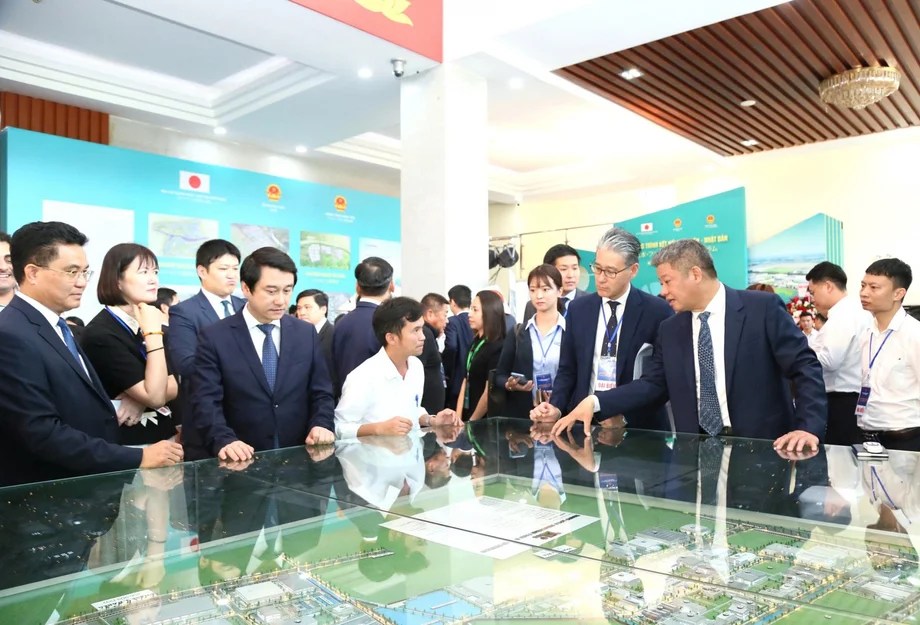
About 60 representatives of regulators and businesses attended the Vietnam Yamanashi agricultural, forestry and fisheries trade conference on November 7. Around 30 Vietnamese companies expressed interest in business cooperation with Japan.
Yamanashi Governor Nagasaki Kotaro said the business matching programme grew from Hung's proposal during a visit to the prefecture in May 2026. Yamanashi leads Japan in grape production and wants plant quarantine negotiations completed so its grapes can be exported officially to Vietnam.
Hung and Nagasaki agreed to strengthen agricultural trade, plant variety research, technology transfer and training. Businesses discussed grapes, peaches, green skinned pomelos, passion fruit, coffee, rice, matcha and other agricultural products with greater added value.
Vietnam also sought expertise in advanced greenhouses, cultivation on sloping land and acid sulfate soils, processing, preservation, watershed forest management and disaster prevention. Acid sulfate soils can become highly acidic under certain conditions, making suitable water and soil management important for farming.
Other proposals included robotic arms to help harvest and sort produce, production models meeting Japanese standards, and cold chain logistics. A cold chain keeps goods at controlled temperatures during storage and transport, helping fresh produce retain quality between the farm and the buyer.
Japan's share shows the commercial stakes
Vietnam's Ministry of Agriculture and Environment reported agricultural, forestry and fisheries exports of approximately $63.02 billion in the first 10 months of 2026, up 8 percent from the same period a year earlier. Japan accounted for 7.3 percent of that export market, with exports there rising 4.8 percent.
Applying Japan's reported share to the total gives an approximate export value of $4.60 billion. The growth rate for sales to Japan was 3.2 percentage points below the 8 percent increase for the sector's exports, showing that trade with Japan grew more slowly than the wider export business.
Vietnamese coffee exports to Japan reached nearly $600 million in 2025, compared with approximately $237 million for fruit and vegetables. Coffee sales were therefore about two and a half times the value of fruit and vegetable exports, illustrating the room that new fruit access could open within an existing trading relationship.
Performance varied by product. Mangoes, mung beans, acerola cherries, pineapples, lychees and coconuts recorded growth, while yams, potatoes, maize, chillies, dragon fruit and ginger declined. The proposed cooperation on preservation, processing and stable production areas addresses the practical work involved in supplying a demanding market consistently.
The timetable from agreements to implementation
The environmental, marine and farm initiatives build on several rounds of cooperation. The agricultural work sits under the Medium and Long term Vision for Vietnam Japan Agricultural Cooperation for 2025 to 2030, signed in September 2025.
The main milestones are:
- September 2025: The countries signed their agricultural cooperation vision for 2025 to 2030.
- May 2, 2026: The governments signed the renewed JCM memorandum in Hanoi.
- November 6, 2026: Agricultural ministers discussed market access and prioritised pomelos and grapes.
- November 7, 2026: The Yamanashi trade conference brought together about 60 representatives.
- November 9, 2026: Environmental and marine memoranda formed part of the Tokyo agreement package.
- 2027 harvest season: The target for Vietnamese pomelos and Japanese grapes to enter each other's markets.
- 2030: The current JCM partnership period ends, with automatic renewal provisions applying.
Fruit access remains subject to completion of the required procedures. Funding totals, project launch dates and quantified emissions reduction targets for the new environmental and marine initiatives were not announced. The next work centres on technical rules, surveys, training and business arrangements that can turn the agreements into operating projects and export orders.
Key Points
- Vietnam and Japan expanded environmental and marine cooperation through memoranda exchanged in Tokyo on November 9, 2026.
- Carbon credit priorities include renewable energy, waste treatment and agriculture with lower emissions.
- Vietnam seeks Japanese technology to use rice straw and manage residues from energy recovery.
- Marine cooperation covers digital mapping, deep sea research, blue carbon, plastic waste, oil spills and offshore wind.
- Vietnamese pomelos and Japanese grapes are targeted for market entry during the 2027 harvest season, subject to completing procedures.
- Yamanashi cooperation connects fruit trade with preservation, robotics, training and cold chain logistics.