Two tests combine a wider blast area with attacks from above
North Korea said it tested a strategic cruise missile carrying a cluster warhead on November 2, 2026, claiming the weapon could devastate a target area of roughly 5 to 6 hectares. The Missile Administration also tested the missile's ability to strike from above, extending a weapons development effort that included a tactical ballistic missile warhead test just two days earlier.
Contents
- Two tests combine a wider blast area with attacks from above
- What does a dispersal warhead do?
- Why test a vertical strike as well?
- How the November test follows the October launch
- A plan for four warhead categories
- Which targets do analysts see in the claims?
- What South Korea said about detection and readiness
- Weapons development amid criticism of allied exercises
- A public message with limited domestic exposure
- Key Points
The announcement on November 3 brought together two different capabilities: spreading smaller explosives across a broad area and changing a missile's final approach to a target. The Missile Administration's Warhead Institute assessed the cluster warhead, while its Cruise Missile System Research Institute assessed the vertical strike flight characteristics.
General Kim Jong-sik, a member of the Workers' Party Central Military Commission and first deputy department director of the Party Central Committee, directed the tests. North Korean leader Kim Jong Un was not reported to have attended.
The launch location was not disclosed. North Korea's claims about the destruction area and completed vertical strike capability have not been independently verified, and South Korean and United States officials were still conducting a detailed analysis.
What does a dispersal warhead do?
North Korea calls the device a dispersal warhead. It is a cluster warhead: a larger container holding smaller explosive devices, known as submunitions, that spread across an area after release. Instead of concentrating the entire explosive effect at one point, the weapon distributes it among multiple locations.
The Missile Administration described the cruise missile's warhead as medium sized. Its Warhead Institute said the test confirmed that it could devastate an area measuring 5 to 6 jeongbo, a Korean land measurement equivalent to approximately 5 to 6 hectares.
One jeongbo is about 9,917 square meters. Using that conversion, the claimed area is approximately 49,585 to 59,502 square meters, often described as about seven or eight football pitches. The figure concerns the area North Korea says the warhead can affect; the announcement gave no count of the submunitions inside it.
The Missile Administration's assessment described the claimed destructive effect in these words:
The medium-sized dispersal warhead mounted on the cruise missile is capable of turning a target area of five to six hectares into ashes.
A weapon that spreads explosives across a wide area can threaten several vehicles, equipment positions or groups of personnel at once. That same spread creates a danger for civilians in or near the area being attacked.
Why test a vertical strike as well?
The Cruise Missile System Research Institute said it had improved the missile's terminal maneuvering characteristics, taking account of the natural and geographic features of the area where the weapon would operate. Terminal maneuvering means changes in direction during the final part of a missile's flight, just before it reaches its target.
The institute claimed those improvements completed the missile's ability to strike vertically. In simple terms, a missile that approaches a target while flying relatively low can change its flight path and descend steeply toward it, rather than arriving mostly from the side.
Shin Jong-woo, secretary general of the Korea Defense and Security Forum, interpreted the capability as an effort to attack underground facilities and tunnel entrances that are difficult to reach from horizontal or sloping approaches. He also said a steep descent could increase speed before impact.
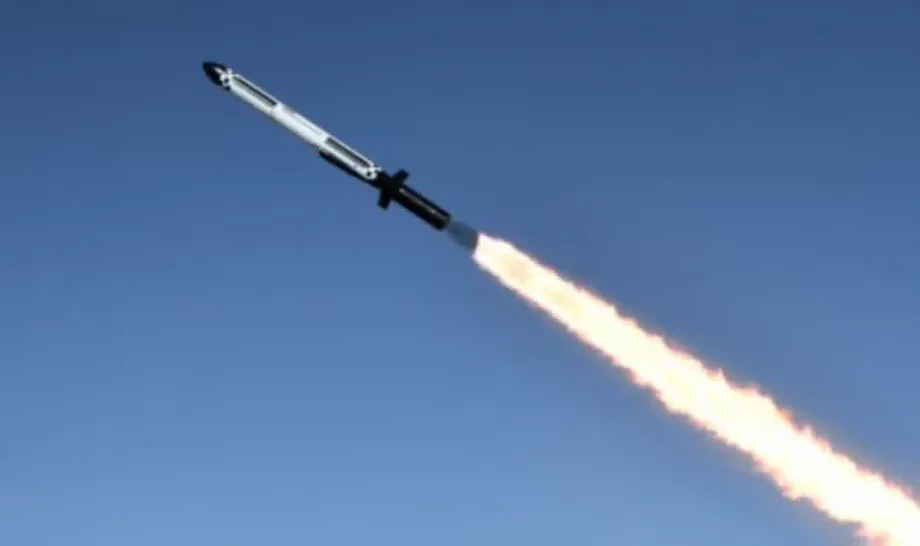
Photographs released with the announcement were described as showing submunitions spreading over the sea and a missile descending almost vertically toward structures resembling artillery positions or ammunition stores. Shin estimated that the missiles belonged to the Hwasal cruise missile family.
How the November test follows the October launch
North Korea's latest announcement followed an October 31 test of a cluster warhead for a tactical ballistic missile. The two tests extended the same broad warhead concept across different types of missiles, while assigning them different claimed destruction areas.
The sequence unfolded over four days:
- October 31, 2026: North Korea conducted a tactical ballistic missile cluster warhead test under Kim Jong-sik's direction.
- November 1: North Korea announced that the earlier warhead could devastate approximately 12 to 13 hectares.
- November 2: The Missile Administration conducted the cruise missile cluster warhead and vertical strike tests.
- November 3: North Korea announced the latest tests, and South Korea said a detailed assessment with the United States was under way.
The earlier ballistic missile warhead was called Standard Type 2. North Korea claimed it could devastate 12 to 13 jeongbo, approximately 12 to 13 hectares, compared with the cruise missile warhead's 5 to 6 hectares. The earlier claimed area was therefore roughly twice as large.
South Korea's military later said it had detected the October 31 missile launch from the Jeongju area of North Pyongan Province toward the Yellow Sea. The location of that earlier launch provides a geographic detail that North Korea did not disclose for the November 2 cruise missile test.
A plan for four warhead categories
The Missile Administration has described a wider plan to divide dispersal warheads into four categories, including standard versions and versions for special purposes. Its director said units would be able to select warheads according to their mission and the characteristics of the target before the end of 2026.
For military units, that would mean choosing among different warheads rather than using a single configuration for every attack. The announced schedule makes the end of the year the next stated milestone for the program.
Hong Min, a senior research fellow at the Korea Institute for National Unification, said the labels Standard Type 2 and medium sized suggested North Korea might be working to standardize warhead dimensions and power for different missile types.
The comparison between the October and November tests supports a concrete reading of that development effort: North Korea is publicly describing different warhead sizes for ballistic and cruise missiles, alongside changes to how a missile approaches its target. The announcements combine choices about the explosive payload with choices about the delivery system.
Which targets do analysts see in the claims?
Lim Eul-chul, a professor at Kyungnam University's Institute for Far Eastern Studies, interpreted the cluster warhead announcements as a message about disrupting key ports and air bases in South Korea where United States military assets could gather during a crisis.
Airfields, fuel and ammunition storage areas, and positions containing dispersed equipment are possible military targets for a weapon designed to spread explosives. A vertical approach serves a different purpose, allowing a missile to attack a particular structure or entrance from an angle that a lower, flatter approach may not reach easily.
Shin's assessment focused on underground facilities and tunnel entrances. Lim's focused on restricting the use of larger military hubs. Together, those interpretations explain why North Korea highlighted both the area covered by the warhead and the final direction of the missile's flight.
Using ballistic and cruise missiles also presents defenders with different flight patterns. Ballistic missiles follow a different trajectory from cruise missiles, which can travel at low altitude and maneuver around terrain. Coordinating weapons that arrive from different directions and heights can increase the number of threats air defenses must track at once.
What South Korea said about detection and readiness
Jang Do-young, spokesperson for South Korea's Joint Chiefs of Staff, said the South Korean and United States militaries were closely examining the North's activity. He said South Korea already possessed precision strike capabilities and related weapons systems developed about 20 years earlier, and maintained them in operational readiness.
The Joint Chiefs did not separately announce the November 2 test as it happened. Asked about disclosure, Jang said confirming the detection of individual launches could expose South Korea's surveillance capabilities. He also said withholding details about military assets and their specifications was a strategic decision.
South Korea often announces detected North Korean ballistic missile launches promptly, while cruise missile activity is not always disclosed in real time. Ballistic missile launches are covered by United Nations Security Council restrictions on North Korea.
Jang explained that cruise missiles fly relatively slowly and at low altitude, using terrain to shape their route. If launched far inside northern North Korea, they can be harder to detect because terrain and the Earth's curvature limit what sensors can see.
The spokesperson said South Korea could detect and respond to cruise missiles launched toward its territory. His remarks paired an explanation of surveillance limits over distant areas with an assurance about the military's readiness to defend the South.
Weapons development amid criticism of allied exercises
North Korea presented the tests as routine scientific research intended to increase the power of its combat systems. Jang Chang-ha, director of the Missile Administration, framed the development of different weapons as necessary to defend the country and deter external threats.
The Missile Administration's statement put that position this way:
The necessity of developing a variety of weapon systems is more urgent than ever before. It is because our armed forces should defend the country's security and deter all sorts of threats.
The tests took place alongside North Korean criticism of military exercises involving South Korea, the United States and Japan. Kim Jong-sik condemned Iron Mace, an exercise held from September 29 to October 2 that examined the combined use of United States nuclear forces and South Korean conventional forces.
A North Korean military commentator also criticized Keen Sword, a United States and Japanese exercise held across Japan from October 19 to 29. The criticism singled out the participation of Japan's Type 25 surface to ship missile launcher.
Hong Min suggested North Korea might be managing external tension by continuing weapons development without highlighting Kim Jong Un's direct involvement. Kim Jong-sik directed both recent warhead tests, while Kim Jong Un was not reported to have attended either.
A public message with limited domestic exposure
North Korea announced the tests through its external communications, while the November 2 event was not carried in domestic outlets such as the Workers' Party newspaper Rodong Sinmun. The October 31 cluster warhead test was also absent from those domestic publications.
The publicity centered on claimed military functions: covering a broad target area, striking from above and allowing units to choose among warheads. South Korea's response centered on existing precision weapons, surveillance practices and readiness. The immediate result was a series of competing public statements about military capability, with the joint South Korean and United States assessment still in progress.
Key Points
- North Korea said it tested a cruise missile cluster warhead and vertical strike flight characteristics on November 2, 2026.
- Its Warhead Institute claimed the medium sized warhead could devastate roughly 5 to 6 hectares.
- A tactical ballistic missile warhead tested on October 31 had a claimed destruction area of approximately 12 to 13 hectares.
- General Kim Jong-sik directed both tests. Kim Jong Un was not reported to have attended.
- North Korea plans to make four categories of dispersal warheads available for units to select by the end of 2026.
- South Korea said it was conducting a detailed analysis with the United States and maintained the ability to respond.