From a first destroyer to plans for larger warships
North Korea commissioned its first 5,000-ton destroyer, Choe Hyon, into the West Sea Fleet on June 23, 2026, beginning a naval expansion that by November included a second destroyer in service and construction of a much larger warship at Nampho Shipyard. Leader Kim Jong Un wants shipbuilders to deliver two major surface warships each year under a construction plan running from 2026 to 2030.
Contents
- From a first destroyer to plans for larger warships
- How the Choe Hyon reached service
- What weapons does the destroyer carry?
- Why the nuclear role matters
- Why a large missile battery has limits
- Submarines and supplies constrain its reach
- The Kang Kon adds an eastern presence
- Kim wants the shipyards to build faster
- Russia ties and sanctions add another concern
- Key Points
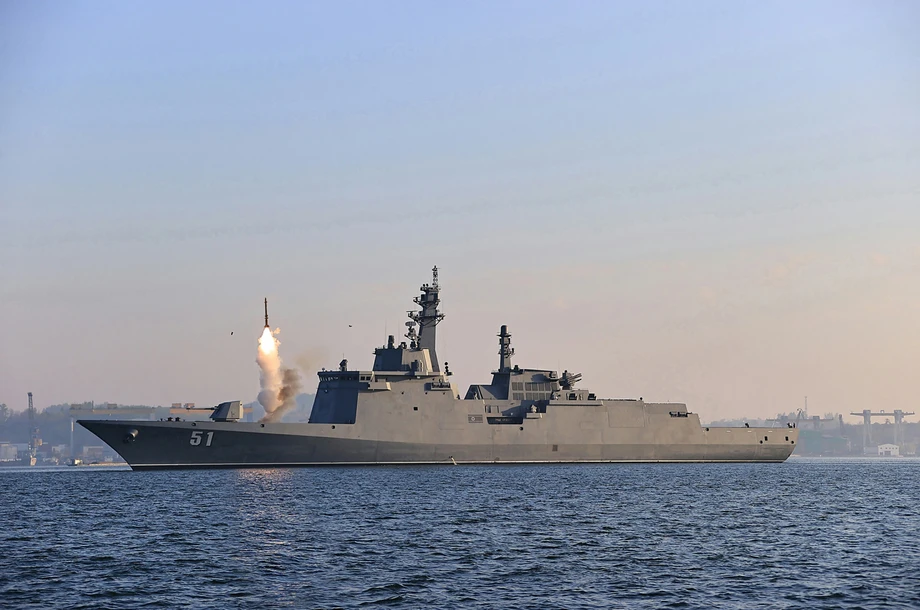
The Choe Hyon, carrying hull number 51, is North Korea's largest warship yet and its first vessel designed for operations beyond coastal waters. Its introduction gives Pyongyang a larger platform for missiles while requiring South Korea, the United States and Japan to monitor a more capable North Korean surface fleet.
Kim used the June ceremony at Nampho, on the country's west coast, to announce ambitions reaching beyond the new destroyer. He called for cruisers of about 10,000 tons, twice the Choe Hyon's stated displacement, and for naval bases capable of supporting a larger fleet. Displacement measures a ship's weight through the amount of water it pushes aside.
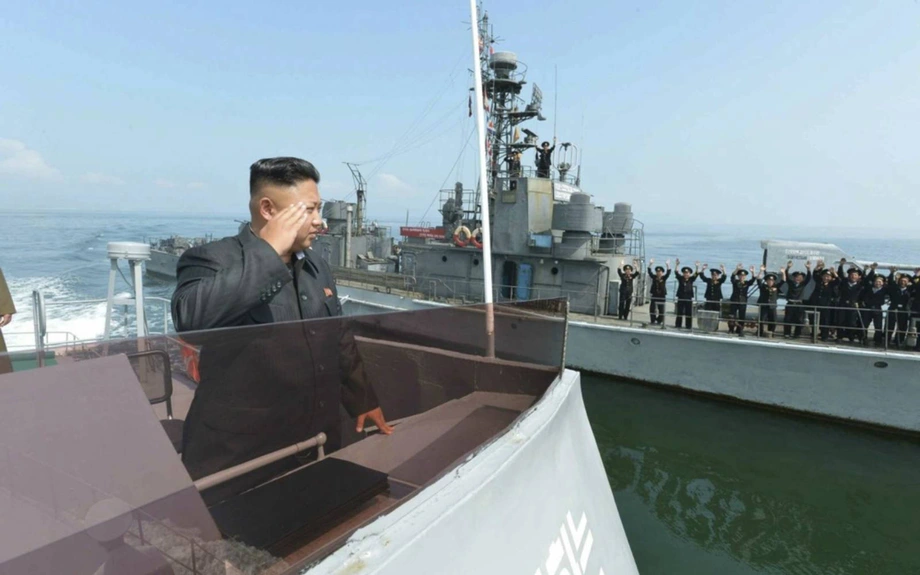
Kim, North Korea's leader, described the commissioning as a break with decades of naval weakness:
In terms of military hardware, the navy was the weakest of all the services of our armed forces,
By November 2, Kim was inspecting a hull at Nampho that appeared considerably larger than the destroyers. Shin Jong-woo, secretary-general of the Seoul-based Korea Defense and Security Forum, assessed from a shipyard photograph that it could be the proposed 10,000-ton cruiser. North Korean authorities released no specifications for that vessel.
The expansion presents two connected challenges for neighbouring countries: more ships to track during a crisis, and uncertainty about whether missiles aboard them could carry conventional explosives or nuclear warheads.
How the Choe Hyon reached service
Nampho Shipyard launched the Choe Hyon on April 25, 2025. Its formal entry into service followed almost 14 months later, after sea trials, weapons tests and changes to its weapons and sensors. Kim personally oversaw several stages of testing.
North Korean state media announced the June 23 commissioning on June 24. The ceremony assigned the ship to the West Sea Fleet of the Korean People's Army Navy, giving the country's western naval forces a substantially larger combat vessel.
The main steps in the programme show how construction, testing and fleet expansion have overlapped:
- April 25, 2025: Choe Hyon was launched at Nampho Shipyard.
- May 21, 2025: Sister ship Kang Kon suffered a failed launch at Chongjin.
- June 12, 2025: Kang Kon was launched again after recovery.
- April 12, 2026: North Korean state media said Choe Hyon fired two strategic cruise missiles and three missiles intended to attack ships during operational tests.
- June 23, 2026: Choe Hyon entered service with the West Sea Fleet.
- September 2026: Kang Kon entered service on the east coast.
- November 2, 2026: Kim inspected construction of a larger warship at Nampho.
Commissioning places a ship formally in naval service. Keeping it ready for combat then requires trained crews, reliable equipment, maintenance and repeated exercises, all of which become more demanding as ships grow larger and their weapons become more complex.
What weapons does the destroyer carry?
The Choe Hyon is approximately 145 metres long. Its reported armament includes a 127 mm main gun, missiles for attacking ships and aircraft, torpedo launchers, and weapons intended to intercept threats approaching at close range.
Missile launch capacity is a central feature, although published technical assessments give different counts. A November 38 North technical assessment counts 34 vertical launch cells forward and 40 aft, a total of 74. A June technical assessment counted 24 forward and 64 aft, totalling 88, and estimated a maximum of 104 missiles when inclined launchers and a separate defensive system were included.
A vertical launch cell is a compartment extending down into the ship from which a missile fires upward. The two assessments therefore describe a substantial missile battery, while differing on its exact arrangement. The 38 North study also identifies changes to the launch systems between the vessel's launch and commissioning.
North Korean test footage examined by 38 North shows air defence missiles launched from the forward cells and strategic cruise missiles from the aft cells. Its assessment also says missiles intended to attack ships have been test fired. These later details extend the picture beyond the uncertainty surrounding the vessel's armament when it first appeared.
Four fixed radar panels and electronic warfare equipment have also been identified in technical reporting. Radar helps locate and track threats; electronic warfare equipment can detect or interfere with opposing electronic systems. Their usefulness depends on how well they work with the ship's weapons and computers.
Why the nuclear role matters
North Korea uses the term strategic for systems associated with nuclear capability. Kim's description of future strategic cruisers therefore places the shipbuilding programme within a broader effort to extend nuclear forces to the sea.
The 38 North assessment identifies the potential to launch cruise missiles carrying tactical nuclear warheads as the Choe Hyon's most consequential capability. Cruise missiles fly under engine power through the atmosphere and can manoeuvre toward their targets. A ship carrying them provides a launch position that can move.
The study identifies a practical danger during a confrontation: allied commanders could face a North Korean warship carrying both conventional and potentially nuclear weapons. They would have to make decisions about surveillance, interception or attack while uncertain about the weapons aboard and the mission assigned to the ship.
Yu Ji-hoon, a research fellow at the Korea Institute for Defense Analyses, described the navy's changing direction:
The North Korean navy is moving away from its existing coastal-defense-centered structure towards extending its nuclear and missile threat into the maritime domain,
North Korea previously relied heavily on submarines, small attack craft, coastal artillery, mines and forces trained to infiltrate enemy territory. A large surface ship carrying missiles adds another way to threaten targets, even while much of that older force remains in place.
Why a large missile battery has limits
The 38 North assessment compares the Choe Hyon with South Korea's Chungmugong Yi Sun-sin destroyer, displacing about 5,500 tons and measuring 150 metres, and Russia's Admiral Gorshkov frigate, at about 4,550 tons and 135 metres. North Korea has built a vessel within the size range of established modern combat ships.
Its fighting ability depends on more than size or missile numbers. A warship must detect a target, identify it, choose a weapon and direct that weapon accurately. An integrated combat system connects the sensors, computers and weapons so the crew can perform those tasks quickly, including when several threats arrive together.
The 38 North study raises concerns about that integration aboard the Choe Hyon. Fire control equipment above the bridge changed between launch and commissioning, from equipment resembling a Russian design to equipment resembling a Chinese system. Such a change requires corresponding work on the software linking sensors and weapons.
Propulsion may impose another limit. The assessment judges from footage that the ship could rely on diesel engines alone, which would generally give it less speed than a vessel combining diesels with gas turbines. Its analysis places a possible diesel configuration in the range of roughly 20 to 25 knots. North Korea has not announced an official maximum speed.
The study also finds limited stealth performance. Although the hull has sloping surfaces intended to reduce radar reflections, exposed guns, launchers and other structures could make the vessel easier to detect.
Submarines and supplies constrain its reach
The Choe Hyon lacks a helicopter hangar, with space aft devoted instead to missile launchers. The 38 North assessment identifies that choice as a serious weakness in defending against submarines. A helicopter can search well beyond the ship and attack a submarine with torpedoes.
No towed sonar array has been identified. Such an array trails underwater listening equipment behind a vessel, helping it detect submarines. The assessment considers a sonar installation in the bow possible, but judges the ship's submarine detection capability to be limited.
Long voyages create a separate supply problem. North Korea lacks the escorts and an oiler needed to support sustained operations by a modern surface force, according to 38 North. An oiler carries fuel that other ships can receive at sea, extending their time away from port.
The assessment therefore expects the Choe Hyon to operate mainly near its home port despite its larger hull. Kim's calls for new naval bases address part of that practical problem: larger ships need suitable berths, repair facilities, supplies and command centres.
The Kang Kon adds an eastern presence
The second destroyer, Kang Kon, suffered a major setback when it capsized during a sideways launch at Chongjin on May 21, 2025. It was recovered, launched again on June 12 and subsequently relocated to Rajin. Sea trials began in June 2026.
Kim said at the Choe Hyon's commissioning that the sister ship would enter service soon. By September, North Korea had commissioned the Kang Kon, describing it as part of a nuclear counteraction system and a nuclear war deterrent.
With Choe Hyon assigned to the west and Kang Kon to the east, allied surveillance must cover large missile carrying surface ships on both sides of the peninsula. The 38 North assessment identifies that division across two seas as one of the programme's principal challenges for the United States and South Korea.
Carl Schuster, a former director of the US Pacific Command's Joint Intelligence Center, said the new vessel would have limited survivability in combat. He nevertheless identified a concrete demand on neighbouring militaries:
North Korea has potentially forced the US, Japan and South Korea to expand their monitoring of North Korea's navy,
Kim wants the shipyards to build faster
North Korea's naval construction plan for 2026 to 2030 calls for two surface ships annually, alongside escort vessels, ships for special purposes and underwater weapon systems. Kim has called for ships of the Choe Hyon class or larger, including the planned 10,000-ton cruisers.
Two further Choe Hyon class destroyers were reported under construction. The third had been scheduled for completion around October 10, the anniversary of the Workers' Party's founding. By the early November shipyard announcements, North Korea had issued no announcement of its launch.
Kim's November 2 instructions at Nampho focused on the production capacity needed for that schedule. He ordered greater automation, an additional dock so construction and repair could proceed together, changes to the shipyard's layout, and recruitment of more design and construction personnel.
The larger hull inspected during that visit suggests work toward the next class is under way. Delivering ships regularly will also require engines, electronics, weapons and skilled workers to arrive in step with hull construction.
Russia ties and sanctions add another concern
Kim has described the Choe Hyon and its weapons as domestic products. Leif-Eric Easley, a professor at Ewha University in Seoul, offered a different assessment of the programme's possible support:
The speed and intended scale of Kim Jong-un's naval buildup suggest North Korea may be receiving significant material and technological assistance from Russia,
Pyongyang has supplied troops and weapons for Russia's war against Ukraine. Its closer military relationship with Moscow was already visible in the tributes to fallen soldiers and promises of support for their families in August 2025. Easley's assessment places the rapid shipbuilding effort within that expanding partnership.
Larger North Korean warships could also complicate enforcement of United Nations arms sanctions. Schuster pointed to the difficulty of intercepting and boarding a vessel carrying arms if a warship escorts it. An operation intended to inspect cargo could then involve a direct encounter with an armed naval vessel.
South Korea and the United States still possess dozens of destroyers with advanced missiles and combat systems between them. The immediate change is a more demanding monitoring and planning task, alongside the possibility of a North Korean ship being used as a missile platform during a crisis.
Yu, the Korea Institute for Defense Analyses researcher, described that risk:
Even if it falls short of being a fully modern destroyer, it could still pose a real burden to South Korean security if it's used as a missile-launch platform or a means of escalating crises,
Key Points
- North Korea commissioned the 5,000-ton Choe Hyon into its West Sea Fleet on June 23, 2026.
- Sister ship Kang Kon entered service on the east coast in September after recovering from a failed launch in 2025.
- Technical assessments identify a large missile battery but give different counts of its vertical launch cells.
- A 38 North study finds weaknesses in submarine defence, stealth, combat system integration and support for extended voyages.
- Kim inspected a larger hull in November while pursuing plans for 10,000-ton cruisers and two major surface ships annually.
- The ships create new surveillance demands and uncertainty about conventional and potential nuclear missile missions.