Tokyo sets a timetable for a new intelligence system
Japan aims to complete its first national intelligence strategy by spring 2027 and establish an independent foreign intelligence agency by the end of fiscal 2027, in March 2028. The plans would extend a restructuring that has already created a National Intelligence Council headed by Prime Minister Sanae Takaichi and a National Intelligence Bureau to coordinate information across government.
Contents
- Tokyo sets a timetable for a new intelligence system
- What the new council and bureau will do
- Why a foreign service is a separate step
- The dates that shape the next stage
- China, Russia and North Korea drive the urgency
- New laws would reach beyond reorganisation
- Public support depends on safeguards
- Australia offers a practical model
- Beijing challenges Tokyo's plans
- Key Points
The proposed foreign service would give Japan a dedicated organisation for gathering secrets abroad, a function associated with America's CIA, Britain's MI6 and Australia's Australian Secret Intelligence Service, or ASIS. Its creation would be a further step beyond the new bureau, whose immediate task is to bring together information gathered by Japanese ministries and agencies.
Takaichi has linked the changes to China's military expansion, North Korea's weapons development and closer cooperation among Beijing, Moscow and Pyongyang. Her concerns also include stolen technology, cyberattacks and campaigns designed to influence public opinion for the benefit of foreign governments.
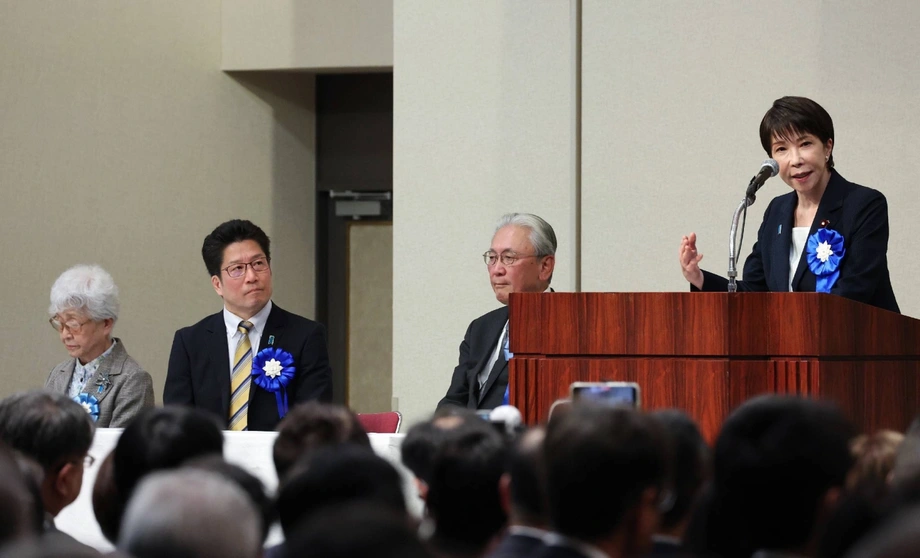
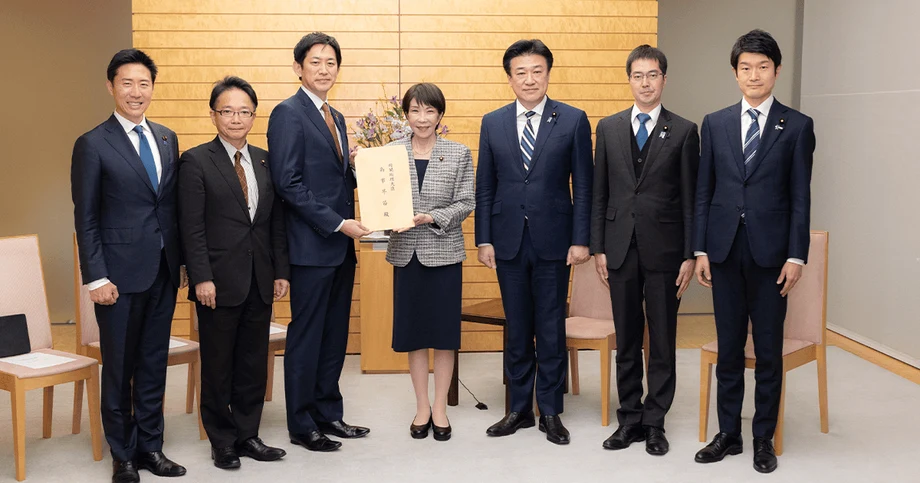
The ruling Liberal Democratic Party laid out its initial priorities in a March 3 policy proposal published in 2026. Its Intelligence Strategy Headquarters, led by party policy chief Takayuki Kobayashi, submitted the recommendations to Takaichi and Chief Cabinet Secretary Kihara. The document called for stronger coordination, better national analysis, greater capacity to collect information overseas and stronger counterintelligence, meaning work to detect and disrupt foreign spying.
Japan's central challenge is now to turn that organisational plan into an effective service while deciding what powers intelligence officers should have, how they should be supervised and how citizens' rights should be protected.
What the new council and bureau will do
The National Intelligence Council Establishment Act created the council and bureau within the Cabinet Secretariat. The legislation passed the lower house of parliament in April and the upper house in May 2026. The council sets direction at the top of government, while the bureau collects, combines and analyses information for senior decision makers.
The bureau upgrades the Cabinet Intelligence and Research Office, known as CIRO, which had about 700 employees. Other ministries are now formally required to share information with the new body. That requirement addresses a longstanding weakness: intelligence could remain scattered among organisations with different responsibilities and priorities.
Japan's police, defence, foreign affairs and public security bodies already gather information. The reform gives their work a stronger central point of coordination. The bureau's responsibilities include counterterrorism, responses to national emergencies, and measures against foreign espionage and covert influence operations.
Jun Osawa, a member of the government's expert panel and a senior research fellow at the Nakasone Peace Institute, says the previous arrangements failed to ensure that Japan gathered and analysed intelligence in a properly coordinated way.
Sanshiro Hosaka, a research fellow at the International Centre for Defence and Security in Estonia, describes the reform as an effort to reduce barriers between agencies and make their analysis more useful to policymakers. He also says the legislation itself creates no significant new powers to collect intelligence or conduct counterintelligence operations. Further powers would require further legal decisions.
Why a foreign service is a separate step
An independent foreign intelligence agency would have a different central purpose: obtaining information overseas, including through people with access to confidential material. This is often called human intelligence, or HUMINT. It depends on relationships, language skills, local knowledge and the ability to protect both officers and their sources.
Osawa, explaining why Japan wants to move beyond domestic coordination, said:
If we are to possess intelligence capabilities truly on a par with those of the US or the United Kingdom, it will be necessary to gather intelligence abroad.
The October 2025 coalition agreement between the LDP and the Japan Innovation Party committed to establishing an independent foreign intelligence agency by the end of fiscal 2027. That deadline falls in March 2028, matching the broader aim of creating the service in early 2028.
Britain's MI6 and Australia's ASIS have been identified as possible organisational models. Both place foreign intelligence work under foreign minister supervision. Japan's final structure, legal powers and arrangements for political supervision have yet to be settled.
The dates that shape the next stage
Japan's intelligence overhaul involves several connected decisions rather than a single launch. The central coordinating bodies are one part; a national strategy, laws addressing foreign interference and a dedicated overseas service are further parts.
- October 2025: The LDP and Japan Innovation Party coalition agreement calls for an independent foreign intelligence agency by the end of fiscal 2027.
- March 3, 2026: The LDP submits recommendations on coordination, overseas collection and counterintelligence to Takaichi and Kihara.
- April and May 2026: The lower and upper houses respectively pass legislation creating the National Intelligence Council and National Intelligence Bureau.
- August 2026: The LDP proposes legislation addressing foreign interference and the registration of foreign agents.
- Spring 2027: The government plans to complete Japan's first national intelligence strategy.
- March 2028: The coalition's deadline for establishing the independent foreign intelligence agency arrives.
A panel of 17 experts is examining the strategy and legislation on foreign interference. Its work will help determine how the government moves from reorganising existing institutions to defining new activities and powers.
China, Russia and North Korea drive the urgency
Takaichi has presented the intelligence programme as a response to several threats developing at once. Describing the regional security situation, the prime minister said:
We are seeing the military build-up of China and North Korea, as well as strengthened cooperation between China and Russia, and between Russia and North Korea.
Japan hosts about 55,000 US troops, making information about American deployments and weapons a potential target alongside Japanese military and political secrets. Its advanced technology companies also hold knowledge that foreign governments may seek for commercial or military purposes.
James D.J. Brown, a political science professor at Temple University's Japan campus who has written about Russian espionage in Japan, identifies several possible targets: US military activity, Tokyo's future policy toward Ukraine and technology held by Japanese businesses.
The LDP's March proposal places intelligence alongside diplomacy, military capability, the economy and technology, a grouping it calls DIMET. In practical terms, the party argues that decisions about security and national prosperity need to draw on information from all five areas rather than treating spying as an isolated activity.
The intelligence changes accompany a wider defence expansion. The cabinet approved a record defence budget worth about $58 billion in December, including more than $600 million for a shield involving drones and lasers to protect Japan's southwestern region.
New laws would reach beyond reorganisation
Japan lacks a comprehensive antiespionage law, a gap cited by supporters of further reform. Hosaka has called for legislation addressing both espionage and foreign influence, including clearer legal authority for investigations and operations using assumed identities.
The LDP's August 2026 proposals included a foreign interference prevention act carrying criminal penalties for unlawful interference, alongside legislation requiring foreign agents to register. Registration would require people or organisations carrying out covered political activities for foreign governments to disclose whom they represent and what they do.
Counterintelligence, registration and criminal prosecution perform different jobs. Counterintelligence seeks to identify and disrupt secret activity. Registration makes specified relationships visible. Criminal law defines prohibited conduct and the penalties for it. Japan must decide how those functions fit together.
Osawa, describing the practical work still required to establish the new system, said:
Those include enacting laws to enable concrete intelligence-gathering and countermeasures, establishing the necessary government agencies, and training personnel capable of carrying out these tasks.
The staffing problem is especially pressing for a service expected to operate immediately after establishment. Experienced officers need more than a new office or title: overseas collection requires training, secure communications and methods for checking whether information from a human source is accurate.
Public support depends on safeguards
More than 200 people protested against the bureau legislation in May before the parliamentary vote. Makoto Oniki, a lawmaker from the Constitutional Democratic Party, criticised its privacy protections and the strength of democratic oversight.
Oniki warned about the power intelligence institutions can exercise over individuals:
A nation's intelligence apparatus is one of its most powerful institutions, and if allowed to run amok, it could seriously and unjustly infringe upon the human rights of its citizens.
Japan's debate carries a specific historical burden. Before its defeat in World War II, the Special Higher Police, known as the Tokko, monitored, arrested and tortured people over their political beliefs. Former prime minister Yasuhiro Nakasone's 1983 proposal for an antiespionage law, which included the death penalty, failed amid public opposition.
An April 2026 opinion poll found 19 percent opposed the intelligence reform bill and about 40 percent were indifferent, with the remainder in favour. The figures suggest roughly twice as many respondents supported the bill as opposed it, while a large group remained uncommitted.
Shigeru Kitamura, a former Japanese national security chief, supports secret intelligence gathering but argues for limits on its mission. He says Japan should build on existing international counterterrorism capabilities and concentrate on obtaining information rather than political manipulation or subversion overseas.
Kitamura, explaining his preferred boundary for the new service, said:
In constructing a new intelligence architecture, we should not simply import every function of intelligence services elsewhere.
Australia offers a practical model
Japan has examined intelligence systems and foreign interference laws in the United States, Britain, France and Australia. Its administration has also sought advice from the United States, Australia and Germany.
Tomohiko Satake of Aoyama Gakuin University in Tokyo sees Australia as a useful comparison for Japan's ambitions. Rather than attempting to reproduce the scale of America's intelligence system, he points to Australia's capabilities and the way its intelligence community is organised.
Satake also identifies Australia's security clearance system as an area Japan should study. Clearances involve checking who can be trusted with sensitive information and governing access to it. Such protections matter when countries decide whether to share secrets with a partner.
Takaichi and Australian Prime Minister Anthony Albanese issued a joint statement during her May visit to Australia that included increased cooperation on information and intelligence. The Five Eyes countries, Australia, Canada, New Zealand, Britain and the United States, have also welcomed Japan's proposed reforms and offered cooperation.
Satake says Japan wants closer involvement with AUKUS, the defence technology partnership between Australia, Britain and the United States. Osawa considers full Japanese membership of Five Eyes difficult, but sees scope for close partnership through exchanges that draw on Japan's knowledge of China.
Kitamura's argument for a stronger domestic capability is that even close alliances leave Japan needing information of its own. The former national security chief said:
We cannot depend entirely upon information supplied by others, however close our allies and partners may be.
Beijing challenges Tokyo's plans
China has criticised Japan's intelligence restructuring as part of a wider shift in its security policy. Relations have deteriorated since Takaichi indicated in parliament that an attack on Taiwan could potentially trigger a Japanese military response.
Mao Ning, a spokesperson for China's foreign ministry, invoked Japan's wartime history when responding to the new National Intelligence Bureau:
Japan's intelligence agencies historically paved the way for its full-scale pursuit of militarism and the launch of wars of aggression.
Beijing accuses Tokyo of threatening regional peace through remilitarisation. Takaichi's government presents stronger intelligence as necessary to protect Japan against foreign espionage, interference and military threats.
The next concrete milestone is the national intelligence strategy planned for spring 2027. Its choices will shape what Japan seeks to collect, how its agencies cooperate and which legal changes the government pursues before the proposed foreign service's March 2028 deadline.
Key Points
- Japan has created a National Intelligence Council headed by the prime minister and a National Intelligence Bureau to coordinate government intelligence.
- The government plans to complete its first national intelligence strategy by spring 2027.
- The ruling coalition wants an independent foreign intelligence agency established by March 2028.
- Further proposals address espionage, foreign interference and the registration of foreign agents.
- Recruitment, training, privacy protections and democratic oversight remain central decisions.
- Australia and other Western partners are offering models and cooperation, while China opposes the reforms.