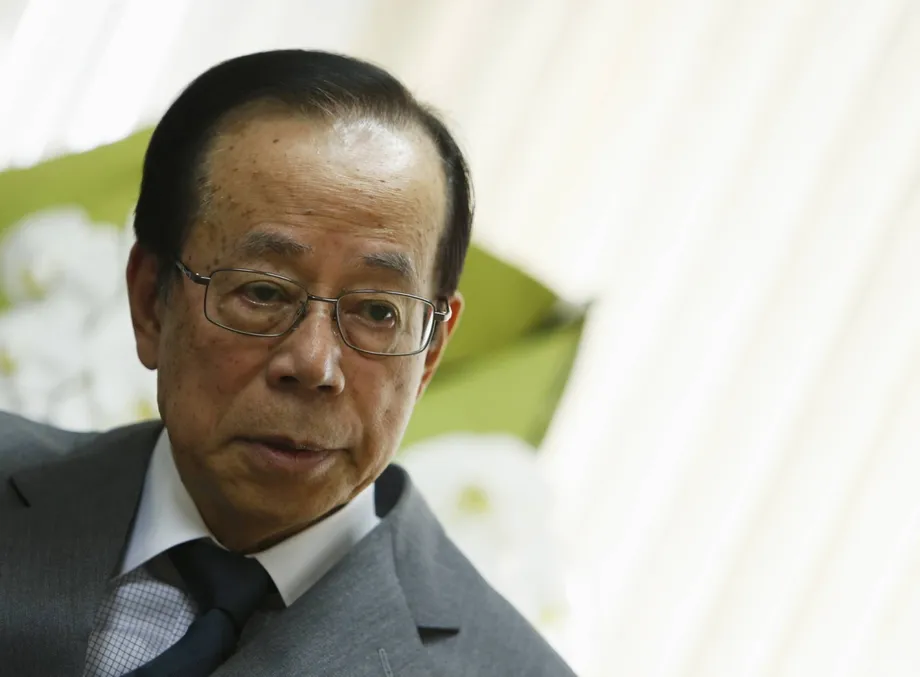
A brief premiership with a lasting diplomatic role
Yasuo Fukuda, who led Japan from September 2007 to September 2008 and continued working to improve relations with China long after leaving office, died at a Tokyo hospital on October 22, 2026. He was 90. His death was announced on October 26 by the House of Representatives and the governing Liberal Democratic Party (LDP), with his son Tatsuo also announcing the news.
Contents
- A brief premiership with a lasting diplomatic role
- From an oil company to a political family succession
- The government spokesman behind two prime ministers
- A divided parliament restricted his government
- Restoring contact between Tokyo and Beijing
- Keeping a channel open after retirement
- Climate commitments at the Hokkaido summit
- Compensation, consumer safety and public records
- The milestones of a public life
- Key Points
Fukuda died of heart failure, according to accounts of his final days; the LDP announcement did not disclose a cause. Some party officials initially gave October 26 as the date of death, while the parliamentary announcement placed it on October 22.
Japan's first prime minister whose father had also held the office, Fukuda inherited a government struggling with pension problems and a parliament divided between competing parties. His administration secured compensation legislation for people infected with hepatitis C through contaminated blood products, prepared the creation of the Consumer Affairs Agency and hosted the 2008 Group of Eight summit in Hokkaido.
Prime Minister Sanae Takaichi praised Fukuda's experience and judgment, as well as his contribution to political stability. In a message on X, she thanked him for his public service:
I express my heartfelt gratitude for his many years of dedication to the nation and its people.
Fukuda's eldest son, Tatsuo, a lawmaker and former chairman of the LDP General Council, was named chief mourner. Funeral arrangements were limited to close family, with a public memorial planned for a later date. No date for that gathering was announced.
From an oil company to a political family succession
Fukuda was born in Tokyo in 1936 and grew up in a political family associated with Gunma Prefecture, northwest of the capital. His father, Takeo Fukuda, served as prime minister from 1976 to 1978 and also sought closer relations with Beijing.
Yasuo Fukuda studied economics at Waseda University before joining Maruzen Oil, now part of Cosmo Oil. He spent about 17 years in the oil industry, including a posting in the United States lasting two years, before becoming his father's secretary.
Fukuda entered elected politics relatively late. He won his first seat in the House of Representatives in 1990, aged 53, succeeding his father in Gunma. He went on to win seven consecutive elections before choosing not to contest the 2012 election.
His rise to the premiership in 2007 made the Fukudas Japan's first father and son to serve as prime minister. His own son Tatsuo later continued the family's parliamentary career.
The government spokesman behind two prime ministers
Fukuda first entered the Cabinet in October 2000 as chief cabinet secretary under Prime Minister Yoshiro Mori. Junichiro Koizumi retained him after taking office in 2001. The job combined speaking for the government with coordinating ministers, officials and policy decisions.
His 1,289 days in the position, from 2000 to 2004, set a record at the time and later became the second longest tenure. Fukuda helped manage foreign and security policy, including the dispatch of Japan's Self-Defense Forces to Iraq, and developed a reputation for being trusted by senior civil servants.
Koizumi said after Fukuda's death that his own roughly five and a half years in government could not be explained without Fukuda's support. He credited Fukuda with allowing him to concentrate on major domestic and diplomatic issues.
Fukuda's years as spokesman also brought controversy. In 2003, he drew criticism for comments made outside a formal briefing suggesting that women who dressed provocatively invited rape. He resigned in 2004 after acknowledging that he had failed to make required payments into the public pension system, amid similar admissions by other Cabinet ministers.
A divided parliament restricted his government
Fukuda became Japan's 91st prime minister in September 2007 after Shinzo Abe abruptly announced his resignation. He began with strong public support, but the LDP controlled only one of parliament's two chambers. Opposition parties held a majority in the House of Councillors, the upper chamber.
Japan's parliament, known as the Diet, generally requires legislation to pass through both chambers. The split gave opposition parties opportunities to delay government bills and block appointments requiring parliamentary approval. Fukuda struggled over a nominee to lead the Bank of Japan, while a temporary gasoline tax surcharge briefly expired in 2008 after tax legislation stalled.
Fukuda tried to break the deadlock through a grand coalition with Ichiro Ozawa, then leader of the opposition Democratic Party of Japan. Their talks in November 2007 came close to agreement, according to Ozawa's recollection after Fukuda's death, and included discussion of sharing senior government positions. Opposition within Ozawa's party stopped the plan.
His government nevertheless secured passage of new antiterrorism legislation through another vote in the lower chamber, allowing Japan's Maritime Self-Defense Force to resume refueling operations in the Indian Ocean. The episode showed how the government could sometimes overcome resistance while still facing repeated legislative battles.
Public support fell amid controversy over a new health insurance system for older adults and the inherited problem of millions of unmatched public pension records. The upper chamber passed a censure motion formally condemning him. Fukuda announced his resignation in September 2008 and was succeeded by Taro Aso.
Restoring contact between Tokyo and Beijing
Fukuda made improving relations with China a central task. He visited China three months after becoming prime minister and invited President Hu Jintao to Japan. Hu's state visit in May 2008 was the first by a Chinese head of state in a decade.
Relations had deteriorated during Koizumi's premiership because of his repeated visits to Tokyo's Yasukuni Shrine, which honors Japan's war dead, including convicted Class-A war criminals. Abe began efforts to repair ties, and Fukuda continued that approach.
Fukuda and Hu issued a joint statement pledging to strengthen a mutually beneficial relationship based on common strategic interests. In simple terms, they committed to seeking areas where cooperation could benefit both countries despite disagreements.
Fukuda described his wider approach as resonant diplomacy, giving weight both to Japan's alliance with the United States and to its relationships across Asia. His work with China sat alongside, rather than outside, that broader foreign policy.
Keeping a channel open after retirement
Fukuda retired from parliament in 2012 but continued visiting China, leading political delegations and attending international conferences. His contacts became useful during a period of strained relations over disputed, uninhabited islands in the East China Sea.
In July 2014, he traveled privately to Beijing and met Chinese President Xi Jinping. The meeting helped prepare the ground for Abe's first summit with Xi that November. Fukuda could speak with Chinese leaders outside formal negotiations between the two governments, providing an additional channel when official relations were difficult.
Fukuda explained his concern about lost communication in a 2022 interview marking 50 years since Japan and China normalized diplomatic relations. The former prime minister warned:
Lack of dialogue increases risks of misunderstanding ... and things that do not happen under normal circumstances could happen,
Chinese Foreign Ministry spokesperson Guo Jiakun expressed condolences on October 26, describing Fukuda as an old friend of the Chinese people and praising his contribution to bilateral relations. The response reflected a diplomatic role that continued for years beyond his short time as prime minister.
Climate commitments at the Hokkaido summit
Fukuda chaired the Group of Eight summit at Toyako in Hokkaido in July 2008, making climate change a central subject of the gathering. Leaders agreed to pursue a global goal of cutting greenhouse gas emissions by at least 50% by 2050.
Greenhouse gases trap heat in the atmosphere. Reducing their release means changing how countries produce electricity, power transport and run industries. The summit's goal set a direction for international efforts, while turning it into action required countries to agree on policies and responsibilities.
Fukuda also presented the Fukuda Vision, a package of proposals addressing global warming. His work placed climate policy alongside diplomacy as one of the most visible parts of his premiership.
Takaichi recalled his leadership of the Hokkaido summit when paying tribute, crediting him with making Japan's presence felt internationally. The summit gave his administration an opportunity to shape international discussions even while its domestic legislative program faced resistance.
Compensation, consumer safety and public records
Fukuda's government helped secure legislation compensating people infected with hepatitis C through contaminated blood products after years of litigation. Hepatitis C is a virus that can damage the liver. For people affected, the law created a route to compensation following a long struggle for recognition and redress.
Fukuda personally apologized to victims on two occasions during his premiership. His response became one of the clearest examples of his effort to direct government attention toward people harmed by failures in public protection.
A series of food safety scandals also drove his push to establish the Consumer Affairs Agency. The new body was intended to give consumer protection a stronger place in government. It opened in 2009, after Fukuda had left office.
Fumio Kishida, who worked on preparations as the minister responsible for consumer administration and later became prime minister, recalled that experience as an important part of his political career. Fukuda also prepared the way for the Public Records Management Act, another reform completed after his departure. Together, the measures extended his influence into how government protected consumers and preserved official records.
The milestones of a public life
Fukuda's career stretched from private industry through Cabinet coordination, the premiership and informal diplomacy. His time in elected office ended in 2012, but his work maintaining contact with Chinese leaders continued afterward.
- 1990: Won his first House of Representatives seat in Gunma at age 53.
- 2000 to 2004: Served as chief cabinet secretary under Yoshiro Mori and Junichiro Koizumi.
- September 2007: Succeeded Shinzo Abe as prime minister.
- November 2007: Pursued coalition talks with opposition leader Ichiro Ozawa.
- May 2008: Hosted Chinese President Hu Jintao's state visit.
- July 2008: Chaired the Group of Eight summit in Hokkaido.
- September 2008: Announced his resignation as prime minister.
- 2012: Retired from parliament.
- July 2014: Met Xi Jinping privately in Beijing before Abe's November summit with the Chinese president.
- October 22, 2026: Died at a Tokyo hospital, aged 90.
Fukuda's public manner could be dry and blunt. At his resignation news conference, a reporter suggested that he sounded as though he were discussing somebody else. The outgoing prime minister replied:
I can look at myself objectively. I'm not like you.
The final sentence became one of Japan's chosen buzzwords of 2008. Fukuda declined the award, leaving a memorable closing exchange from a premiership shaped by diplomatic ambitions and domestic frustration.
Key Points
- Yasuo Fukuda died in Tokyo on October 22, 2026, aged 90. His death was announced on October 26.
- He served as prime minister from September 2007 to September 2008, becoming Japan's first premier whose father had held the same office.
- He hosted Hu Jintao in 2008 and continued efforts to improve relations with China after retiring from parliament.
- His private meeting with Xi Jinping in July 2014 helped prepare the ground for an Abe-Xi summit that November.
- His government secured hepatitis C compensation legislation and prepared the creation of the Consumer Affairs Agency.
- A divided parliament, falling support and legislative disputes contributed to his resignation.
- A public memorial is planned following private family funeral arrangements.