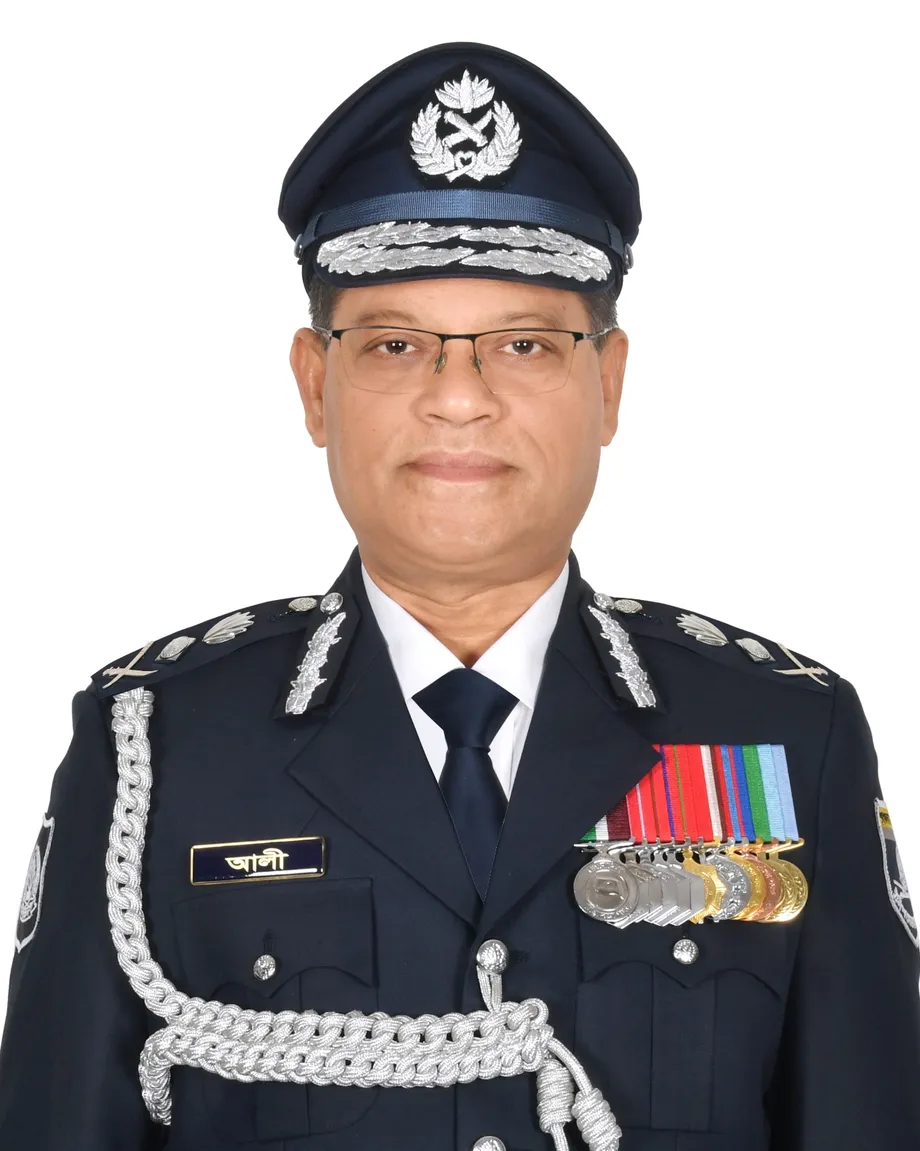
Police chief's remarks trigger demands for accountability
Transparency International Bangladesh (TIB) demanded the removal of Inspector General of Police Md Ali Hossain Fakir until accountability is ensured after he said police would resort to crossfire if necessary and permitted by the government. His remarks in Dhaka on Monday, 26 October 2026, drew criticism from rights organisations and a member of parliament, putting the government's position on extrajudicial killings under scrutiny.
Contents
- Police chief's remarks trigger demands for accountability
- What Fakir said about police powers
- Why government approval is at the centre of the dispute
- When lethal force is permitted
- A September pledge and an October challenge
- Past killings shape TIB's warning
- Police chief cites action against officers
- Hasnat demands neutrality before local elections
- Public criticism and the space for scrutiny
- Key Points
In a statement issued on 26 October, TIB called for a formal explanation from the police chief, withdrawal of his remarks, an unconditional public apology and administrative accountability. The organisation said presenting crossfire as a way to control crime sent a dangerous message to officers responsible for protecting the public.
Fakir made the comments at the inauguration of Community Bank Bangladesh PLC's Islamic banking service, Community Islamic, in Chawkbazar. He is also the bank's chairman. Speaking about police powers and public order, he made government permission a condition for using crossfire.
The IGP told the gathering:
If the government permits and it becomes necessary to maintain law and order and suppress crimes, we will not hesitate to resort to crossfire.
TIB's central objection was that government permission cannot replace the law. Its executive director, Dr. Iftekharuzzaman, said police must investigate crimes, gather evidence that courts can accept and bring accused people to trial. Killing someone outside that process, he said, cannot become lawful simply because the executive branch approves it.
The Human Rights Support Society (HRSS) also condemned the remarks. It asked the government to state whether it considered extrajudicial killings permissible or whether Fakir had expressed a personal opinion. Both organisations placed responsibility on the government to explain its position and ensure that police act within legal limits.
What Fakir said about police powers
Fakir placed his crossfire remarks alongside calls for police empowerment, public cooperation and respect for the Constitution. Just before discussing crossfire, he said officers would enforce the law and carry out their responsibilities in accordance with the Constitution.
The police chief argued that officers faced criticism whether they acted forcefully or held back. He said police were called fascist when they used batons and weak when they remained silent. He asked for an environment in which officers could perform their duties and said attempts to make the force ineffective would make maintaining social order difficult.
Fakir also urged the public to avoid rumours and false allegations against police, refrain from taking the law into their own hands and cooperate with officers. He said both police and citizens had to follow the law and the Constitution.
TIB identified a direct contradiction between those commitments and the suggestion that crossfire could become an option with government approval. For the organisation, the issue was the choice of methods available to police and whether those methods respected legal protections.
Why government approval is at the centre of the dispute
Articles 31 and 32 of Bangladesh's Constitution form the basis of the objections raised by TIB and HRSS. Article 31 concerns protection of the law, while Article 32 protects life and personal liberty. In simple terms, the state must follow the law when dealing with people, including those accused of serious crimes.
Iftekharuzzaman, TIB's executive director, explained why he rejected the idea that executive permission could authorise a killing outside the judicial process:
No government approval can legitimise an extrajudicial killing. The rights to legal protection and to life and personal liberty guaranteed under Articles 31 and 32 of the Constitution cannot be set aside by executive decisions. Regardless of the seriousness of an allegation, the police have no authority to kill anyone by bypassing due process.
Due process means following the legal steps through which accusations are investigated and judged. Police identify suspects and collect evidence; courts determine criminal responsibility. TIB said crossfire could not serve as an alternative to that division of responsibilities.
When lethal force is permitted
TIB said any police use of force must be lawful, necessary and proportionate. Those requirements mean officers need a legal basis for acting, must use force only when required and must keep it within the limits justified by the situation.
Under the international standards cited by TIB, the intentional lethal use of firearms is permissible only when strictly unavoidable to protect life. The organisation described that as a narrowly defined exception, rather than permission to kill people as a method of crime control.
HRSS made a similar argument in a statement signed by its executive director, Ijazul Islam. It said public safety must be pursued through lawful procedures, impartial investigations and respect for the authority of the judiciary. Accusations of criminal activity, it said, do not remove a person's rights to life and justice.
The practical issue is what an officer is trying to achieve. Protecting someone from an immediate threat to life requires a different legal justification from punishing a suspected offender. TIB and HRSS insisted that punishment for crime belongs within the judicial process.
A September pledge and an October challenge
TIB pointed to a statement by the law minister on 14 September that the government would not resort to crossfire to combat terrorism because existing laws were sufficient. Fakir's later comments introduced government permission as a possible route to using it.
The sequence places the government's stated policy and the police chief's remarks side by side:
- 14 September: The law minister said the government would not use crossfire to combat terrorism and that existing laws were sufficient.
- 26 October: Fakir said at the Chawkbazar banking event that police would resort to crossfire if necessary and allowed by the government.
- 26 October: TIB demanded an explanation, withdrawal, an apology and administrative accountability. HRSS also called for the government to clarify its position.
No government decision on TIB's demands, withdrawal by the IGP or deadline for a response was announced in the statements and remarks described here. TIB asked the government to explain the inconsistency and specify how it would enforce its declared position.
Past killings shape TIB's warning
Iftekharuzzaman cited three cases to explain why the police chief's language carried particular weight: the Sinha murder case, the killing of Teknaf municipal councillor Ekramul Haque and the Narayanganj seven-murder case.
TIB recalled the convictions of police officers in the Sinha case. It also referred to allegations discussed in connection with the verdict that crossfire had been used to extort money, torture people and kill them. The organisation presented those experiences as reasons to strengthen lawful investigations and accountability.
Ekramul Haque's death in a purported gunfight raised serious questions after his family released an audio recording and alleged that he had been murdered, TIB said. The organisation cited the family's allegations as part of the history that makes renewed talk of crossfire alarming.
The convictions of former Rapid Action Battalion (RAB) officials in the Narayanganj seven-murder case supplied another judicial example of criminal abuse of law enforcement powers, according to TIB.
Iftekharuzzaman warned that officers working in the field could interpret the police chief's remarks as an implicit licence to use unlawful force. With public expectations focused on police and state reform, he questioned what lessons the force had learned from past crimes.
Police chief cites action against officers
Fakir defended the force's internal accountability measures, saying around 27 police members had been sent to jail over the previous two months. He said officers involved in criminal activity were not being spared and that police had their own checks and balances.
The IGP acknowledged that some police personnel had been involved in the drug trade and that some remained involved. He also accused figures from the former Awami League government of patronising the spread of drugs and said police were pursuing a policy of zero tolerance.
Fakir described the action against officers as an effort to address wrongdoing within the force:
We are cleaning up our own house first, as you can see. Yet, various misinterpretations are being spread even about this.
TIB's demand went beyond action against individual officers. It asked for accountability at the top of the force over a public statement about how policing could be conducted. The organisation said institutional weaknesses required professional remedies, including better investigations and prosecutions based on admissible evidence.
Hasnat demands neutrality before local elections
Hasnat Abdullah, the National Citizen Party's chief organiser for the southern region and MP for Cumilla-4, criticised Fakir at a public outreach programme in Dhaka's Mugda on Monday afternoon. He called the IGP a thug and compared his remarks with the conduct of former IGP Benazir Ahmed and former Detective Branch chief Harun Or Rashid during Awami League rule.
Hasnat connected the controversy to police neutrality before upcoming local government elections. He urged police and administrators to work for the public rather than the BNP, NCP, Jamaat or any other political party.
Addressing police officers, Hasnat said:
You are not the home minister's police, nor the prime minister's police. The uniform you wear is bought with the people's taxes. Do not forget that.
Hasnat also demanded the release of a woman in Mymensingh who was reportedly arrested after expressing regret on social media for voting for the BNP. He raised the reported disappearance of Miraj Sheikh in Mongla for more than six months and alleged that the Coast Guard had taken him away. These were allegations and demands made by Hasnat during his speech.
His election message extended the dispute beyond the wording of Fakir's remarks. The NCP leader called for fair policing and administrative neutrality while campaigning for the party's Dhaka South City Corporation mayoral candidate, Nasiruddin Patwary.
Public criticism and the space for scrutiny
Fakir also responded at the banking event to a statement by 101 citizens concerning the arrest of 85 people during a raid at a senior police officer's home. He challenged criticism of the operation, referred to alleged alcohol and drug consumption and said freedom required people to remain within the law.
The police chief argued that people must behave in accordance with the country's ethics and values. His comments came alongside his broader request that the public avoid false accusations and allow police to carry out their responsibilities.
TIB addressed another aspect of the relationship between police and public scrutiny: allegations that journalists criticised police because they had not received money. It said any specific allegation of criminal conduct by a journalist should be investigated and pursued through lawful action based on evidence.
Sweeping accusations against journalists, TIB warned, weaken the media's role in oversight and accountability and risk discouraging independent reporting. It accepted the need for adequate police capacity and a suitable working environment, while insisting that those needs could not justify avoiding legitimate criticism.
TIB's requested response is concrete: an explanation from Fakir, withdrawal of the remarks, a public apology and administrative accountability, including removal until accountability is ensured. HRSS's demand focuses on a clear government commitment to keep law enforcement within the law. Both place the protection of life and access to justice at the centre of crime control.
Key Points
- IGP Md Ali Hossain Fakir said on 26 October 2026 that police would resort to crossfire if necessary and permitted by the government.
- TIB demanded an explanation, withdrawal, an unconditional apology and administrative accountability, including his removal until accountability is ensured.
- TIB and HRSS cited constitutional protections for life, personal liberty and access to the law.
- TIB said the law minister had stated on 14 September that existing laws were sufficient to combat terrorism without crossfire.
- Fakir said around 27 police members had been sent to jail over the previous two months.
- NCP MP Hasnat Abdullah condemned the remarks and urged police neutrality in upcoming local government elections.