A border crossing brings trade and diplomacy together
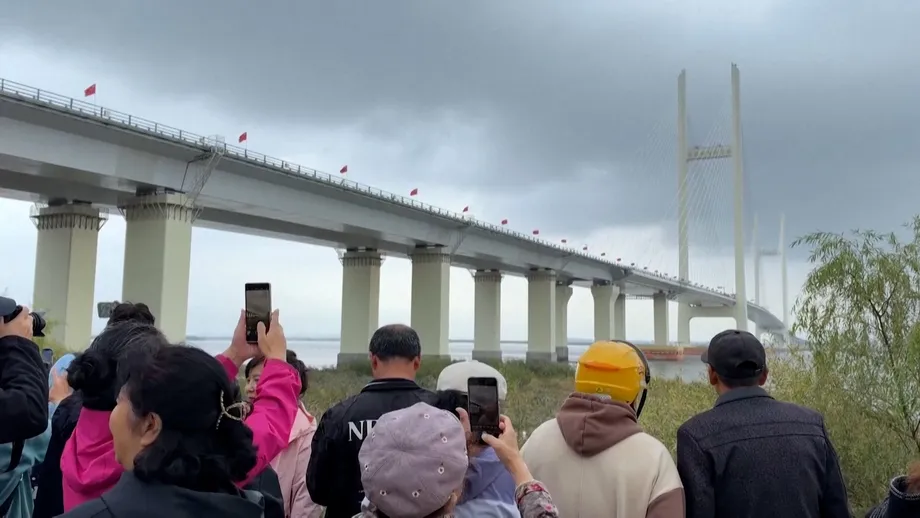
North Korean leader Kim Jong Un crossed the New Yalu River Bridge into Dandong, China, on October 24, 2026, giving his personal backing to a trade route that stood unused for 12 years after construction finished. The bridge connects the Chinese city in Liaoning province with Sinuiju in North Korea and is expected to carry heavy trucks and containers in both directions around the clock.
Contents
- A border crossing brings trade and diplomacy together
- What Kim and Wang promised in Dandong
- Why a completed bridge waited until 2026
- What changes for trucks and border businesses
- China's economic role alongside Russia's military ties
- Why the Korean War anniversary matters
- The sequence from Beijing to Dandong
- Closer ties with Beijing, sharper tensions with Seoul
- Will the Shenzhen summit bring talks with Trump?
- Key Points
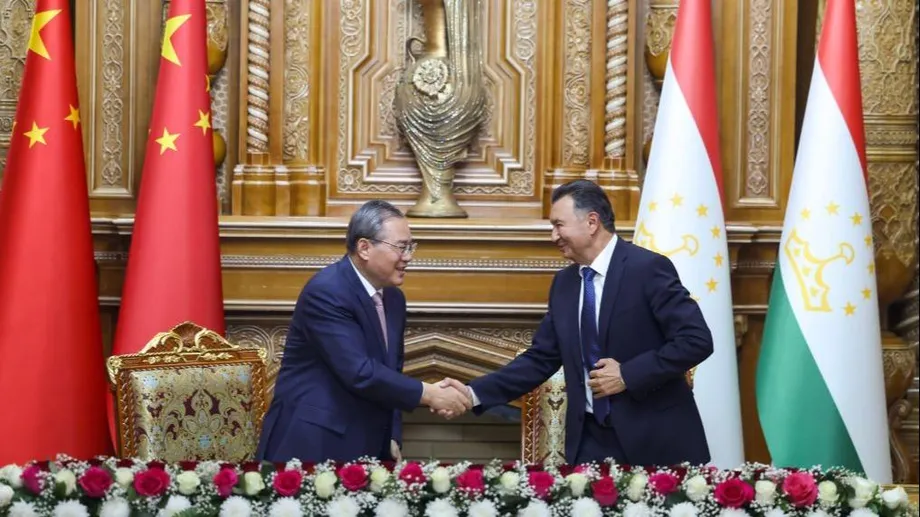
Kim's visit followed the crossing's opening in mid October. South Korea's Unification Ministry confirmed his arrival, and he met Wang Huning, a member of the Chinese Communist Party's highest leadership body and chairman of the National Committee of the Chinese People's Political Consultative Conference. A South Korean official speaking anonymously also said Premier Li Qiang met Kim in Dandong.
The journey combined an economic message with a reminder of the countries' wartime alliance. It came a day before October 25, when China and North Korea commemorate Chinese intervention in the Korean War, and weeks before an international summit in China that has prompted speculation about renewed diplomacy between Kim and US President Donald Trump.
For businesses around the border, the immediate development is more practical: a new road connection designed to move goods that North Korea needs for construction, industry and energy supplies. For Kim, the crossing also demonstrates closer ties with Beijing while his government deepens its partnership with Russia and maintains a confrontational approach toward South Korea.
What Kim and Wang promised in Dandong
Wang conveyed Chinese President Xi Jinping's greetings and best wishes to Kim. The two visited a car factory, discussed stronger relations and pledged closer communication on sovereignty, security and development. They also supported more economic cooperation, trade and exchanges between people.
Kim, North Korea's leader since late 2011, described the visit as an opportunity to turn the countries' longstanding relationship into practical benefits. He said North Korea:
stands ready to work with China to carry forward their historical friendship and expand practical cooperation, thereby delivering tangible benefits to the peoples of both countries
Wang accompanied Kim to the bridge to see him off. The visit was Kim's sixth to China since taking power and his first since September 2025, when he attended a military parade in Beijing alongside Xi and Russian President Vladimir Putin.
Why a completed bridge waited until 2026
China completed the four lane bridge in 2014, but connecting roads and customs facilities on the North Korean side were not ready. The result was a finished structure across the river without the full arrangements needed to operate an international freight crossing.
Customs facilities are where officials inspect cargo and process goods entering or leaving a country. A bridge can carry trucks only when roads reach both ends and border authorities can handle the traffic. Those connections were the practical obstacle identified during the long delay.
China invested approximately 2.2 billion yuan in the project, according to details published ahead of the October bridge opening. The structure measures 3,026 metres, usually described as about 3 kilometres. Chinese Foreign Ministry spokesperson Mao Ning announced on October 14 that the countries had agreed to open it the following day, October 15, 2026, and would jointly hold an opening ceremony that day.
At the regular press briefing, Mao described the bridge as an important facility connecting the two countries and said its opening would further promote trade and exchanges between people, benefiting both peoples. The two sides held the joint opening ceremony on October 15. Vehicles had been crossing the bridge on a trial basis since September.
The opening therefore preceded Kim's ceremonial visit by nine days. His October 24 crossing gave the project political prominence after its operational launch, ending a period in which a major investment remained disconnected from the trade it was intended to serve.
What changes for trucks and border businesses
Dandong and Sinuiju already share the Sino-Korean Friendship Bridge, which carries both trains and road vehicles. Its road section allows vehicles to move in only one direction at a time, requiring trucks heading opposite ways to take turns.
The new bridge's four lanes offer a different arrangement: traffic moving both ways, with capacity for containers and heavy cargo trucks. Its deck is 28.5 metres wide, and its navigation clearance is designed for vessels of up to 3,000 tonnes. It is expected to help carry heavy equipment, raw materials and energy products into North Korea while supporting efforts to revive commerce after strained relations and disruptions during the COVID-19 pandemic.
Lu Chao, a specialist in relations between China and North Korea at the Liaoning Academy of Social Sciences in Shenyang, said the crossing addresses a specific obstacle to trade:
The opening of the bridge has resolved a major bottleneck in China-North Korea trade logistics,
Lu predicted that trade would increase as transport constraints eased. For freight operators, the practical benefit would be less dependence on an older crossing where opposing flows of road traffic must alternate. The scale of any increase in shipments will become apparent as the new route operates.
China's economic role alongside Russia's military ties
China remains North Korea's largest trading partner and accounts for most of its official trade. Its importance extends beyond transport: during a June visit to Pyongyang, Xi expressed willingness to expand cooperation in agriculture, construction, technology and trade. Kim described relations with China as a top strategic priority.
Russia has become a closer partner since its full scale invasion of Ukraine in 2022. North Korea has sent thousands of troops and conventional weapons to support Russia's war, possibly in exchange for military and economic assistance. That relationship gives Pyongyang another source of support alongside Beijing.
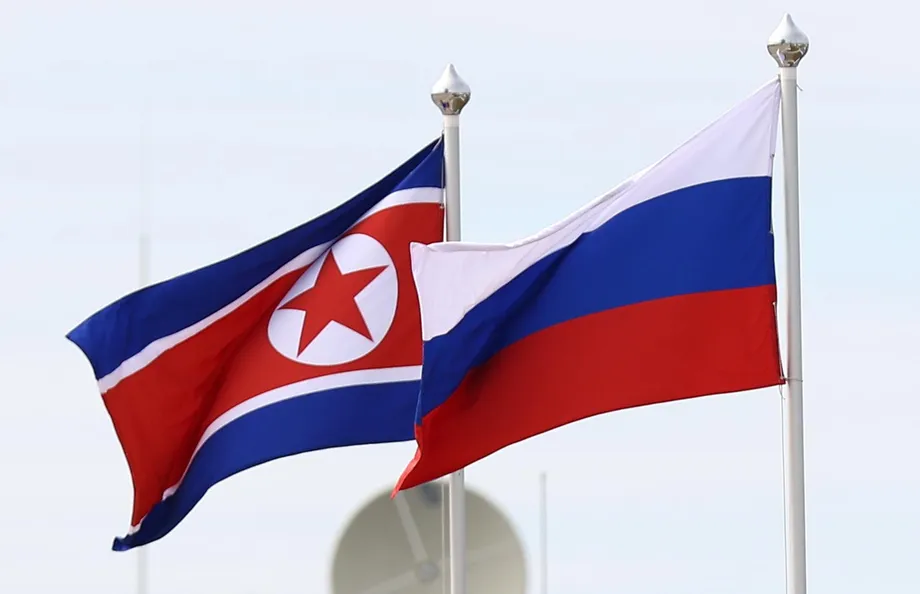
North Korea and Russia opened their first road bridge in early September, just over a month before the new Chinese crossing began operating. Together, the projects give North Korea new road links to its two principal backers, although the relationships serve different immediate needs. Trade with China can supply civilian industry and development, while recent exchanges with Russia have centred heavily on military supplies.
North Korea remains subject to United Nations sanctions because of its nuclear weapons programme. Border transport capacity and permission to trade are separate requirements: trucks need a usable crossing, while their cargo remains subject to applicable restrictions.
Christopher Green, a Korea specialist at Leiden University in the Netherlands, described the political meaning of Kim's choice to use the bridge:
That bridge was for more than a decade a symbol of how dysfunctional bilateral relations could become.
Kim's crossing now places the same structure at the centre of a visible effort to rebuild economic cooperation.
Why the Korean War anniversary matters
October 25 is observed by Beijing and Pyongyang as the anniversary of China's entry into the Korean War. It also marks China's first major battlefield victory in the conflict, days after Chinese forces crossed the Yalu River in October 1950. Kim said his visit was also intended to remember those killed in the war.
The conflict began with North Korea's attack on South Korea in June 1950. A United Nations coalition led by the United States intervened, while Chinese troops fought alongside North Korea with assistance from the Soviet air force. Fighting stopped under an armistice in 1953. An armistice is an agreement to stop fighting rather than a peace treaty, leaving the peninsula technically at war.
Dandong's location makes that history especially relevant. The river now crossed by freight trucks was also the route Chinese forces used to enter North Korea. Kim's journey placed a new commercial connection beside the memory of the military alliance that helped sustain his country.
Traffic restrictions were imposed around the bridge and near a museum devoted to China's role in the war before the visit, while nearby hotel bookings were restricted. Those preparations brought the border city's trade infrastructure and commemorative sites into the same tightly managed visit.
The sequence from Beijing to Dandong
Kim's trip follows a series of meetings and transport openings that have brought North Korea closer to China and Russia. Two meetings between Kim and Xi over the past 13 months preceded the Dandong visit.
- September 2025: Kim visited Beijing, met Xi and attended a military parade alongside Putin.
- June 2026: Xi visited Pyongyang, his first trip there in seven years, and discussed cooperation in trade, agriculture, construction and technology.
- Early September 2026: North Korea and Russia opened their first road bridge.
- October 15, 2026: The New Yalu River Bridge opened after construction had been completed in 2014.
- October 24, 2026: Kim crossed into Dandong, met Wang and visited a car factory.
- October 25, 2026: China and North Korea mark the anniversary associated with Chinese intervention in the Korean War.
The next scheduled political gathering in Beijing is the Communist Party Central Committee's fifth plenary session on Monday, October 26. Xi will then host the Asia Pacific Economic Cooperation summit in Shenzhen on November 18 and 19.
Closer ties with Beijing, sharper tensions with Seoul
South Korea faces a different message from Pyongyang. Kim Yo Jong, the North Korean leader's sister, has issued about 10 statements criticising Seoul since late September, a frequency South Korea's Unification Ministry described as unusual. She has also announced plans to resume loudspeaker broadcasts along the border within days.
The confrontation follows North Korea's removal of reunification commitments from its constitution earlier in 2026. The revision deleted language supporting eventual unity with the South and defined North Korea as a separate state bordering the Republic of Korea.
Seoul's government favours engagement and hopes renewed talks between Washington and Pyongyang could improve relations between the Koreas. It has also urged China to play a constructive role in easing the standoff.
Leif-Eric Easley, a professor at Ewha University in Seoul, described why a stronger economic focus in North Korea would matter to the South:
From Seoul's perspective, if North Korea focuses more on economic development than military buildup and threats, that would be positive for diplomacy and security,
Easley's assessment also points to Seoul's difficulty: greater support from China and Russia can reduce the attraction of benefits South Korea might offer in return for engagement. The new bridge expands Kim's economic options while his government's rhetoric toward Seoul remains hostile.
Will the Shenzhen summit bring talks with Trump?
Trump is expected to attend the November 18 and 19 APEC summit in Shenzhen, creating a possible setting for contact with Kim. South Korea's intelligence agency told lawmakers in September that it assessed a 50% possibility of a meeting on the sidelines. More recently, US and South Korean officials have judged the chances of a meeting this year to be fading.
No meeting between Kim and Trump has been announced. Their diplomacy broke down in 2019, during Trump's first term, and Kim has so far rebuffed his proposal to restart it. Pyongyang wants Washington to abandon what it calls a hostile policy and drop demands for North Korea's denuclearization as a precondition for renewed talks. Denuclearization means giving up nuclear weapons and the programmes that support them.
The Dandong visit leaves Beijing with a visible role in North Korea's economic relationships ahead of that summit. Kim has backed a new trade route and renewed promises of cooperation with China while retaining close ties to Russia. Whether diplomacy with Washington resumes will depend on decisions beyond the bridge opening itself.
Key Points
- Kim Jong Un crossed into Dandong on October 24, 2026, using the newly opened New Yalu River Bridge.
- The four lane crossing was completed in 2014 but waited 12 years for the necessary connections and border facilities.
- Kim and Wang Huning pledged stronger economic cooperation, trade and exchanges between people.
- The bridge is expected to carry containers, heavy trucks and traffic in both directions around the clock.
- The visit coincided with commemorations of China's intervention in the Korean War and followed new road links with Russia.
- A meeting between Kim and Trump at November's APEC summit has not been announced.