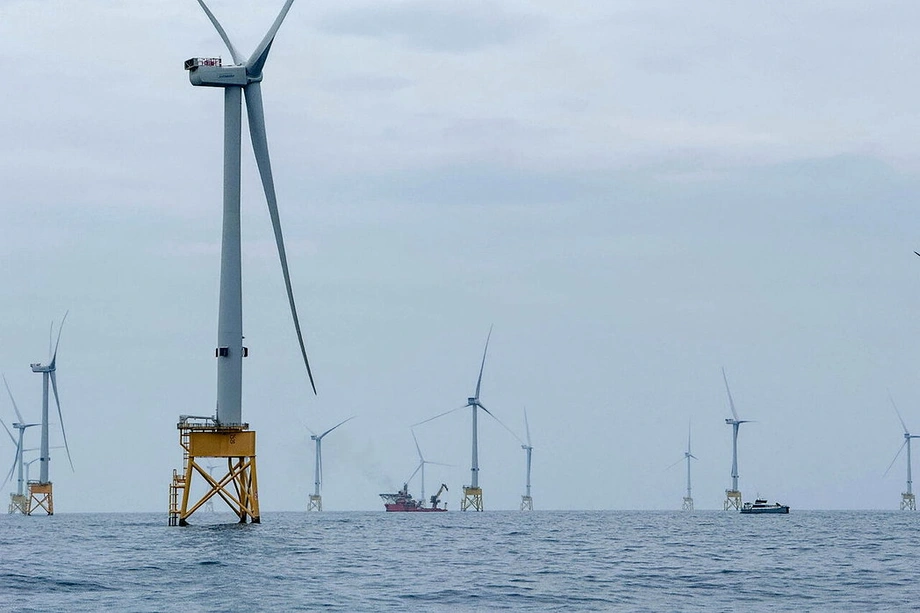
A landmark wind farm, and a sharp contrast
On Nov. 17, the Hailong offshore wind project announced that all 73 of its turbines had been connected to Taiwan's electricity grid, adding about 1 gigawatt of renewable power. The milestone came as a key Taiwanese supplier to the project, Yeong Guan Energy Technology Group, faced delisting from the Taiwan Stock Exchange the next day after failing to file its financial reports by the required deadline.
Contents
- A landmark wind farm, and a sharp contrast
- How the project reached completion
- Financing on an exceptional scale
- Local manufacturing became part of the project
- Foundations tested local engineering capacity
- Why Yeong Guan is heading for delisting
- A completion milestone, with a question about the next work
- Key Points
The contrast captures two sides of Taiwan's offshore wind industry: a large project completing a decade of development and construction, and a local manufacturer under serious financial strain. Nearly 200 representatives from government, finance and the supply chain attended a Hailong appreciation event on Nov. 17. Yeong Guan, which made cast components for wind turbine nacelles, was among the invited companies.
Hailong is being developed by Japan's Mitsui & Co., Canada's Northland Power and Malaysia's Gentari. Its three wind farms, Hailong 2A, 2B and 3, lie about 45 to 70 kilometres off Changhua County. The project has been described as Asia's largest single offshore wind development, and its completion marks the end of construction for Taiwan's second round of selected offshore wind sites, apart from Taipower's second phase project managed by Fwusow Industry.
The scale figures depend on which project description is used. The three farm capacities listed in the completion account, 300 megawatts, 232 megawatts and 512 megawatts, add up to 1,044 megawatts. Hailong's 2023 financing announcement gave an expected total of 1,022 megawatts. The difference is that 1,044 megawatts refers to grid capacity awarded (up to 300 megawatts for 2A and up to 744 megawatts for 2B and 3), while 1,022 megawatts is the expected generating capacity, comprising 294 megawatts for 2A and 728 megawatts for 2B and 3, according to Northland's 2023 financing announcement. Both descriptions place the project above the 1 gigawatt mark.
How the project reached completion
Hailong's construction unfolded in stages. The official March project update said the first turbine at Hailong 3 was installed at sea on March 20, 2026. It also recorded that all 21 turbines at Hailong 2A had been connected to the grid by the end of 2025, while 16 turbines at Hailong 2B had been installed during that year.
By March 2026, 73 locally assembled nacelles had been completed and were being sent out for installation. A nacelle is the housing at the top of a turbine tower. It contains key equipment, including parts that turn the blades' motion into electricity. Hailong's final November announcement that all 73 turbines were connected marked the completion of the full project.
The sequence also shows why a wind farm's construction date and its grid connection date are not the same. Turbines must be assembled, transported by sea, installed on foundations, connected to electrical systems and then linked to the grid. Hailong's work took place in the Taiwan Strait, where weather and sea conditions can complicate large offshore construction tasks.
- 2023: Hailong completed financing of NT$117 billion.
- 2025: Hailong 2A turbines were connected to the grid, and turbines at Hailong 2B were installed.
- March 20, 2026: The first turbine at Hailong 3 was installed at sea.
- Nov. 17, 2026: Hailong announced that all 73 turbines were connected to the grid.
- Nov. 18, 2026: Yeong Guan was scheduled to be delisted from the Taiwan Stock Exchange.
Financing on an exceptional scale
The project's construction depended on a large financing network. In October 2023, Hailong announced it had completed NT$117 billion in green financing lasting more than 20 years. The official 2023 financing notice described it as Taiwan's longest offshore wind financing contract at the time. Sixteen local and international banks provided loans, while seven export credit agencies from Canada, Japan, the United Kingdom, Australia, Norway and Belgium provided credit support.
Export credit agencies are public institutions that can help support trade and overseas projects by backing loans or other financial commitments. Hailong also said it used fixed interest rates and long term hedging to manage interest rate risk, and foreign exchange hedging to manage construction costs in currencies outside its financing arrangements.
The original financing total was adjusted from NT$118 billion to NT$117 billion after final exchange rates were applied. The project's completion account also says Hailong obtained an additional NT$55 billion in 2026 through Taiwan's national financing guarantee mechanism, bringing in 35 domestic and international financial institutions across the financing effort.
Hailong 2A was allocated 300 megawatts under Taiwan's feed in tariff system, in which electricity generators receive a set price for power sold to the grid. Hailong 2B and 3 secured 744 megawatts in a 2018 auction, and the project signed a corporate power purchase agreement for that auctioned capacity in 2022. A corporate power purchase agreement is a direct contract for a company to buy electricity from a generator. Hailong 2A also signed such an agreement with Taiwan Semiconductor Manufacturing Co., even though it was originally covered by the government tariff scheme.
Local manufacturing became part of the project
Hailong's construction created orders for Taiwanese firms in turbine components, foundations, cables, electrical equipment and marine services. The project first committed to 21 locally assembled nacelles, then expanded local assembly to all three wind farms. The added orders brought the total to 73 nacelles and helped Siemens Gamesa expand its Taichung assembly factory.
Nine Taiwanese suppliers gained approval to join Siemens Gamesa's global supply chain. Yeong Guan supplied cast hubs and nacelle bases. Other suppliers provided nacelle covers, power equipment, cables, blade resin, towers, transformer windings and fasteners. Those components link local factory work to equipment used in turbines around the world.
Taiwan Shipbuilding Corp. and the marine contractor CDWE used the Hai Long Emerald, described as Taiwan's first large floating crane vessel designed and built locally, for transport and installation work. Century Wind Power made underwater foundations, while Taiwan International Shipbuilding manufactured piles, the large steel tubes driven into the seabed to secure those foundations. TECO Electric & Machinery handled the onshore substation, which helps prepare electricity for transmission into the grid.
Hailong chief executive and project director Tim Kittelhake said the work brought together international developers and Taiwanese industrial partners. He described local supply chain participation as one of the results of a decade of planning and construction.
Every achievement, from integrating a large wind farm and introducing advanced turbine technology to local supply chain participation, reflects the long term commitment of an international team and Taiwan industry partners.
Foundations tested local engineering capacity
The project's local industrial work extended below the waterline. In August 2025, all 21 jacket foundations for Hailong 2A were completed and delivered. Each structure stood more than 90 metres tall and weighed about 2,000 tonnes. A jacket foundation is a steel frame fixed to the seabed with piles, supporting the turbine tower above the water.
The foundations were the largest and heaviest of their kind produced in Taiwan, and their size exceeded the capacity of existing factory space. Century Wind Power built a dedicated work station at Taipei Port and introduced a hydraulic pile gripper system. The equipment clamps piles during installation, helping keep them steady in moving water and supporting safer, more controlled work.
Century Group chairman Lai Wen-hsiang described several ways the company could manage costs on future projects: learning from construction experience, raising production volumes, coordinating local suppliers and moving some labour intensive prefabrication work to Indonesia. Century Wind Power planned to lift its monthly output of large foundation assemblies from two to four units to four to six.
Those measures reflect a practical issue for manufacturers: large factories and specialist equipment require substantial investment, and producing more units can spread those fixed costs across more orders. But the local supply chain needs a steady stream of new projects to keep production moving and retain workers and skills.
Why Yeong Guan is heading for delisting
Yeong Guan's difficulties began before Hailong finished construction. In February 2026, the company encountered a repayment problem involving its fourth unsecured convertible bond. Convertible bonds are loans that may be exchanged for company shares under agreed terms. In April, its shares were suspended from trading after the company failed to file financial reports on schedule, among other issues.
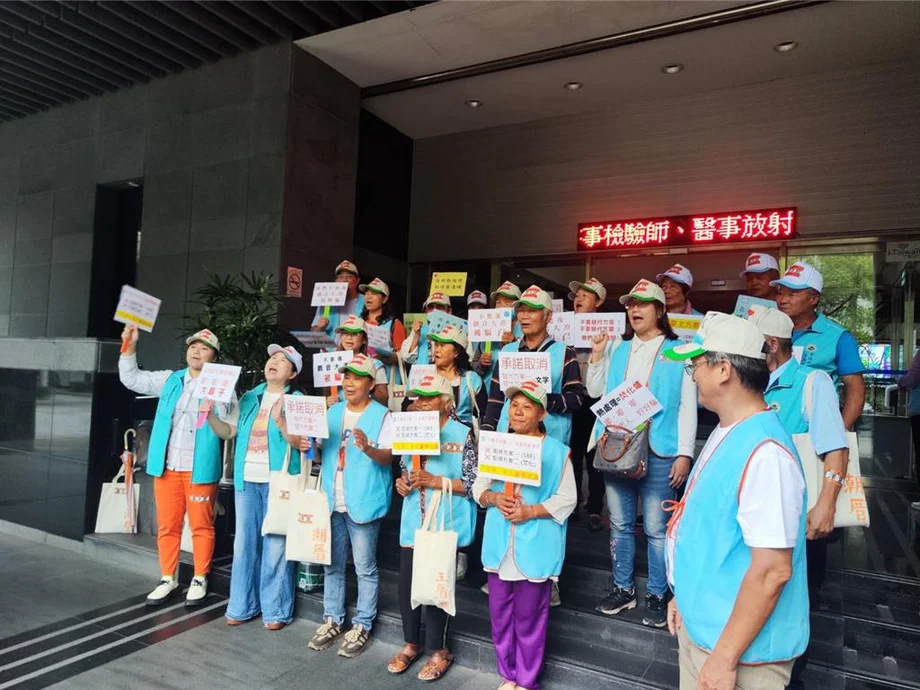
The Taiwan Stock Exchange announced in October that Yeong Guan would be removed from the exchange on Nov. 18. About 43,000 shareholders are affected. Delisting removes a company's shares from the exchange, so investors can no longer trade them there in the usual way. It does not by itself mean that the company stops operating.
Yeong Guan strategy officer Li Yi-tsang said the company could not set a repayment plan because the timing of future wind farm projects was still uncertain. He said the company had been discussing the matter with the Taiwan SME Joint Guidance Foundation, but had no firm schedule.
Li said orders and employment had not been affected for the time being, and that the company would handle related matters according to regulations as it reorganised and sought a possible return to the exchange. He also said the company continued operating and taking orders in Taiwan, planned to deal with some land in Thailand and would maintain its operations in China.
The biggest problem now is still the number and timing of wind farms opened in Taiwan. If the current situation continues, the whole supply chain will have a gap of more than a year. That still depends on the government's solution.
A completion milestone, with a question about the next work
Yeong Guan's concern is about what comes after the current construction cycle. Suppliers rely on project orders to keep factories, specialist equipment and trained staff in use. If a long pause separates one round of wind farms from the next, manufacturers may have to wait for work even after they have gained experience on a major project.
For Hailong, the completion announcement closes a decade of development and construction, but the turbines now move into long term operation and maintenance. The project's earlier financing announcement said it was expected to provide electricity for more than one million Taiwanese households once in operation. Its locally assembled equipment and supplier network have also created industrial experience that can be used on later projects, provided new orders arrive.
The next project schedules are not specified in the completion account, and Yeong Guan has not announced a definite repayment timetable. Its immediate statement is that orders and staff remain in place while it works through the financial and regulatory process. For Taiwan, the completed wind farm supplies new renewable electricity; the timing of the next construction round will shape how continuously local suppliers can turn that milestone into ongoing work.
Key Points
- Hailong announced on Nov. 17, 2026, that all 73 turbines had joined Taiwan's grid, adding about 1 gigawatt of renewable power.
- The project's three wind farms are located 45 to 70 kilometres off Changhua County and took about 10 years to develop and build.
- The 1,044-megawatt figure refers to awarded grid capacity, while the project's expected generating capacity is 1,022 megawatts.
- Hailong completed NT$117 billion in financing in 2023 and later obtained an additional NT$55 billion in 2026.
- The project supported local assembly of 73 nacelles and work by Taiwanese manufacturers, construction firms and marine contractors.
- Yeong Guan is scheduled for delisting on Nov. 18 after late financial reporting and a bond repayment problem. The company says orders and employment are continuing for now.