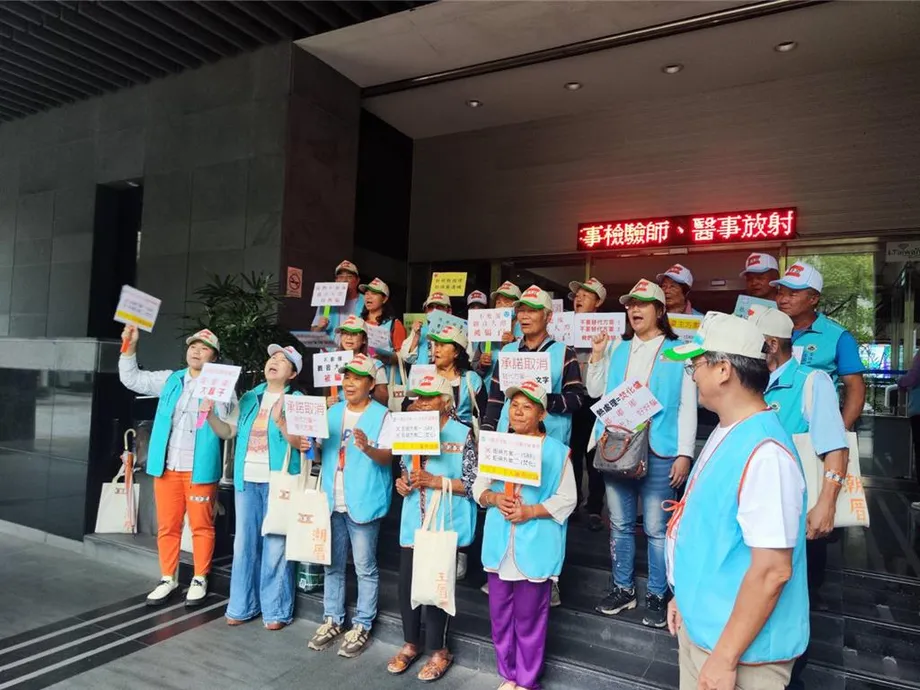
Scrapping the fuel plant has not settled the dispute
Taiwan's Ministry of Environment review panel has required revisions to the environmental impact assessment for the proposed Baozhong Industrial Park in Yunlin County, where residents want a written commitment excluding solid recovered fuel manufacturing and waste incineration from the development.
Contents
- Scrapping the fuel plant has not settled the dispute
- What the revised waste plan would allow
- Why SRF remains in the assessment
- How large would the park be?
- Air pollution concerns extend beyond SRF
- Flooding, wastewater and land risks
- A carbon plan covering 40 years
- Wildlife protection and the sugar railway
- How the proposal reached another revision
- Key Points
The Ministry of Economic Affairs has withdrawn an SRF manufacturing facility originally planned for the park's second phase. Residents say its continued appearance among alternatives in the assessment leaves them worried that fuel production or treatment using heat could return later.
The proposal would turn more than 265 hectares at Taiwan Sugar Corporation's Maguang Farm in Baozhong Township into an industrial park intended mainly for businesses that process agricultural products and increase their value. About 20 residents and members of the Yunlin County Net Zero Homeland Action Association traveled to the ministry to press their objections.
After roughly two hours of discussion at the second preliminary review meeting, held on the 22nd, the panel required corrections and another review. Its concerns extended beyond SRF to air pollution, development phases, water use, wastewater, waste storage and wildlife protection. The park has not received clearance through this review.
The dispute now turns on two connected issues: what businesses and waste operations the park would permit, and whether a development of this size can address pollution and environmental risks near farming communities. Removing one proposed facility has left both questions open.
What the revised waste plan would allow
The Ministry of Economic Affairs said it held four meetings involving different agencies and other participants after the first review. Those discussions led to agreement to cancel the SRF manufacturing facility planned for phase two.
The land reserved for that facility would instead accommodate temporary waste storage and transfer operations. Waste would be collected and taken elsewhere for treatment through industrial waste operators in Yunlin, industrial park treatment systems or other qualified contractors.
SRF is fuel made by processing combustible waste into a material that can be used for energy. Making the fuel and burning it are separate activities. At an earlier review, the developer said the proposed plant would sell its product to businesses outside the park and would not burn it onsite.
Residents want the exclusion to cover both activities, as well as related treatment using heat. Their demand is for a written restriction, with a new environmental assessment if such operations are proposed later.
Temporary storage and transfer would still require detailed safeguards. The panel asked the developer to reconsider how much land waste facilities need, where those facilities would sit, and how their space and safety arrangements would work.
Why SRF remains in the assessment
The developer asked whether the review panel could allow it to remove the table containing the SRF alternative. Ministry of Environment officials responded that regulations require an alternatives section. Its wording could be revised, but the section should remain.
An environmental impact assessment examines a project's expected effects and compares possible ways of carrying it out. That comparison can include options different from the developer's preferred plan. Here, residents want the document to explain those options without leaving uncertainty over whether SRF operations could eventually be admitted.
The Yunlin County Net Zero Homeland Action Association and other groups said they were not opposing industrial development itself. They sought an explicit exclusion of SRF manufacturing and thermal treatment, alongside protections against pollution and increased flooding around the site.
Chang Tzu-chien, chair of the Yunlin Ecological Conservation Association, warned that the wording could allow the SRF proposal to return. He also questioned whether the development would attract waste treatment businesses returning from China. The Ministry of Economic Affairs said it had adjusted the plan in response to earlier public comments and wanted to reconcile industrial opportunities with local agriculture and living conditions.
How large would the park be?
The development plan divides approximately 265 hectares into a first phase of 86 hectares and a second phase of about 179 hectares. Around 165 hectares would be industrial land, while roughly 100 hectares would be used for public facilities.
Those figures put about 62% of the site into industrial use and about 38% into public facilities. The second phase represents roughly two thirds of the proposed development area, making its timing and scope central to the review.
The Ministry of Economic Affairs argues that Yunlin needs more industrial land. It says the county's 11 designated industrial zones have a utilization rate of 99%. For Baozhong, the ministry projects NT$30 billion in investment, more than 10,000 jobs and annual output of NT$20 billion.
Those are projections for the proposed park. Review members asked for information on businesses returning to Taiwan and occupancy rates across industrial parks, bringing the question of demand into the assessment alongside the environmental costs of opening more land.
The ministry described the project as a way to provide development opportunities while retaining Baozhong's agricultural and industrial character. Residents carrying garlic and peanuts to an earlier protest highlighted what they want protected: an existing farming economy and the communities around it.
Air pollution concerns extend beyond SRF
A review member said predicted increases in nitrogen oxides and other pollutants remained high even after removal of the SRF plant. Nitrogen oxides are gases commonly produced during combustion. They can irritate airways and contribute to ozone and fine particle pollution.
The panel member suggested reducing the development area by postponing work south of Provincial Highway 19 or the Taiwan Sugar railway and reserving that land as green space. This would change the amount and sequence of development, rather than relying entirely on controls applied after factories arrive.
The Ministry of Economic Affairs said future tenants would face emissions controls. Food manufacturers with potential odor impacts would have to locate at least 500 meters from nearby communities and schools.
Residents had said at the earlier review that the nearest village was about 250 meters from the site. The proposed 500 meter separation would therefore matter to the placement of particular businesses within the park. The ministry described it as a requirement for food manufacturers with potential odor impacts, while the panel also sought revisions to the wider air pollution estimates.
Flooding, wastewater and land risks
Baozhong residents have raised concerns about ground subsidence, soil liquefaction and flooding. Subsidence means land gradually sinks. Liquefaction occurs when loose, waterlogged soil loses strength during shaking, making it less able to support structures.
Residents described the proposed site as an area with high potential for subsidence and liquefaction. A review member also identified high flood risk and urged attention to it. Protesters demanded that the development avoid increasing flooding in surrounding communities or shifting health and flood risks onto neighbors.
The panel required the developer to check the park's water balance. In practical terms, this means accounting for the water the development would need, the supplies it would use, and the water leaving through wastewater, drainage or other routes.
Residents and panel members also sought water quality monitoring outside the park boundary, together with stronger monitoring of discharged wastewater. Monitoring beyond the boundary would provide information about the waterways and surrounding areas receiving the park's discharges.
Temporary soil and rock storage was another required revision. Construction across a site of this size needs a plan for where excavated material would be kept and how that space would be managed. The panel requested more detail alongside changes to the development sequence and waste arrangements.
A carbon plan covering 40 years
The park's proposed operating life of 40 years prompted calls for stronger carbon emissions planning. Residents and review members want the assessment to address emissions across that period, rather than concentrating only on the park's opening stages.
At the earlier review, environmental campaigners criticized a plan to offset additional greenhouse gas emissions through measures such as replacing old motorcycles, air conditioners and lighting equipment. They argued that incoming businesses should first reduce their own emissions.
An offset seeks to balance emissions in one place with a reduction elsewhere. Direct reductions instead change the activity creating the emissions, for example by using less energy or changing equipment. The disagreement concerns how much responsibility future tenants would carry within their own operations.
Chang argued that the proposed approach placed the burden on the public and the Ministry of Environment while the Ministry of Economic Affairs promoted the development. His criticism connected the park's carbon plan to Taiwan's goal of reaching net zero emissions by 2050.
One resident proposed a different use for agricultural waste: producing compost, biochar and liquid fertilizer for local farmers. Biochar is a carbon rich material made by heating organic material with limited oxygen. The suggestion put agricultural reuse into the debate as an alternative to the disputed waste fuel activity.
Wildlife protection and the sugar railway
Review members also called for better protection of species including the Australasian grass-owl and ring-necked pheasant. One member said there remained a possibility of grass-owls occurring locally and recommended conserving the sugar railway and nearby land.
The railway corridor therefore matters to more than the order of construction. Keeping it and surrounding areas could retain space relevant to wildlife while also shaping where industrial development takes place.
The suggestion to reserve land as green space connects several parts of the review: habitat conservation, the size of the industrial area and the expected pollution burden. Each would be affected by decisions about how much land to develop and when.
The panel requested stronger conservation measures as part of the revised assessment. Its comments place wildlife protection alongside the engineering and pollution questions that the developer must address before returning for another review.
How the proposal reached another revision
The dispute has developed through successive reviews and changes to the waste plan. The main steps are:
- June 11, 2026: Residents protested during an earlier environmental review. The proposal still included an SRF manufacturing facility in phase two, with its fuel intended for sale outside the park.
- After the first review: The Ministry of Economic Affairs held four meetings involving different agencies and other participants, then agreed to cancel the SRF manufacturing facility.
- The second preliminary review, held on the 22nd: Residents demanded written exclusion of SRF manufacturing and thermal treatment. The panel required revisions and another review.
The month and year of the meeting on the 22nd were not specified, and no date was given for the next review. The developer must now revise the assessment before it returns to the panel.
The required work includes development phasing, water balance, air pollution calculations, wastewater monitoring, waste facility locations, storage safety and temporary soil and rock storage. Residents are also pressing for firm wording on excluded activities, stronger carbon planning and protection beyond the park boundary.
For nearby communities, the immediate result is a further review of a plan that still needs substantial detail. For the Ministry of Economic Affairs, the task is to explain how its investment and employment goals can be delivered while meeting the panel's requirements and addressing the concerns of people living beside the proposed park.
Key Points
- The environmental review panel required revisions and another review of the proposed Baozhong Industrial Park.
- The Ministry of Economic Affairs canceled the planned SRF manufacturing facility, but residents want a written exclusion covering fuel manufacturing and thermal treatment.
- The approximately 265 hectare park would provide about 165 hectares of industrial land in two development phases.
- The ministry projects NT$30 billion in investment, more than 10,000 jobs and NT$20 billion in annual output.
- Review concerns include air pollution, flooding, wastewater, carbon emissions, waste storage and protected wildlife.
- No date was given for the next review.