Two new generators put gas at the centre of Taiwan's transition
Taiwan's Taichung Power Plant is replacing its oldest coal generators with imported natural gas, even as a court challenge, rising fuel bills and slow renewable development complicate the government's promise to end regular coal generation at the site by December 2034.
Contents
- Two new generators put gas at the centre of Taiwan's transition
- What the new plant includes
- Which coal units will disappear?
- Why the coal deadline still leaves backup generators
- Cleaner local air, with a separate climate dispute
- A court challenge threatens the second gas phase
- Fuel prices expose the cost of the switch
- Sea routes become part of electricity security
- Renewables and nuclear are running behind demand
- Key Points
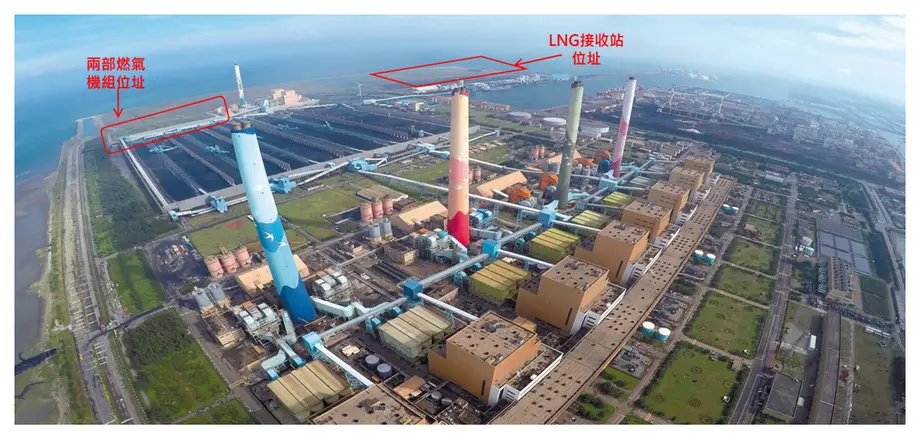
The first of two new gas units entered commercial operation on September 30, 2026, according to Taiwan Power Co.'s Taichung project update. Each unit is rated at 1.3 gigawatts, giving the pair a combined capacity of 2.6 gigawatts. The second is scheduled to begin commercial service on March 31, 2027.
Premier Cho Jung-tai visited the plant on September 4, when both generators reached their full rated output together for the first time. He reaffirmed a deadline for phasing out coal generation by the end of 2034, one year earlier than previously planned.
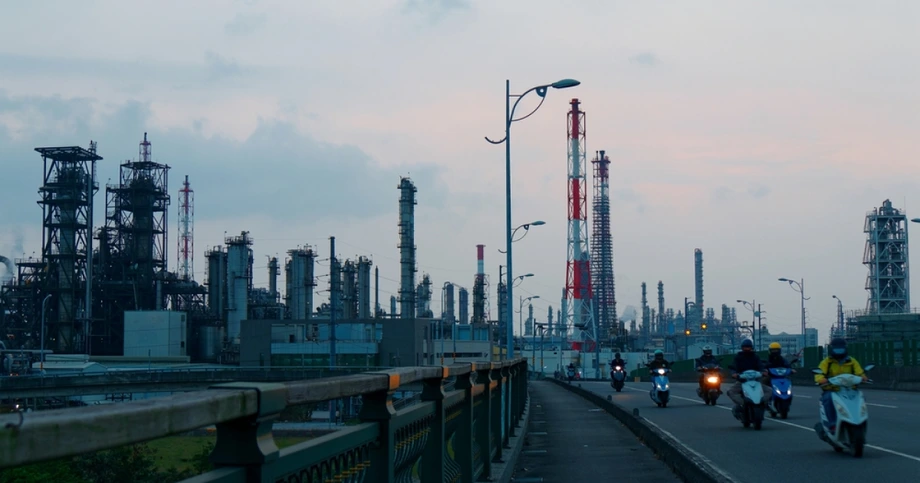
Taichung brings Taiwan's competing energy needs into one place. Its residents want less air pollution. Manufacturers need more electricity. The government wants lower carbon emissions, while the utility must secure enough fuel to keep the grid running.
Gas is increasingly carrying that burden. Electricity generation data from energy think tank Ember put its share at 31.0% in 2015, 48.2% in 2025 and 51.3% during the first eight months of 2026. Renewables supplied 12.1% in both 2025 and January through August 2026, far below the government's original 20% target for 2025.
The result is a transition that reduces coal use while increasing reliance on liquefied natural gas, or LNG, delivered by ship. A planned expansion at Taichung would deepen that dependence well into the next decade.
What the new plant includes
Taipower's first gas phase occupies 13.4 hectares south of the existing coal units 9 and 10. Beyond the generators, the project includes an LNG unloading berth, five storage tanks, a terminal that turns the liquid back into gas, and connecting pipelines. Taipower describes it as its first terminal built and operated by the utility itself.
The generators use combined cycle technology. Gas first powers a turbine, then heat from that process produces steam to drive another turbine. Using the heat twice allows more electricity to be generated from the same fuel.
Taipower specifies net thermal efficiency of 64.1% under its stated fuel measurement method. In simple terms, roughly 64% of the fuel's measured energy becomes electricity delivered from the plant after its own operating needs are deducted.
The utility recorded project progress of 65.97% in September 2026. Its page retains an August 31 target for the first unit, while the construction update records actual commercial operation on September 30. The Energy Administration had completed the unit's final inspection on July 21.
Which coal units will disappear?
Coal units 1 and 2 operated for 36 years and generated nearly 280 billion kilowatt hours during their working lives. Taipower subsequently said they stopped generating on September 30, 2026, were formally retired the following day, and entered demolition.
The demolition date changed between announcements: the September milestone announcement scheduled dismantling for October 2027, while the subsequent account placed its start on October 1, 2026. The demolition programme is expected to last about 28 months and finish in early 2029.
Workers must remove boilers, turbines and a chimney standing 252 metres tall. The cleared area is intended to support the next gas expansion.
The main dates in the transition are:
- July 11, 2025: Residents filed a lawsuit challenging environmental approval for the second gas phase.
- September 4, 2026: Both first phase gas units reached full rated output together.
- September 30, 2026: The first gas unit entered commercial service and coal units 1 and 2 stopped generating.
- March 31, 2027: The second gas unit is scheduled to enter commercial service.
- 2031 to 2034: Four more gas units are planned, alongside demolition of coal units 3 and 4.
- 2032: The government plans to reassess how many coal units should remain available for emergencies.
Why the coal deadline still leaves backup generators
Cho's three goals for Taichung are to end coal generation by the close of 2034, move existing coal units into emergency standby, and review the number of standby units in 2032. Under the announced plan, six coal units would remain available after units 1 through 4 are removed.
Taipower says retired units kept as backups would operate only during national crises or disasters. Routine testing would consume less than 100,000 metric tonnes of coal a year, under 1% of the plant's 2025 consumption of 11 million tonnes.
Emergency standby means maintaining equipment so it can be brought back into use when needed. Taichung's 2034 goal therefore concerns the end of regular coal generation, while retaining a limited reserve of coal equipment and fuel.
City officials want a clearer route to that endpoint. Taichung Deputy Secretary-General Lin Ku-lung has urged the central government to produce a concrete reduction plan, pointing to Taipower's promise to cut coal consumption to 10.5 million tonnes in 2026 and uncertainty about the years before the next gas units arrive in 2031.
Cleaner local air, with a separate climate dispute
Taichung burned 11 million tonnes of coal in 2025, down from a peak of 18.39 million tonnes in 2014. That is a reduction of about 40%. Taipower says it has spent TWD44.1 billion, about US$1.34 billion, on pollution controls since 2017.
The utility puts the plant's air pollutant emissions at 7,590 tonnes in 2025, a reduction of nearly 80%. For the new gas equipment, it lists emission concentrations of eight parts per million for sulphur oxides, five for nitrogen oxides and 10 milligrams per normal cubic metre for particulate matter.
Local air pollution and climate pollution are different problems. Sulphur oxides, nitrogen oxides and particles affect air quality and health. Carbon dioxide and methane trap heat in the atmosphere. The residents challenging the gas expansion argue that its climate effects require closer scrutiny even as coal consumption falls.
Their legal case cites projected annual greenhouse gas emissions of 21.160 million tonnes in 2037, compared with 26.548 million tonnes in 2022. Those figures represent a reduction of about 20.3%. The plaintiffs argue that the plans lack retirement dates for the gas generators and reserve coal units consistent with Taiwan's 2050 net zero goal.
A court challenge threatens the second gas phase
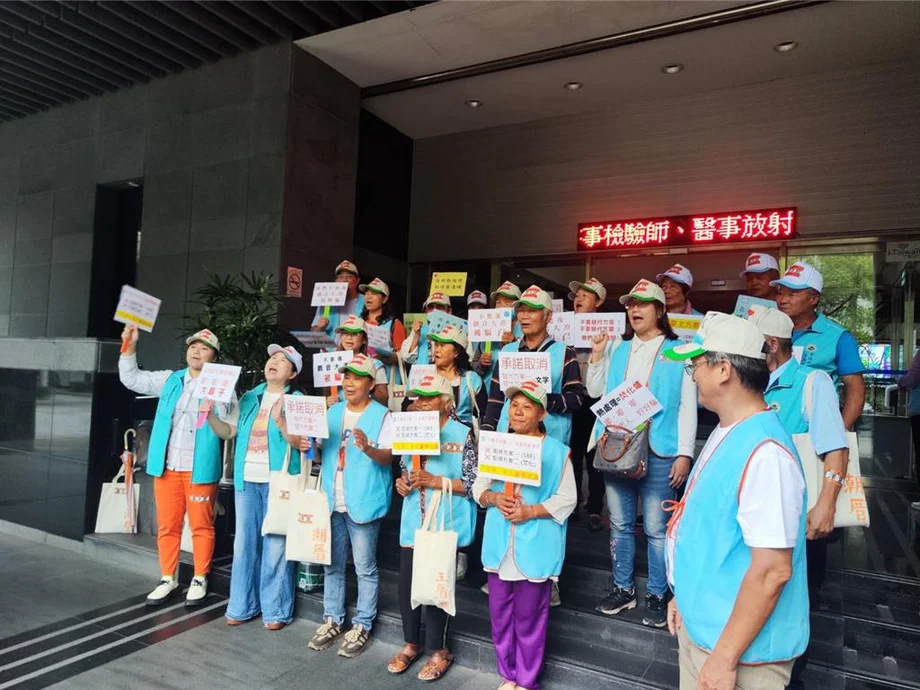
Residents of Taichung, Changhua and Nantou brought their challenge against the Environment Ministry on July 11, 2025. The Environmental Rights Foundation's litigation case summary describes their effort to overturn the second phase's environmental approval, granted in 2024.
The Taipei High Administrative Court revoked that approval in October 2026, finding that the wrong standards had been used to assess construction pollution and that the combined effects of existing coal units and new gas units had not been properly reviewed. The Environment Ministry was expected to appeal. No final appeal outcome or replacement approval timetable has been announced.
The legal challenge concerns a proposed 5,500 megawatts of gas capacity. Taipower's later expansion outline describes four units totalling 4,800 to 5,200 megawatts between 2031 and 2034. Residents sought to reduce the disputed expansion to 2,600 megawatts.
The foundation's account also sets out allegations that methane leakage was omitted from the assessment required under Article 52 of Taiwan's Environmental Impact Assessment Working Standards. Methane is the main component of natural gas and can escape during transport, unloading and storage.
The plaintiffs also challenge the review procedure, saying the second phase received only one panel meeting and one environmental assessment committee meeting, with approval declared without a vote or consensus decision. Those are the plaintiffs' allegations; the reported court decision focused on pollution standards and the assessment of coal and gas operations together.
Taipower says the new gas capacity is needed before six coal units can close. Environmental approval therefore affects both the construction schedule and the timetable for taking coal generators out of regular service.
Fuel prices expose the cost of the switch
Taipower faces a growing fuel bill even as it plans to burn less coal. Its coal budget for 2027 is TWD10 billion higher than in 2026, despite an expected reduction of nearly 800,000 tonnes in consumption. The utility attributes the increase to higher international coal prices.
Gas has also become more expensive since the US-Israeli war with Iran began in February 2026 and closed the Strait of Hormuz. Vice Economics Minister Lai Chien-hsin told lawmakers that Taipower's gas bill had increased by more than TWD70 billion by the end of August compared with the months before the war.
The Cabinet has asked the legislature to approve TWD71.1 billion, about US$2.18 billion, in support for the loss making utility. In August, Taipower warned that its total fuel costs for 2026 could rise by more than TWD120 billion, about US$3.68 billion.
Fuel price increases leave the government choosing how much of the burden should fall on electricity customers, the utility's finances or public funding. Building more efficient generators helps reduce fuel use for each unit of electricity, but the price of the imported fuel remains a major expense.
Sea routes become part of electricity security
President Lai Ching-te said in March that Taiwan held enough LNG for 12 to 14 days. A US think tank's war game estimated that a blockade of the Taiwan Strait would exhaust gas reserves in 10 days. The first figure described stocks available at the time; the second came from a blockade scenario.
Disruption to Qatari supplies in spring 2026 prompted Taipower to buy electricity generated from coal at the privately operated Mailiao plant. Coal consequently served as a fallback while the utility pursued its longer transition away from the fuel.
US President Donald Trump said in October that Taiwan had agreed to take 30% of the LNG from the planned Alaska export project. Such purchases would change where some gas originates, while continuing to require delivery by sea.
Taichung's new unloading berth and five tanks give Taipower direct control over more of the fuel handling chain. Taiwan's electricity security will still depend on ships reaching its ports as gas supplies a larger share of generation.
Renewables and nuclear are running behind demand
Taiwan's original 2025 electricity targets were 50% gas, 30% coal and 20% renewables. Ember's figures show renewables reached only 12.1%, leaving a gap of 7.9 percentage points. Coal still supplied 33.8% during the first eight months of 2026, while gas passed half of generation.
Economic Affairs Minister Kung Ming-hsin acknowledged in February that renewables would miss the 20% target again at the end of 2026. He blamed new laws restricting solar installations on the ground in protected areas. Offshore wind development has also been slowed by rising supply costs, requirements to source equipment locally and tougher permits.
Wind supplied 4.2% of electricity during January through August, and solar supplied 6.2%. Their slow expansion leaves gas meeting more of the demand that coal and nuclear power previously supplied.
The government is also considering a return to nuclear generation. The Nuclear Safety Commission completed its review of Taipower's plan to restart Maanshan in late September, but equipment ageing, radiation and seismic checks still have to be completed. Kung has said generation could resume as early as 2028.
Taichung's own demand shows why the timetable matters. The city used nearly 35 billion kilowatt hours in 2025, around 15% of Taiwan's total, and ranked first among cities for the seventh consecutive year. Taipower says the plant's coal units have not covered local demand since 2019.
Kung has told Taipower to keep the second gas phase on schedule after the ministry raised its electricity demand growth forecasts. The utility also plans 43 new substations over 15 years to serve chipmakers and artificial intelligence users. Until other generation arrives, Taichung's transition is chiefly a change from coal to imported gas, with its construction, legal and fuel supply risks concentrated in the same programme.
Key Points
- Taichung's first new gas unit entered commercial operation on September 30, 2026; the second is scheduled for March 31, 2027.
- The government aims to end regular coal generation at the plant by the end of 2034, while keeping six units available for emergencies.
- A court revoked environmental approval for the second gas phase, putting the expansion timetable under pressure.
- Coal consumption fell about 40% between 2014 and 2025, while Taipower reports a nearly 80% reduction in air pollutant emissions.
- Gas supplied 51.3% of Taiwan's electricity in the first eight months of 2026; renewables supplied 12.1%.
- Higher fuel costs, limited LNG stocks and growing industrial demand are shaping the cost and security of the transition.