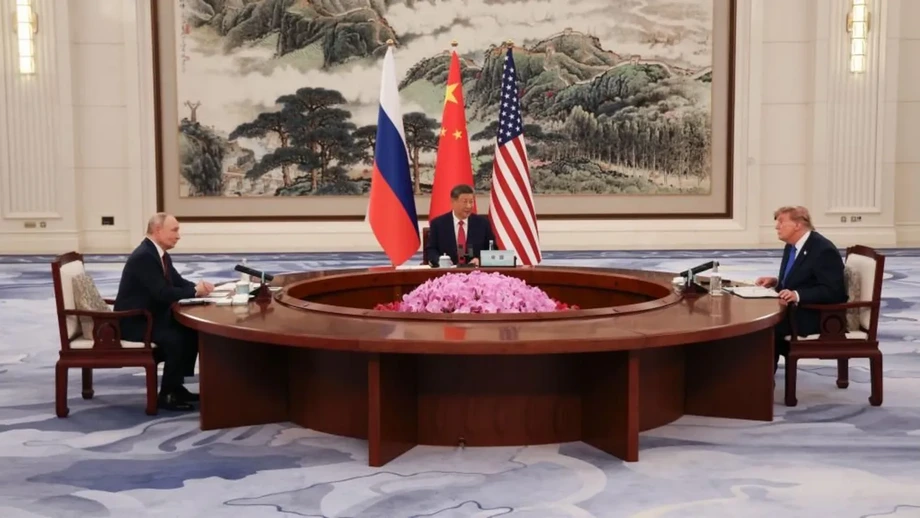
Historic Gathering of Superpower Leaders in Southern China
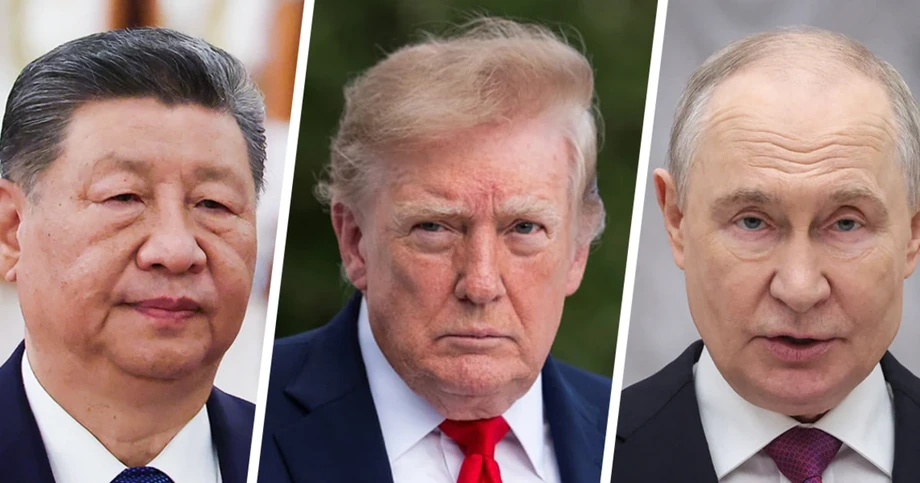
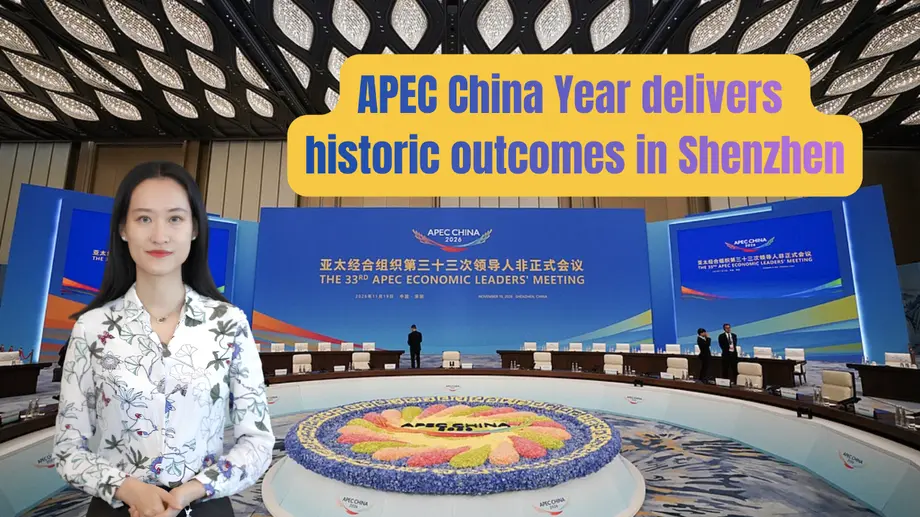
Chinese President Xi Jinping, United States President Donald Trump, and Russian President Vladimir Putin met on November 19, 2026, at the Kylin Villa in Shenzhen, China. The 90-minute gathering marked the first time the leaders of the three nations held a formal trilateral summit. Set against the backdrop of the annual Asia-Pacific Economic Cooperation summit, the meeting brought together the heads of the world's three largest nuclear-armed states to discuss global strategic stability, energy security, and international order.
Contents
- Historic Gathering of Superpower Leaders in Southern China
- The Four-Point Joint Declaration Toward Peace
- Nuclear Arsenals and Global Security Commitments
- Divergent Agendas on Regional Conflicts
- Timeline of the Shenzhen Summit and Related Diplomacy
- Reactions from Lawmakers and International Analysts
- The Essentials
The location of the talks, Shenzhen, is a major technology hub in southern China. Chinese officials Cai Qi and Wang Yi also participated in the event. The historic nature of the summit drew intense global attention as the leaders attempted to bridge deep geopolitical divides amid ongoing conflicts in Europe and the Middle East.
Chinese President Xi Jinping opened the discussions by emphasizing the shared weight carried by the three nations. He noted that humanity lives in a single global community where major countries hold unique responsibilities. According to the Ministry of Foreign Affairs of China, President Xi outlined four core principles for major-power relations, urging the leaders to practice mutual respect, peaceful coexistence, win-win cooperation, and open consultation.
Positive interaction among major powers is not a matter of choice, but a mandatory requirement.
Russian President Vladimir Putin described the discussions as a significant chapter in diplomatic history. United States President Donald Trump praised the summit as a major achievement, rating the meeting a 12 on a scale of 10 during a phone interview after boarding Air Force One for his return flight to Washington.
The Four-Point Joint Declaration Toward Peace
Following their closed-door talks, the three leaders released a joint statement titled the U.S.-Russia-China Heads of State Declaration toward Peace. The four-point document outlines broad areas of agreement focusing on international governance, energy supplies, judicial oversight, and nuclear risk reduction.
First, as permanent members of the United Nations Security Council, the three countries committed to reforming the United Nations to ensure it can respond more effectively to global challenges. Second, the nations pledged to increase the production and supply of refined petroleum products to maintain stable global energy flows. Third, the leaders agreed that international judicial bodies must respect state consent and the immunity of officials.
Finally, the declaration addressed nuclear safety. The document reaffirmed that a nuclear war cannot be won and must never be fought, setting the stage for future bilateral and trilateral dialogues on preventing proliferation.
Nuclear Arsenals and Global Security Commitments
The issue of nuclear weapons formed a central pillar of the public statements surrounding the Shenzhen summit. The United States and Russia maintain massive nuclear stockpiles of well over 5,000 warheads each, while China maintains a smaller nuclear arsenal estimated at approximately 600 warheads.
President Trump noted during the summit that the three nations are uniquely positioned to discuss reducing global nuclear stockpiles. President Putin echoed the sentiment, emphasizing that the three countries share a responsibility to prevent nuclear proliferation and avoid catastrophic conflict. Chinese President Xi Jinping also called for the complete prohibition and destruction of nuclear weapons to build a secure world.
Experts noted that while the inclusion of the phrase that nuclear war cannot be won is a welcome rhetorical down payment on stability, the declaration stopped short of establishing a formal arms control framework or verification measures similar to past pacts like the New START treaty.
Divergent Agendas on Regional Conflicts
Despite the unified front presented in the joint declaration, the three leaders arrived in Shenzhen with distinctly different priorities regarding active global conflicts. The war in Ukraine and ongoing tensions involving Iran formed the background of the diplomatic maneuvering.
President Putin used his post-summit press briefings to address the conflict in Ukraine, stating that neither Kyiv nor European capitals were ready to make necessary compromises. He also vowed a firm response following recent Ukrainian drone and missile strikes that damaged the bridge connecting mainland Russia to the Crimean Peninsula.
President Trump stated during his communications that the United States would not make decisions regarding the resolution of the war in Ukraine without direct participation from Ukrainian leadership. Meanwhile, European leaders gathered in Berlin during the summit to coordinate support for Ukraine and express caution regarding any potential bilateral deals that could affect European security.
Timeline of the Shenzhen Summit and Related Diplomacy
The events in Shenzhen unfolded over several days of intense diplomatic activity across the Asia-Pacific region:
- October 2026: Russian President Vladimir Putin proposes a trilateral meeting during a phone call with U.S. President Donald Trump.
- November 18, 2026: Leaders gather in Shenzhen for preliminary events on the sidelines of the APEC conclave.
- November 19, 2026: Presidents Trump, Xi, and Putin hold their 90-minute trilateral meeting at Kylin Villa and issue the joint peace declaration.
- November 20, 2026: President Trump schedules a White House news conference to discuss the trip and related trade agreements.
The tightly managed schedule reflected the careful diplomatic preparation required to bring the three leaders together in a single room for the first time.
Reactions from Lawmakers and International Analysts
The summit generated sharp domestic reactions in the United States, reflecting deep political divisions over foreign policy. Senate Minority Leader Chuck Schumer criticized the trip on the Senate floor, describing the gathering as a historical embarrassment and a betrayal of American interests. Republican Senator John Curtis expressed cautious approval for commitments regarding nuclear risk reduction while voicing concern over friendly rhetoric toward foreign leaders.
International analysts offered varied interpretations of the summit outcomes. Some observers viewed the meeting primarily as a successful public relations event for leaders seeking to project global influence. Other analysts noted that the talks provided a rare operational channel for major powers to maintain communication channels during a period of intense geopolitical friction.
Preparations are already underway for the upcoming G20 summit scheduled for December 14–15 at President Trump's Doral resort in Florida, where leaders will determine whether the momentum from Shenzhen translates into institutional mechanisms.
The Essentials
- Presidents Donald Trump, Xi Jinping, and Putin held a historic 90-minute trilateral meeting in Shenzhen, China.
- The leaders issued a four-point joint peace declaration focusing on UN reform, energy supplies, judicial immunity, and nuclear risk reduction.
- The United States, Russia, and China reaffirmed that a nuclear war cannot be won and must never be fought.
- Differing positions on the war in Ukraine and regional conflicts remained unresolved during the closed-door discussions.
- Future diplomatic engagements are anticipated at the upcoming G20 summit in Florida.