Tokyo Talks Put Copper and Lithium at the Centre
Tokyo, November 20, 2026. Keiko Fujimori and José Antonio Kast arrived in Japan days after meetings with Xi Jinping in Shenzhen, and both presidents left the prime minister's office with promises to link their countries more closely to Japanese mineral supply chains. Fujimori, Peru's president, and Kast, Chile's president, held separate summits with Prime Minister Sanae Takaichi on their first visits to Japan. Each leader also met Emperor Naruhito and spoke to Japanese business leaders.
Contents
- Tokyo Talks Put Copper and Lithium at the Centre
- Why Critical Minerals Matter to Japan
- What Chile Put on the Table
- A Japanese Network Inside a Copper Mine
- Peru's Nine Agreements Reach Beyond Mining
- China Remained the Other Major Partner
- Chile's Processing Gap Is the Central Test
- Peru Pitches Itself as a Gateway
- El Niño Aid Became Part of the Bargain
- A Short Timeline of the Asian Tour
- Old Family Ties Shape a New Minerals Agenda
- What Still Needs Definition
- Key Points
The stakes are easy to see in numbers. Chile is the world's largest copper producer and second largest lithium producer, while Peru is the third largest copper producer. Japan's Foreign Ministry ranks Chile first and Peru second among exporters of copper to Japan, and Chile is Japan's top lithium exporter. Copper carries electricity in homes, factories and electric vehicles. Lithium stores energy in rechargeable batteries.
Peru signed nine cooperation documents with Japan on November 20, covering disaster preparation, agriculture, education, cultural heritage, investment and critical minerals. Chile and Japan agreed to strengthen critical mineral supply chains, pursue a joint next generation technology project and expand defence cooperation. The two sides gave few details about which Chilean minerals, projects or sums the wider programme will cover.
These were the first bilateral summits between Takaichi and the two South American leaders since Fujimori and Kast took office earlier in 2026. They followed two days of talks at the APEC summit in Shenzhen on November 18 and 19, where China, the largest trading partner of both countries, was the host.
Why Critical Minerals Matter to Japan
Critical minerals are raw materials needed for phones, cars, batteries, power lines and military equipment. The word critical does not mean the rock itself is rare in every case. It means a disruption can hurt important industries. A supply chain is the route from a mine to a factory, including shipping, refining and manufacturing.
Japan has few mineral resources of its own. Tokyo has sought alternatives since January 2026, when China restricted exports of refined rare earths to Japan after Takaichi's comments supporting Taiwan. Chinese controls on gallium and germanium, metals used in chips and advanced electronics, added to the concern. Energy uncertainty has also grown after the effective closure of the Strait of Hormuz during the war in the Middle East.
Japan has pursued the same agenda with other partners. The EU and Japan minerals alliance advanced in May as Chinese export controls raised worries about the materials needed to keep factories running. The Tokyo meetings took that search to two major South American producers. In her meeting with Fujimori, Takaichi highlighted Peru's copper and zinc resources.
What Chile Put on the Table
Kast arrived in Tokyo on Thursday as the final stop of an Asia tour that included China, Vietnam and his first APEC leaders' summit. His talks with Takaichi covered minerals, defence and crisis management. Chile's Foreign Minister Francisco Pérez Mackenna also signed a memorandum on political consultations with Japan's ambassador to Chile, Kenko Sone.
The Chile and Japan joint statement said cooperation on critical minerals, including copper, would make global supply chains more resilient and stable. It said trade measures should be consistent with relevant international agreements. Both governments backed a free international economic order and signed a memorandum on information and communications technology.
Sanae Takaichi, Japan's prime minister, told reporters after the Chile summit that the discussion centred on supply chain resilience for metals used by Japanese industry. She described Chile as a long standing source of copper and lithium:
We confirmed that Chile, as a major supplier of copper and lithium to Japan, will deepen its cooperation and coordination with Japan to strengthen the resilience of supply chains for critical minerals.
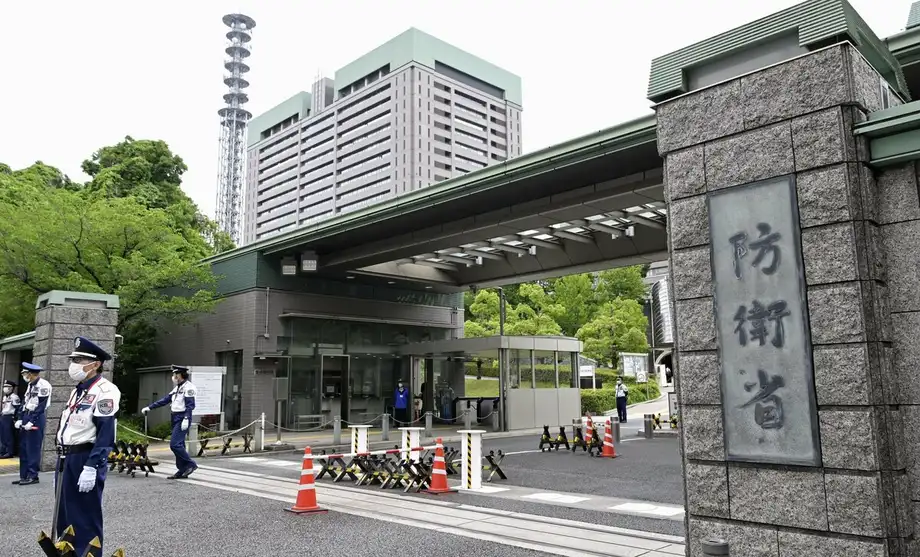
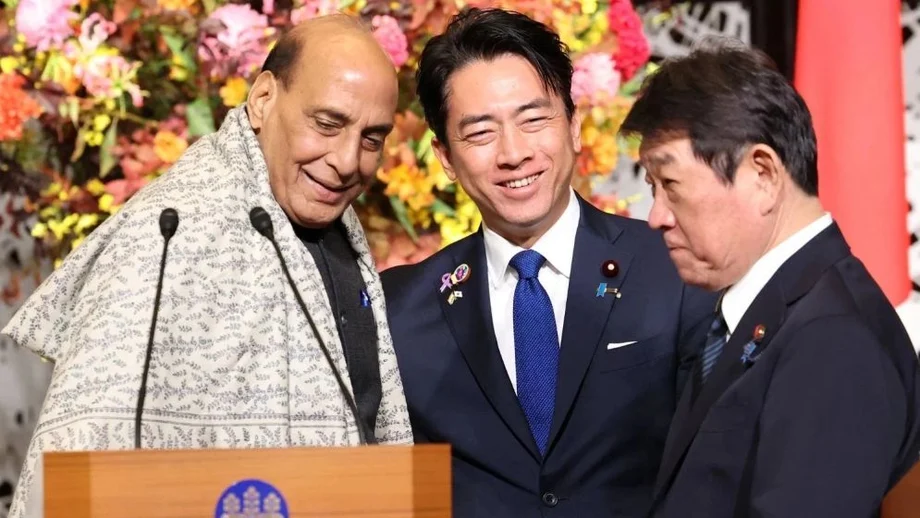
Japanese Defence Minister Shinjiro Koizumi met Chilean Defence Minister Fernando Barros on the sidelines. Japan and Chile also exchanged a letter of intent covering defence exchanges in maritime affairs, disaster relief and equipment. Takaichi was invited to visit Chile and to attend the Choose Chile Summit planned for March 2027. Chile and Japan will mark 130 years of diplomatic relations in 2027, and an anniversary logo was unveiled after the summit.
A Japanese Network Inside a Copper Mine
The most concrete Chilean example is at Codelco's El Teniente copper mine. Since August 2026, the mine has been testing a photonics communications network developed in Japan. NTT Docomo Business and Codelco are working on a project that allows equipment to be operated remotely. Such networks carry data with light, helping machines in dangerous mine areas to be controlled from a safer distance.
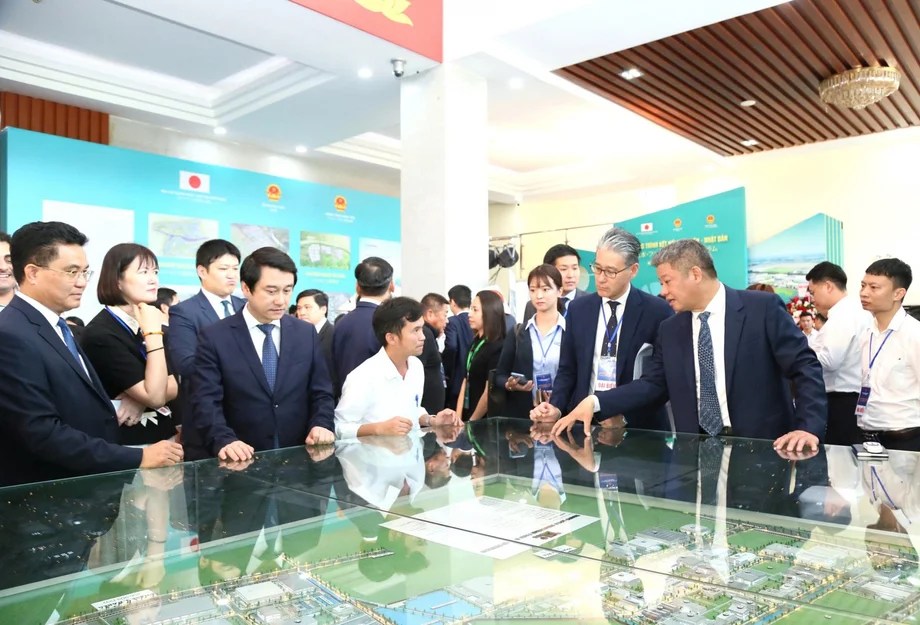
Japan's Minister of State for Foreign Affairs Iwao Horii highlighted such projects at an investor event linked to APEC. He said Japanese communication technology was advancing in Chilean mining and pointed to Chile's copper and lithium resources. Japanese companies are also active in Chilean renewable energy and aquaculture.
Kast has made clear that Chile wants more than a supplier role. The Chilean president told Japanese business leaders at a Tokyo breakfast that his country wants Japanese capital to help build refineries and other facilities at home. He used a simple partnership image to explain the offer:
Today it is not enough to extract and export. We want to process, refine and add value in Chile with Japanese partners. We put in the raw material, you put in the capital, and together we become famous.
Kast repeated that argument at APEC, where he told a forum of about 2,000 political and business representatives from 34 economies that countries producing minerals should also process them and develop technology.
Peru's Nine Agreements Reach Beyond Mining
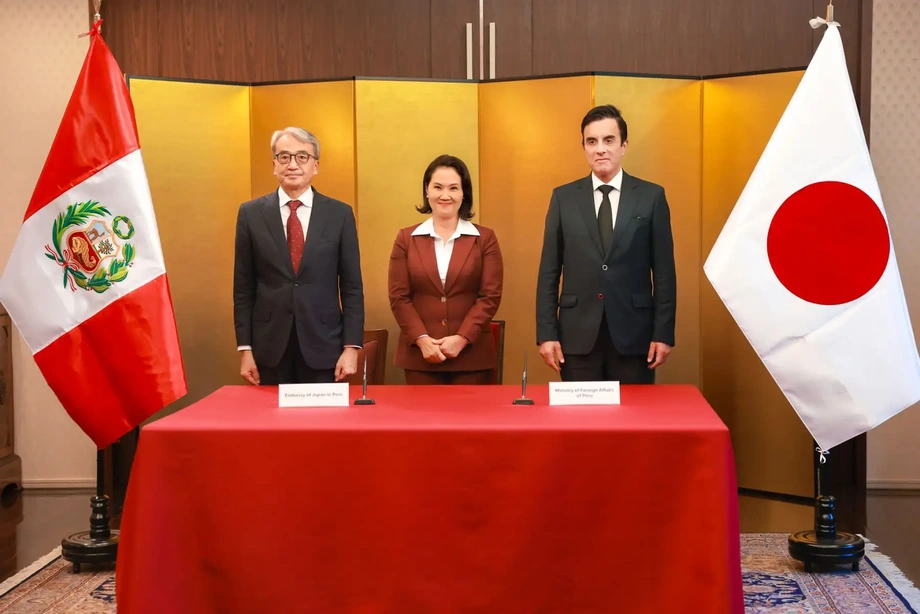
Fujimori was an honorary witness at the signing of nine Peru and Japan agreements in Tokyo. Signatories included Foreign Affairs Minister Carlos Espá, Energy and Mines Minister Guillermo Shinno and Peru's Ambassador to Japan, Francisco Tenya. The documents cover flood protection, farm productivity, schools, museums, firefighting and investment.
- Japan will grant 500 million Japanese yen (about US$3.129 million) for 15 dump trucks and 15 inspection drones for Peru's National Water Authority, known as ANA.
- Peru's Council of Ministers and Japan's Ministry of Internal Affairs and Communications signed an information technology disaster risk memorandum.
- Peru's agrarian development ministry and Japan's agriculture ministry agreed to share technical help and experience on productivity and food security.
- JETRO and ProInversión agreed to identify investment projects and connect companies in both countries.
- Peru's Energy and Mines Ministry and Japan's Ministry of Economy, Trade and Industry signed a critical minerals memorandum covering investment, technology transfer and value chains.
- Peru's Energy and Mines Ministry and the Japan Organization for Metals and Energy Security renewed cooperation first established in November 2024.
- Peru's Education Ministry and Japan's education ministry signed a letter of intent focused on primary and secondary education.
- Japan will provide 78.3 million yen (about US$493,000) for equipment at the Brüning National Archaeological Museum in Lambayeque.
- Japan's Firefighters Association and Peru's National Firefighters Department signed a framework for future donations of used firefighting vehicles and equipment.
The critical minerals memorandum is meant to attract investment, transfer technology and build value chains that support Peru's mining sector while improving Japan's security of supply. The JOGMEC document focuses on investment and better use of Peru's mineral resources. Five emergency vehicles were also delivered to Peru's volunteer firefighters during the visit.
China Remained the Other Major Partner
The Tokyo agreements came three days after Fujimori and Kast courted Xi in Shenzhen. Fujimori met Xi on November 17, one day before the APEC leaders' summit. Xi pledged US$22.5 million in money and machinery for Peru's El Niño preparations, including US$7.5 million in machinery. China and Peru had updated their 2010 free trade agreement on November 1, adding rules on e-commerce, global supply chains, rules of origin and services.
Kast met Xi on November 17 for nearly 45 minutes. He described the conversation as frank, pleasant and relaxed. Chile and China signed an economic cooperation roadmap and a memorandum supporting free trade and multilateralism. Kast invited Xi to Chile, and Xi invited Kast on an official visit to China. Xi raised deep sea exploration and artificial intelligence, while both sides discussed mining, infrastructure and industry.
China's commercial weight explains why Japan's approach matters. Chile's state copper commission Cochilco puts about two thirds of Chile's copper concentrate exports going to China, while figures used at APEC put about half of Chile's copper exports and more than 70 percent of its lithium exports going to China. China took about 37 percent of Peru's exports in 2025. Peru is the second largest recipient of Chinese investment in Latin America after Brazil.
Chile and China marked 20 years of their free trade agreement, Beijing's first in Latin America, and 10 years of a Comprehensive Strategic Association. Xi's reception of the two presidents contrasted with the colder welcome he gave Takaichi, whose government has faced Chinese pressure over minerals and Taiwan.
Chile's Processing Gap Is the Central Test
Chile mined about 23 percent of the world's copper concentrate in 2025, yet its share of global smelted copper fell to 4.2 percent from 13.3 percent in 1990. Smelting separates metal from ore concentrate, and refining removes more impurities. Countries that only export concentrate miss much of the industrial activity and skilled work that come later.
Chilean smelters are running at about 60 percent of capacity. Cochilco has urged the country to repair and improve existing smelters before building new ones. Mine output has fallen to the lowest level in 15 years, while a record US$24 billion of mining projects entered environmental review this year as the government reduced permit requirements.
Japanese demand gives Chile a reason to move faster. Sumitomo Metal Mining said this month that it wants more stakes in South American copper mines as it works toward an equity output goal of 300,000 tonnes. Equity output means the share of production a company owns through its investments. Chile also has lithium for electric vehicles and energy storage, making processing a jobs and industry question as much as a mining question.
Peru Pitches Itself as a Gateway
Fujimori told Takaichi that Peru should be treated as the gateway to South America for trade. Her message linked minerals with ports, roads and logistics. Japanese companies have been looking for a bigger role in the next stages of production.
In September, Guillermo Shinno, Peru's energy and mines minister, presented a three year programme to Japan's trade ministry. The plan covers mining investment priorities, green hydrogen pilots and distributed energy generation. Distributed energy means smaller power systems near users, such as solar or gas generation that does not depend on one large grid connection. Shinno also pitched Peru to Mitsubishi, Mitsui and Sumitomo Metal Mining. Fujimori also reaffirmed the 61 commitments in the Peru and Japan Roadmap 2024 to 2033.
Carlos Espá, Peru's foreign minister, has cited 66 exploration projects and 69 investment projects worth more than US$64 billion. Peru is also being courted by Canada, which signed a critical minerals memorandum with Lima in March 2026 as part of a G7 alliance that has mobilised about C$18.5 billion (US$13.5 billion). Mining projects in Peru can take 10 to 15 years to win approval, and the Chancay Megaport gives the country a Pacific route for minerals.
El Niño Aid Became Part of the Bargain
Disaster preparation was not a side issue in Tokyo. Peru's forecasters expect El Niño to hit the coast with extraordinary strength until February 2027. El Niño is a climate pattern that warms Pacific waters and can bring heavy rain, flooding and damage to fisheries along Peru's coast.
Fujimori said Japan would provide US$10 million of machinery for El Niño work. The signed exchange of notes is more specific: 500 million yen (about US$3.129 million) will buy 15 dump trucks and 15 inspection drones for ANA, the national water authority. The vehicles and drones can help move material, inspect water systems and support emergency teams. Fujimori also raised satellite information for disaster management.
Xi's US$22.5 million pledge in Shenzhen, including US$7.5 million in machinery, gave Fujimori two Asian partners offering help for the same climate threat. Japan's Foreign Ministry said Takaichi welcomed the disaster equipment agreement. For coastal communities, the immediate result is equipment. For Peru's policy, the result is a chance to link disaster resilience with investment in mining and infrastructure.
A Short Timeline of the Asian Tour
Fujimori's official tour ran from November 15 to 21, and Peru's Senate authorised the trip by 44 votes to 1, with 5 abstentions. Kast's route included Vietnam, China and Japan. The main dates were:
- November 1: Peru and China updated their 2010 free trade agreement.
- November 17: Fujimori met Xi and received the El Niño pledge. Kast met Xi for nearly 45 minutes and signed two cooperation documents.
- November 18 and 19: APEC leaders met in Shenzhen. Kast spoke at a business forum with about 2,000 political and business representatives from 34 economies.
- November 20: Fujimori and Kast held separate summits with Takaichi in Tokyo. Peru signed nine agreements, and Chile announced minerals, technology and defence cooperation.
All three countries are parties to CPTPP, a Pacific trade agreement. Peru will preside over the group in 2027, giving Fujimori another reason to seek close coordination with Japan on trade rules.
Old Family Ties Shape a New Minerals Agenda
Fujimori's visit carried a personal history that few state visits have. She is Peru's second president of Japanese descent, after her father, Alberto Fujimori, who governed from 1990 to 2000. Japanese migration to Peru began in 1899, and her paternal grandparents arrived in 1934. Takaichi noted that Peru has about 200,000 nikkei, or people of Japanese descent.
Emperor Naruhito received Fujimori at the Imperial Palace and greeted her in Spanish. He also received Kast in parallel. Takaichi called Fujimori a bridge between the two countries and referred to more than 150 years of diplomatic relations. Fujimori's summit lasted about 20 minutes and marked 10 years since Peru and Japan established their Strategic Partnership.
Her Tokyo schedule included meetings with Nippon Foundation directors, Senator Muneo Suzuki and lawmaker Yuko Obuchi, names tied to the history of Japanese support for her father during his years in Japan. Kast's own anniversary is coming in 2027. He invited Takaichi to Santiago for the 130th anniversary of Chile and Japan diplomatic relations and pointed her toward the Choose Chile Summit in March 2027.
Luis Álvarez, a Peruvian journalist in Japan, said Fujimori's schedule left little space to thank Peruvians in Japan, a community estimated at about 50,000. José Shimohira, an 81 year old nikkei in Aichi, tied his support for the Fujimori family to ancestry.
What Still Needs Definition
The political signal from Tokyo is strong, but the industrial details remain thin. Chile and Japan did not announce a money figure, named mineral list or project schedule for their critical minerals programme. Officials also spoke about moving toward economic security memorandums. Peru's critical minerals memorandum sets out goals such as investment, technology transfer and supply security, but it does not by itself build a refinery or a mine. No new deadline was given for turning the memorandums into specific plants or contracts.
The known dates are political and climate related. Peru faces the forecast El Niño peak until February 2027. Chile will host the Choose Chile Summit in March 2027 and celebrate 130 years of diplomatic relations with Japan in 2027. Peru will preside over CPTPP in 2027 and has offered to host the next Political Dialogue meeting with Japan.
For ordinary people, the change depends on implementation. If Japanese money helps repair smelters, build processing facilities or improve water systems, the effects could show up in jobs, safer communities and more local manufacturing. If the agreements stop at statements, minerals will keep leaving South America and much of the refining and technology work will happen elsewhere.
Key Points
- Peru and Japan signed nine agreements on November 20 covering critical minerals, disaster response, agriculture, education, investment, firefighting and cultural heritage.
- Chile and Japan agreed to deepen cooperation on critical minerals, information technology and defence, with El Teniente's remote equipment project as a concrete example.
- Japan wants more reliable access to copper, lithium, zinc and other minerals as it reduces dependence on supply chains dominated by China.
- Chile's state copper commission Cochilco puts about two thirds of Chile's copper concentrate exports going to China, while China took about 37 percent of Peru's exports in 2025.
- Japan will provide 500 million yen for ANA dump trucks and drones, and 78.3 million yen for museum equipment in Lambayeque.
- Key dates ahead are February 2027 for Peru's El Niño forecast, March 2027 for the Choose Chile Summit and 2027 for the Chile and Japan anniversary.