How Much More Metal Kazakhstan Wants to Process at Home
Kazakhstan has set a clear industrial goal: by the end of 2029, process twice as much copper, aluminum and zinc inside the country, and raise lead processing by 14%. Yersaiyn Nagaspayev, minister of industry and construction, announced the target during a government hour in the Qurultay on 23 November 2026. The plan is about more than digging minerals out of the ground. It is about keeping more work and more value in Kazakhstan before raw materials are sold abroad.
Contents
- How Much More Metal Kazakhstan Wants to Process at Home
- What the 2029 Target Actually Changes
- Why Copper Gets Special Attention
- Where the New Copper Smelters Would Sit
- A Short Timeline of the Metals Push
- What Has Already Been Built
- Why Manufacturing Is Moving Ahead of Mining
- Clusters, Cars and Rail: The Wider Industrial Plan
- Chemicals, Fertilizer and Light Industry Join the Push
- Lawmakers Ask Whether Support Is Paying Off
- A Private Cathode Copper Project Adds Another Thread
- What Still Has to Be Decided
- Key Points
Metallurgy makes up about 40% of Kazakhstan's manufacturing output and employs about 109,000 people. The government wants factories to move further along the production chain. Copper concentrate, for example, is ore that has been crushed and treated to raise its copper content. Smelting and refining can turn it into cathode copper, a refined sheet used for wire and electrical goods. Each extra stage needs more equipment, skills and services.
Nagaspayev linked the metals push to wider economic change. Manufacturing output rose 14.5% over three years, and investment in the sector doubled to 3 trillion tenge. Since 2024, manufacturing has made up a larger share of gross domestic product, or GDP, than mining for three years in a row. In the first 10 months of 2026, manufacturing grew 9.3%, while total industrial output grew 3.5% and mining output fell 3.4%.
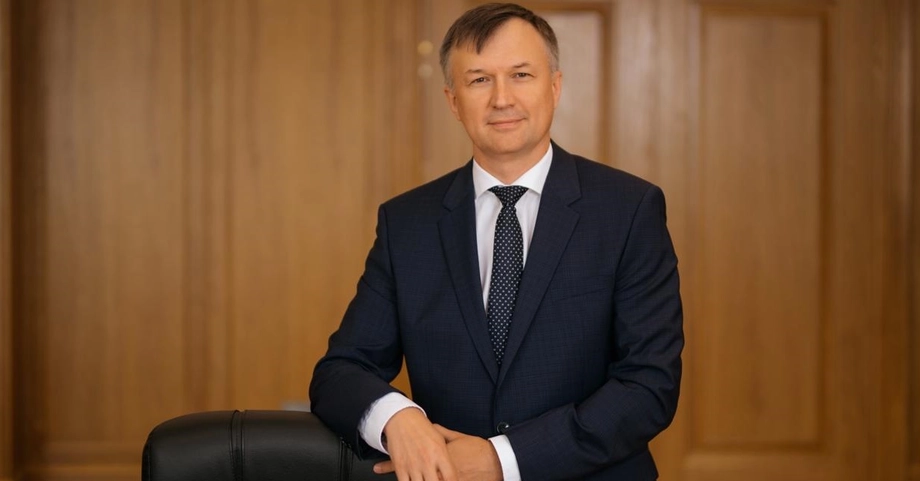
Yersaiyn Nagaspayev, minister of industry and construction, put the recent growth in a longer frame. He said the sector was expanding at a pace not seen in decades.
Production in the manufacturing sector grew by 9.3% in the first 10 months of this year, marking its strongest performance in 25 years
Mining continues under the plan. The change is where more processing happens. More local factories can mean more radiators, profiles, batteries and wire rod made in Kazakhstan, plus more demand for engineers, welders, electricians and logistics workers.
What the 2029 Target Actually Changes
The main policy tool is a preferential supply mechanism introduced in 2021 under the Law on Industrial Policy. It requires major metallurgical companies to meet the needs of domestic processors before exporting raw materials. The rule covers copper, aluminum and zinc. Domestic processors can buy these metals at prices up to 5% below market rates.
The discount is meant to help local factories compete while they build customers and experience. Nagaspayev said 30 agreements had been signed between raw material producers and processors, along with 15 commercial contracts for copper wire rod supply. Wire rod is a semi finished metal used to make cables and electrical goods.
Those contracts have supported new production lines. Almaty has radiator production, Shymkent has metal profile manufacturing, Zhetysu region has modern battery production, and Saran has a metal galvanizing facility. Galvanizing coats steel or iron with zinc to slow rust. The 2029 target concerns processing volumes, including more finished goods, while lead processing is planned to rise by 14%.
Why Copper Gets Special Attention
Copper shows both the opportunity and the gap. Kazakhstan produces about 3.4 million tons of copper concentrate a year, but only about 59% is processed in the country. The remaining 41% is not processed there. The gap matters because jobs, technical work and industrial know how can be created in the processing stage.
The government wants concentrate output to reach 5.1 million tons by 2030, 1.5 times the present level. Projects at the Koksay and Aidarly deposits are expected to add 1.7 million tons of concentrate. Annual copper output is targeted to rise from 471,000 tons to 1.1 million tons.
Yersaiyn Nagaspayev, the minister of industry and construction, described the finished product goal at a government meeting on 17 November 2026. He was linking larger concentrate and refined copper volumes to a domestic sector able to use the metal.
This will allow us to more than double the output of finished copper products, to 40,000 tons
The numbers show the scale. A target of 40,000 tons of finished copper products is much smaller than 1.1 million tons of copper output planned for 2030. Kazakhstan can therefore expand refined metal sharply while most copper remains metal rather than wire, cable, tubing or parts for electrical equipment.
The government has drafted amendments to introduce state regulation of tariffs for copper concentrate processing, with the aim of encouraging more treatment at home. A special methodology for processing nonferrous metal concentrates has also been approved, and related legislative amendments have been prepared.
Where the New Copper Smelters Would Sit
Two new copper smelters are planned before 2030, each with a capacity of 300,000 tons, for a combined 600,000 tons. One is planned at Aktogay in Abai region. The other is planned at Balkhash in Karaganda region. Both would rely on the preferential supply system for raw material.
Kazakhstan marked the Aktogai smelter launch on 20 October 2026. The $1.8 billion project is being developed by KAZ Minerals with Chinese engineering company NFC as partner. Abai Region Governor Berik Uali put the investment at 800 billion tenge. First cathode output is expected in 2030. Gold, silver and sulfuric acid are also planned products.
Balkhash follows a similar timetable on paper. Construction is scheduled to begin in 2027, with production expected in 2030. The plant is expected to create 1,200 jobs. Together, the two plants would give Kazakhstan more capacity to treat copper concentrate near the mines and rail links that feed it.
A Short Timeline of the Metals Push
The policy mixes rules already in force, factories already running and projects that still depend on construction and financing. The sequence matters.
- 2021: Kazakhstan introduced the preferential raw material supply mechanism under the Law on Industrial Policy.
- 20 October 2026: construction began at the Aktogay smelter, with first cathode output set for 2030.
- 17 November 2026: the government set copper concentrate, copper output and finished product targets.
- 23 November 2026: the minister told the Qurultay that copper, aluminum and zinc processing should double by the end of 2029.
- 2027: construction is scheduled to start at the Balkhash smelter, and a private cathode copper project in Karaganda region is listed for production.
- 2029: the domestic processing targets for copper, aluminum and zinc are due.
- 2030: two smelters with capacity of 300,000 tons each are due to produce, copper output is targeted at 1.1 million tons and finished copper products at 40,000 tons.
The timeline shows why 2030 is a different milestone from 2029. The processing target depends heavily on current plants and the 2021 supply rule, while the two smelters are expected to reshape copper capacity later in the decade.
What Has Already Been Built
The supply rule is meant to be practical. Copper wire rod contracts are important because they connect raw metal to factories that make cables and electrical goods. The minister said the mechanism has already supported production in several regions.
The plants announced so far are smaller than the giant smelters, but they show how a processing chain can start. Radiators use metal forming and assembly skills. Profiles serve construction and manufacturing customers. Batteries bring a more complex product into local supply. Galvanizing adds a protective finishing step that extends the life of metal goods.
Kazakhstan has launched a wider group of industrial projects. Officials said 125 projects worth 900 billion tenge, about $2 billion, started in 2026, with 75 more nearing completion. Total planned investment in the 200 projects exceeds $3.8 billion. At full capacity, they are expected to produce $3.4 billion of goods a year, about one third for export, and create more than 17,000 jobs, including 5,500 in rural areas.
Why Manufacturing Is Moving Ahead of Mining
Kazakhstan's industrial numbers give the metals plan both momentum and pressure. Manufacturing output rose 9.3% in January to October 2026. Mining output fell 3.4% over the same period, and total industrial output rose 3.5%. The contrast helps explain why officials talk about processing rather than extraction.
Mining can bring large export revenue, but it creates fewer jobs in the stages after extraction than a chain of factories. Metallurgy remains the largest manufacturing block, at about 40% of output. If copper, aluminum and zinc processing doubles, it will change a large slice of manufacturing, not a small niche. It will also test finance, raw material access and demand for local goods.
Clusters, Cars and Rail: The Wider Industrial Plan
Kazakhstan is pairing metal processing with an industrial cluster policy. A cluster, in this policy, means companies grouped around an anchor plant, with suppliers, small businesses, research groups and service firms linked to it. The ministry is preparing a document setting the conditions for clusters and the state support they can receive.
Car factories already produce batteries, tires, seats and multimedia systems. In 2026, manufacturers began producing heating and climate control systems, floor coverings and engine blocks for trucks. Bus body panels are stamped from steel supplied by Qarmet in Temirtau. Rail makers produce wheels, wagon axles, switch points and rail fastenings.
More projects are due before the end of 2026. A plant in Kostanay is expected to make up to 60,000 automotive components a year. Almaty is preparing production of wiring harnesses, brake lines and fuel lines. Volvo assembly is expected to start in Almaty before the end of the year. Prime Minister Olzhas Bektenov has said talks are under way with Mercedes Benz about possible production in Kazakhstan.
The $54 million Saran Machinery project is designed to produce up to 10,000 HOWO trucks a year. Its first stage is cab and chassis assembly, with welding, painting and some component production planned later. The original schedule called for operation in the second quarter of 2026, but construction was still nearing completion in November. Machine building output rose 22.4% over three years to 5.8 trillion tenge, more than 17% of manufacturing. Kazakhstan also plans new special economic zone rules focused on territory planning, private management companies and stricter project selection.
Chemicals, Fertilizer and Light Industry Join the Push
Chemical production rose 10.5% in 2025 and 22% in the first 10 months of 2026. New capacity includes an 800,000 ton sulfuric acid plant and polypropylene production. Fertilizer output now exceeds 1 million tons a year and covers about half of demand. The government plans to reach 4 million tons by 2030, including new products such as carbamide, a nitrogen fertilizer, and potassium chloride.
Construction materials grew 23% over three years and 5.4% in the first 10 months of 2026. Local products meet about 73% of domestic demand, and 98 projects worth 975 billion tenge are expected to lift that share to 80% within three years. Light industry grew 20% in 2025 and 60% in the first 10 months of 2026. The target is to double output by 2030 and raise the domestic market share to 20%.
Lawmakers Ask Whether Support Is Paying Off
Natalia Godunova, chair of the Committee on Economic Policy, Industry and Energy, said results should be judged by how well budget money is used. She noted that at least 10 trillion tenge had gone to manufacturing support since 2010. Manufacturing's share of GDP rose from 11.3% to 12.8%, a gain of 1.5 percentage points.
Manufacturing exports rose from $15 billion to $29 billion and reached 36% of total exports, but metallurgy still makes up much of the export mix. Imports of manufactured goods rose from $21 billion to $61 billion over the same long period. In current dollar terms, labor productivity rose from $30,000 to $63,000 per worker, while the real increase after price changes was about 70%.
Godunova said agencies do not adequately track the domestic share of goods consumed in Kazakhstan. She also said there is no full assessment of private investment attracted for each tenge of state support, including land and other benefits. Support can stop when a factory opens, she said, even if the plant later lacks raw material, working capital or orders.
Daniya Espaeva, vice speaker of the Qurultay, said Kazakh goods made up only 21.3% of oil and gas sector purchases and 17% of purchases in solid minerals in the first half of 2026. Large companies keep importing valves, pumps, cables and reagents that could be made locally. Commercial loans cost 16% a year or more, while projects need rates of no more than 7% to pay back. Banks also resist treating offtake contracts as full collateral. An offtake contract is an agreement to buy future output, giving a new factory evidence of a future customer.
Lawmakers proposed evaluating state support over the last five years using value added, productivity, processing depth and private investment. They also proposed reserving part of procurement for Kazakh producers and giving legal guarantees to long term offtake contracts.
A Private Cathode Copper Project Adds Another Thread
State backed smelters are not the only route into refined copper. Kyzyl Aray Copper has submitted a plan for the Almaly-2 mining and processing complex in Shet district, Karaganda region. The project is designed to produce up to 30,000 tons of cathode copper a year from 2027, operating through 2036.
The site is listed about 5.95 km south of the village of Nura. It would process 13.5 million tons of copper ore a year across 1,383.3 hectares. Crushing would reduce ore to pieces smaller than 18 mm. The process would produce copper electrolyte containing 48.5 grams of copper per liter, then cathode sheets with 99.99% copper content.
The company says the site would employ 500 people working year round in two 12 hour shifts, with a shift settlement, roads and other infrastructure. In December 2024, Alibek Moldakariimov, a Karaganda regional industry official, described a cathode copper plant in the same district costing 112.5 billion tenge and creating 800 jobs. Whether that plant and Almaly-2 are the same development is not clear from the public details.
Caravan Resources Group Ltd owns Kyzyl Aray Copper. Its listed co owners include Yalkun Hitbayev, described in public records as a personal representative of former prime minister and former national security chief Karim Masimov, who was convicted in 2023. Ownership changed on 24 September, when nine direct owners of Kyzyl Aray Copper became owners through Caravan Resources Group Ltd. In 2018, Sary-Arka Copper Processing, a company linked to Caravan Resources, put a 14 billion tenge cathode copper plant in Shet district into test mode.
What Still Has to Be Decided
Several targets are clear, but the path to them is not fully mapped. No date has been given for full output at either new smelter. The final tariff rules, their timing and the operating details of the concentrate methodology have not been published. The cluster support document is still being prepared. The cost of finance remains a problem for companies asked to invest in new plants.
The next concrete dates are close. Kostanay's auto components plant is due by the end of 2026. Volvo assembly in Almaty is expected before the end of the year. Balkhash smelter construction is scheduled for 2027. Aktogay and Balkhash are both due to start production in 2030. The 2029 metals processing target arrives before the smelters start, so near term gains depend heavily on existing plants and the preferential supply agreements.
The sequence gives the policy a practical test. Kazakhstan must keep current factories supplied, finish new projects on time and create buyers for extra output. Financing, raw material rules and procurement will decide how much of the processing chain stays at home.
Key Points
- Kazakhstan aims to double domestic copper, aluminum and zinc processing by the end of 2029 and raise lead processing by 14%.
- Manufacturing grew 9.3% in the first 10 months of 2026, the strongest result in 25 years, while investment in the sector doubled to 3 trillion tenge.
- A 2021 supply mechanism lets domestic processors buy copper, aluminum and zinc up to 5% below market rates; 30 agreements and 15 copper wire rod contracts have been signed.
- Kazakhstan processes about 59% of the 3.4 million tons of copper concentrate it produces each year and wants concentrate output to reach 5.1 million tons by 2030.
- Two smelters with capacity of 300,000 tons each are planned at Aktogay and Balkhash, with first production expected in 2030.
- Lawmakers want stronger checks on state support, citing 10 trillion tenge spent since 2010 and a rise in manufacturing's share of GDP from 11.3% to 12.8%.