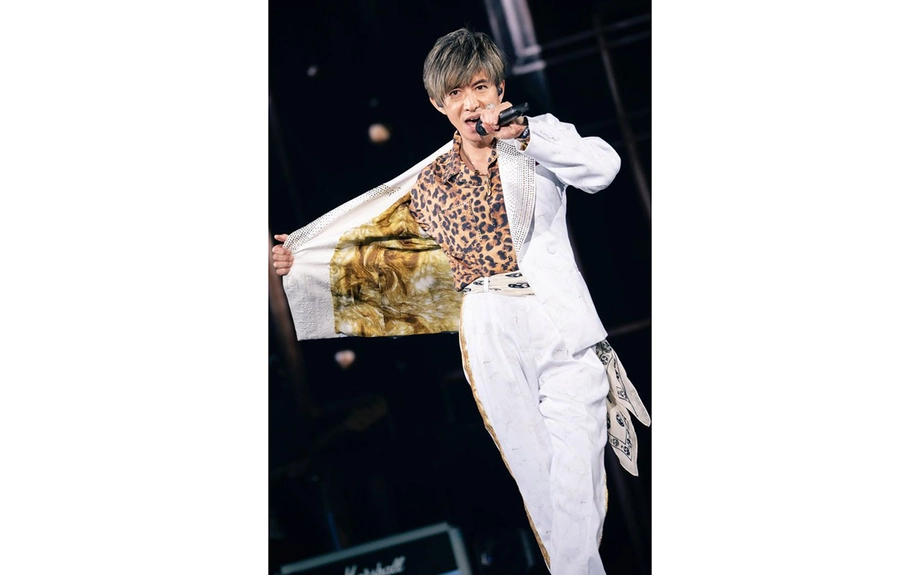
LaLa arena TOKYO-BAY Becomes a Sea of Voices
Takuya Kimura, the 54 year old singer and actor, ended his first solo tour in two years on 23 November 2026 with a scene that turned a concert finale into a group goodbye. At LaLa arena TOKYO-BAY in Funabashi, Chiba, about 11,000 fans called him back after the show had officially ended. They sang the SMAP song Yozora no Mukou so loudly that Kimura stopped, turned away, covered his face with a towel and cried.
Contents
- LaLa arena TOKYO-BAY Becomes a Sea of Voices
- How the Tour Reached Chiba
- Chiba's Three Nights Drew 33,000 People
- The Show Mixed Spectacle with Jokes
- Kimura's Crew Became Part of the Stage
- Taipei Brought a Formal Thank You
- Old Hits and New Songs Shared the Stage
- The Double Encore Turned into a Group Memory
- What the Tour Changed for Kimura's Solo Work
- The Full Setlist of 24 Songs
- Key Points
The final night closed TAKUYA KIMURA Live Tour 2026 Checkpoint, a tour across five cities with nine shows. It included Kimura's first solo concerts outside Japan, in Seoul and Taipei, and ended in the prefecture where he spent part of his childhood. The set held 24 songs, including new material from Checkpoint and songs from his SMAP years. The show lasted about two hours and 40 minutes.
Kimura's fans are known as Crew, and they call him Captain. The names fit the staging. A sail and an ocean appeared on the screen before the show, and the evening moved like a voyage with stops, a crew and a final checkpoint. For ordinary viewers, the emotional ending was simple to understand: a performer who has spent decades in the public eye heard the crowd sing his old group's song back to him, and he could not hold back tears.
How the Tour Reached Chiba
The Checkpoint tour followed a run of career changes. In May 2026, Kimura announced a move from Victor, where he had been for about 35 years, to C&C STAGE, a private label set up inside Avex Music Creative. A private label is a small label housed within a larger music company, often built around one artist. In August, he released Checkpoint, his first album with the new label.
The title works in two ways. A checkpoint is a point on a route where a traveller checks position. Kimura used it as a meeting point with fans and as a marker of his current place as a solo artist.
Takuya Kimura, the singer and actor heading the tour, described the title as a way to ask what bound him to the audience.
It also has the meaning of a meeting place where we can think about our value and our relationship, the time we have spent until now and whether we can keep going into the future. Today, thank you for coming to this meeting place.
The route stretched from September to late November. The dates below show how the voyage built toward Chiba.
- September 5 to November 23: the full itinerary ran across Kobe in Hyogo, Fukuoka, Chiba, Seoul and Taipei, with nine performances.
- November 13 and 14: two Taipei shows took place at Taipei Music Center. The first fell on Kimura's 54th birthday.
- November 21 to 23: three Chiba shows took place at LaLa arena TOKYO-BAY, starting at 18:00 on 21 November and 17:00 on the following two days.
- November 22: Sanma Akashiya, 71, appeared during Shinpu ni Fukaretsutsu (新風に吹かれつつ), a song for which he wrote the lyrics.
- November 23: the final show ran with 24 songs, a double encore and about 11,000 people in the arena.
Chiba's Three Nights Drew 33,000 People
Chiba was not a single stop. The three shows at LaLa arena TOKYO-BAY drew about 33,000 people in total, roughly 11,000 each day. That made the venue the largest repeated stop on a tour that otherwise touched each city briefly. Kimura's connection to Chiba was personal as well as logistical. He spent his boyhood in the prefecture, and the final date brought the tour close to home.
The final show began at 17:00. Before the lights went down, calm wave sounds filled the arena. A gauze screen showed a large sail and open sea. Voices from backstage called out during a team huddle, and the audience answered with applause. The theme from Kimura's TBS drama GOOD LUCK!! played before he appeared, which brought shouted calls of Takuya from the seats.
Thunder and bass notes like a heartbeat pushed the mood upward. Kimura emerged in a white suit with dancers and a live band. The first song, Head Shot, used sharp dance moves and a chorus of repeated bang sounds. The choreography was by kazuki of s**t kingz, a Japanese dance group known for precise, powerful movement. Eight dancers shared the stage, while the band included international musicians and TIGER, a chorus singer associated with Southern All Stars.
The Show Mixed Spectacle with Jokes
Kimura wasted little time raising the temperature. After Head Shot, he sang No Night, No Starlight and High on you in quick order. At the first break, he stepped out of the white jacket to reveal a leopard print shirt. He also told the room he had been outside in the cold and asked if everyone was all right.
Takuya Kimura, the singer and actor performing the final date, gave an honest report on his body after three nights in the same arena.
On the third day, to be honest, my physical condition is wrecked.
The crowd shouted encouragement. Kimura answered with the sort of line that made the show feel like a conversation with a familiar television personality.
Of course I will try. I am the kind of person who only has a brain for doing everything I can in front of everyone. Today too, I will do what this body allows.
Those remarks mattered because the performance was not a quiet concert. Kimura ran through dance numbers, used a microphone stand with the theatrical confidence of Queen's Freddie Mercury, changed into a leather jacket and black damaged trousers, and later returned with an animal print electric guitar. The production also drew on Michael Jackson's stage language, from tight movement to carefully timed poses. He joked about checking social media and split the room into groups for a call and response warm up. Every part was designed to make a large arena feel close.
Kimura's Crew Became Part of the Stage
The bond with fans was not just a theme in the lyrics. Kimura repeatedly addressed the audience as Crew, and he treated the words and reactions from the floor as part of the show. In Talk, he played with the names fans call him, including Kimutaku and Captain, and answered with the lyric that people could call him however they liked. He joked about his Instagram clothes and about being seen eating a bowl of beef in a commercial, then invited the room to shout back.
He also linked that closeness to his decision to keep working in public. Takuya Kimura, the tour's lead performer, said the audience helped him avoid becoming stuck.
Because I could say to everyone, Do not rot, I was able not to rot myself.
Some of the warmest moments felt personal. During Sekai ni Hitotsu Dake no Hana, known in English as The Only Flower in the World, Kimura rode a small cart through the arena so people at the back could see him close. The crowd joined the familiar hand motion. During UNIQUE, fans celebrating birthdays that day came onto the stage. Kimura sang to them one by one, leaned close, shook hands, hugged them and turned the song into a personal gift. Nine birthday fans were invited up at the Chiba final.
Birthday surprises were not new to the tour. In Taipei, the first concert on 13 November was Kimura's own 54th birthday, and he invited people celebrating birthdays onstage. He repeated the gesture on 14 November. Show Lo and Lin Chi-ling sent flower baskets to the venue, a sign of how far the tour's reach had travelled.
Taipei Brought a Formal Thank You
Kimura's first solo overseas concerts added a diplomatic note to the tour. At Taipei Music Center, he thanked Taiwan for help after earthquakes and other natural disasters in Japan. He did not simply say the words from the stage. He bowed 90 degrees, a deep bow used in Japan to show serious gratitude or apology.
Takuya Kimura, the singer and actor headlining the Taipei shows, spoke directly to the audience about disaster support.
Although the show has only just begun, I've always felt there was something else I had to thank you all for. Whenever Japan is struck by an earthquake or a natural disaster, you are always among the first to lend a helping hand. On behalf of Japan, I want to say: thank you so very much.
That moment explains what the overseas stops changed in practice. The tour was more than a Japanese pop show travelling abroad. Kimura used the stage to address regional ties in public, in front of fans who had come to see a Japanese star in a solo setting.
Old Hits and New Songs Shared the Stage
The music drew from several parts of Kimura's career. Checkpoint, released after his label move, supplied Malibu Drive, written and composed by Tamio Okuda, and Hikari no Naka de (光の中で), provided by Taka of ONE OK ROCK. Kimura introduced the latter as a song connected to gratitude and asked the audience to receive it at the end of the main show.
Songs from SMAP gave the arena its biggest recognition points. Original Smile, The Only Flower in the World and Yozora no Mukou brought fans back to a shared past. Kimura called some of these numbers nostalgic and emotional, then sang One Chance! from the centre of the stage. Blues and rock added other colours. Shinpu ni Fukaretsutsu had lyrics by Sanma Akashiya and music by Kouki Kimura of 憂歌団. It was staged like a musical, with performers falling to the floor at the end, a comic touch that made the crowd laugh. Kimura later joked that fans would see how television edited such moments on the New Year program Santaku. BLACK DENIM, provided by Rei, pushed the show toward hard rock.
The acoustic section slowed the pace. Kimura played guitar on Serori (セロリ), included on the first edition of Checkpoint, then put the guitar down for Orange (オレンジ), which had been added to the tour after a label event. Sunset Bench (サンセットベンチ) used piano. The sequence showed how the set had changed during the tour rather than staying frozen from the first night.
The Double Encore Turned into a Group Memory
An encore is an extra performance after a show appears to be over. A double encore means the artist comes back again after that first extra set. At the Chiba final, the usual encore brought Take it easy, Koko ni Iru (ここにいる) and One and Only. Kimura led a final jump, thanked staff and fans, and told the room to keep their chests lifted, a phrase about staying proud and strong. Then he left the stage.
The announcement that the show had ended began, but the crowd kept shouting for more. The chant grew loud enough to cover the announcement. Kimura returned with an acoustic guitar after a long pause, and the arena erupted again.
Takuya Kimura, the singer and actor closing the tour, thanked the crowd for refusing to let the night end and explained why he had chosen one more song.
Thank you for the huge encore that would not lose to the announcement. I am proud of my Crew with their huge voices.
He then spoke about trust before naming the song. Takuya Kimura, the performer who has led the tour as Captain, said his place on stage rested on other people's belief in him.
I have been through many things, but I truly believe in everyone, in the staff and family around me, and in myself. That is why I am standing here now, in front of everyone.
The song was Yozora no Mukou, the 1998 SMAP hit that had not been played earlier on this tour. Kimura began alone with acoustic guitar. The audience took over the chorus, and the sound grew until it filled the arena. He turned away and wiped his face with a towel. When he faced the crowd again, he bowed deeply, muttered yabai yabai, a flustered way of saying he was overwhelmed, and ended without a microphone by saying thank you very much. He left with a peace sign and a fist raised, still facing away.
The final choice gave the tour a circular shape. Checkpoint was about finding a present position. The last song went back 28 years to SMAP, then handed the words to the crowd. Kimura's tears came at the moment when the past and the audience sang together.
What the Tour Changed for Kimura's Solo Work
The final show closed a tour with a clear before and after. Before it, Kimura had moved labels after about 35 years, released a new album and planned a return to live performance after a gap of two years. By the end, he had completed nine shows in five cities and had taken a solo act to Seoul and Taipei for the first time. For audiences, that meant the set no longer belonged only to Japan. For Kimura, it tested whether the Crew idea could travel.
The answer in numbers was strong. Taipei had two concerts. Chiba had three concerts and 33,000 attendees. The final night alone drew about 11,000. Seoul's audience size was not given, so the scale of that stop cannot be compared directly with Chiba or Taipei.
Kimura's own comments pointed to one unresolved wish. He said the tour had too few domestic dates and hinted at a wish to play more places around Japan.
If next time that wind blows, I would like to make noise with all of you in many places around Japan.
No date for another tour was given. He also described endings as beginnings, saying that reaching a last moment can become the chance for a new start. The clearest next step was his promise to keep thinking and acting on things that would make fans happy. The final show also showed how the tour's language worked in practice. A captain needs a crew, and a checkpoint is not a finish line. It is a place to look at the route so far and choose the next direction.
The Full Setlist of 24 Songs
The Chiba final mixed album tracks, solo songs and SMAP songs. The order below follows the final night, including the three song encore and the final extra song.
- Head Shot
- No Night, No Starlight
- High on you
- Malibu Drive (マリブドライブ)
- Original Smile (オリジナル スマイル)
- One Chance!
- BLACK DENIM
- What a dramatic life!
- Long Saturday
- Shinpu ni Fukaretsutsu (新風に吹かれつつ)
- Talk
- Crazy in love
- Serori (セロリ)
- Orange (オレンジ)
- Sunset Bench (サンセットベンチ)
- Sekai ni Hitotsu Dake no Hana (世界に一つだけの花)
- Born ready
- UNIQUE
- SHAKE
- Hikari no Naka de (光の中で)
- Encore: Take it easy
- Encore: Koko ni Iru (ここにいる)
- Encore: One and Only
- Double encore: Yozora no Mukou (夜空ノムコウ)
Key Points
- Takuya Kimura, 54, closed TAKUYA KIMURA Live Tour 2026 Checkpoint on 23 November at LaLa arena TOKYO-BAY in Funabashi, Chiba.
- The tour ran across five cities with nine shows and included his first solo concerts outside Japan, in Seoul and Taipei.
- The Chiba run drew about 33,000 people, with about 11,000 at the final show.
- The finale of 24 songs included SMAP songs, new Checkpoint material and a birthday surprise for nine fans.
- A double encore of Yozora no Mukou brought a huge crowd chorus, and Kimura wiped away tears before ending without a microphone with a thank you.
- Kimura said he hoped a future tour could bring more shows to different places in Japan, but no date was given.