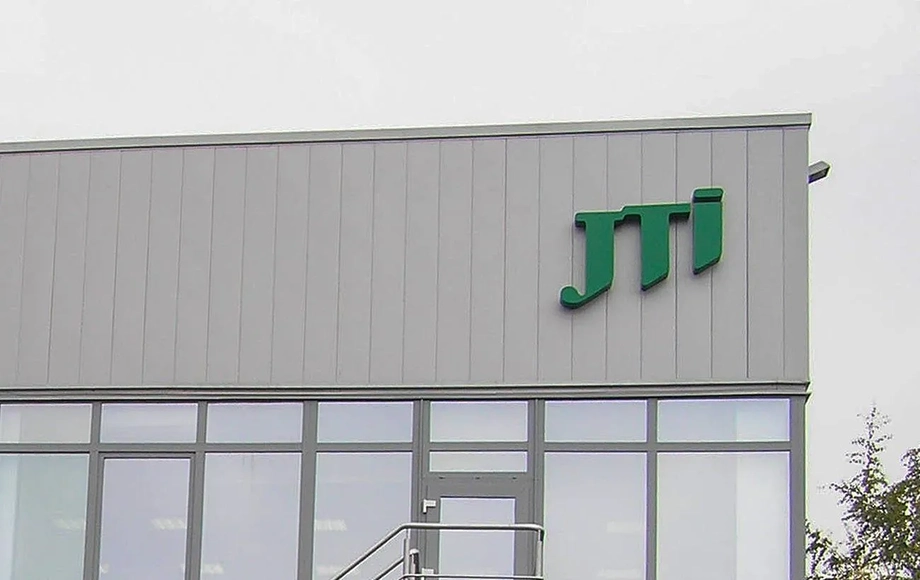
Seven businesses placed under Russian management
Russia has extended temporary management of Japan Tobacco's local assets from four manufacturing companies to three businesses responsible for sales, imports and corporate management, bringing much of its Russian operation under a manager appointed by Moscow.
Contents
- Seven businesses placed under Russian management
- What the second decree adds
- Which factories were covered first?
- Who is Industrial Assets?
- Japan demands a reversal
- Why Russia matters so much to JT
- Large revenues and a sharp market reaction
- How temporary management works
- Employees and partners take priority
- Key Points
A presidential decree dated November 6 added JTI Russia, Pereslavl-Tabak and JTI Innovative Products to the arrangement. It followed a November 5 decree covering four companies operating cigarette factories and tobacco processing facilities. Together, the measures shift effective control across the chain from processing tobacco to selling finished products.
The stakes matter well beyond the seven companies. Japan Tobacco International, or JTI, employs about 4,000 people in Russia and accounts for roughly 40% of the country's cigarette market. The Russian business generates about 10% of Japan Tobacco Group revenue and roughly 25% of its operating profit.
Japan has demanded that Moscow withdraw the measure, with officials visiting Russia delivering a protest directly. The dispute also has a public ownership dimension: the Japanese government holds around 37% of Japan Tobacco, above the minimum stake of one third that it is legally required to retain.
Russia describes the arrangement as temporary management. Under the mechanism, foreign companies retain ownership of their assets while losing the ability to direct their operation. For Japan Tobacco, the immediate change concerns who makes business decisions across one of its largest markets.
What the second decree adds
The November 6 decree covers 100% of the shares in Pereslavl-Tabak and all ownership interests in JTI Russia and JTI Innovative Products. All three belong to JTI Investments Sarl.
The businesses perform different functions within the group. They include a holding company with a stake in a factory already covered by the first order, a domestic sales and distribution operation, and a company importing and marketing products including devices that heat tobacco.
Heated tobacco devices warm tobacco rather than burn it like a conventional cigarette. Including the company handling those products extends the management arrangement beyond the manufacture and sale of traditional cigarettes.
The expansion gives the appointed manager access to the commercial side of the operation as well as its production assets. Factories make goods, but sales companies handle relationships with distributors and customers. Importing and holding companies can also control products, contracts and ownership stakes needed to run the wider business.
Which factories were covered first?
The November 5 decree placed interests in four manufacturing companies under the same Russian manager: Petro, JTI Donskoi Tabak, JTI Yelets and Kres Neva.
Petro operates a cigarette factory in St. Petersburg, while JTI Donskoi Tabak produces cigarettes in Rostov-on-Don. JTI Yelets processes tobacco in the Lipetsk region, and Kres Neva processes tobacco in the Leningrad region.
The sequence shows how quickly the intervention expanded:
- April 2023: Russia introduced a framework for temporary management of assets belonging to owners from countries Moscow calls unfriendly.
- November 5: Putin signed the decree covering JTI's four manufacturing companies.
- November 6: A second decree added three companies handling imports, management, sales and ownership interests.
- November 7: Japan publicly demanded withdrawal of the measure, while JTI said it was assessing its options.
The first order covered both the preparation of raw tobacco and cigarette production. The second reached the businesses connecting those factories to the market, widening the practical reach of Russian management.
Who is Industrial Assets?
The decrees name the manager as the joint stock company Promyshlennye Aktivy, translated as Industrial Assets. The same company was designated for both groups of JTI businesses.
Identifying the precise legal entity has been difficult because the decrees provide its name without registration details. Corporate database searches identified at least five Russian joint stock companies with that name. Russia's Federal Agency for State Property Management said information identifying the particular manager was subject to restricted access.
Anton Pivovarov has since spoken as Industrial Assets' general director. Corporate registry information cited in connection with his company identifies Sergei Dremov as its founder and lists asset management as its business activity.
Pivovarov said the manager would seek to maintain production, preserve existing teams and fulfil obligations to employees and business partners without disruption. He also described maintaining the factories' productive capacity as part of Russia's economic security priorities.
At the time of the registry checks, the new management arrangements had not yet appeared in the public records for JTI's businesses. Those records still listed JTI Russia's existing leader, Evgeny Nikolsky, and the individual factory directors as authorised to act for their companies.
Japan demands a reversal
Chief Cabinet Secretary Minoru Kihara said Japan had lodged a protest and requested immediate withdrawal of the presidential decree to protect the legitimate interests of Japanese people and the company.
Officials from Japan's Ministry of Economy, Trade and Industry and the Foreign Ministry who were visiting Russia delivered the demand to Moscow. Their presence allowed Japan to make its objection directly while the dispute was unfolding.
Japanese officials also said Kimitake Nakamura, director general of the Foreign Ministry's European Affairs Bureau, made a similar request to Russian Ambassador Nikolay Nozdrev in Tokyo. Nozdrev denied that the ministry had expressed such a complaint to him.
A Russian Foreign Ministry official described the intervention as a response to what Moscow called overtly hostile actions. The decrees themselves gave no specific reason for selecting JTI's businesses.
Japan's ownership stake gives the dispute a direct connection to government finances as well as commercial relations. The state is Japan Tobacco's largest shareholder, so a loss of control over a business contributing a quarter of group operating profit also affects a company in which Japanese taxpayers hold a substantial interest.
Why Russia matters so much to JT
JTI entered Russia in 1999, when Japan Tobacco acquired the international business of R.J. Reynolds. It became the country's tobacco market leader in 2007 and strengthened its position by purchasing Donskoi Tabak in 2018.
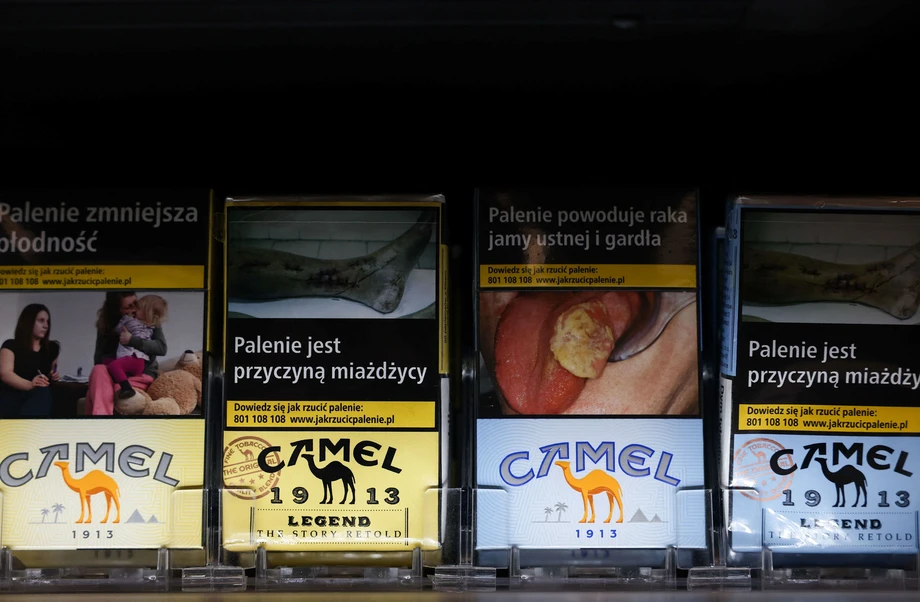
The group has invested $4.6 billion in Russia over more than 20 years. Its brands sold there include Winston, Camel, LD and Sobranie, alongside domestic labels such as Russky Stil and Donskoi Tabak.
Market figures attributed to research company N Data Factory put JTI's share by volume at 41.84%, compared with 25.64% for Philip Morris Izhora, 15.65% for BFT and 10.49% for International Tobacco. On those figures, JTI leads its nearest competitor by 16.20 percentage points.
The financial exposure is larger than the revenue share alone suggests. Russia contributes about one tenth of group revenue but about one quarter of operating profit. Its share of operating profit is therefore roughly 2.5 times its share of revenue, making control of the operation especially important to the group's earnings.
Operating profit is the money a business makes from its ordinary activities before items such as interest and tax. Losing authority over an operation producing that much profit can affect decisions about spending, production and how earnings are used.
Large revenues and a sharp market reaction
JTI Russia reported revenue of 480 billion rubles and net profit of 47 billion rubles for 2023, the latest year of local company accounts described publicly. Those figures imply a net profit margin of about 9.8%, or nearly 10 rubles of profit for every 100 rubles in revenue.
Petro, the St. Petersburg cigarette factory, reported revenue of 73.2 billion rubles for the same year. JTI Donskoi Tabak reported 10.3 billion rubles, Kres Neva 8.5 billion rubles and JTI Yelets 1.3 billion rubles.
The figures describe different companies within the same production and sales network. A factory can sell products to another group company before that company sells them onward, so the individual revenues overlap within the wider business.
Japan Tobacco shares fell by a reported record 19% following Moscow's decision. The fall reflected the scale of the Russian operation and investors' concern about losing control over assets that contribute heavily to group profit.
After Russia's full invasion of Ukraine in 2022, JTI remained in the country while suspending new investment in production and marketing. The management orders now place decisions about much of that continuing business in Russian hands.
How temporary management works
Russia created its temporary management framework in April 2023 in response to restrictions on Russian assets imposed after the invasion of Ukraine. Moscow applies the mechanism to property linked to countries it designates as unfriendly, including states that imposed sanctions.
The arrangement separates ownership from control. A foreign company can remain the legal owner while a Russian administrator gains the authority to run its local assets. For employees and suppliers, the factories may continue operating even as the power to direct them changes.
Other foreign businesses placed under Russian management have included operations associated with Nestle, Auchan, Leroy Merlin and Metro. Earlier interventions also affected a French dairy producer and a Danish brewer. Some businesses subjected to the mechanism have subsequently been sold to Russian buyers at steep discounts.
Putin has presented the policy as a response to Western action against Russian companies and assets abroad. In comments in October, he also left open the possibility of returning businesses to foreign owners if relations improved.
JTI's case extends the mechanism to a major international tobacco group. The two decrees cover both industrial assets and the companies needed to manage imports and domestic sales, giving the intervention a wider business reach than a factory order alone.
Employees and partners take priority
JTI said it was examining the decision and considering its response. In a statement issued after the first decree, the company described its immediate approach:
assessing the situation and our options, prioritising our stakeholders, most notably our employees
Pivovarov's stated priorities also centre on continuity: keeping production running, retaining existing teams and meeting commitments to workers and partners. For approximately 4,000 employees, those commitments concern wages, jobs and the daily operation of plants and offices.
Suppliers and distributors depend on the same continuity. Tobacco processing facilities provide material for cigarette plants, while sales and import companies connect the finished products to the market. The second decree brings more of those relationships under the appointed manager.
No timetable has been announced for returning control to JTI, and the company has not announced a final response or quantified the financial effect of the decrees. Japan is seeking withdrawal while the Russian manager says its immediate task is to keep the businesses operating.
Key Points
- Decrees dated November 5 and 6 placed seven JTI companies under Russian temporary management.
- The intervention covers tobacco processing, cigarette production, imports, sales and corporate management.
- Industrial Assets is the appointed manager, with Anton Pivovarov speaking as its general director.
- JTI employs about 4,000 people in Russia and holds roughly 40% of the cigarette market.
- Russia contributes about 10% of Japan Tobacco Group revenue and roughly 25% of operating profit.
- Japan has demanded withdrawal of the measure. JTI is assessing its options and prioritising employees.
- No timetable has been announced for restoring JTI's management control.