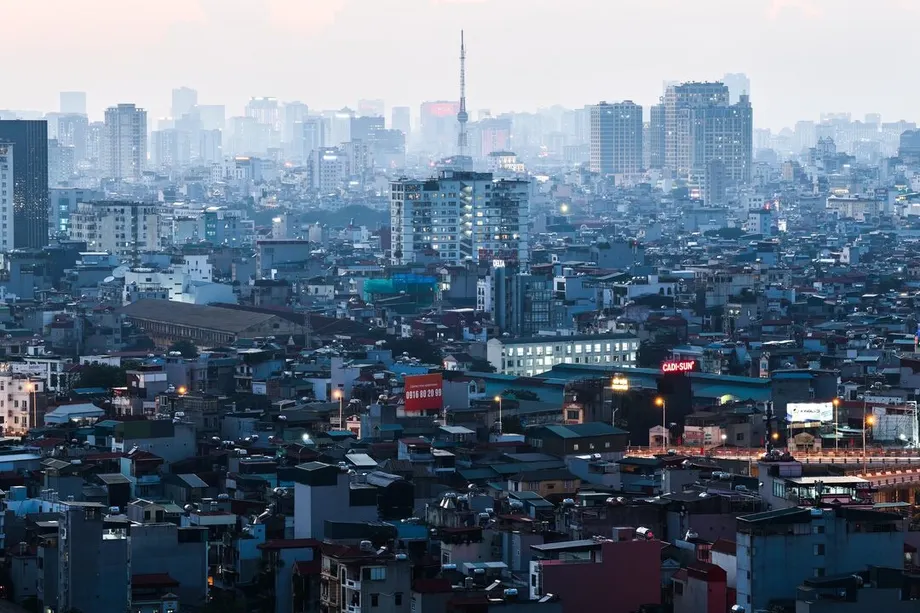
A Tower of at Least 60 Floors Beside West Lake
Vietnamese partners of the Trump Organization are proposing a skyscraper of at least 60 floors on the western edge of Hanoi's West Lake, at an estimated development cost of about $1 billion, or more than 26 trillion dong. Three people with knowledge of the proposal said it would become the third property venture bearing the Trump name in Vietnam, joining a golf complex already under construction in Hung Yen province and a separate tower planned for Ho Chi Minh City.
Contents
- A Tower of at Least 60 Floors Beside West Lake
- From Submission to a Possible Construction Start
- Why the Trump Organization Would Not Fund the Projects
- The Hung Yen Golf Complex Is Already Under Way
- Tariffs of 35 Percent, 20 Percent or 12.5 Percent
- Aircraft Purchases Enter the Same Trade Conversation
- Who Controls the President's Business Interests
- Land and Permitting Concerns in Hung Yen
- What Happens Next
- Key Points
Government officials met the partners, including Kinh Bac City Development Holding, on November 26, 2026, to discuss the Hanoi plan. The proposed site is in an affluent part of the capital where many foreign executives and diplomats live. If the remaining approvals are secured, construction could begin toward the end of 2027 or during 2028, according to one person familiar with the submission.
From Submission to a Possible Construction Start
The proposal was first submitted to the government in May 2026 and had not been approved when the November meeting took place. The people describing it declined to be identified because the plans were not public. The Trump Organization, Kinh Bac and Vietnam's government did not immediately respond to requests for comment, and authorities have not announced a date for deciding whether the tower can proceed.
- 2024: Kinh Bac and the Trump Organization established their business relationship.
- May 21, 2025: The Trump International Hung Yen golf and resort project broke ground, with Eric Trump attending.
- May 2025: Plans for a separate Trump Tower in Ho Chi Minh City became public, with Thu Thiem mentioned as a potential location.
- May 2026: The Hanoi tower proposal was submitted to the government for the first time.
- November 26, 2026: Officials met Kinh Bac and other partners to discuss the Hanoi project.
- Late 2027 or 2028: Construction could begin if the necessary approvals are obtained.
Why the Trump Organization Would Not Fund the Projects
Local partners are developing all three Vietnamese ventures at no cost to the Trump Organization, according to a person with direct knowledge of the plans. President Donald Trump's family company would instead receive money for the use of its brand, charge operating fees and earn income connected with villa sales at the golf complex. The roughly $1 billion attached to the Hanoi proposal is therefore its estimated development cost, not a capital commitment from the Trump Organization.
Brand licensing allows a developer to use a company's name under agreed conditions. It differs from a conventional property investment, in which the brand owner might buy land, provide construction money or hold a direct stake in the building. In this arrangement, the Vietnamese partners carry the development costs while the American company can collect income tied to its name and services.
The approach extends a portfolio that already includes properties carrying the Trump name in Britain, Ireland, India and Indonesia. In Vietnam, however, the three ventures are at very different stages: Hung Yen has broken ground, Hanoi is awaiting approval, and the Ho Chi Minh City tower has no publicly stated cost or construction timetable.
The Hung Yen Golf Complex Is Already Under Way
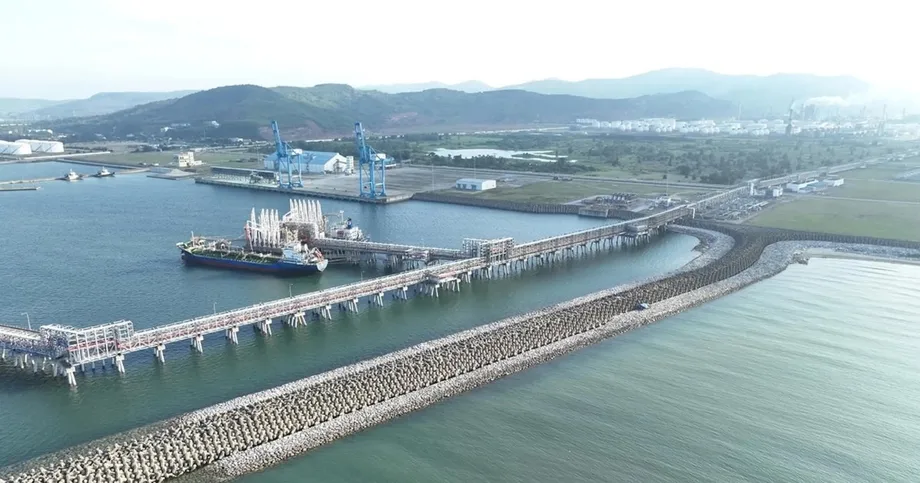
The largest of the three ventures by stated value is the Khoai Chau Urban, Ecotourism and Golf Complex, also known as Trump International Hung Yen. Covering nearly 1,000 hectares, it has a stated investment of more than $1.5 billion, or nearly 39.8 trillion dong. Plans include 54 golf holes, resorts, luxury villas, an urban area and other amenities.
The golf project is a collaboration between the Trump Organization and Hung Yen Company, a member of Kinh Bac. Its groundbreaking on May 21, 2025, gave the partnership a physical project well before the Hanoi tower became public. Dang Thanh Tam, chairman of Kinh Bac's board, said at the ceremony that the partners wanted to develop Hung Yen into an Asian destination for golf and lifestyle tourism. He also said their experience in golf development made them enthusiastic about realising that ambition.
Trump's 2025 financial disclosure provided an unusually specific picture of the income arrangements. It listed $5 million in licensing fee income associated with the Hung Yen project and a $4 million receivable. A receivable is money that is owed but had not necessarily been collected when the disclosure was prepared.
The licensing agreement is with Hung Yen Hospitality Services, a Kinh Bac subsidiary. The disclosure listed DT Marks Vietnam LLC as 79 percent owned by a trademark management company connected to Trump and 20 percent owned by Trump family members. Those details show how the family business can receive revenue without supplying the money needed to build the fairways, hotels or villas.
Tariffs of 35 Percent, 20 Percent or 12.5 Percent
The November 26 property meeting followed Washington's announcement of possible additional tariffs of up to 35 percent on Vietnamese goods. People familiar with the discussions said the rate could fall to 20 percent if the two governments reach a qualifying trade agreement. Even that reduced rate would exceed the existing general duty of 12.5 percent.
The arithmetic illustrates the choice facing Vietnam. A 20 percent rate would be 7.5 percentage points above the current duty but 15 points below the threatened maximum. Tariffs are taxes collected on imports, so higher rates can raise costs for American buyers and make goods produced in Vietnamese factories less attractive.
Vietnam enters the negotiations with one of the largest bilateral trade surpluses with the United States, meaning it exports substantially more to the American market than it imports from it. Its economy depends heavily on exports, giving Hanoi a strong incentive to prevent the highest tariff from taking effect.
Prime Minister Le Minh Hung said on November 27 that negotiations had essentially concluded and that he expected the final tariff to be well below 35 percent. He said Vietnam had made strong commitments to the United States. Vietnam's trade ministry also said the two sides were working to complete an agreement as soon as possible and that Hanoi would cooperate with an American investigation into excessive industrial capacity. No final agreement text, signing date or detailed tariff schedule has been announced.
Aircraft Purchases Enter the Same Trade Conversation
Vietnamese officials held another meeting on November 26 with domestic airlines to discuss possible purchases of additional Boeing aircraft beyond orders already announced. A person familiar with that meeting said tariffs and the trade negotiations formed part of the conversation.
Large aircraft orders represent substantial purchases from an American manufacturer and can therefore feature in discussions about bilateral trade. The person did not identify which aircraft might be ordered, how many were under discussion or what they would cost. No new Boeing purchase was announced after the meeting.
Who Controls the President's Business Interests
Eric Trump and Donald Trump Jr., both executive vice presidents, run the Trump Organization. The White House says the president ended his involvement in his businesses after placing them in a trust managed by his children.
At a press conference in May, then White House press secretary Karoline Leavitt said Trump had placed his businesses in a blind trust when he took office in 2017 and that they remained under the control of family members, including his adult sons. The White House has also said that the current arrangement is not a blind trust.
The distinction concerns who controls the assets. A blind trust normally places investment decisions with an independent manager, while the arrangement described by the White House leaves management within Trump's family. The White House rejects suggestions that the family's overseas business interests conflict with American trade policy and says there is no evidence connecting the Hanoi tower discussions to the tariff negotiations.
Land and Permitting Concerns in Hung Yen
For people living near the golf development, the partnership raises more immediate concerns than branding or licensing. Le Van Truong, a local farmer, spoke last year about his fear that the project could take farmland and a family cemetery. He also questioned the separation between the presidency and the family company.
Trump says it's separate, the presidency and his business.
Truong went on to say that the president retained broad power. His comments placed the experiences of farming families alongside the project's promise of international golf tourism and luxury property sales.
The groundbreaking also attracted scrutiny over its approval process. Vietnamese authorities were reported at the time to have allowed work to begin before several legally required steps, including environmental reviews, had been completed. The public comment period was also shortened. Those accounts concerned Hung Yen; the Hanoi tower remains at an earlier stage and has not received approval.
What Happens Next
Vietnamese authorities must first decide whether to approve the West Lake proposal. Only then could its backers work toward the possible construction window in late 2027 or 2028. An exact building design, detailed construction programme and approval deadline have not been made public.
Trade negotiators face a separate set of decisions. Le Minh Hung's remarks indicate that the broad negotiations are close to completion, but businesses still lack a published final rate and implementation schedule. Until those details arrive, exporters face a gap between the existing 12.5 percent duty, a possible negotiated rate of 20 percent and the threatened ceiling of 35 percent.
For now, Hung Yen is the only one of the three property ventures under construction. Hanoi remains a proposal beside West Lake, while Ho Chi Minh City's planned tower awaits further details.
Key Points
- Vietnamese partners have proposed a Hanoi tower of at least 60 floors near West Lake, costing about $1 billion.
- The plan was submitted in May 2026, remains unapproved and could start construction in late 2027 or 2028 if cleared.
- Kinh Bac City Development Holding is among the partners that met government officials on November 26, 2026.
- The Trump Organization would provide no development capital, earning instead from branding, operating fees and villa sales.
- The Hung Yen complex covers nearly 1,000 hectares, includes 54 golf holes and has a stated investment above $1.5 billion.
- A trade agreement could set the US tariff at 20 percent, compared with the current 12.5 percent duty and a threatened maximum of 35 percent.
- Officials also discussed possible additional Boeing purchases with Vietnamese airlines, but no new order was announced.