Why did doughnuts replace hot lunches?
School support workers across South Korea stopped work on Friday, 27 November 2026, forcing thousands of schools to replace normal lunches with bread, milk or food brought from home. The Ministry of Education counted 23,562 participants at 11 a.m., equivalent to 13 percent of the 180,722 support workers employed by 16 regional education offices and national schools. Of the 12,597 schools scheduled to serve lunch, 4,014, or 31.9 percent, could not provide their usual meals.
Contents
- Why did doughnuts replace hot lunches?
- How far did the disruption spread?
- What happened to childcare and special education?
- Who walked out, and what were the pay demands?
- How did negotiations reach a national strike?
- What did workers say at the Yeouido rally?
- Why is a national funding formula part of a pay dispute?
- Why did the union invoke promises from 2025?
- How did authorities respond, and what happens now?
- What to Know
An elementary school in Gyeonggi Province showed how quickly the walkout changed an ordinary school day. Eight of roughly a dozen cooks who normally prepared food for about 1,000 pupils and staff joined the strike. Instead of dakbokkeumtang, a braised chicken dish, teachers carried boxes of doughnuts and cheesecake from the cafeteria and distributed them in classrooms with fruit juice.
A teacher surnamed Kim, aged in their 30s, said older pupils were largely untroubled and some welcomed the bread. Younger children needed closer attention, while parents telephoned with questions. Kim explained why the school had taken particular care over the substitute food.
We prepared especially carefully because there was a food poisoning case last year.
Some families decided not to rely on the replacement meals. An office worker surnamed Kim, whose eight year old child attends another elementary school in Gyeonggi, said she had heard that most substitutes would be bread or sandwiches and worried that they would be inadequate.
I got up an hour earlier than usual to prepare seaweed soup and side dishes, and now I feel a little more at ease.
How far did the disruption spread?
The Education Ministry said 8,583 schools served lunch normally. Among the 4,014 that did not, 3,698 supplied substitutes such as bread and milk, 30 asked pupils to bring packed lunches and 123 bought or otherwise arranged alternative food. The remaining 163 did not serve lunch because examinations or other changes to school activities had altered their schedules.
Gangwon Province recorded the highest regional disruption rate, with 454 of its 669 schools in the meal programme unable to serve normal lunches, or 67.9 percent. Sejong reported 97 affected schools, representing 63.8 percent, while North Jeolla reported 392, or 50.1 percent. Gyeonggi had the largest number of striking workers in the ministry's regional count, at 5,562? No, the correct figure is 5,582. Other counts included 1,996 in Gangwon, 1,897 in North Jeolla, 1,640 in South Gyeongsang, 1,359 in North Chungcheong, 1,321 in Seoul and 1,313 in Incheon.
Alternative food was stocked at 145 of the 580 schools serving meals in Incheon and at 262 of the 1,046 such schools in South Gyeongsang. In the combined South Jeolla and Gwangju education area, the local office reported that 2,064 of 10,969 support workers joined the action, a participation rate of 18.8 percent. It said 414 of 1,019 schools replaced lunch with bread, drinks and other simple food, comprising 256 schools in South Jeolla and 158 in Gwangju. Some other schools finished after morning classes.
What happened to childcare and special education?
Most elementary childcare remained open, but the effects were substantial at individual schools. The ministry said 201 of 6,044 schools providing the service, or 3.3 percent, could not operate it on the strike day. Another 655 schools had employees taking part but maintained care by using replacement staff or alternative arrangements. Measured by classrooms rather than schools, 753 of 13,101 childcare classrooms stopped operating.
North Jeolla had 58 elementary schools unable to provide care, followed by South Jeolla and Gwangju with 46, Gyeonggi with 33, Gangwon with 21, South Chungcheong with 18 and Sejong with 10. Among kindergartens, 27 of 3,987, or 0.7 percent, could not run their programmes after classes. Two of 154 special schools adjusted their academic calendars, including by designating a discretionary closure day.
Regional outcomes varied according to staffing. The South Jeolla and Gwangju office said elementary care operated without disruption, as did all 485 kindergarten programmes after classes and all 15 special education schools in its area. North Jeolla prepared to combine several childcare classrooms where necessary and keep them open after normal lessons until pupils went home. Schools were instructed to tell parents about meal changes through newsletters, while existing employees were assigned to cover gaps where possible.
The North Jeolla office opened situation rooms at its headquarters, education support offices and schools from 26 to 27 November. It also planned inspections after the strike to check that employees had returned and meals, childcare and other educational activities were operating normally.
Who walked out, and what were the pay demands?
The action was called by the National School Non-Regular Workers' Solidarity, a coalition comprising the National Education Public Service Workers' Headquarters, the National Women's Trade Union and the National School Non-Regular Workers' Union. Its members work in cafeterias, childcare, special education, cleaning, administration, security, counselling, libraries, school facilities and kindergartens. Many are permanent employees in practical terms but have employment conditions and pay systems separate from teachers and civil servants.
The National Women's Trade Union's advance strike notice put coalition membership at about 94,000 and forecast that roughly 40,000 people would take part. That was an organising estimate rather than a count of everyone absent from work. The ministry subsequently measured participation at 23,562 at 11 a.m., while the union estimated that about 20,000 people attended the Seoul rally.
Pay was the central negotiating dispute. The coalition initially sought a monthly basic salary increase of 105,000 won, or 4.9 percent. Education authorities first offered 49,300 won, or 2.3 percent, before raising their proposal on 19 November to 64,300 won, or 3 percent. The union rejected that figure because it remained below the 3.9 percent civil servant pay increase cited for the following year.
Both sides altered parts of their positions before the walkout. On 17 November, the union reduced its annual bonus request from 2.5 million won to 2 million won. Management subsequently added a proposal concerning seniority payments. The union also wanted the monthly seniority allowance to rise by 50,000 won for each additional year of service, removal of payment caps, equal holiday leave payments, a new duty allowance and better protection for employees who receive no pay during school vacations. It said management's seniority proposal amounted to an increase of only 500 won for each year.
How did negotiations reach a national strike?
The stoppage followed months of collective wage bargaining involving the ministry and 16 metropolitan and provincial education offices. Unlike the regional actions used in 2025, the coalition organised this strike simultaneously across the country. Its referendum authorised industrial action but did not require every member to stop working.
- September 2026: The parties continued collective wage negotiations but failed to agree on basic pay and measures to reduce differences in employment conditions.
- 19 to 26 October: The coalition held its strike referendum and announced 92.5 percent approval.
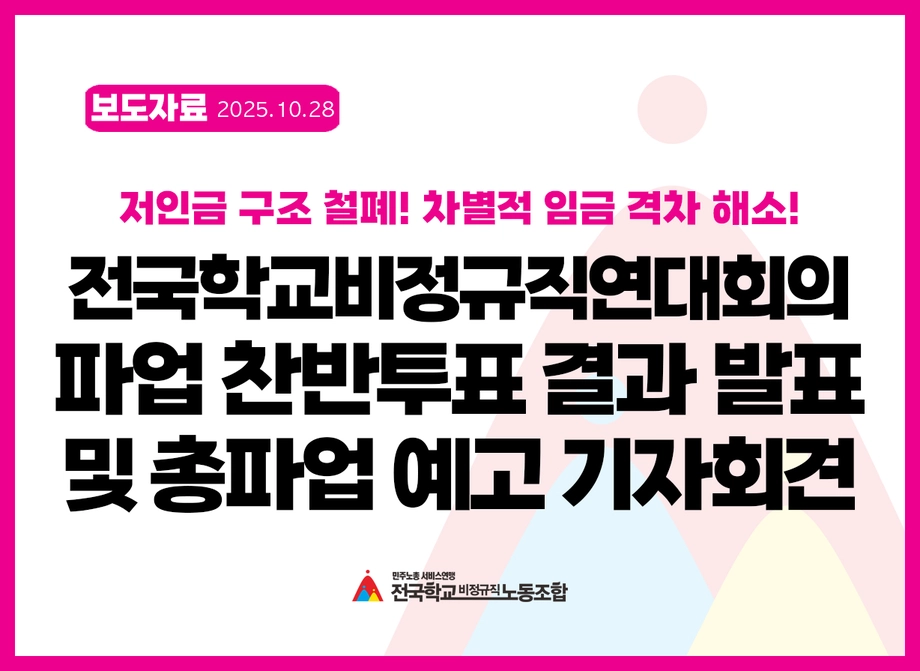
- 28 October: Union leaders held a press conference at 11 a.m. outside the main entrance of the Government Complex Seoul and declared their intention to strike.
- 9 November: The coalition publicly confirmed its plan for a general strike.
- 17 November: The union lowered its annual bonus demand to 2 million won.
- 19 November: Education authorities raised their basic salary offer to 64,300 won and presented another proposal on seniority payments.
- 26 to 27 November: Education authorities operated response centres before and during the strike.
The coalition's October 28 declaration named the officials who presented its case. Lee Dong-gyu, organising director of the National Education Public Service Workers' Headquarters, moderated. Min Tae-ho, chairman of the National School Non-Regular Workers' Union, addressed the referendum and grant reform. Choi Soon-im, chairwoman of the National Women's Trade Union, discussed wages, and headquarters chief Jung In-yong read the statement.
The declaration accused education offices of repeatedly answering that proposals were unacceptable. It also called on elected education superintendents to enter the dispute directly rather than leave it to negotiating officials.
What did workers say at the Yeouido rally?
About 20,000 people, by the union's estimate, gathered along Yeouidae-ro and around the Yeouido transfer centre from 1:30 p.m. Many wore bright pink caps and vests and carried placards reading Defend Education Finances and Win Collective Wage Bargaining. After the main rally, participants marched about 2.5 kilometres through streets around Mapo Bridge and Yeouido Park towards the National Assembly.
Kim Seon-mi, head of the union's national cleaning division and an environmental worker at an elementary school in Busan, described the physical burden of her job.
I work alone for six hours a day, covering 15 toilets and four floors. By the time I leave work, my wrists and knees barely obey me.
Kim Hyeon-chan, aged 24 and a cook at an elementary school on Jeju, said four years in the job brought monthly pay of only 2.2 million won. He told the rally that living alone might be manageable, but marriage, raising a family and planning for the future felt beyond reach. Yoon Hong-jun, who had worked as an elementary school sports instructor for 15 years, said he still renewed a contract lasting one year at a time because his instructor title excluded him from conversion to employment without a fixed end date.
Seo Haeng-seon, a childcare branch leader in South Gyeongsang, described another employee whose written contract covered less than three hours a day but who actually worked eight hours and received less than 600,000 won a month. Seo said the worker also faced verbal abuse and persistent complaints from parents without adequate protection from the school.
Min Tae-ho linked the pay campaign to cafeteria staffing and warned that another strike could follow.
We will prepare for a second general strike to defend education finances, close the low wage gap and increase cafeteria staffing.
Why is a national funding formula part of a pay dispute?
The dispute extends beyond individual salaries because regional education offices depend on local education grants financed from national tax revenue. Under the existing arrangement, 20.79 percent of domestic tax revenue is allocated to the grants. The government wants to replace that automatic share with a formula reflecting economic growth and changes in the population of children at school age, while placing money saved through the revision in a fund for future needs.
The coalition argues that reducing the fiscal room available to provincial education offices would make improvements in pay, staffing and welfare harder to secure. Its October declaration said the tax link had been maintained for about 50 years and called for the proposed revision to be withdrawn. It also demanded an expanded education welfare budget.
A 53 year old cafeteria worker surnamed Kim from Incheon, who attended the Seoul rally, said workers had heard that even replacing cooking uniforms could become difficult if education budgets shrank. Kim criticised the proposed seniority increase in particularly direct terms.
Raising the seniority allowance by 500 won is closer to a cut.
Jung, a computer systems employee from Daegu, said budget reductions would hit people in the most vulnerable positions first. Jung argued that education funding should not shrink while schools and teachers were taking on expanding responsibilities.
Cafeteria staffing carries a separate safety argument. The union says the revised School Meals Act, due to take effect in July 2027, requires additional personnel. It estimates that placing one extra employee in every school cafeteria would cost about 420 billion won a year and says the government budget proposal did not include that money. Progressive Party lawmaker Jung Hye-kyung, a former member of the school workers' union, told the rally that parliament had not yet passed the budget and urged legislators to secure the funding.
Why did the union invoke promises from 2025?
The current referendum's 92.5 percent approval rate was slightly higher than the 91.8 percent announced by the coalition on 28 October 2025. At that earlier press conference outside the presidential office in Yongsan, Choi Soon-im reviewed the negotiations, Min Tae-ho set out the campaign and Jung In-yong read the coalition's statement. The coalition then warned of gatherings in Seoul on 20 and 21 November and 4 and 5 December, with a third round possible if no agreement was reached by the end of the year.
Its 2025 strike statement said Lee Jae Myung, while a presidential candidate, had signed his first policy agreement with the coalition on 1 May that year. The agreement covered expanded education welfare, a comprehensive school meals plan, measures against unpaid work during vacations and reform of the wage structure. The statement also cited governing commitments to fair wages, narrower gaps between regular and other employees, and bargaining conducted at an early stage across an industry.
The same document said 178 cafeteria workers had received occupational disease rulings connected to lung cancer and cited a fifteenth death. It presented cafeteria conditions, unpaid vacations and welfare benefits as questions of basic security rather than special privileges.
The strike is not a path we chose because we wanted it. We will keep the door to dialogue open at all times, even during the strike.
The coalition's October 2026 declaration said those commitments had yet to produce an acceptable negotiating offer. It also referred to policy agreements with candidates for education superintendent, arguing that responsibility now rested with both the national government and elected regional education leaders.
How did authorities respond, and what happens now?
The Education Ministry and regional offices opened response centres on 26 November. Schools without enough cooks could simplify menus, supply bread and milk, buy alternative meals or ask families to prepare lunchboxes. Elementary childcare was intended to remain open wherever possible through replacement programmes and existing staff. Special schools could shorten lessons when employees supporting disabled pupils' movement, meals and classroom activities joined the strike.
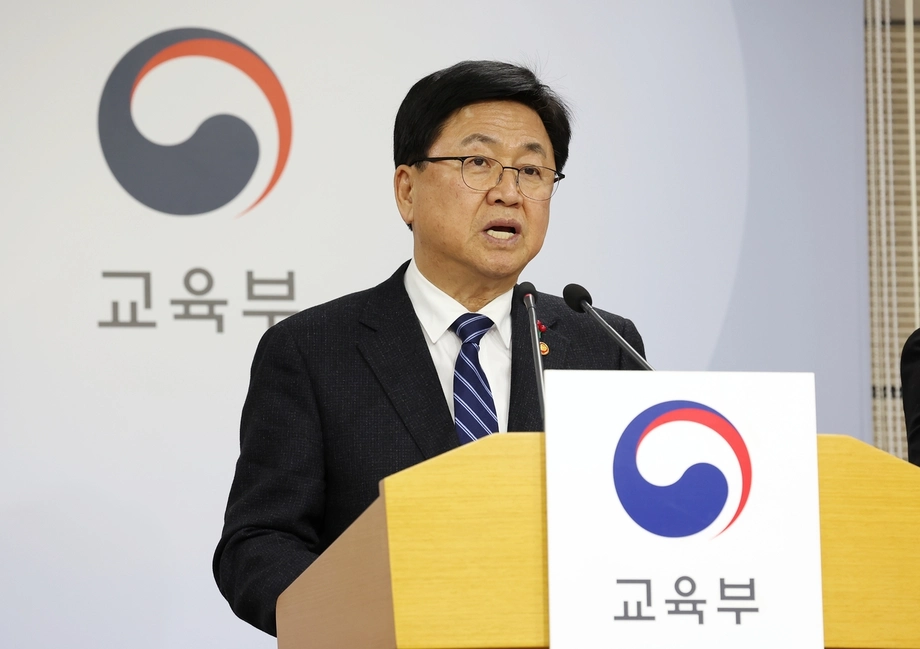
Acting Education Minister Choi Eun-ok said the government would monitor schools and seek a negotiated settlement.
We will strive to find a reasonable agreement promptly through consultations between labour and management to protect students' educational activities and health and prevent any inconvenience for parents. The Ministry of Education and provincial and district offices of education will closely monitor and support the field for stable school operations.
The ministry later said it would continue working with the 16 regional offices to settle the 2026 collective wage negotiations. An education official said schools that could not provide childcare had informed guardians beforehand, while others used substitute programmes or instructors hired for short periods.
The recurring disruption has also prompted a legal debate. Jang Seung-hyuk, spokesperson for the Korean Federation of Teachers' Associations, supports designating school meals and childcare as essential public services under the Trade Union and Labour Relations Adjustment Act. Such a designation would permit replacement personnel within a limit of 50 percent of the striking workforce.
It is students and parents who suffer as school meal suspensions and gaps in care after classes recur year after year due to repeated strikes. While the right to strike is important, measures must be put in place to protect students' safety and health.
No date for another bargaining session or a second strike had been announced by the end of the walkout. The union left open the possibility of further action, while the next fixed legislative date in the dispute is July 2027, when the revised School Meals Act is scheduled to take effect.
What to Know
- The Education Ministry counted 23,562 striking school support workers at 11 a.m. on 27 November, or 13 percent of 180,722 employees.
- Normal meals were disrupted at 4,014 of 12,597 schools, with 3,698 providing substitutes such as bread and milk.
- Elementary childcare stopped at 201 schools, while 27 kindergartens could not operate programmes after classes.
- The union sought a 105,000 won monthly basic pay increase; management's final offer before the strike was 64,300 won.
- About 20,000 workers joined the Seoul rally, according to the union, before marching towards the National Assembly.
- Other demands included higher seniority payments, equal holiday benefits, vacation income protection and 420 billion won a year for additional cafeteria staff.
- No new negotiating date or date for another strike was announced.