A near perfect score leads to a police investigation
A candidate who answered 159 of 160 questions correctly in South Korea's certified tax accountant examination has admitted using a miniature camera, a smartphone and generative artificial intelligence to cheat. His confession on Sunday, November 15, prompted a police investigation and plans to suspend his passing certificate, four days before about 550,000 students were expected to take the national university entrance examination.
Contents
- A near perfect score leads to a police investigation
- The marks that attracted scrutiny
- What Han said about the equipment
- Suspension, a possible ban and criminal proceedings
- How the case developed
- Why two supervisors did not settle the security issue
- What will change at the university entrance exam
- Teachers face competing demands
- The cost to candidates who studied honestly
- Key Points
The candidate, who identified himself by the surname Han, ranked first in both stages of the 63rd certified tax accountant qualification examination, held in April and July. He also admitted using the same method in a certified public accountant examination, extending the inquiry beyond a single qualification.
The Seoul Metropolitan Police Agency said it received his written confession through his lawyer and assigned the case to investigators. The presidential office subsequently announced an investigation into suspected AI cheating across national qualification examinations.
Han appeared wearing a face mask on attorney Lee Don-ho's YouTube channel. He acknowledged that his results had been obtained unfairly:
I cheated using electronic devices and generative AI. My passing the exam with the top score was not the result of fair effort.
The admission shifted attention from an extraordinary examination result to a practical security problem: two supervisors were present during his tests, yet the conduct he described went undetected. Authorities now face pressure to investigate past examinations while strengthening checks for the College Scholastic Ability Test, widely known as Suneung, scheduled for November 19.
The marks that attracted scrutiny
Han scored 397.5 out of 400 in April, missing just one of 160 questions. That means he answered approximately 99.4 percent correctly. He answered every question correctly in the first stage's tax law section, where the average among candidates was 30.18 out of 100, a gap of 69.82 points.
His July marks were 192 and 190 in two accounting subjects and 114 and 167 in two tax law subjects. Together, those scores total 663 out of 800, or approximately 82.9 percent.
Public discussion intensified after Han publicized his performance. Online scrutiny included questions about his study materials and handwritten notes. He initially denied allegations that he had used smart glasses, before admitting to a method involving a camera and phone.
The Human Resources Development Service of Korea, known as HRDK, administers the examination. Before the confession, it said a review of his first stage grading had found no irregularities. The inquiry has now moved from checking the marking process to examining what happened inside the examination rooms.
What Han said about the equipment
Han described photographing questions, sending them to an AI system and reading answers on a smartphone. Generative AI is software that can produce responses to instructions and, in some products, read text contained in photographs.
Explaining the method on the lawyer's channel, Han said:
I cheated by taking pictures of the questions with a miniature camera, sending them to AI, and checking the answers on a smartphone.
His account centered on checking a phone screen; another description of the incident included answers being relayed through a tiny earpiece. The AI product, camera model and full communication setup have not been publicly identified. His lawyer said further technical details were being withheld because others might copy the method.
Han also said he used the equipment during the certified public accountant examination, with the admission described more specifically as involving its first stage. That gives investigators another examination sitting to examine alongside the two tax accountant tests.
Suspension, a possible ban and criminal proceedings
The finance ministry planned to move quickly to provisionally suspend Han's certificate through the Tax Accountant Qualification Deliberation Committee under the National Tax Service. The proposed measure would place his passing status on hold while the case proceeds.
The ministry said disciplinary action normally follows an investigation establishing the facts, but Han's admission had prompted it to seek faster action. Under the applicable rules, a person found to have cheated can have the examination result invalidated and be barred from taking the test for five years, starting on the date the sanction is imposed.
HRDK president Lee Byung-hoon apologized and said the agency would file a criminal complaint for obstruction of business. The planned complaint was also described as obstruction of official duties. Its precise legal basis and any criminal charges will be determined through the investigation.
The police inquiry and the qualification process serve different purposes. Examination authorities decide whether a result or certificate should remain valid, while investigators examine possible criminal conduct. Han's immediate professional position therefore depends on the certificate proceedings as well as the police case.
How the case developed
The confession followed examinations months apart and a series of warnings about electronic cheating. Government action had already begun before Han publicly admitted what he had done.
- April: Han took the first stage of the tax accountant examination and scored 397.5 out of 400.
- July: He took the second stage and earned a combined 663 out of 800.
- October: Two applicants were caught using AI glasses during entrance examinations at two Seoul universities.
- October 27 to November 3: An education ministry collection of school data recorded four cases involving AI glasses at middle and high schools.
- November 5: President Lee Jae-myung ordered comprehensive measures against cheating with smart devices in examinations run by government bodies, public institutions and schools.
- November 15: Han publicly confessed, police confirmed receipt of his written statement, and the presidential office held an emergency meeting.
- November 16: A meeting involving the prime minister and relevant vice ministers was scheduled to discuss prevention measures.
- November 19: About 550,000 students were expected to take Suneung.
The presidential response expanded during Sunday, from announcing an emergency meeting to ordering scrutiny of suspected AI cheating across national certification tests. The immediate deadline remained Thursday's university entrance examination.
Why two supervisors did not settle the security issue
Han sat in the center of the second row during the first stage and in a front row seat during the second. Two supervisors were assigned to each room. Neither detected the cheating he later described.
Examination room footage did not show him wearing the smart glasses that had drawn public suspicion. His confession instead directed attention to miniature cameras and phones, broadening the range of equipment supervisors must consider.
HRDK said an AI inspection system had detected a person wearing smart glasses at a gas engineer certification examination in October. However, People Power Party spokesperson Choi Bo-yoon challenged the effectiveness of electronic detection in an HRDK mock test. She said all five detected cases involving AI glasses were noticed because supervisors saw light or heard sounds, despite the use of radio frequency detectors.
Radio frequency detectors look for signals from electronic equipment. The mock test account places human observation at the center of the debate over how detection technology should be checked before wider deployment. HRDK has apologized and announced a broader review of other national qualification examinations.
What will change at the university entrance exam
The education ministry said Suneung has different security procedures from the tax accountant examination. Candidates must surrender electronic devices before the first session, including mobile phones that have been switched off. Smart glasses, smartwatches and Bluetooth earphones are prohibited in examination rooms.
Authorities planned to assign at least one specialist trained to identify smart glasses to each of the country's 1,312 testing centers. The ministry was also considering radio frequency detectors at examination centers beginning the following year, leaving visual checks as a major part of the immediate response.
The government had announced in October that it planned to file criminal complaints against students caught using such devices during Suneung. The presidential office also called for personnel dedicated to detecting AI cheating and stronger training for candidates and supervisors.
Presidential policy chief Ha Joon-kyung, who chaired Sunday's emergency meeting, instructed agencies to examine the possibilities for AI cheating while protecting students from unnecessary disruption. He described the balance authorities needed to strike:
The authorities should use all possible methods available at the current level of technology. At the same time, please ensure that test management does not create unnecessary anxiety for students who wear ordinary glasses or use medical equipment.
For students, the practical change is closer scrutiny of devices and eyewear during an examination that can strongly affect university admission. For officials, the task is to carry out those checks consistently across more than a thousand centers.
Teachers face competing demands
Jang Seung-hyuk, spokesperson for the Korean Federation of Teachers' Associations, described growing anxiety among teachers assigned to supervise Suneung. They face criticism if cheating goes unnoticed, while close observation can bring complaints that students have been distracted.
Jang said supervisors had previously faced complaints when comparing students' faces with identification documents. Walking around an examination room had also drawn objections. He questioned how effective visual inspection alone could remain as electronic devices became harder to recognize.
Teachers' organizations called for additional personnel, arguing that one specialist could struggle to cover several examination rooms. That concern connects the national plan to conditions inside individual centers: a specialist must be available when a supervisor needs help identifying a device.
The cost to candidates who studied honestly
Han attributed his conduct to financial difficulties after leaving a job and starting a business that failed. He cited rising costs, anxiety about beginning his studies again in his mid 30s and pressure to make his parents proud.
Describing that pressure, Han said:
Starting over in my mid-30s, I felt helpless and the fear of not knowing how long I would end up studying made me anxious.
A tax accountant candidate identified by the surname Kwon described a different consequence: losing motivation to retake the examination. He said competition for a limited number of places made the possibility of undetected cheating especially discouraging. Other candidates described anger after spending years preparing.
The candidate who finished second responded publicly by showing heavily used tax law study books on YouTube and solving tax accounting problems. His response illustrates how the scandal has placed pressure even on successful candidates to demonstrate the knowledge behind their results.
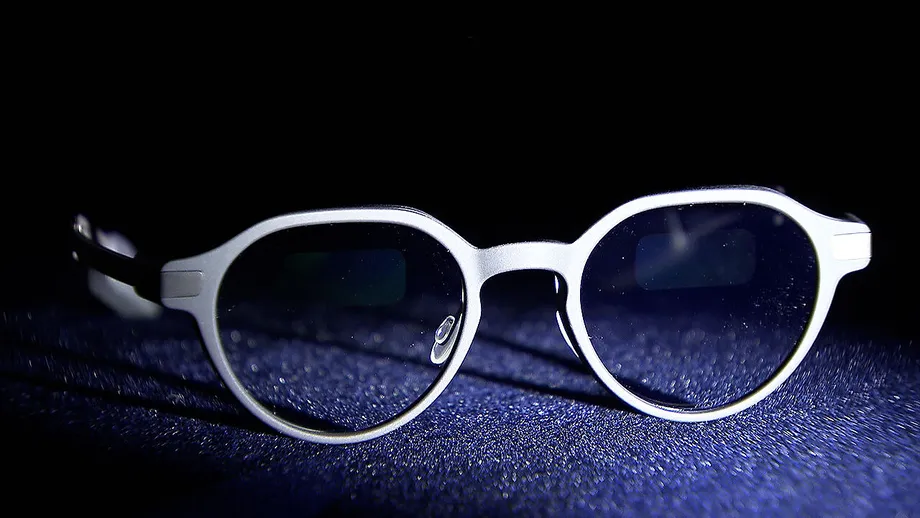
A November 5 demonstration at an optical shop in Seoul's Myeongdong district showed why examination authorities are paying attention to the technology. AI glasses answered a calculus question from South Korea's 2025 college entrance examination and displayed the answer on the lens within seconds. The devices' ability to receive a question and return an answer makes detecting unauthorized equipment a concrete concern for examination organizers.
Key Points
- Han admitted cheating in both stages of the tax accountant examination using a miniature camera, a smartphone and generative AI.
- He scored 397.5 out of 400 in April and 663 out of 800 in July, ranking first in both stages.
- Police received his confession through his lawyer and assigned the case to investigators.
- The finance ministry planned provisional suspension of his certificate. Cheating can lead to invalidation of the result and a ban lasting five years.
- Authorities ordered wider scrutiny of suspected AI cheating across national qualification examinations.
- About 550,000 students were expected to take Suneung on November 19, with device collection rules and smart glasses specialists planned across 1,312 testing centers.