A smaller generation reaches the classroom
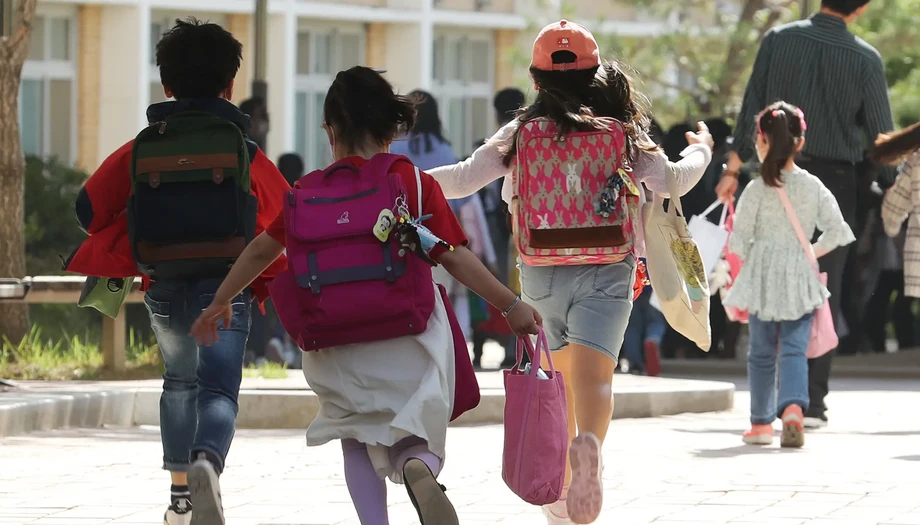
South Korea expects fewer than 300,000 children to enter elementary school in the 2027 academic year, the first time enrollment would fall below that threshold since records began in 1964. The forecast, detailed on November 8, 2026, follows a class of 301,442 first graders in 2026, already the smallest on record.
Contents
- A smaller generation reaches the classroom
- Why births point to another enrollment drop
- How quickly has the school intake shrunk?
- Why the birth rebound takes time to reach schools
- Rural schools face the greatest pressure
- Education funding faces a proposed overhaul
- Smaller classes foreshadow a smaller workforce
- Population policy shifts toward adapting to change
- Key Points
The incoming generation consists mainly of children born in 2020, when the country recorded 272,337 births, according to the Ministry of Data and Statistics. That was 10% fewer than in 2019. Figures compiled by the Korean Statistical Information Service (KOSIS) and the Korean Educational Development Institute (KEDI) show how that sharp fall is now reaching classrooms.
The expected crossing comes just three years after first grade enrollment fell below 400,000 in 2024. For rural communities, the change brings concerns about school mergers, closures and a growing gap in educational opportunities between regions.
An enrollment notice estimate assigns the same 301,442 total to 2025 and the crossing below 300,000 to 2026, while the November 8 figures place those developments in 2026 and 2027, respectively. The forecast described here follows the November 8 chronology.
Why births point to another enrollment drop
South Korea recorded 302,676 births in 2019 and 272,337 in 2020, a decrease of 30,339. The 2020 figure marked the first time annual births fell below 300,000 since birth statistics began in 1970.
Children generally enter elementary school in the calendar year they turn seven, so a smaller generation of babies becomes a smaller intake of pupils several years later. Education authorities can therefore anticipate much of the enrollment decline before families receive school notices.
Birth totals and first grade enrollment are different counts. Early entry, deaths and emigration affect how many children from a birth year eventually enter school together. Over the past 20 years, first grade enrollment has averaged 2.6% below the corresponding number of births.
That historical gap helps explain why a birth cohort of 272,337 points toward enrollment comfortably below 300,000. An earlier KEDI projection put the 2027 first grade intake at 291,922. The Education Ministry published that estimate on December 31, 2021, in KEDI's 2021 pilot projection of elementary, middle and high school student numbers for 2022–2027. School enrollment notices are expected to be distributed in December 2026, providing the next practical step toward identifying the incoming class.
KEDI calculated first grade enrollment by multiplying the population of six-year-olds by the average enrollment rate over the preceding three years, assuming that recent enrollment patterns would continue. For the first years of middle and high school, it multiplied the previous year's final-year elementary and middle school student counts by average graduation and advancement rates. For other grades, it applied average progression rates to the previous year's student count in the grade below. The 291,922 figure is therefore a projection based on those population and rate assumptions, not a final enrollment count.
How quickly has the school intake shrunk?
South Korea's largest first grade intake was 1,055,632 in 1968, when children from the baby boom reached elementary school. The 2026 total of 301,442 is about 28.6% of that peak, meaning the annual intake has already fallen by more than seven tenths.
The 272,337 births recorded in 2020 equal about 25.8% of the 1968 enrollment peak. That comparison explains why the expected 2027 class is described as roughly one quarter of its historical high, even before the final enrollment count is available.
The timeline shows a decline that has crossed several thresholds:
- 1968: First grade enrollment peaked at 1,055,632.
- 1982: Enrollment fell into the 800,000s, followed by the 700,000s in 1983.
- 1991: The annual intake fell into the 600,000s.
- 2009: Enrollment stood at 469,592.
- 2024: Enrollment reached 353,828, its first fall below 400,000.
- 2026: The November 8 figures put enrollment at a record low of 301,442.
- 2027: The incoming class is expected to fall below 300,000.
- 2030: Enrollment is projected to reach the low 200,000s.
Between 2024 and 2026 alone, the intake fell by 52,386 children, or about 14.8%. Schools are therefore adapting to a rapid change in the number of new pupils, alongside the much longer decline from the 1968 peak.
Why the birth rebound takes time to reach schools
South Korea's new first grade classes are projected to keep shrinking through 2030, when children born in 2023 enter elementary school. There were 230,028 births that year, pointing toward an intake in the low 200,000s.
Births subsequently rose to 238,317 in 2024 and 254,341 in 2025. The increase between those two years was 16,024, or about 6.7%. Both generations remain smaller than the 272,337 children born in 2020 who are due to start school in 2027.
The timing explains why a recovery in births can coexist with falling school enrollment. Under the usual entry schedule, children born in 2024 reach first grade in 2031, followed by those born in 2025 in 2032. Schools must first pass through the smaller generations born before that recovery.
The forecast keeps annual first grade enrollment above 200,000 through 2030. The recent birthrate rebound offers some relief for later school intakes, while the immediate planning challenge remains a sequence of smaller incoming classes.
Rural schools face the greatest pressure
Rural communities and areas outside the Seoul metropolitan region face particular concern about school closures and mergers. When fewer children enter each year, schools can lose pupils across several grades as larger classes leave and smaller ones arrive.
Families could then face a difficult combination: fewer nearby schools, fewer classmates and greater difficulty sustaining a varied school program. The concerns extend beyond the number of occupied desks to the range of activities and peer relationships available to children.
School consolidation can also affect where families choose to live. Parents seeking stronger educational infrastructure may move toward the Seoul metropolitan area, further reducing the number of children in provincial communities. The pressure on schools and the movement of families can reinforce each other.
No national total of schools scheduled to close, or list of communities facing mergers, has been announced with the enrollment forecast. The immediate issue for families is how local education offices respond to falling pupil numbers while maintaining access to education.
Provincial universities face a later version of the same problem. Today's smaller elementary school classes will eventually become smaller groups of applicants for higher education, adding to concern about university closures outside the capital region.
Education funding faces a proposed overhaul
The government plans to change the Local Education Finance Grants system, which automatically allocates 20.79% of national tax revenue to metropolitan and provincial education offices. The arrangement links a major source of local education funding to tax collections.
The proposed overhaul would end that automatic link and redirect funds toward early childhood care, high school education and lifelong education. Lifelong education includes learning and training beyond the usual years of school and university, including opportunities for adults to gain new skills.
The proposal brings two planning needs together. Education offices must respond to fewer pupils entering elementary school, while the country also needs services for young children, older students and adults. The allocation question is how to fund those needs as the population changes.
For rural areas, the number of pupils is only part of the calculation. Keeping education accessible across communities remains a practical concern even as national enrollment falls. No implementation date or detailed redistribution amounts were given for the proposed funding overhaul.
Smaller classes foreshadow a smaller workforce
Children entering elementary school in 2027 will reach working age in the following decade. Their numbers offer an early view of the smaller generations that will eventually enter employment and contribute to public finances.
The old age dependency ratio is projected to rise from 31.3 people aged 65 or older for every 100 people aged 15 to 64 in 2026 to 103.3 in 2070. In simple terms, the population aged 65 and above would grow from roughly one third of the working age population to slightly more than its size.
The ratio compares age groups. Employment, productivity and participation in the workforce determine how much income the economy can generate from that population structure. A smaller working age population makes education and training, alongside opportunities for more people to work, central to economic planning.
South Korea has already experienced similar pressure in national defense. The decline in military personnel reflects smaller generations reaching recruitment age. Elementary schools are now encountering the next stage of the same demographic process, years before these children become workers or potential recruits.
Population policy shifts toward adapting to change
South Korea's response increasingly includes adapting institutions to a smaller and older population, alongside efforts to encourage births. Its new population strategy, announced on October 14, 2026, proposes measuring progress through life satisfaction and participation in the workforce rather than a headline fertility target.
The strategy sets a 2030 goal of raising labor force participation from 71.8% to 74%. Participation counts people who are working or actively seeking work. It also seeks to reduce career interruption among women aged 30 to 44 from 20% to 10%, connecting family policy with the ability to remain in employment.
The announced strategy still required public feedback, revisions and government approval when it was presented. Its direction nevertheless matches the timing problem visible in schools: measures affecting births today take years to influence enrollment, while education offices must make decisions for children already born.
For the 2027 intake, the next milestone is the expected distribution of enrollment notices in December 2026. The larger task is to preserve access to education as pupil numbers fall, while preparing funding and services for the generations that follow.
Key Points
- South Korea expects fewer than 300,000 new elementary school pupils in 2027, a first since enrollment records began in 1964. KEDI's earlier pilot projection, published by the Education Ministry on December 31, 2021, estimated 291,922 using the population of six-year-olds and the preceding three years' average enrollment rate.
- The incoming generation was born in 2020, when births fell 10% to 272,337.
- The November 8 figures put 2026 enrollment at 301,442, compared with a peak of 1,055,632 in 1968.
- First grade enrollment is projected to decline into the low 200,000s by 2030.
- Birth increases in 2024 and 2025 would normally begin reaching elementary schools in 2031 and 2032.
- Rural school mergers, regional educational gaps and later pressure on provincial universities are major concerns.
- The government plans to change the education grant system that allocates 20.79% of national tax revenue to local education offices.