Criminal referrals planned before November 19 exam
South Korea's Education Ministry plans to seek criminal investigations into cheating with smart glasses during the national university entrance examination and pursue a three-year ban on taking the test again, up from the current one year. The response plan, announced on October 29, 2026, also assigns a specialist staff member to each of the country's 1,312 examination sites to help identify suspicious eyewear.
Contents
- Criminal referrals planned before November 19 exam
- How smart glasses entered the examination room
- Yonsei considers further penalties
- What the current Suneung rules require
- Why the government is seeking criminal action
- Teachers describe the difficulty of detection
- A support network for all 1,312 sites
- Why signal detectors will wait
- Universities face a gap in common rules
- Key Points
The measures come before the November 19 College Scholastic Ability Test, commonly called the Suneung, following cheating incidents at Yonsei University and the University of Seoul. Both cases involved applicants who reportedly passed initial inspections wearing ordinary glasses before changing into smart glasses during their examinations.
The ministry considers using the devices to cheat a deliberate and planned attempt to disrupt a national examination. It intends to file criminal complaints or request investigations for obstruction of official duties by fraudulent means and interference with business.
The proposed three-year exclusion requires a change to the current legal framework under the Higher Education Act. The ministry announced that it would pursue the increase, without giving a date for its enactment. For candidates preparing for November, the immediate measures are the existing device restrictions, closer inspections and a new support network for examination supervisors.
Universities will also be urged to apply tougher sanctions to their own admissions examinations. Their responses have already varied: the University of Seoul imposed a three-year admissions ban, while Yonsei initially invalidated an applicant's result before considering further restrictions and criminal action.
How smart glasses entered the examination room
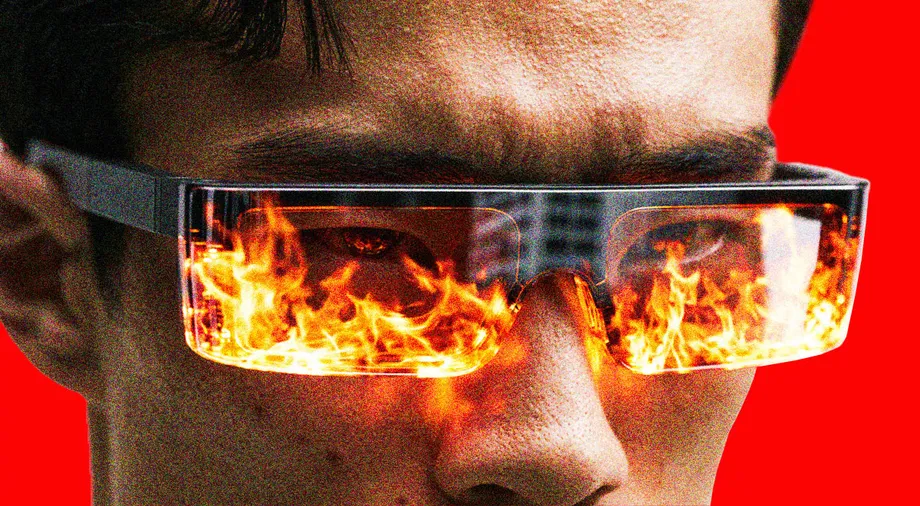
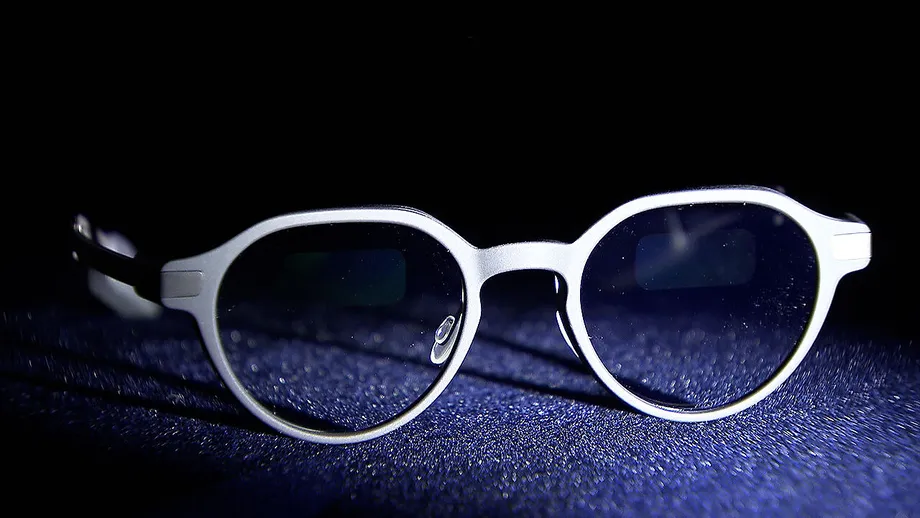
Smart glasses can combine ordinary looking frames with a miniature camera, wireless communication and a display inside the lenses. Some can photograph a question, use artificial intelligence to process it and present an answer or the steps needed to reach one.
Those features make the devices difficult to distinguish from prescription glasses through a quick visual check. The university cases also exposed a practical weakness in inspections conducted only before an examination begins: an applicant can change glasses afterward.
At the University of Seoul on October 3, a supervisor noticed unusually thick frames during an essay examination for applicants in natural sciences. Admissions staff checked the glasses and identified them as a smart device. The applicant was competing for a place in the artificial intelligence department, where 120 candidates were seeking five places, equivalent to 24 applicants per place.
The university removed the applicant, disqualified them from admission and barred them from its admissions processes for three years. The institution described its action in a statement:
We immediately ordered the student to leave the examination room and barred them from taking our admissions exams for the next three years,
Yonsei detected another applicant wearing smart glasses during its mathematics essay examination on October 10. A supervisor noticed the applicant touching the glasses and looking around nervously, then asked for the glasses to be removed and inspected.
Yonsei considers further penalties
Yonsei obtained a written statement admitting cheating and retained the glasses as evidence. Whether the applicant actually used artificial intelligence to write answers had not been confirmed.
The university initially invalidated the examination result without immediately restricting future applications, because its internal rules did not specify further penalties. Information later submitted to the office of Democratic Party lawmaker Ko Min-jung described plans to reject the applicant and bar them from the university's early admissions process for the 2028 academic year.
Yonsei was also reviewing whether to file a criminal complaint for interference with business by fraudulent means. Its developing response shows how institutions have had to consider both existing admissions rules and possible legal action when handling the new devices.
What the current Suneung rules require
The Education Ministry explicitly listed smart glasses as prohibited items for the Suneung for the 2027 academic year in July. That examination takes place in November 2026, before the academic year for which students are seeking admission.
Under the detailed handling rules, bringing or carrying smart glasses into an examination site without surrendering them before the first session invalidates the examination. Wearing or using them during the examination brings invalidation and exclusion from the following year's Suneung. Earlier ministry guidance was also described as applying the one-year exclusion to possession alone.
A candidate who refuses a supervisor's request to inspect their glasses can receive the same penalty after a review. The inspection procedure therefore matters both for identifying a device and for resolving a refusal before a sanction is imposed.
Seoul Education Superintendent Jeong Geun-sik explained the basis for disciplinary action during a parliamentary audit:
Smart glasses have been explicitly designated as prohibited items in examination rooms, establishing a basis for taking disciplinary action against their use as a form of cheating,
The ministry plans visual inspections of candidates wearing glasses before each examination session. Training materials include videos, booklets and a brochure intended to help supervisors recognise devices and suspicious behaviour.
Why the government is seeking criminal action
The ministry's proposed criminal response would operate alongside examination penalties. Cancelling a result or restricting a future application is an educational sanction. A police complaint or investigation request starts a separate legal process concerning possible offences.
Obstruction of official duties by fraudulent means concerns using deception to interfere with public officials carrying out their work. Interference with business concerns disruption of an institution's operations. The ministry identified both as possible grounds for action over smart glasses cheating.
A previous examination case illustrates the possibility of a criminal sentence. In 2005, a participant in an organised scheme to exchange answers by mobile phone received an eight-month prison sentence, suspended for two years. A suspended sentence allows imprisonment to be held back subject to conditions during the specified period.
The government now wants stronger consequences for smart glasses use because it regards the conduct as planned interference with examination administration. Its proposed increase from one year to three years would triple the exclusion period, potentially delaying a candidate's next opportunity to sit the national test by several examination cycles.
Teachers describe the difficulty of detection
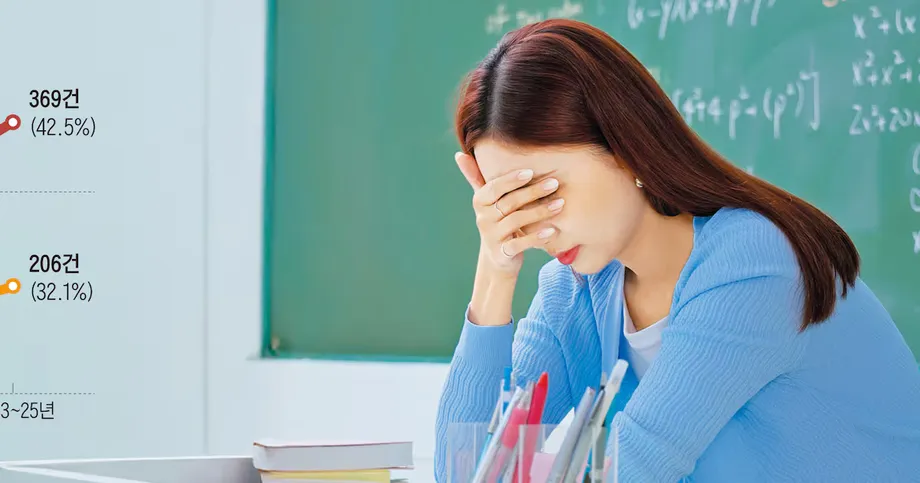
A Korean Teachers and Education Workers Union online survey of approximately 2,700 middle and high school teachers found that 82.3 percent considered smart glasses difficult to identify using the ministry's current supervision procedures. Only 3.5 percent said identification was possible. The findings were published on October 27, two days before the response plan.
Teachers were concerned about both missing a device and wrongly suspecting a student wearing ordinary glasses. In questions allowing multiple responses, 64.4 percent cited complaints and disputes arising from a mistaken identification. Another 48.0 percent cited the burden of treating a student as a suspect, while 45.9 percent worried about being held responsible if smart glasses went undetected.
The most frequently selected urgent measure was professional personnel and systems to assess suspicious devices, chosen by 64.8 percent of respondents. The ministry's decision to assign a designated staff member to every examination site addresses that specific request.
The National Union of Secondary Teachers separately launched a petition seeking more inspection staff, clearer procedures for disputes and better working conditions for Suneung supervisors. Teachers must oversee the examination while carrying out checks, and a prolonged dispute can interrupt other candidates.
A support network for all 1,312 sites
Each of the 1,312 examination sites will designate one staff member to make an initial assessment when a supervisor encounters suspicious glasses. The designated employee can also patrol examination rooms when needed.
Difficult cases can move through an emergency contact network linking the examination school, provincial or metropolitan education offices, and situation rooms at the ministry and the Korea Institute for Curriculum and Evaluation. The institute is involved in administering the Suneung.
The ministry says this arrangement is intended to reduce the burden on individual supervisors and support teachers who carry out their duties diligently. Instead of having to settle every uncertain case alone, a supervisor will have access to staff assigned to identification and further checks.
All supervisors at this year's examination will also receive group liability insurance with broader protection and a longer period for claims. Coverage includes damages, legal fees and litigation costs. The ministry will pursue improvements to supervisor pay beginning with the Suneung for the 2028 academic year.
Why signal detectors will wait
Radio frequency detectors are being assessed as a possible additional way to identify electronic devices at examination sites. Such equipment looks for wireless signals, offering another check alongside inspection of the glasses themselves.
Education Minister Choi Kyo-jin told a parliamentary audit on October 7 that conditions at different examination venues could cause detection errors. That concern has prevented immediate deployment for this year's test.
The ministry plans to examine equipment being developed by specialist institutions and consider supplying it to Suneung sites next year. Deployment remains under review, so this November's response will rely mainly on visual inspections, trained staff and the escalation network.
The recent university incidents make repeated observation relevant. Both applicants reportedly changed glasses after initial checks, placing pressure on supervisors to notice devices during the examination as well as at the entrance.
Universities face a gap in common rules
University admissions examinations operate under each institution's own regulations, unlike the Suneung's national framework. The Korean Council for University Education issues basic admissions guidelines, but those guidelines do not prescribe a uniform penalty for cheating with smart glasses.
The ministry has said it respects university autonomy while seeing a need to discuss whether disciplinary procedures should be standardised. Its October 29 plan recommends applying tougher sanctions to university examinations from this year.
The council has also identified privacy restrictions as an obstacle to sharing information about cheating between universities. A ban imposed by one university applies to that institution, leaving other universities to handle applications under their own rules.
The policy has developed through several steps:
- July 2026: Smart glasses were explicitly listed as prohibited items for the Suneung for the 2027 academic year.
- October 3: The University of Seoul detected smart glasses during an admissions examination and imposed a three-year ban.
- October 7: Minister Choi discussed invalidating Suneung results, a one-year exclusion and difficulties with signal detectors.
- October 10: Yonsei detected smart glasses during its essay examination.
- October 29: The ministry announced criminal referrals, a proposed three-year exclusion and designated identification staff.
- November 19: Candidates will sit the national examination under the expanded inspection arrangements.
The crackdown follows other efforts to protect confidence in university entry, including proposed exam question trading penalties after prosecutors indicted 46 private academy instructors. It also follows an English examination overhaul prompted by unexpectedly low top grades. The smart glasses response adds device detection and clearer responsibility for inspections to those efforts.
Key Points
- The Education Ministry plans criminal complaints or investigation requests over Suneung cheating with smart glasses.
- A proposed change would extend the current one-year exclusion from the national examination to three years.
- The November 19 examination will have one designated identification staff member at each of 1,312 sites.
- Supervisors will inspect glasses before each session and receive support through an emergency contact network.
- Yonsei University and the University of Seoul have taken different approaches to admissions restrictions following smart glasses incidents.
- Signal detectors are being assessed for possible deployment next year.
- Expanded insurance will cover examination supervisors' damages, legal fees and litigation costs.