A new population strategy looks beyond births
South Korea has unveiled a national population strategy that would measure progress through life satisfaction and participation in the workforce rather than a headline fertility target. The plan sets 2030 goals of raising life satisfaction from 6.6 to 7.0 points and labor force participation from 71.8% to 74%, while extending demographic policy into housing, immigration, regional decline and technology.
Contents
- A new population strategy looks beyond births
- What the 2030 targets would measure
- Housing support would reduce penalties for marriage
- Birth grants and support for workers outside standard jobs
- Why cash incentives are only part of the response
- Older people would receive more housing and protection
- K-Care would connect services across life stages
- Technology and immigration enter the population plan
- Family diversity and regional priorities get explicit attention
- Public discussion and budget coordination come next
- Key Points
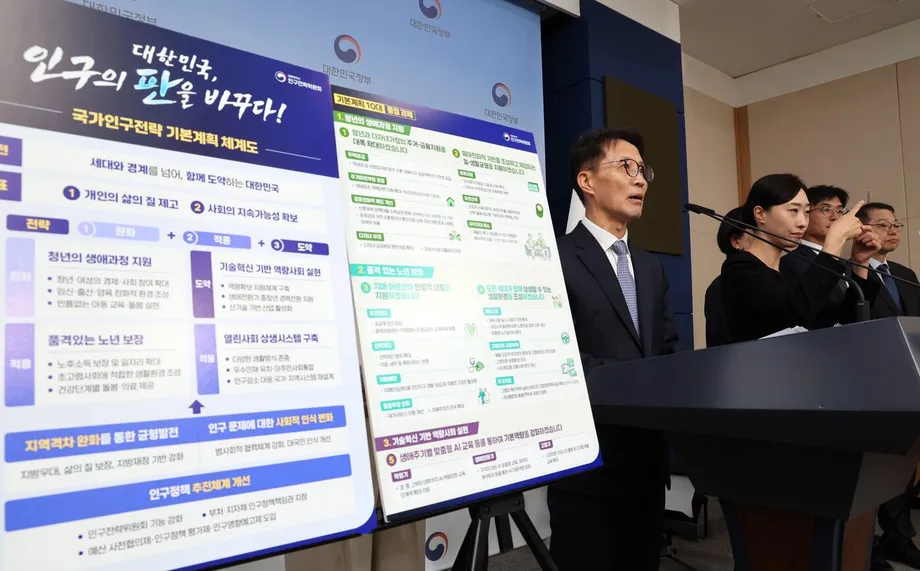
Announced on October 14, 2026, the first National Population Strategy Basic Plan succeeds the five year planning framework for low fertility and an aging society established in 2006. It contains 117 basic policy tasks agreed through ministry consultations and seven broader challenges that still require public debate and more detailed implementation arrangements.
The distinction matters. Housing and family support measures sit alongside proposals to train up to 100,000 young care professionals and build an integrated care system, but those proposals are not all at the same stage. The announced plan still requires final public feedback, revisions and deliberation and approval through vice ministerial and Cabinet meetings.
The Population Strategy Committee describes three approaches: slowing rapid demographic change, adapting institutions to a smaller and older population, and using technological innovation to support productivity and growth. Its four policy areas cover young people, older people, technological capabilities and an inclusive society.
Childbirth assistance remains substantial, including proposed grants reaching 20 million won in some regions. The change is that producing more births would no longer be the sole organizing principle. Government performance would also be judged by whether people can work, obtain housing, receive care and live securely as the population changes.
What the 2030 targets would measure
The new indicators turn the strategy toward outcomes that families and workers experience directly. Labor force participation measures the share of the relevant population either working or actively seeking work. It differs from an employment rate, which counts those actually employed.
The participation target represents a rise of 2.2 percentage points, from 71.8% in 2025 to 74% in 2030. Life satisfaction would rise by 0.4 points over the same period. Neither measure is a substitute for counting births, but together they broaden the test of whether demographic policy is working.
Other targets address employment, poverty and the ability to combine work with family responsibilities:
- Youth employment would rise from 45% in 2025 to 50% by 2030.
- Career interruption among women aged 30 to 44 would fall from 20% to 10%.
- Elderly poverty would decline from 35.9% in 2024 to 30%.
- Flexible work use would increase from 16.3% to 25%.
- Employment among older people would rise from 70.5% to 72%.
Halving the measured rate of career interruption among women is one of the largest proportional changes sought. It connects family policy with the strategy's workforce objective: retaining people in employment rather than treating childbirth and economic participation as separate issues.
Population Strategy Committee Vice Chair Kim Jin-oh said the government would avoid setting a total fertility rate target, although raising fertility remained an important policy task. At an October 12 briefing, he described the next five years as a decisive period for the country's population transition.
Housing support would reduce penalties for marriage
The plan includes 571,000 public housing units for young people, newlyweds and households raising children, with preferred locations such as areas near railway stations. It also proposes a new preferential mortgage for young buyers purchasing their first home.
Under the proposed Youth Future Bogeumjari Loan, buyers aged 39 or younger purchasing a home other than an apartment for no more than 400 million won could receive an interest rate discount of up to 2.1 percentage points. That is a discount from the applicable rate, not a promise that the mortgage rate itself would be 2.1%.
Newlywed eligibility for policy loans would be relaxed by assessing income eligibility on the basis of one spouse. The measures cover programs including Beotimmok, Didimdol and Bogeumjari loans. Young unmarried public rental tenants would also be allowed to renew their tenancy if marriage pushed them above the usual income or asset limits.
These provisions target a specific problem: combining two households can make a couple ineligible for assistance even while their housing needs increase. The plan also calls for broader public housing application opportunities for families with several children and preferential loan rates for households with three or more.
Birth grants and support for workers outside standard jobs
Proposed childbirth grants vary by birth order and local government category. The ranges are 10 million to 15 million won for a first child, 12 million to 17 million won for a second, and 15 million to 20 million won for a third or later child. The highest amounts would therefore not apply universally.
The plan would expand the monthly child allowance to 200,000 won, with additional assistance reflecting regional conditions. It also includes monthly support of 300,000 won for children aged zero to one who are cared for at home. Detailed eligibility and how payments interact with other benefits will matter for the amount individual households receive.
Artists, freelancers, workers in special employment categories and sole proprietors would be eligible for a proposed payment of 500,000 won a month for three months. That amounts to 1.5 million won over the support period and extends childbirth and parenting assistance beyond employees in conventional jobs.
The cash measures are paired with proposals for childcare that fits different working arrangements and parental schedules. That connection is central to the strategy: a grant can offset expenses, while dependable care and flexible employment address whether parents can continue earning a living.
Why cash incentives are only part of the response
The new approach follows years of concern about exceptionally low fertility. Statistics Korea recorded a total fertility rate of 0.78 in 2022 and 0.72 in 2023. A projection cited in September 2024 put that year's rate at 0.68, but that was a forecast, not a final observed result.
Research on earlier incentives helps explain why the strategy extends beyond payments. Hugo Jales, an associate professor of economics at Syracuse University, and a coauthor found that more than 74% of disbursements under a local baby bonus program went to births expected to occur even without the incentive.
That finding does not mean the payments had no value to families. It does distinguish financial support for parents from spending that induces additional births. It also cannot establish the effect of the newly proposed grants, whose amounts and accompanying policies differ.
Jennifer Sciubba, president and chief executive officer of the Population Reference Bureau, identified education costs as another constraint on family decisions:
education is prohibitively expensive, which disincentivizes having large families.
A 2022 study in the Review of Economics of the Household found that paid childcare leave for working women increased conception and reduced contraception. Together, these findings support examining cash assistance alongside employment conditions, leave and continuing care, rather than assuming a larger grant alone will reverse fertility trends.
Older people would receive more housing and protection
The strategy aims to provide 25,000 housing units suited to older residents over five years, including welfare housing and Silver Stay accommodation. It also seeks to help older people remain economically and socially active in the communities where they already live.
Public guardianship support for people with dementia would expand from 300 beneficiaries in the announcement year to 1,900 by 2030. That is 1,600 additional people and more than six times the starting coverage. Guardianship provides assistance with decisions and legal or financial affairs when a person cannot adequately manage them alone.
Other measures include protections against suspicious financial transactions, more jobs matched to older workers and easing reductions in old age pension payments associated with business income. Support for employers outside the capital region that operate continued employment systems would rise by 100,000 won per month.
The employment and poverty targets should be read together. Increasing the number of older people in work is one objective, while reducing elderly poverty from 35.9% to 30% is another. Job quality, income support and access to care would therefore remain relevant even if employment rises.
K-Care would connect services across life stages
Among the seven challenges requiring further discussion is the K-Care Promotion System. It would connect services currently divided by age group, ministry or region, extending from early childhood and primary school care through support at the end of life.
For children, the proposal would strengthen coordination among nurseries, schools and other institutions to identify care needs and respond to parents' schedules. Information now scattered across Government24, the childcare portal 아이사랑 and other services would be connected so households could find relevant assistance more easily.
For older people, the plan proposes broader community integrated care, visiting rehabilitation and integrated home nursing. Integrated care means organizing medical, nursing and daily living support around the person, rather than requiring separate arrangements with disconnected providers. The committee is also considering expanding eligibility to people with mental illness by 2030.
A related proposal would train up to 100,000 young care professionals in successive cohorts, with pay, stable employment and housing support. Jobs would focus particularly on areas losing population, where care workers are scarce. The intended roles include helping people use care robots and assistive devices, connecting local service needs with technological skills.
Technology and immigration enter the population plan
The technology measures go beyond using robots in care. The strategy includes AI education suited to different life stages and expansion of AI Digital Learning Centers. Schools providing AI education would increase from 1,000 in 2026 to 2,000 in 2028, while 10,000 AI teachers would be trained by 2029.
For aging communities, proposed technologies include care robots, fall detection sensors and smart beds. These are examples of age technology, products and services intended to support older people's safety and independence. The training proposals recognize that introducing equipment also requires people who can operate it and help residents use it.
Immigration is another discussion area. The plan proposes attracting 2,000 people with master's or doctoral qualifications in science, technology, engineering and mathematics by 2030, alongside 350 leading international specialists in industry, science and technology. The two targets should not be added together without knowing whether their categories overlap.
A proposed settlement package would connect tax treatment, housing, children's education and employment support for family members. Faster routes to residence, permanent residence and citizenship would be expanded for eligible talent. Birth registration, education opportunities and possible childcare assistance for children with migration backgrounds also form part of the agenda.
These measures address both recruitment and settlement. Bringing qualified people to South Korea is one task; making it practical for them and their families to remain is another. Detailed rules and implementation arrangements for these discussion stage proposals have yet to be settled.
Family diversity and regional priorities get explicit attention
The plan calls for removing the distinction between children born within and outside marriage from birth registration forms and improving registration procedures for unmarried fathers. These are administrative changes with a direct bearing on how families gain recognition and access services.
A Government24 platform would bring together policy information for households consisting of one person. Along with measures for unmarried parents and children with migration backgrounds, it marks a broader scope than support designed primarily around married couples raising children.
Regional population decline would also receive more explicit attention in spending decisions. Officials would be required to consider regional priority when budgeting for population programs. Higher childbirth grants in designated areas, support for continued employment outside the capital region and care jobs in shrinking communities give that principle concrete policy forms.
The strategy therefore connects several pressures in the same places: fewer residents, a growing need for care and difficulty recruiting workers. Whether those measures reach communities together will depend on coordination across ministries and local governments.
Public discussion and budget coordination come next
The legal foundation is the comprehensive revision of the Framework Act on Low Birth Rate and Aging Society into the Framework Act on Population Strategy, which took effect on September 10. The Population Strategy Committee was expanded and reorganized from its predecessor under that change.
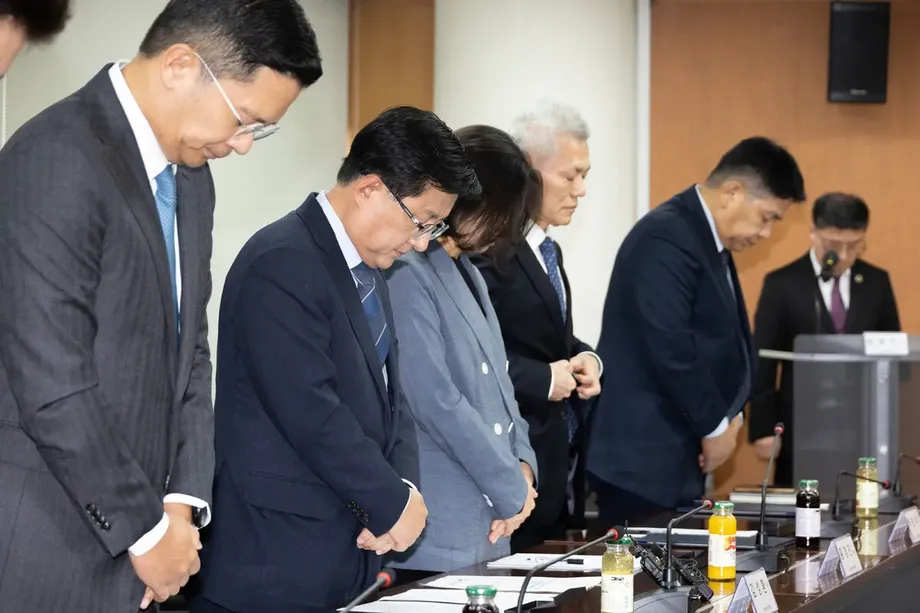
President Lee Jae-myung's vision ceremony was scheduled for October 14 at 2 p.m. at the Blue House guesthouse. About 120 officials, committee members and representatives from business, religion, academia and the public were expected. A 100 member participation group, selected to reflect ages, genders and regions, was to begin its work at the event.
The sequence and next milestones are:
- September 10: The revised population strategy law took effect.
- October 12: Vice Chair Kim Jin-oh outlined the approach at a preliminary briefing.
- October 13: The presidential office announced arrangements for the vision ceremony.
- October 14, 2026: The committee announced the first national strategy, with public discussions scheduled at the launch.
- January following the announcement: Advance consultation on population related ministry budgets is planned to begin.
- 2030: The plan's main outcome targets are due.
The ceremony was scheduled for livestreaming through KTV, with public participation through comments. Discussions would address youth, childbirth, childcare and regions, as well as older people, care technology and migrants.
Before ministry budgets are finalized, the committee would coordinate investment directions and priorities and submit its views to the Ministry of Planning and Budget. Ministries and local governments would designate population policy officers. Regular forecasts would examine demographic effects on sectors and industries, while specialist evaluations would focus on aging, regional populations and immigration.
No exact date is given for final Cabinet approval. The next test is whether consultation turns the seven broader challenges into workable programs and whether budget decisions support the agreed tasks. The announcement establishes direction and numerical goals, but it does not make every proposed benefit immediately available.
Key Points
- South Korea's first National Population Strategy Basic Plan broadens policy beyond fertility and elderly welfare.
- The 2030 headline targets are life satisfaction of 7.0 points and labor force participation of 74%.
- The plan includes 117 agreed basic tasks and seven challenges requiring further discussion.
- Proposed support includes 571,000 public housing units, childbirth grants of up to 20 million won and assistance for workers outside standard employment.
- Older people would receive expanded guardianship, housing, employment support and connected care services.
- Technology training, international talent recruitment and regional budget priorities form part of the strategy.
- Final feedback, revisions and government deliberation and approval are still required.